Elliot C. Williams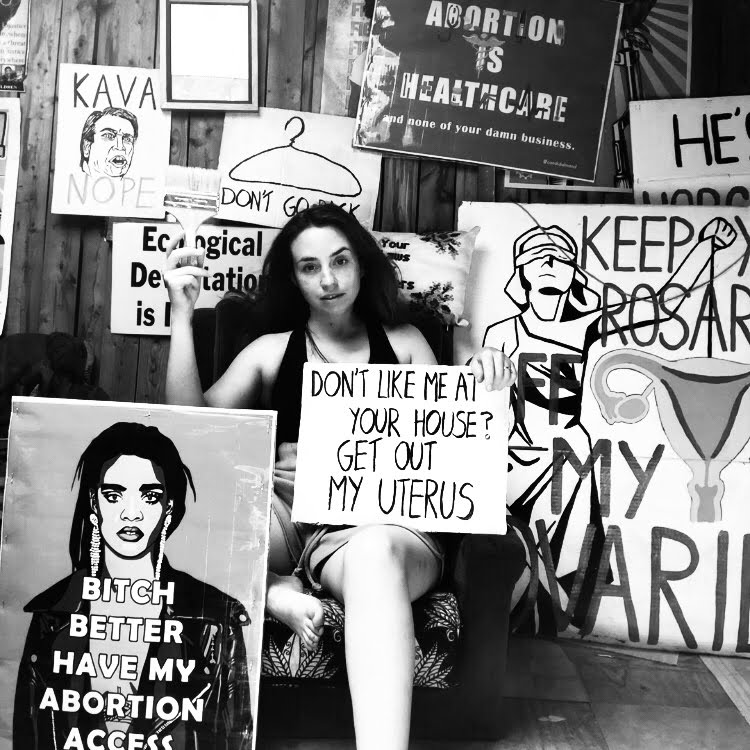
After the Supreme Court released the Dobbs v. Jackson Women’s Health ruling Friday, Deb Almond — known more widely by her Instagram handle, Candid Almond — says sales of her protest art on her Etsy page over the weekend went up by 500%, compared to the same period last year. Over the weekend, her “I’m Not Ovary-Acting” bags and pillows at the Femme Fatale DC shop in Cleveland Park sold out.
Originally from London, the 35-year-old Northeast D.C. mother of two has spent years painting detailed, colorful vulvas and turning feminist phrases into powerful pieces of protest art. Chances are, if you’ve been to a Women’s March or similar protest in D.C. in recent years, you’ve seen demonstrators holding Almond’s art.
But Almond’s recent financial success left her with complicated feelings. While she appreciated the bump in business, she says she felt utter dread as the Supreme Court overturned Roe v. Wade, ending the constitutional right to an abortion.
“It feels like everyone’s just grasping for something to feel a bit better, and to feel some sort of comfort and solidarity with people,” Almond tells DCist/WAMU. “As an artist, I’m sitting there and I’m thinking, ‘Okay, I’m really fucking angry.’ But people are clearly coming to my work to express something to their friends, or in their house or something. And so, like, what’s my responsibility?”
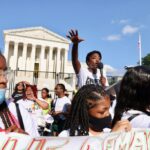
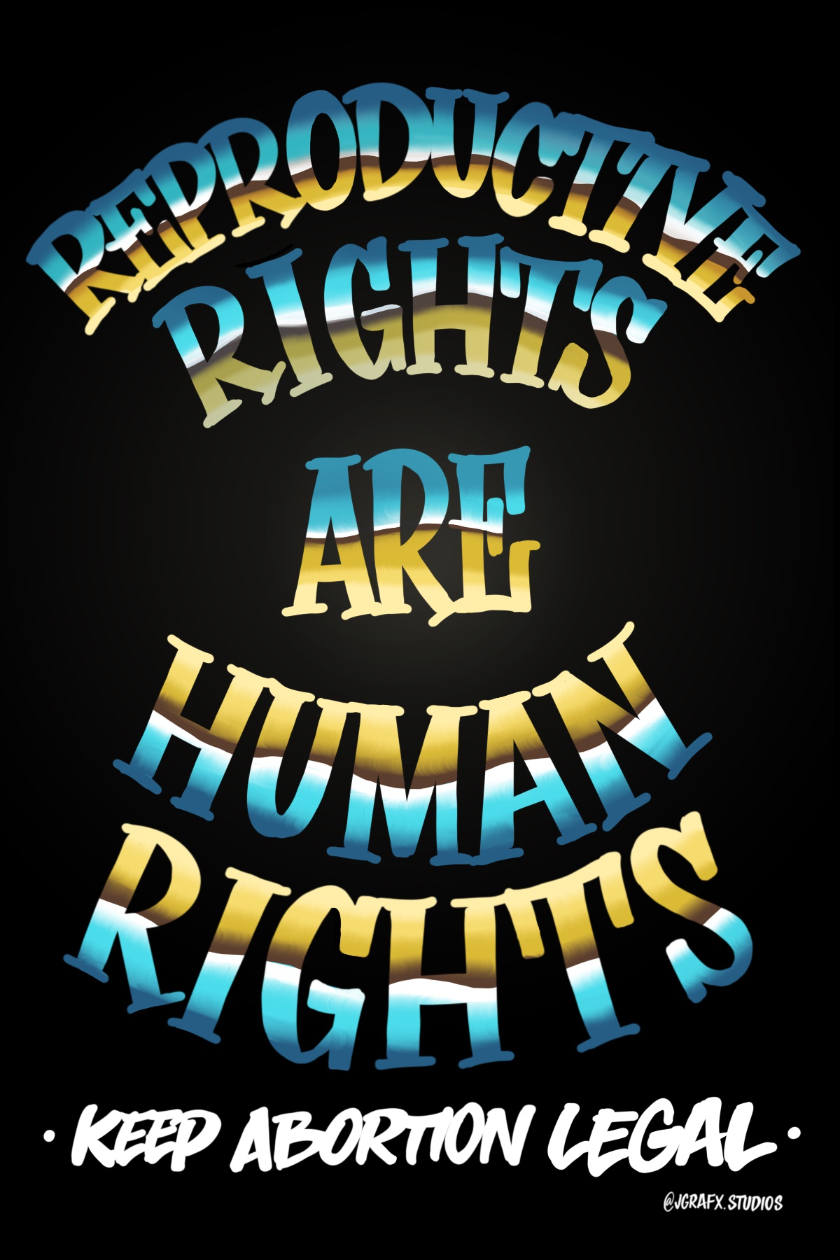
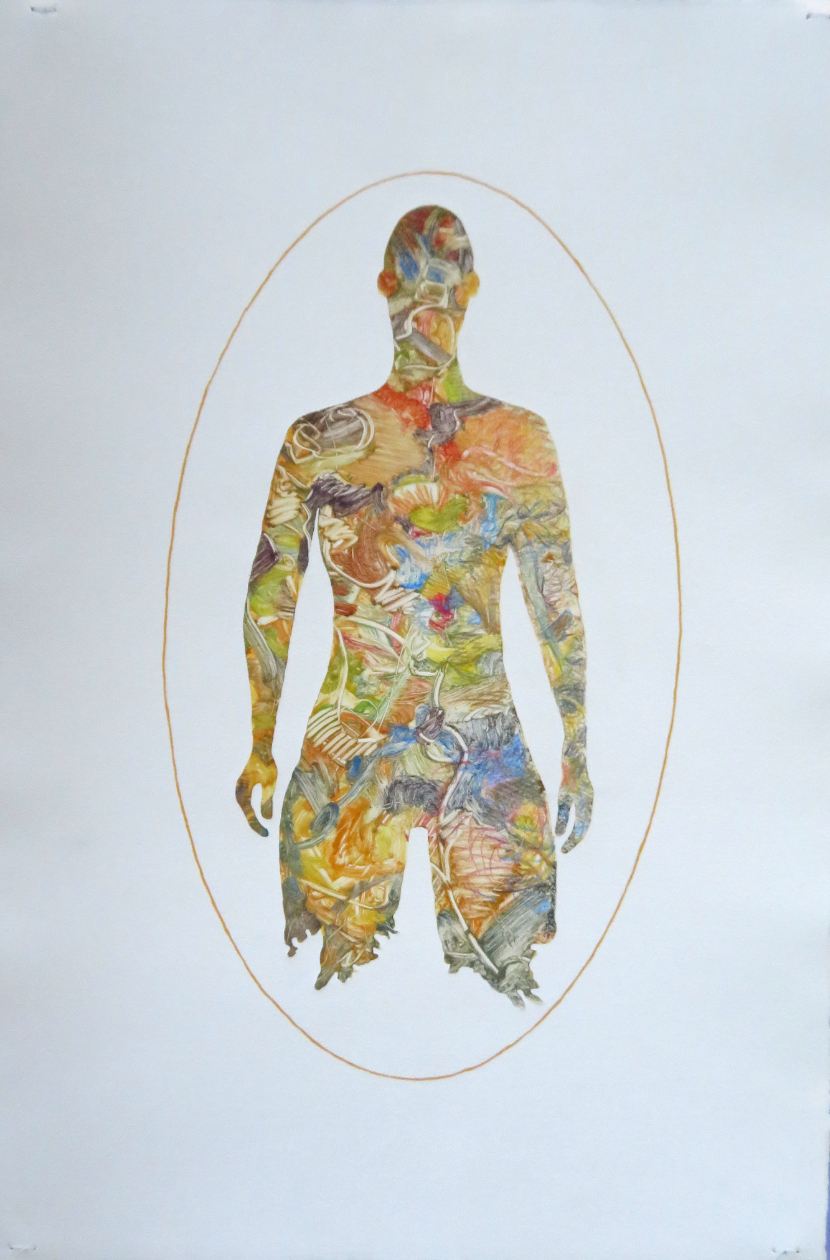
In the immediate aftermath of the Dobbs ruling, hundreds of protesters gathered to express their rage — or, in the case of anti-abortion groups, to celebrate — outside the Supreme Court. Those crowds hardly waned throughout the weekend, as the future of abortion rights in the Washington region became murkier, and suddenly, artistic expression could be seen everywhere. Political chalk art and yard signs popped up across many neighborhoods, while local painters, poets, performance artists, and musicians are attempting to do what they do best: interpret the current moment by any creative means necessary.
As Almond processed all of it, she uploaded a selfie from her garage, where she paints. Her caption, inspired by Beyoncé lyrics, reads: “Anti-choice can suck on my ⚽️🏀🎾 Love Deb x #suckonmyballs.” She wanted to add an element of humor to her post because, she says, “Sometimes laughing at things makes you feel a bit better.”
Almond has been open about the motivation behind her work, including her past as a healthcare worker and her own experience with sexual assault. She donates 10% of her proceeds to HIPS DC, a harm-reduction agency that serves sex workers and unhoused people in the District. Almond has done this work for years, but she says her feminist art and that of her peers has a new gravitas in the wake of the Dobbs ruling.
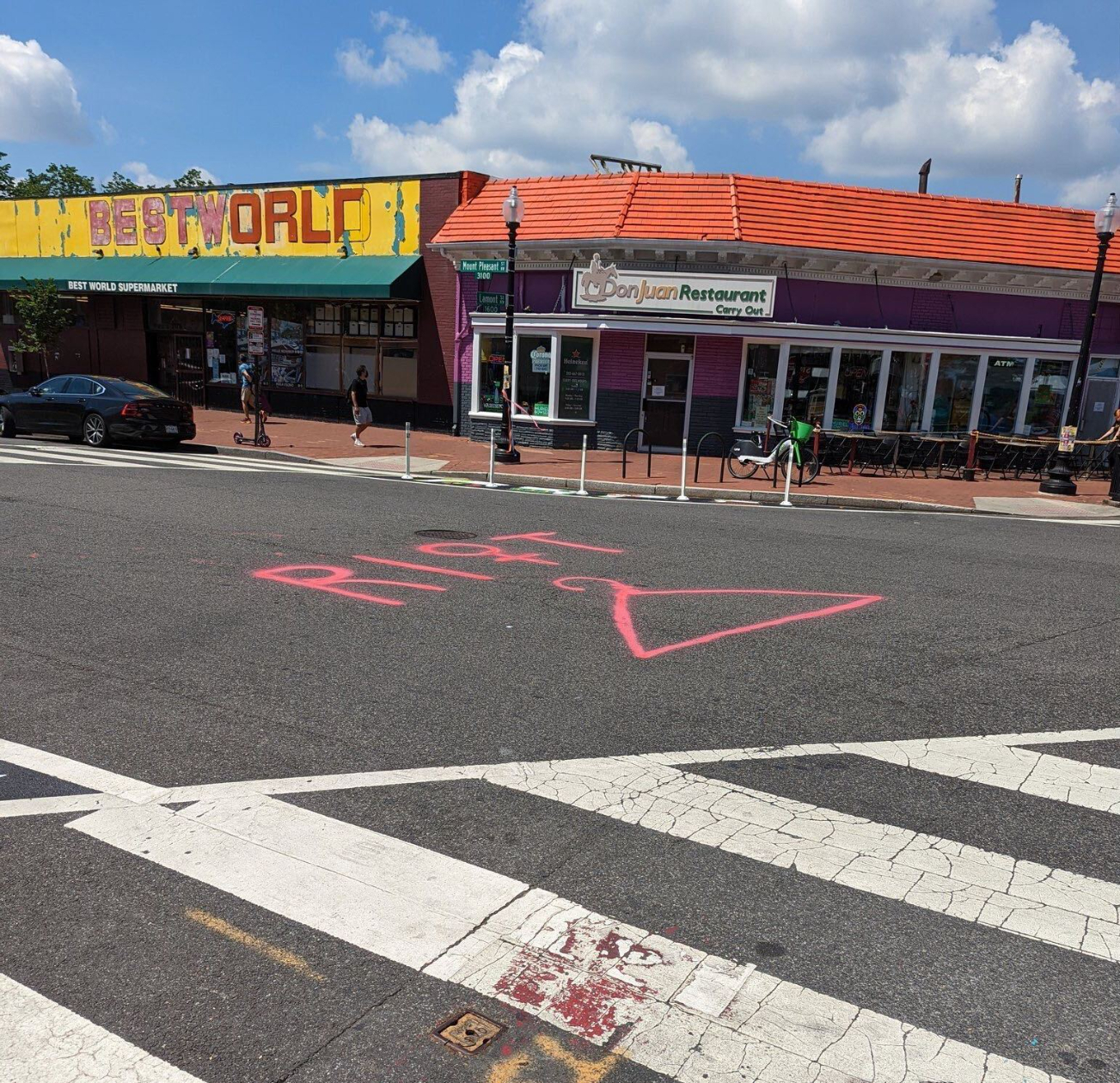
Over the weekend, some artist hubs and businesses became de facto bastions for creatives needing to stretch their legs and creative muscles in communion with others.
Painters and printmakers have flocked to the Pyramid Atlantic Art Center in Hyattsville to create new works. It’s all very preliminary, according to the nonprofit’s executive director, Kate Taylor Davis.
“Artists are still processing the news, like everyone else, and it’s going to take some time before we see larger collaborative projects emerge,” Davis says over email.
One potential project involves ceramist and sculptor Margaret Boozer of Red Dirt Studio, Davis says. Pyramid hopes to invite the public to join Boozer in creating a piece of protest art in the form of a giant uterus of packed earth.
“While it started in jest, that might actually happen now,” Davis says. “Pounding earth seems like a good way to get out some of the frustration. We are currently looking around for a site that would welcome such a project.” Pyramid also plans to host a community event soon, where locals can access their printing equipment and consult with artists on site to make their own prints.
Performance artists have been busy, too.
Wes Holloway, a recent graduate of the MFA program in social practice at GW’s Corcoran School, went to the Supreme Court on Friday to “spark conversations, offer a moment of reflection in the crowd, and empower/encourage a willingness to be messy in the ongoing fight for basic equity in healthcare,” as he wrote on his Instagram page. A queer man who was paralyzed from the chest down in a diving accident, Holloway uses his art to explore themes of masculinity, gender, ableism, shame, and how these relate to the body.
His most recent installations have invited viewers to tie neckties on each other, connecting them through cloth to start conversations. He brought this practice to the Supreme Court on Wednesday, asking people to participate.
“Some people were totally not interested. For some, it sparked their curiosity, but they didn’t really get it,” Holloway explained in an interview. “I think some thought I was soliciting ties or that I was selling something, So I just had to keep asking people and sitting and watching.”
Finally, some people told Holloway they were willing to take part. He encouraged protesters to hold, wear, throw, or destroy the ties — whatever they felt like doing in the moment.
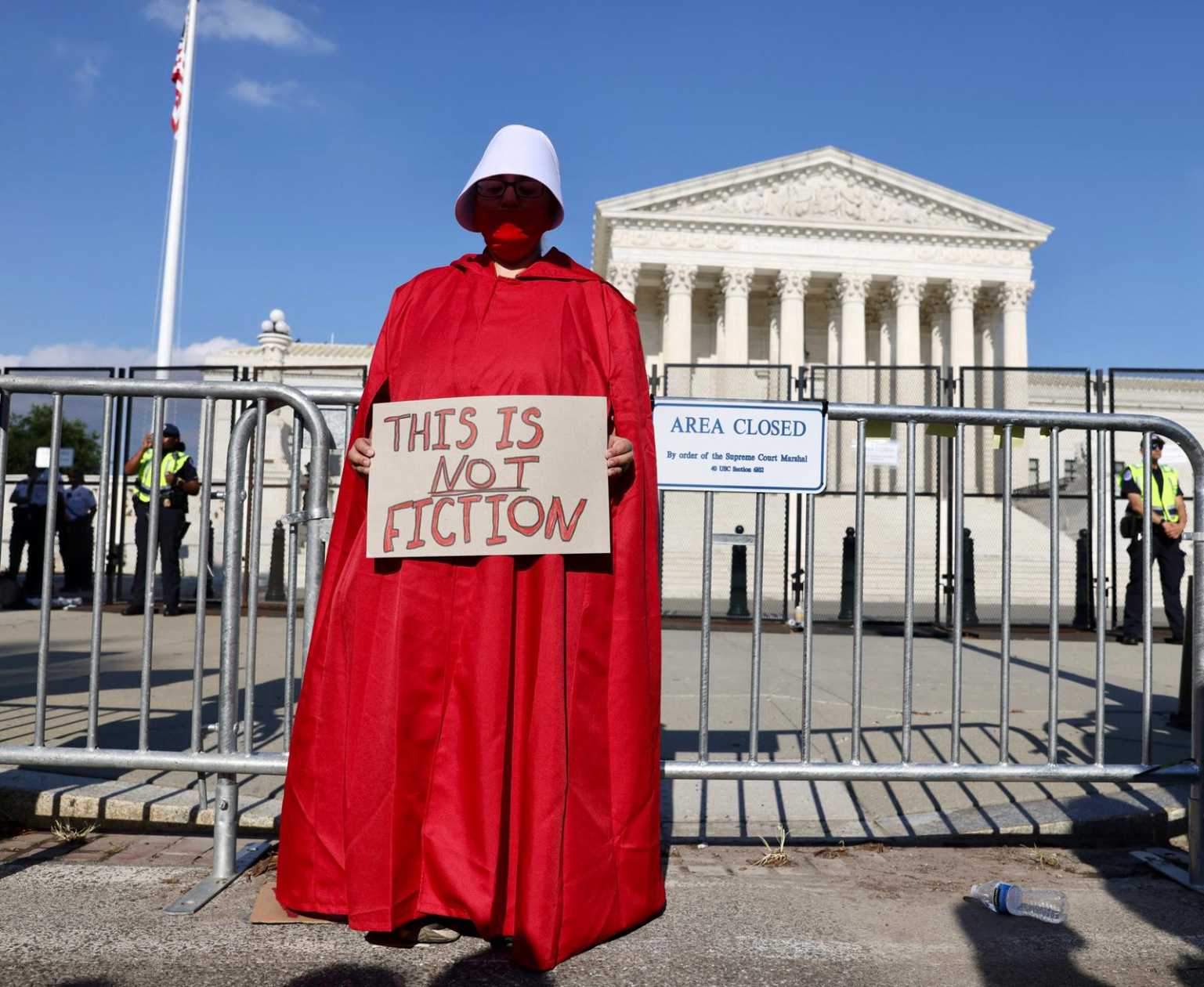
There were other ways people used their bodies or movement as a form of protest throughout the weekend. One man spent over 24 hours atop the Frederick Douglass Memorial Bridge, an act some considered a form of protest art. A few protesters on Friday wore costumes inspired by Margaret Atwood’s dystopian novel A Handmaid’s Tale, in which the U.S. is overtaken by Christian fundamentalists who strip women of their rights.
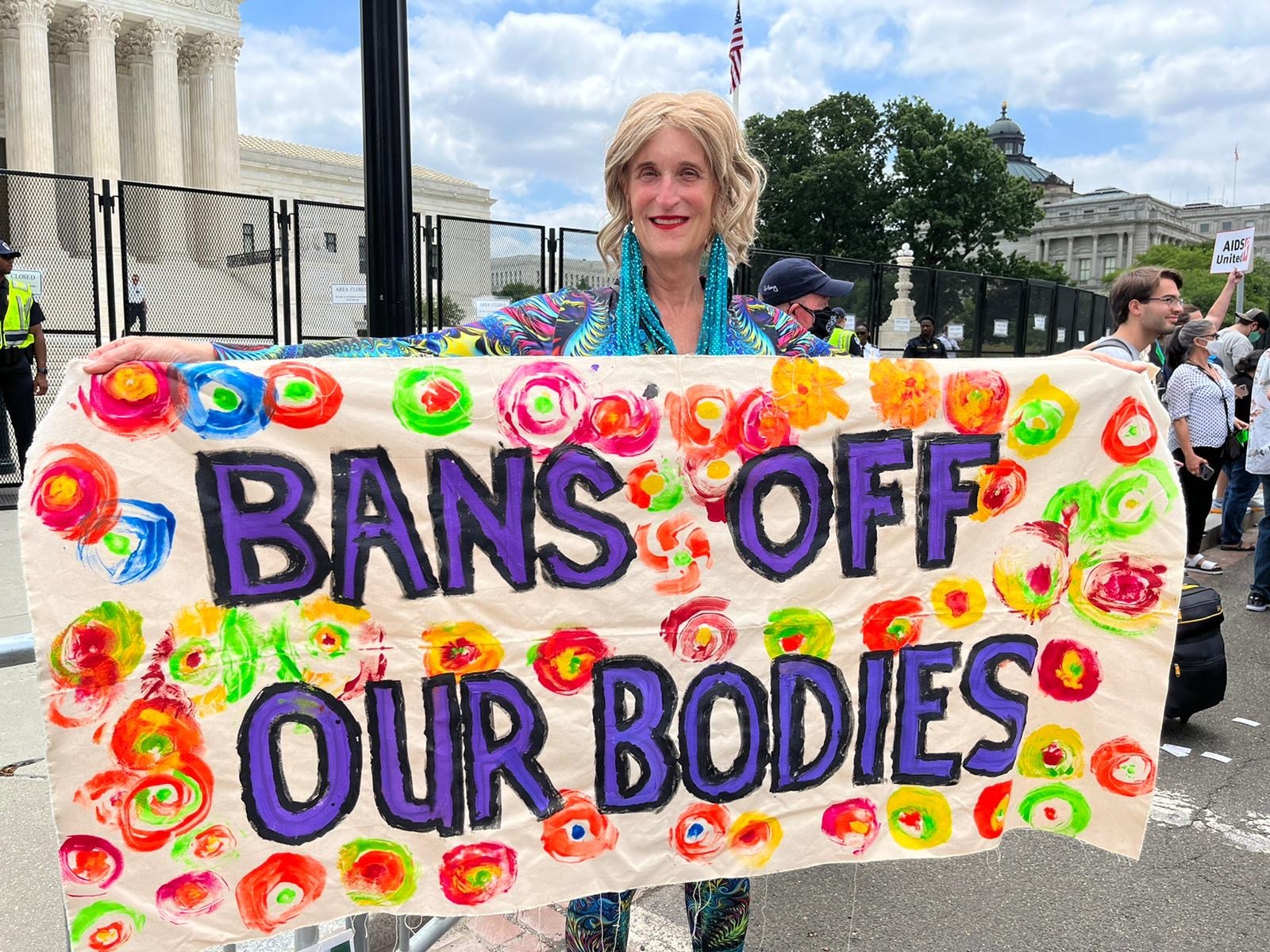
Also seen at the Supreme Court Friday: a piece of protest art held by Capitol Hill resident Nicky Sundt, who painted it with a group of her friends using their breasts as brushes, that read “Bans off our bodies.”
“The right wing in this country is going after women, people of color, queer people. They’re all tied together, and we have to fight it together, or we’re all going down together,” Sundt told DCist. “This isn’t going to be the [last] decision that’s going to erode our rights.”
Of course, there’s a soundtrack to every movement. While writing and recording a song or album takes time, plenty of local musicians, too, are finding their own creative ways to respond to the Dobbs ruling. The soulful rock band Rock Creek Kings are donating proceeds from their upcoming show to the National Network of Abortion Funds. The outdoor performance, scheduled for July 9 at Rose Park South, features at least six other local rock and jazz acts and will be produced by D.C. studio and sound company Manor Time Recording Co.
Emma G, recent winner of the local Wammy Award for Best Pop Artist, was on her way to perform at a music festival in Milwaukee when news of the ruling broke. A stranger she met at DCA airport handed her a poster that reads, “Equality is impossible without equal rights.” The D.C. singer/songwriter and public speaker carried it with her to each airport for her connecting flights to and from D.C. Inspired by protests across the U.S., she peppered her set at the festival with commentary on human rights and equality.
She’s thinking longer term as well. She posted to a Facebook group she moderates with nearly 10,000 members of the D.C.-area music industry asking if anyone would lend their voices to a project about the overturning of Roe v. Wade. The post received over 141 comments from group members — including some who criticized Emma for turning a music forum into a “political circus.”
Undeterred, Emma plans to record a compilation album with other interested musicians that focuses on justice, diversity, equity, and inclusion. The proceeds would go to a reproductive rights organization, she says.
“It’s so hard to see the forest for the trees. But I think it’s really important that we take a step back, and we look at this objectively like, ‘Okay, what is the America that we want to live in?'” she says. “The only way we’re going to get through this is to not focus on the pain points, but to focus on the healing points.”
Like Emma, painter Deb Almond says she’s trying to channel her feelings into “something both creative and useful.” Working through her pain and anger, she’s already picked up the brushes and started working on new paintings.
“I think we have to set ourselves up for the long fight,” Almond adds. “And for me, this is part of it.”
Margaret Barthel contributed reporting to this story.