Colleen Grablick
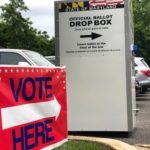
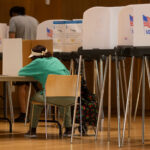
Early voting in Maryland’s delayed primary election ends tomorrow, meaning anyone who hasn’t voted early in-person or by mail will have to head to the polls on Tuesday, July 19.
However, thanks to a wrinkle in what’s become a fairly confusing and beleaguered election cycle, we might not know results for days.
Per Maryland law, the State Board of Elections is not allowed to begin counting mail-in or absentee ballots until the Thursday after the election, July 21. It’s the only law of its kind in the U.S. – a remnant of pre-pandemic times when mail-in ballots made up a much smaller percentage of the total pool. With voters now turning increasingly to mail-in voting (in 2020, more than 1 million Marylanders requested a mail-in ballot) the General Assembly passed a bill in the latest legislative session that would have allowed election workers to begin processing mail-in ballots up to eight days before the start of early voting, and counting (but not releasing) the votes before the polls closed on Election Day. But outgoing Republican Gov. Larry Hogan vetoed the bill in late May, less than two months out from Primary Day, citing election security and concerns about opportunities for fraud.
So on election night next week, it’s likely we won’t know the winners – at least of close races.
According to the latest numbers from the State Board of Elections, nearly half a million voters statewide have requested a mail-in ballot. Montgomery County has received 112,000 requests – about about 16% of all registered county voters. In Prince George’s County, around 12% of the county’s 508,978 registered voters have requested a mail-in ballot.
Turnout for primaries in an non-presidential election year always drops off a bit, so it’s not all too surprising that early voting thus far has been a bit quiet in the region. As of July 12, 12,880 people had turned out for early voting in Montgomery County, and Prince George’s County has seen 15,927 early voters. But these numbers could suggest that come Tuesday, election officials may have a sizable number of mail-in ballots left to count at the end of the night, delaying the results in especially close races. This could play out in Montgomery County, where incumbent county executive Marc Elrich is hoping to hold onto his seat, again facing a challenge from wealthy business executive David Blair; in 2018, Elrich beat Blair by only 80 votes, a result that came after two weeks of counting mail-in and provisional ballots.
A potential delay in results opens the door to questions about “election integrity” – a favored talking point of GOP candidates and officials since the 2020 election, including Trump-backed gubernatorial candidate Dan Cox.
In addition to a delay in counting the ballots, both Montgomery and Prince George’s counties have run into some issues with the ballots themselves. Back in June, before early voting started, Prince George’s County sent about 10,000 of the wrong sample ballots out, and in Montgomery County, nearly 800 residents received two ballots for the upcoming primary election – a printing error.
Most recently, in Montgomery County, residents who voted early told election officials that in races with more than seven candidates, the way the electronic ballot splits up the list was potentially confusing, and could be a detriment to some candidates. According to Bethesda Beat, the Montgomery County Board of Elections vowed to put signs around polling places with instructions for electronic ballots and to share information on social media – but said it would be too late to change the software on the machines.