Héctor Alejandro Arzate
When the Taliban seized control of Kabul last August, Asadullah Sahel was forced to flee Afghanistan with his wife and six children. He says his prior work on a United States military base put him and his family at risk.
“Our life was in danger,” says Sahel, who assisted U.S. Marines during his 14 years as a computer and database operator for the Afghan Ministry of Defense. “We left the country.”
Like thousands of others, Sahel and his family were eventually brought into the U.S. They lived in Indiana for two months before making their way to the suburbs of Maryland, not far from Washington D.C.
Since then, Sahel says he’s been supporting his family with work as a part-time Pashto and Dari interpreter for a resettlement agency. He helps people like himself – many of them only just arriving – with medical appointments and other important processes. Still, Sahel says life in the U.S. hasn’t been easy on a single income.
“We need some support,” says Sahel. “I’m working by myself and serving eight people. My wife is taking care of the baby, so it’s too hard for us.”
Although Sahel initially received assistance for rent and food, the money has since run out. In addition to his work as an interpreter, Sahel now does quality assurance for a produce factory in Landover. He says it’s the only way to keep up with his bills.
Now, he’s asking his community to help buy him enough time to get on his own two feet.
“If they help a little bit more, for two or three months more rent or something like that, then we will be able to manage over here,” says Sahel.
According to Andrea Cook, who’s been volunteering with Afghans for about a year, Sahel and his family are not the only people who still need help in the region. She says many families are still arriving and that resources are stretched thin for everyone. Previously, resettlement agencies like the International Rescue Committee estimated that more than 1,000 families have been resettled in Maryland alone since August of 2021.
“Last summer, people were happy to donate money to help set up apartments to help get people on their feet,” says Cook, who teaches chemistry at George Washington University. “But it’s not happening anymore.”
In an effort to better support Afghans, Cook recently organized a benefit concert at the Calvary Lutheran Church in Silver Spring. The concert was put together with help from other volunteers after Cook put an informal call-out in a local listserv. From there, the group partnered with Homes Not Borders, a local non-profit that helps resettle refugees, asylum seekers, and people with special immigrant visas.
The funds generated from the concert and ongoing donations will be used to provide families like Sahel’s with direct cash assistance through Homes Not Borders’ “Moving Up Fund.” The organization says the fund provides individuals with $2,400 so that they can afford to spend time on professional development opportunities like trainings and mentorships. According to the executive director of Homes Not Borders, Laura Thompson Osuri, they plan to award six individuals each month until the end of the year.
While Cook says the event was held to generate funds for short-term assistance, it was also an opportunity to continue sharing the stories of people like Sahel. She says the focus on Afghans has tapered off in the past few months.
“Afghanistan isn’t in the news anymore,” says Cook. “People aren’t talking about it. People aren’t donating money.”
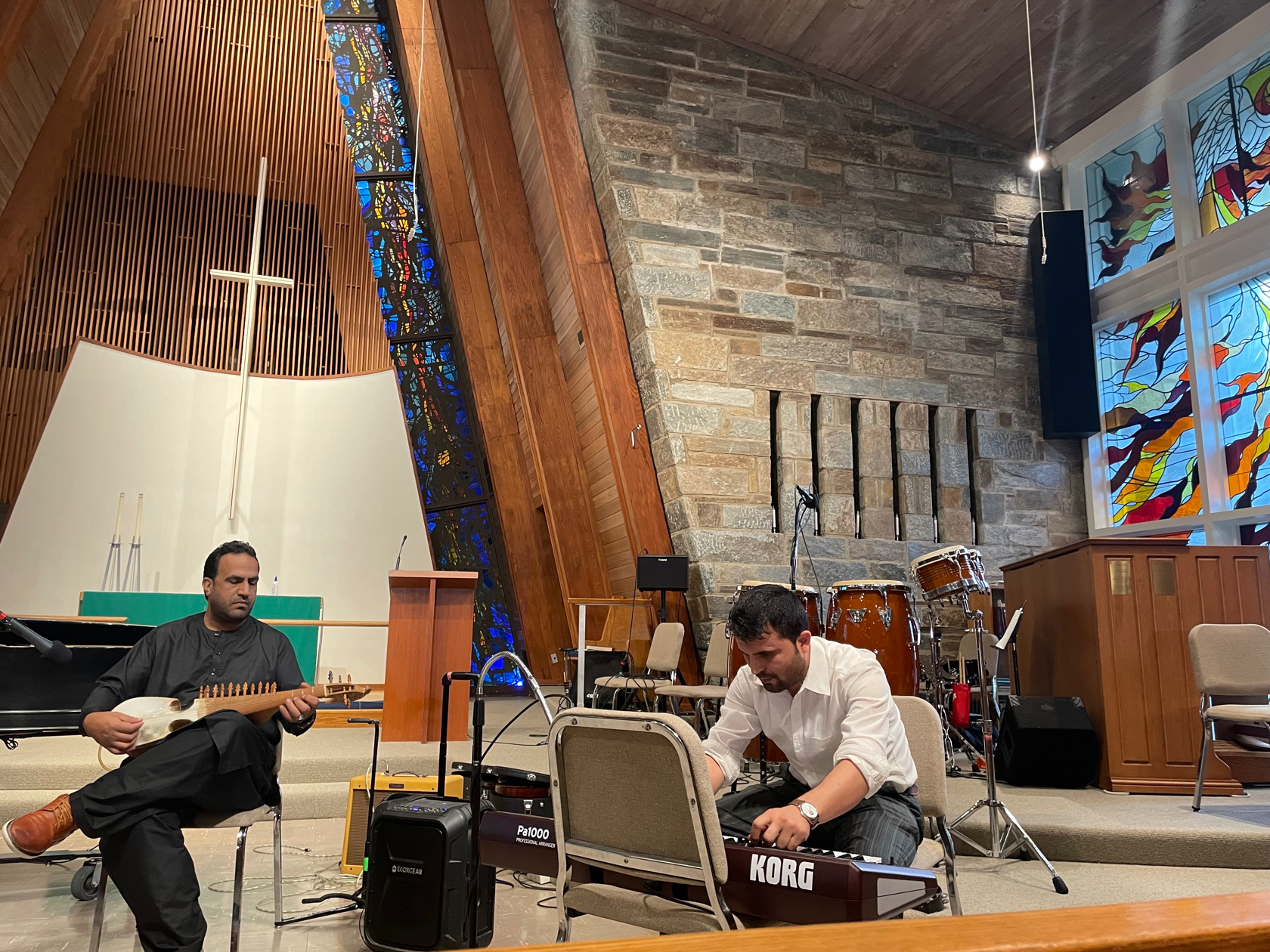
The concert also featured performances from local musicians like Melinda Baird, who says it’s crucial to continue highlighting the needs of Afghans in the year since they were forced to leave their home country.
“The consciousness goes away sometimes as other things – other world events – eclipse the things going on in Afghanistan,” says Melinda Baird, who teaches piano at the Levine School of Music in Silver Spring. “But the need is still there.”
Among those in attendance were Nicole Cassou-Mackenzie, a student at the Georgetown School of Foreign Service. She says events like the concert serve as a reminder for community members to support their new neighbors.
“It’s been really great to hear stories of Afghans that have arrived and been settled here,” says Cassou-Mackenzie. “And so [it’s] really amazing to see the community come together in this way and hope we can all continue to do so.”
Meanwhile, volunteers like Nancy Pressa are eager to jump into the ongoing efforts. Pressa says she recently became a stay-at-home mom but that she’s started supporting Afghans in her spare time. Along with putting together events like the concert, she says she’s been helping one family find job opportunities.
“They had homes set up but they might need different things,” says Pressa, a church volunteer from Silver Spring. “This is hopefully helping to bridge the gap for some of those families that are still applying or still looking for jobs.”