Margaret Barthel
Workers who run some of Metro’s paratransit service have reached a tentative agreement with a private contractor, ending a nine-day strike.
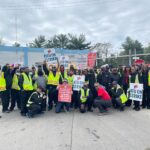
The over 200 MetroAccess workers walked off the job on August 1, after negotiations for a new three-year contract with employer Transdev stalled. The main sticking points were wages — workers said the company was offering less than what similar workers in Baltimore currently make — and the company’s original unwillingness to sign on to a three-year contract, workers say.
The employees perform a range of MetroAccess functions, working in utilities, maintenance, dispatch, and supervisory roles. They are expected to ratify the tentative agreement soon, according to Local 689 organizers.
The agreement came after workers rallied and attended a contract negotiation en masse.
“Our members stood strong and united throughout this process. They braved the heat and the company’s tactics to try and divide us,” said Amalgamated Transit Union Local 689 President Raymond Jackson, in a statement announcing the tentative agreement. “This strike shows that our members are willing to lay it all on the line for justice.”
Transdev did not immediately respond to a request for comment.
In addition to higher wages, the agreement also includes improvements in sick leave, a better retirement plan, and more holidays off — changes workers argued they particularly deserved after weathering near-constant health risks at work during the pandemic.
“We were here on the front lines during the whole pandemic. We didn’t even get hazardous pay,” said Local 689 shop steward Valerie Thomas in a press statement during the strike. “We took risks just like everyone else and not to be compensated for it? We think that it is wrong.”
Local 689 has long criticized Metro for using private contractors like Transdev at all. This month’s MetroAccess strike is far from the first standoff between the company and workers frustrated by stalled contract negotiations, conditions on the job, and lower pay in comparison to workers directly employed by Metro.
Earlier this summer, a group of MetroAccess workers employed by Transdev at the Hubbard Road facility threatened to strike. In 2019 and early 2020, Metro workers at Transdev’s Cinder Bed Road Metrobus garage went on strike for 84 days over the company’s labor practices, forgoing healthcare and pay and frustrating bus riders on many Virginia routes. Also in 2020, the company faced a near-strike from Fairfax Connector bus workers with Amalgamated Transit Union Local 1764 over poor bus maintenance and healthcare costs.
“We must still address the issue of privatization of our most vital services like paratransit,” Jackson, with Local 689, said in the statement. “WMATA needs to reconsider its relationship with private contractors. It’s not working, and transit workers and riders are being left behind.”
MetroAccess Paratransit Workers Strike, Claiming Low Wages, Bad Faith Bargaining