Héctor Alejandro Arzate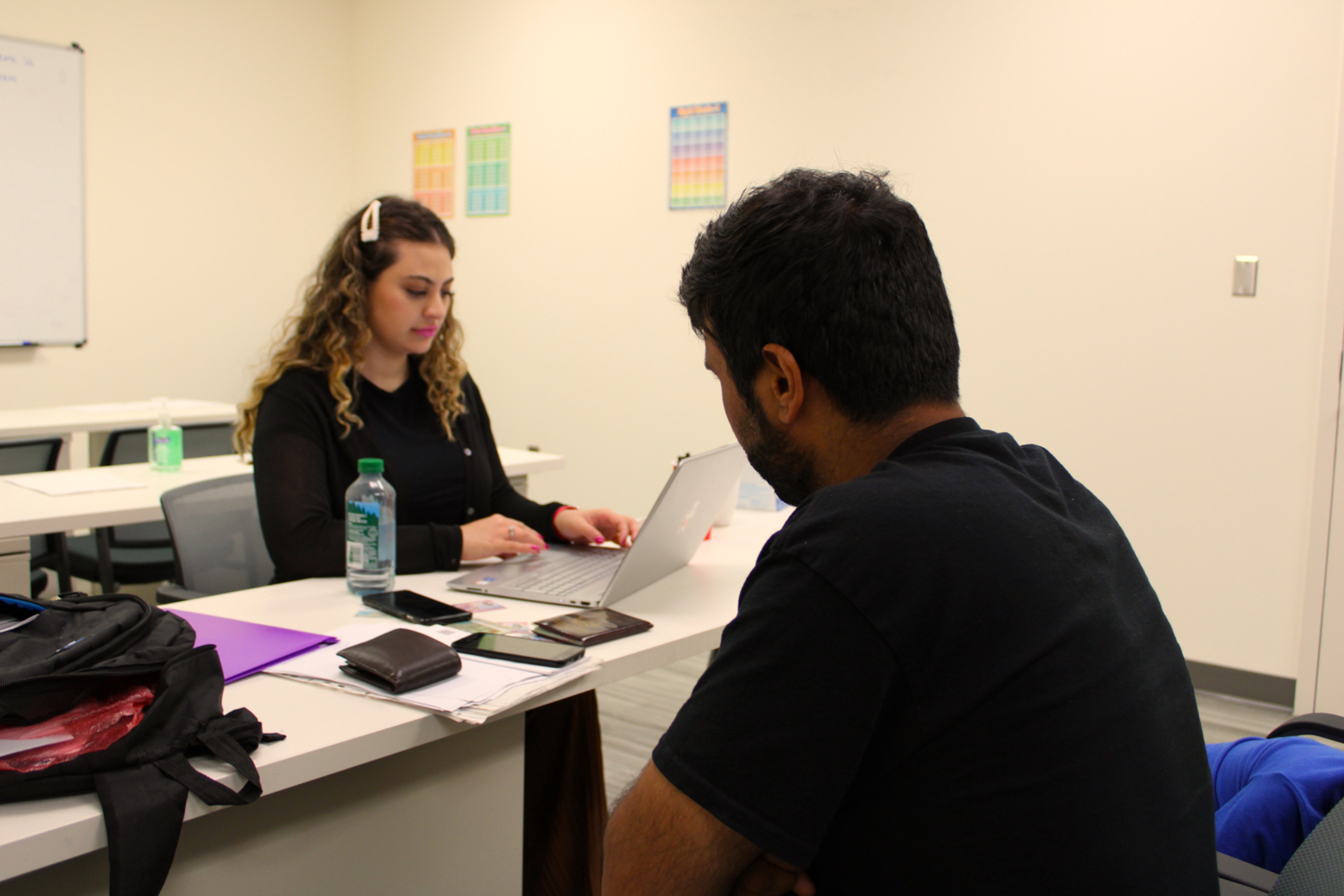
Makeze Javid is sitting at the end of a table where there’s passports, paperwork, and laptops strewn about. It’s a busy day and every seat in the room is filled with her clients – Afghans who need help filing for asylum.
“I feel like it’s been a nonstop marathon,” says Javid, a case worker at the Women for Afghan Women office in Alexandria.
Over the past year, the organization has helped more than 400 people file their applications for asylum. By her own estimate, Javid has individually helped more than 50 people file their paperwork – and it isn’t even in her job description.
“I feel like I’m always just running around and doing a million things at once,” she continues.
Since the Taliban seized control of their home country, more than 70,000 Afghans have entered the U.S. While some were allowed entry as refugees or through a “Special Immigrant Visa” for assisting the U.S. government, the majority were brought in as humanitarian parolees. It’s a term defined by the USCIS as a person who would be ineligible to enter the U.S. but is temporarily allowed in for humanitarian reasons.
Advocates say that unlike a SIV or refugee status, there’s no direct path to legal permanent residency from humanitarian parole. So there’s no guarantee that parolees will be allowed to stay in the U.S. after their status expires next year. Even if they wanted to return to Afghanistan, most couldn’t.
“I haven’t met a single person yet that has not had to uproot their life to be here,” says Mariam Kakar, the program manager for WAW’s Alexandria office. “They were trying to escape uncertainty. Trying to escape [a] very, very, violent, fanatic government.”
According to caseworker Javid, the process for asylum is neither short nor easy. Asylum seekers must complete a I-589 form that’s over 10 pages long. They need to provide a thorough personal background check that includes listing the address of each home they’ve lived in and each school they’ve attended. They also need to explain, in detail, if they fear they’ll be tortured if they get sent back to their home country.
“This asylum process is like lengthy. It takes a while, but it’s really important for them to file it,” says Javid. “That’s something that we push at our office.”
Among the clients who need assistance is a woman named Tamana. She agreed to be interviewed by DCist/WAMU under the condition that her last name, former employer, and photograph not be published because she says there are credible threats from the Taliban against her family members and former co-workers who still live in Afghanistan.
Tamana says it’s difficult to remember each detail required for the application, which Javid says is common due to the level of trauma and stress they’ve experienced.
“I still didn’t complete my application,” says Tamana. “I need to go to home and think about it and then take some time. Maybe one or two days.”
Before leaving her home country with her mother, Tamana worked for a foreign aid non-profit. She says her professional background put her at risk with the Taliban, so she had no choice but to flee. Now, she lives in Manassas and works two jobs, one at a hotel and another at a grocery store.
Although she’s anxious about the uncertainty, Tamana wants to stay in Virginia, where she feels safe.
“We don’t have an idea for our future,” says Tamana. “What’s going to happen in the future? But [with a] green card, you feel good. Better. Like [if] I have a green card, I can stay and use it.”
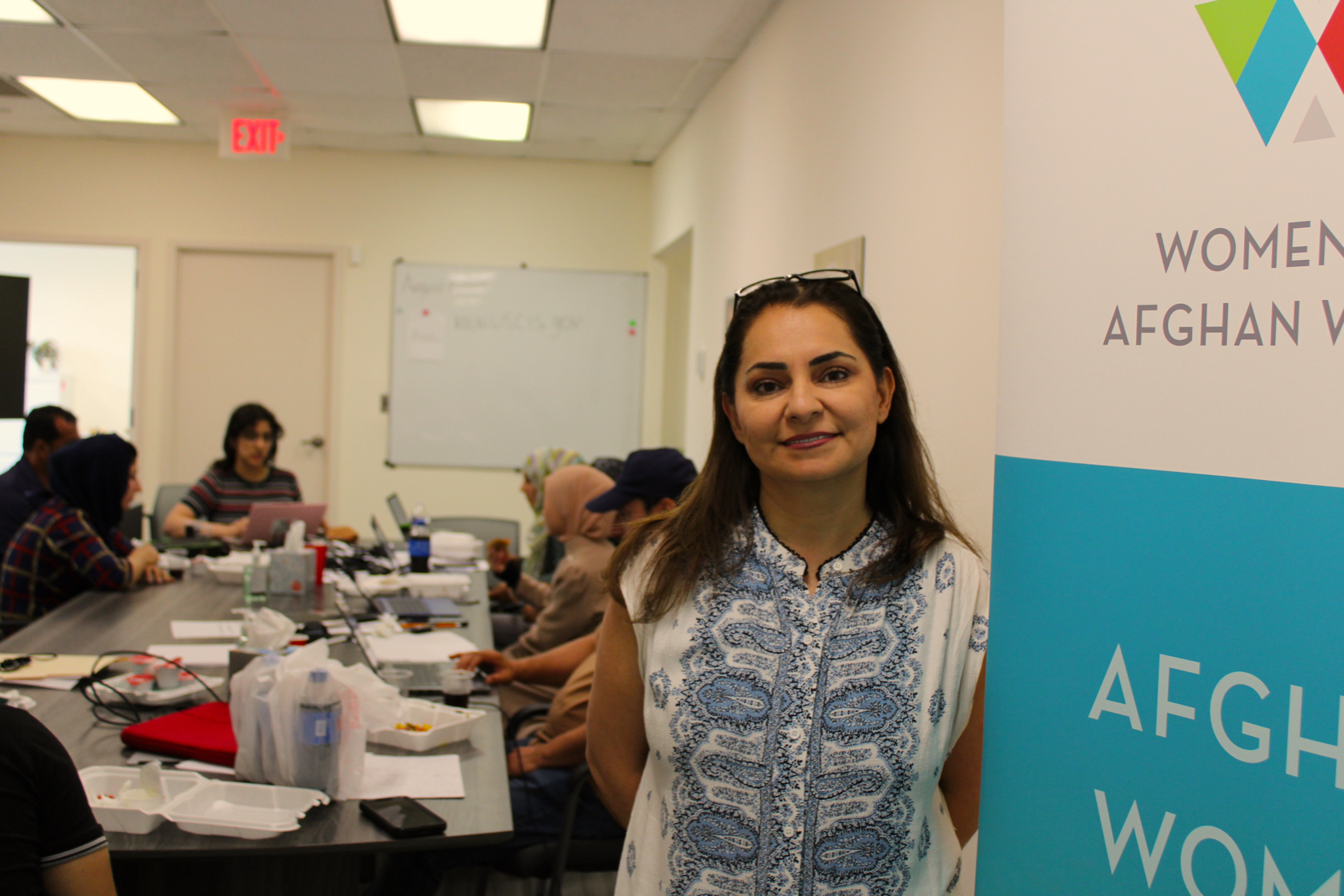
Still, Kakar says the system for asylum applications has been backlogged. Until recently, people were waiting up to four months for an interview after completing the initial filing. She says it is a real possibility that some Afghans could miss the deadline, but the organization is working quickly to relieve some of that anxiety.
“I think, mentally, it puts them at ease and then also legally. I mean, you could eventually become a citizen. That’s the end goal for everyone,” says Kakar. “You get to do it for free with other Afghans that also speak English.”
For Javid, there is also a need to pay it forward. She says there was little infrastructure to support her parents when they left Afghanistan in the 1980s. In 2001, when more groups of Afghans began to arrive, Javid and her mother sought to help them. While the system is still difficult to navigate today, Javid says she wants to help people like Tamana.
“I just had that instilled in me, as an Afghan-American, to always be helpful,” says Javid. “I do it from the heart.”
While WAW is not alone in hosting legal workshops throughout the region for asylum seekers, Kakar estimates that more than 4,000 Afghans have resettled in northern Virginia, so every bit of help counts. She says their efforts could be aided with legislative help through the Afghan Adjustment Act, which was introduced last week.
According to proponents, the legislation could streamline the pathway for thousands of Afghans to receive legal status and eventually, green cards. The Afghan Adjustment Act allows some evacuees to apply for permanent status after one or two years. It would remove the strain on the SIV and asylum process. Afghans could not lose their jobs or be deported to a third country while their application is pending.
Kakar also says the Afghan Adjustment Act would speed up the vetting process and help incoming Afghans receive their work visas much more quickly, in turn allowing them to find long-term housing using their pay stubs. For Kakar, it could provide more hope for the future of recently arrived Afghans like Tamana.
“I think it’s just going to help with the uncertainty for everybody,” says Kakar. “A year ago, you didn’t see many smiles on these faces.”
Despite the hardships she faced, Tamana says she enjoys her new life in Virginia and hopes she and her mother can stay. If she does, she plans to support other Afghans.
“I have a dream here to start my studies again,” says Tamana. “So I do a job like [in] resettlement agencies. I just want to work with them and help the people who are coming from Afghanistan in the future.”
While she works on her application, Tamana says she’s happy to partake in the every-day experiences of her new home. She recently bought a car – a freedom she says she couldn’t afford under the rule of the Taliban.
“Actually, I love driving,” says Tamana. “In the future, I want to visit New York and also California. But not fly, I just want to drive.”