Héctor Alejandro Arzate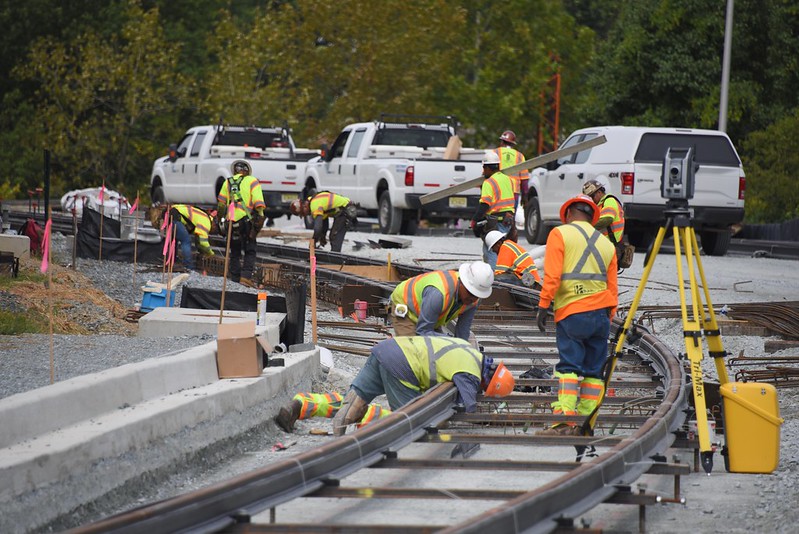
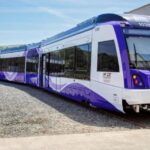
After months of negotiations over wages and benefits, a major labor union has reached an agreement with Maryland Transit Solutions, the contractor hired to complete construction on the upcoming Purple Line.
The agreement comes after years of delays over project costs that saw a previous contractor leave, claiming the state refused to pay for related expenses. Construction of the Purple Line has largely stalled since then, leading transit officials to announce in January 2020 that the light rail project would not be completed until the fall of 2026 and that it would cost billions more than planned.
“Other projects in the area are suffering major workmanship issues without a PLA (project labor agreement) , and it speaks volumes that MTS and Purple Line Transit Partners are taking steps to prevent those issues on the Purple Line,” said Dennis L. Martire, the vice president and regional manager for the union, Laborers’ International Union of North America, in a statement. “They recognize that a PLA is a good option for everyone involved.”
Under the new labor agreement, workers who lost their jobs due to construction stoppage will have a chance to return with higher wages and a benefits package. It will also commit the union and the contractor to prioritizing local hiring and training for residents in proximity to the project. Meanwhile, the agreement requires that the union meet staffing needs for the project in an effort to prevent labor shortages.
“We look forward to working with MTS and Purple Line Transit Partners to deliver this critical project in a safe and timely manner,” said Martire. “MTS and Purple Line Transit Partners are doing things the right way, and as a result, the entire community will benefit. We are committed to helping local workers and local residents who are depending on the project in more ways than one.”
According to union officials, the project labor agreement was signed during the week of August 15 and construction of the Purple Line has resumed. Once completed, the new light rail project will have 21 stations between a 16.2 mile east-west span that will connect Montgomery and Prince George’s County, the two most populous in Maryland.