 Aja Drain

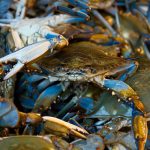
If you’re a Marylander, you know the smell of summer: the wafting aroma of Old-Bay seasoned crab with melted butter. Maybe you’re from St. Mary’s County, and so that region’s notorious stuffed ham is what’s taking over your Thanksgiving dinner table.
But who gets to define the foods that make Maryland, well, Maryland? That’s one of the many questions food historian Joyce White is trying to answer with the Great Maryland Recipe Hunt, a project launching this month to collect Maryland recipes from any point in history — including the present day — for a new cookbook.
A state recipe collection is not an unprecedented concept in Maryland. In 1963, “wealthy white women…received funds from some commission and produced what’s been known as Maryland’s Way, the Hammond Harwood House Cookbook,” White says. The book is an ode to Maryland cuisine with historical recipes using crabs, terrapins, scallops, shrimp oysters, and so much more.
But that was 60 years ago, and many of the recipes are missing context or proper attribution for where those recipes originated, according to White.
“So just a series of recipes submitted by white women from throughout the state…There’s no look at the foundational inspirations for it, which are heavily British but also heavily African American, because most of the cooks in Maryland, for the wealthier households anyway, were enslaved women,” White says.
White felt it was worth interrogating further to fairly represent enslaved cooks who contributed to Maryland’s food history — and to document more of their stories.
“It’s like, ‘this is my recipe.’ And it’s submitted by a woman who probably never stepped into her kitchen in her life,” White says. “Or, ‘this is my recipe for my family,’ but it may go back 100, 200 years. And really, whose recipe was it, right? Was it your great great grandparents’ or was it the cook who served your great-great-grandparents who actually created that recipe into what you know it is today?”
The earlier book also doesn’t reflect how diverse the state has become with immigrant communities from all over the world, which is something White hopes to include in a new version. Think pupusas from the state’s ample Salvadoran community, or traditional Lunar New Year dishes made by Montgomery County’s Chinese population, for example.
“I really hope to see Hispanic recipes,” White says, noting that over the years, those dishes have been the most elusive for her to collect. “What recipes can they make here that remind them of their homelands?… How have they adapted some of those recipes to the local produce?”
She also mentioned Greek food from Baltimore’s Greektown, recipes from Lithuanian and African immigrants, and even the Amish market in Annapolis as parts of Maryland foods she’s excited to explore. Maryland also has many regional specialties, from that aforementioned Southern Maryland stuffed ham to the Baltimore tradition of serving sauerkraut with turkey on Thanksgiving.
In western Maryland, there’s “more the Pennsylvania German experience,” White points out. So bakeries out that way will sell fastnachts, a type of fried donut, for Mardi Gras instead of king cake. “In Hagerstown, their version of barbecue is called steamers. It’s almost like a sloppy Joe,” White describes.
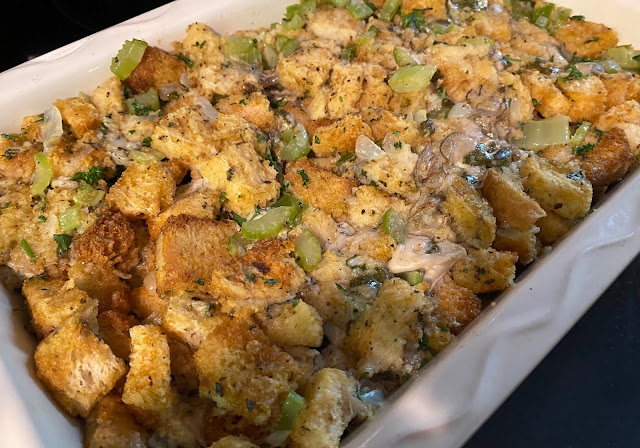
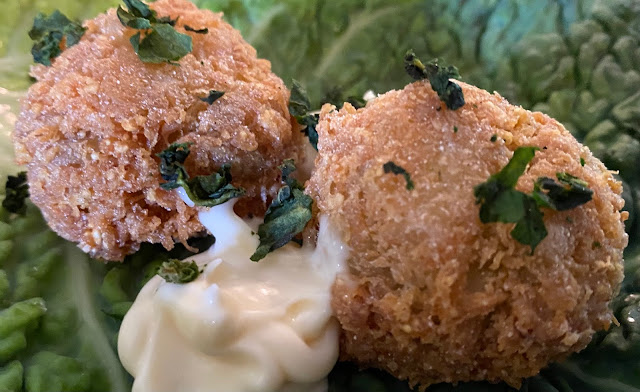
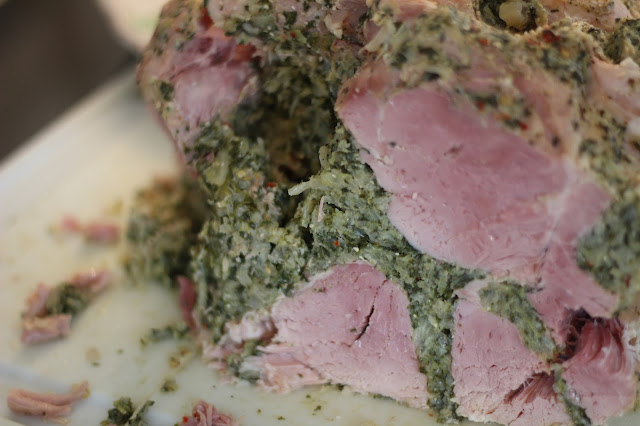
White hopes to include all that and much more in the new cookbook she will write with the recipes submitted to the Great Maryland Recipe Hunt. The book, a joint project from White, the Hammond-Harwood House (where she serves as vice president of the board), and the Maryland State Archives, will commemorate the 60th anniversary of Maryland’s Way.
“We are seeking donations of people’s private, personal, intellectual property for recipes — and not even just recipes. In some cases, the recipe is less important than the story about how that food is used,” White says. She wants to document what food means for each person, their family, friends, and why they make them.
White is hoping to reach people via the recipe hunt website and partnerships with local museums such as Riversdale House and the Banneker-Douglass Museum in Annapolis, which are helping spread the word.
For those who are interested in sharing their stories and recipes, White suggests that the best place to start looking is on their family members’ cookbook shelves.
“Sometimes, people will store other recipes in printed cookbooks. They’ll put, you know, clippings from newspapers, or they’ll have handwritten notes,” White says. She also mentioned looking for old composition books since older generations may have kept a journal of their recipes, also known as a ”commonplace book.” If the recipes weren’t written down, the best thing to do, of course, is to ask — but also watch.
“Watch grandma … or great aunt make her famous crab cakes or cookies or whatever it is, and just watch what she’s doing and try to write down,” she says, encouraging people to even record video. Some people cook like it’s an instinct, but to get to that point, they had to learn from their family members, she adds.
White and her partners are embarking on the project over the next year to collect and compile recipes. They’re on a shoestring budget, but hope to find businesses who may want to help sponsor the endeavor. The hunt officially launched Sept. 1, and contributors can submit their recipes here.