Black Ski, Inc. has been etching out a supportive space in the powder for jet-setting African Americans in the D.C. area since 1972.
Based in the D.C. area, the organization was one of the earliest Black ski clubs in the U.S., and its members have hit the slopes locally, across the United States, and all over the world thanks to the ski club’s various excursions. Black Ski, Inc. still counts more than 500 members locally.
They’ve skied black diamonds in the Rocky Mountains and vacationed at luxe resorts in Aspen. They’ve carved lines through the Atlas Mountains in Morocco and the French Alps that comprise Val Thorens ski resort. They’ve thrown après ski parties that go well into the night in Switzerland, Japan, New Zealand and other far-flung destinations. (Club lore has it that Cher even partied with the group at one of those post-slope happy hours, though it was so long ago no one remembers it clearly.)
Often over the years, the group’s members were aware they’d probably be the only Black people on the mountain, but that’s never stopped them.
“Where there’s snow, we’ll go,” says Ken Ford, the club’s board chairman and an original member.
The club celebrates its 50th anniversary this weekend with a raft of activities at the College Park Marriott Hotel and Conference Center. There’s a happy hour there Friday and a black-tie gala with dinner, live music and a silent auction Saturday. They’ve set aside part of the gala to honor the two founding members — Lenny Milner and Furman Marshall — who are still alive. Sunday brunch rounds out the weekend.
Ford, of Upper Marlboro, likes to say Black Ski isn’t an organization, but an institution.
Black Ski, Inc.’s early days
Six men — Milner, Marshall, Mickey Diggs, Ray Mott, Donny Claytor and Jim Thorne — founded Black Ski to expose Black people in the D.C.-area of like minds and interests to the sport. They launched the club from Mott’s cozy Northeast D.C. townhouse and one of its first meetings attracted roughly 20 people. From then on, members promoted the club and began organizing regular ski trips, defying the stereotype that Black people can’t function in cold weather.
“As you well know, most people think of us as not being desirous of being in cold weather,” Ford says. “Well, we chose to disprove that.”

All these years later, skiing remains a predominately white sport. The National Ski Areas Association reports that in 2021, 87.5 percent of the people they surveyed at participating ski areas identified as white. Just 1.5 percent identified as Black or African American.
So when Black Ski members show up to a resort in droves, they sometimes deal with racism from white folks. After entering a mountain lodge or at any other point of a trip, for example, many Black Ski members have seen white skiers stare at them.
“Sometimes they would be brave enough to talk to me and ask me questions that were really centered on, ‘How can you afford to do this,’ but they didn’t say it directly,” says Christy Wright, of Springdale, and a member since 1991. “They would say, ‘How often do you ski,’ and they also are curious about my ability. Most of us are very, very good skiers and they will ask questions before they actually see me ski, like ‘Can you ski fast?’ I just answer them and move on, and ski on, actually.”
Black Ski was one of the founding clubs of the National Brotherhood of Skiers, a 49-year-old nonprofit comprised of 55 predominantly Black U.S. ski clubs. It holds weeklong, annual ski summits that attract thousands of people from the member clubs and beyond to American ski resorts. These summits act as fundraisers to help NBS find and train athletes of color to compete in the winter Olympics and other international competitions.
NBS held its first summit in 1973 in Aspen, but the state didn’t exactly welcome them with open arms.
“(NBS Founder Ben) Finley tells a story, that I can’t really attest to, but he says that the State of Colorado called out the National Guard when they found out a bunch of us would be in Aspen,” NBS Cofounder Arthur Clay told ABC7 Denver news in February.
Thankfully, those days are over in Aspen.
“We’ve come a long way to the point where they now do solicit our business for the annual meeting,” Ford says of the big Western ski resorts. “So from having to deal with the National Guard, to the bankers now wanting our money to do this, we’ve come a long way.”
Time on the slopes leads to lifelong bonds
The Black Ski members enjoy the sport, regardless of these negative experiences.
Wright talks about the look of awe, wonder and delight she’s seen from white skiers after the club has ended its ski day with a happy hour gathering in a ski resort lodge. One time during an NBS ski summit in Sun Valley, Idaho nearly a decade ago, one of the local white business owners approached a small group of club members with a big smile and asked, “What time does happy hour start today?” He mentioned to them that his wife had hung out with the group the day before, and he wanted to party with them too.
“We smiled and gave him the details,” Wright says. “We don’t just replenish our fluids with spirits. We bring a spirit to the function by turning it into a party.”
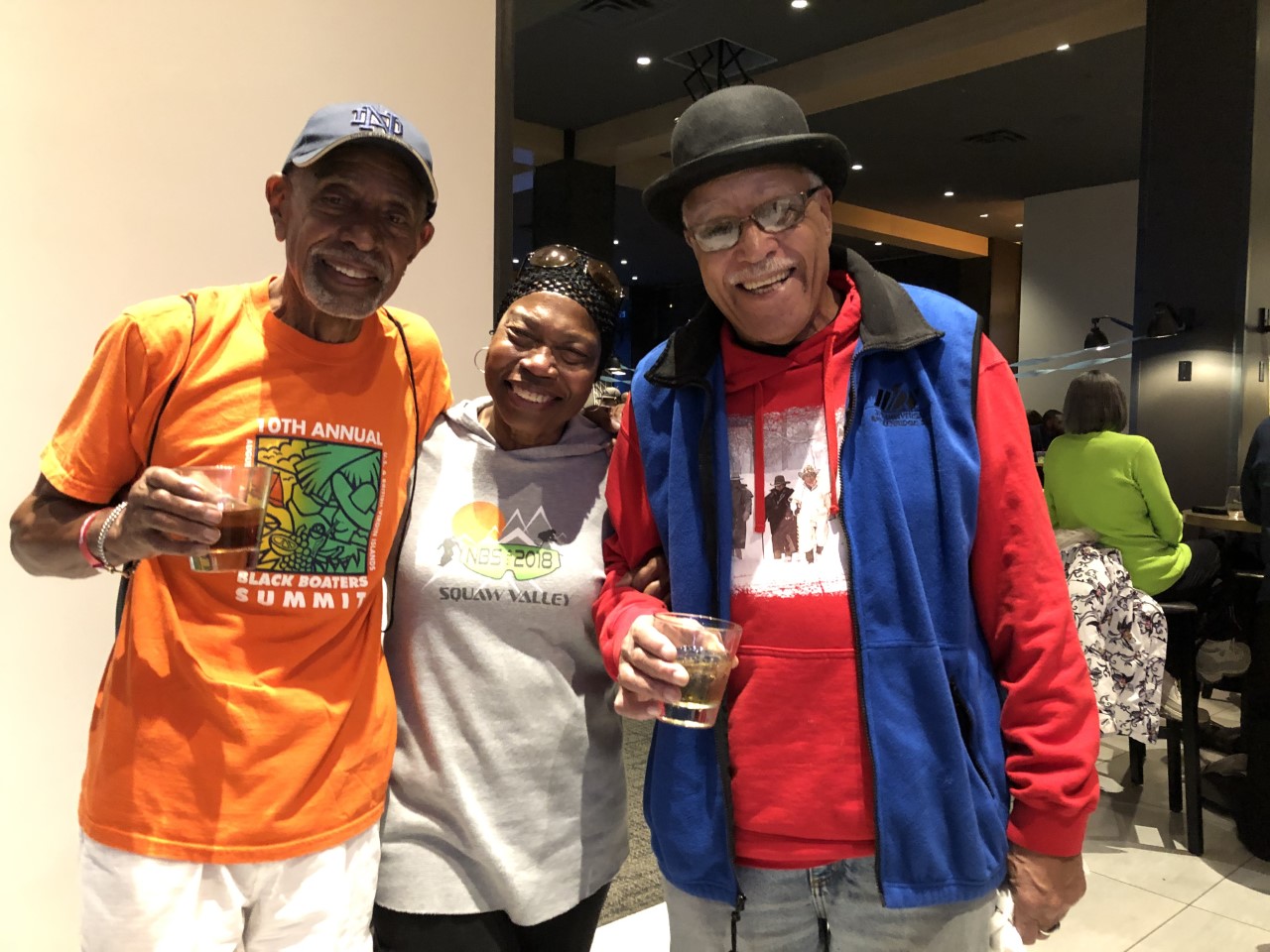
They’ve formed valuable friendships along the way. Ford says he met his wife of 39 years through the club. Three generations of the Henderson family belong to the club. There’s Silver Spring resident Sandy Henderson, the club’s president, her son, Gregory Henderson, and his son, Malik Henderson, both of the District.
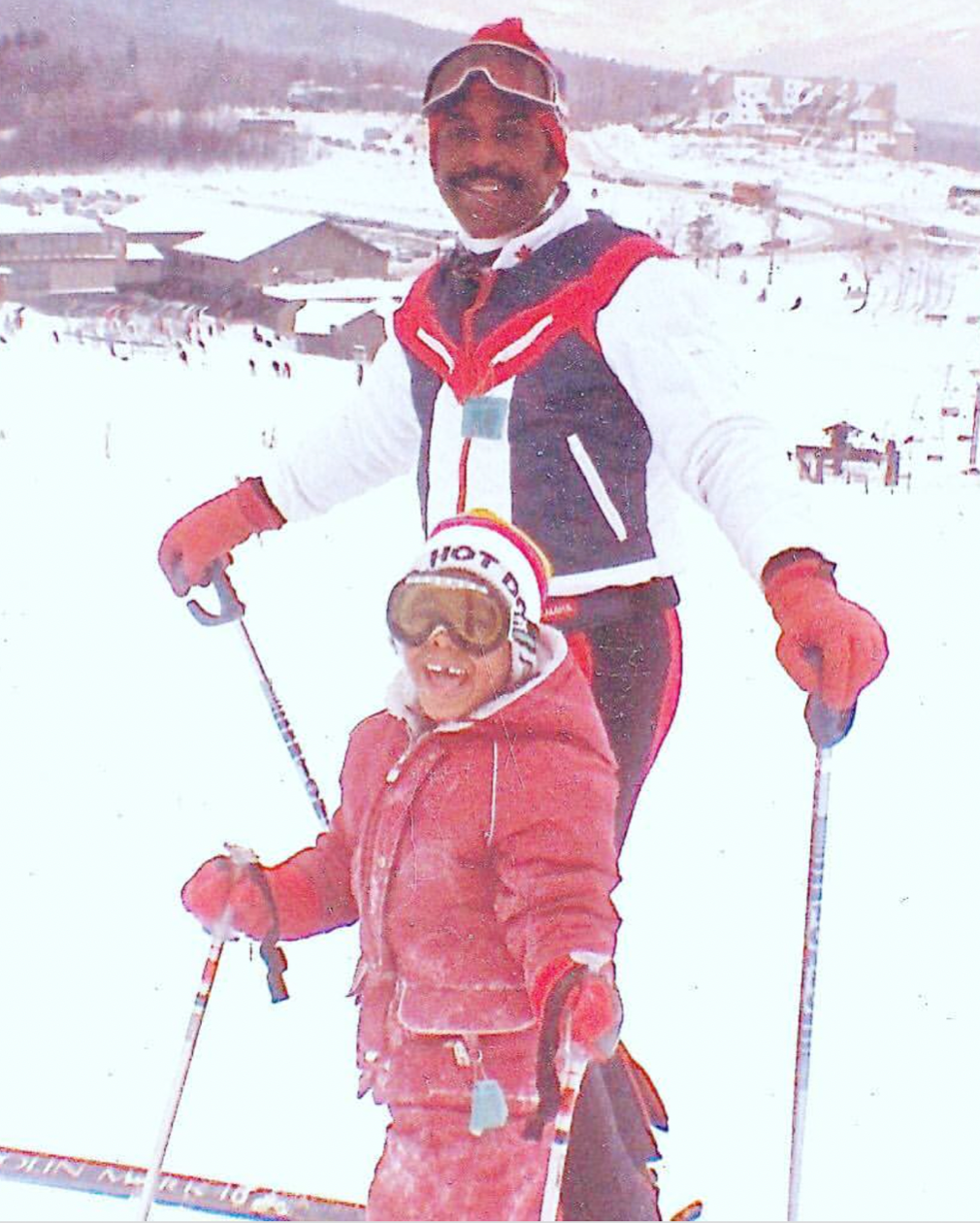
Malik Henderson, 13, says the club’s road trips to local ski resorts not only strengthen family bonds, especially with his father, but knowing how to ski also helps him fit in with his mostly white classmates at Northern Virginia’s private Flint Hill School. Through the club, he’s making memories of his own.
The teenager recounted the time he was six or seven years old, skiing at Seven Springs Mountain Resort in Pennsylvania, and he nearly veered off onto a more difficult run that could have gotten him hurt.
He recalls his grandfather, Chet Henderson, rushing over and gently guiding him out of harm’s way.
“As I remember, I was almost floating off into the woods,” Malik Henderson says, adding that he was “happy and grateful” his grandfather rescued him.
Club faces impacts of COVID
The club has faced several challenges over these 50 years, including a big one that’s altered much of the way we all socialize: the pandemic.
In March 2020 at the beginning of the COVID-19 pandemic, Sandy Henderson and her significant other contracted the virus several days after returning from NBS’s Sun Valley, Idaho summit. The Wall Street Journal reported that several NBS members at the summit also contracted COVID and that the virus killed two of them — Henderson says she knows of five NBS members who died.
She also recalls the stigma of catching the coronavirus in those early days.
“It wasn’t necessarily something that you wanted to share with a lot of people, because you were almost looked at, as like lepers,” she says of her COVID diagnosis. “I mean, people would bring juice to the door. There was such a panic and such a fear. But as we do, we’ve overcome it.”
The pandemic forced the club to cancel its annual crab feast, one of its largest fundraisers, for three consecutive years. They put all other warm-weather activities, such as picnics, happy hours and other get togethers, on ice. The club canceled all but one of its trips in 2020 and did not plan any for 2021. Black Ski no longer holds in-person meetings, and probably never will.
“We fortunately discovered Zoom, and we’ve been Zooming it ever since,” Ford says.
Trips returned in 2022, and members look forward to celebrating the national organization’s 50th anniversary next year in Vail.
Beyond COVID’s impacts, the club has struggled to attract younger members over the years, because would-be members have more individual access to ski resorts now than when Black Ski first emerged in the early 1970s, Wright says. They have long opened their trips to members from other clubs to continue snagging group deals on ski trips — anyone who wants to travel with the club must sign up for a membership. They’re also increasingly targeting skiers of other races.
“A lot of people assume that we’re just Black-centered on everything, but we’re not, and we’d like to dispel that, even though it’s in the name,” Ford says. “We’re a multi-racial, multi-cultural group of folks that just like to enjoy life.”
At its peak, the club had 1,000 members. Today, it has about half that, in part because members have aged and dependable trip leaders have died. The club, which welcomes members of all ages and skiing abilities, used to offer a weeklong Learn-to-Ski package in Canada with ski pros who showed novices how to ski on new or used gear the club secured through ski swaps. They used the skills they learned on that trip the rest of the ski season. But due to a lack of interest, it’s been 15 years since the club hosted that weeklong trip, an event that helped drive membership.
Spreading the word to the next generation
Meanwhile, members are working to aggressively recruit families and younger members, while ramping up their youth programming.
In the past, the club partnered with Plummer Elementary School in Southeast D.C. to take 15 kids skiing who had never hit the slopes and didn’t have the financial means to do so. Skiing is a very expensive sport, with fees to rent skis and related gear and purchase ski lift tickets.
Members brought them to Liberty Mountain Ski Resort in Pennsylvania for four weekends and covered their ski equipment and lessons. By the end of the trip, the kids were flying down the mountain without a second thought, Sandy Henderson says.
“Those are the rewarding times that we can afford our youth as we continue our 50th legacy to expose the young Black children to the wonderful world of skiing,” Sandy Henderson says.
Her son, Gregory Henderson, and grandson Malik, represent an important part of the club’s future.
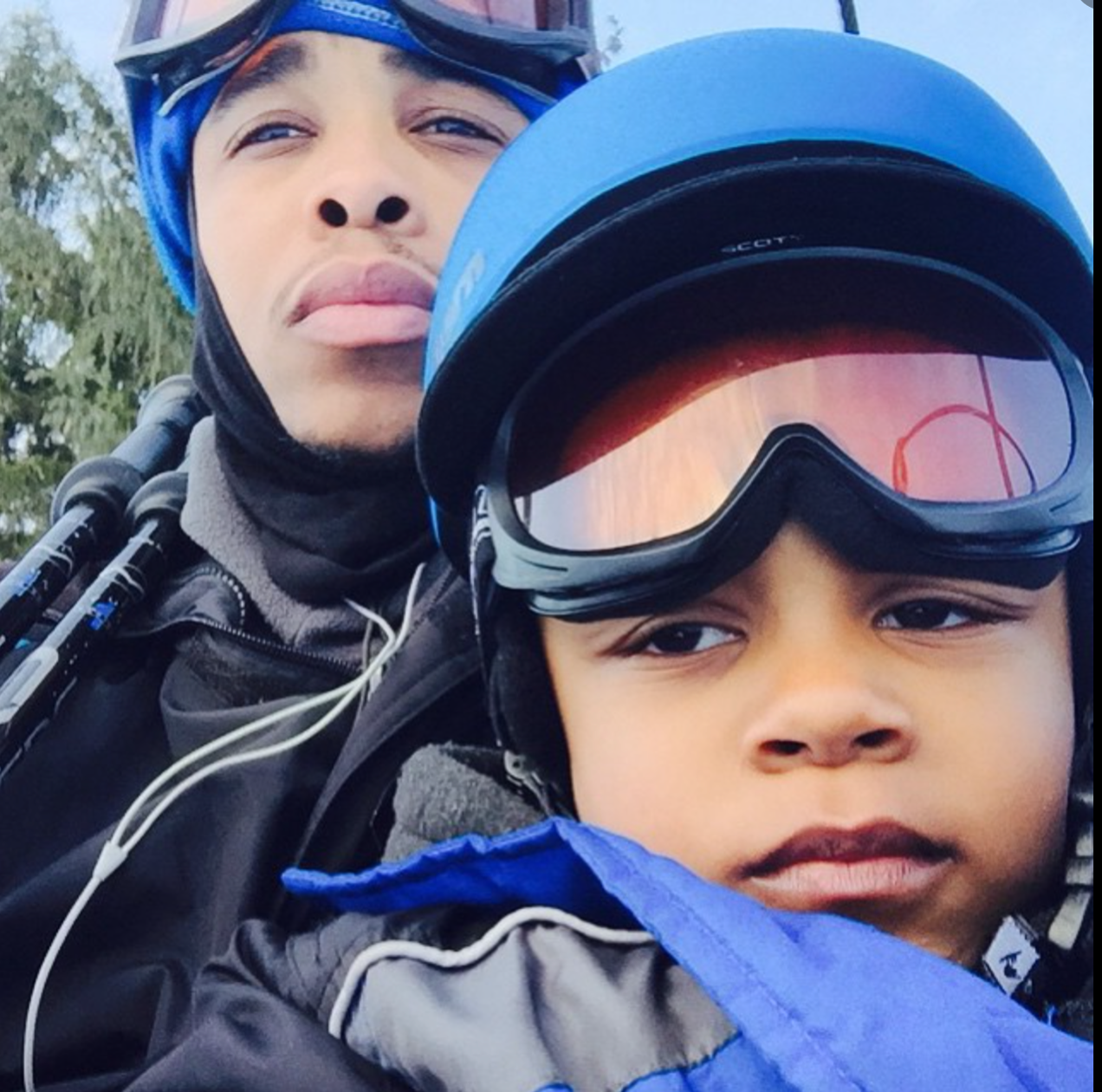
Gregory Henderson took Malik, Malik’s cousins and kids from his basketball team, DMV Hoopstarz, to Liberty Mountain Ski Resort in Pennsylvania in 2019 to further their interest in skiing. The goal is to attract Black children to the club who couldn’t afford to ski otherwise. This, he says, will give them the same confidence and pride he began to feel when his parents put him on skis at the age of 4.
“In a lot of ways, it gave me confidence because as a youth, it was something that a lot of kids from my community didn’t have the opportunity to do,” he says. “And as a little, small, skinny kid growing up and struggling to compete with some of the bigger kids in some of the sports that we played in my neighborhood, I always knew that I could ski, while other kids couldn’t.”