Amanda Michelle Gomez
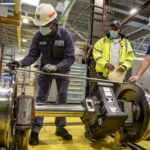
The Metro wheel problems that caused a train to derail outside Arlington Cemetery nearly a year ago and prompted WMATA to sideline its newest 7000-series trains may also have been the result of issues with the tracks themselves. And the problem appears to have affected earlier models of train cars. The Washington Metrorail Safety Commission — an oversight group independent of WMATA — delivered the revelation Tuesday based on a 2015 report.
The report was commissioned by WMATA after repeated wheel problems dating back to before 2015. It called for changes to address both wheel and track issues. But the commission’s chief executive officer David Mayer said WMATA failed to make all the appropriate adjustments. Mayer also said the report now impacts the scope of the federal investigation into the wheel problems.
“This report was prepared prior to the existence of the WMSC and we learned of it through the investigation,” said Mayer at a meeting. “This working group should fully consider and address these prior engineering conclusions and recommendations.”
CEO Mayer: Metrorail’s engineering report, completed by an engineering consulting firm in 2015, identified safety issues related to both wheel/axle assembly specifications and implementation, and to the force placed on the wheel flanges by Metrorail tracks.
— Washington Metrorail Safety Commission (@MetrorailSafety) September 20, 2022
The report appears to broaden the scope of the federal investigation and may also raise concerns about the overall safety of Metro’s rail system. WMATA sought to mitigate concerns on Twitter after the commission revealed findings from its 2015 report: “Our entire fleet is regularly inspected to deem our railcars safe for passenger service. We continue to work with the WMSC as part of the [National Transportation Safety Board] investigation on the 2021 Blue Line derailment.”
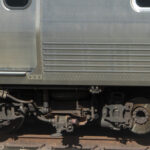
The National Transportation Safety Board found that WMATA knew of 50 instances since 2017 where wheels moved out of compliance, but the tri-jurisdictional government agency treated the problem as simply a warranty issue. The problems have been linked to the wheelsets on dozens of 7000-series trains, which amount to roughly half of Metro’s fleet. This is why Metro removed 7000-series trains, causing extended delays and service interruptions. Only recently has Metro been given the greenlight to run more of these trains each day.
According to the Washington Post, only one other car outside the 7000-series have experienced wheel problems, but Metro officials said the defects are unrelated.
At a Thursday meeting of the Metro board, WMATA Assistant Chief Safety Officer Jayme Johnson insisted that the company was not attempting to hide the contents of the 2015 report, including the information about the problems with tracks.
“I want to be clear that this report was not new information that WMATA was hiding, as it was part of our provision of tens of thousands of pages of documents for investigatory analysis,” Johnson said at the meeting. “All parties have had the report since November 2021.” He added that since WMATA turned over the report to the NTSB last fall, the transit agency has not been ordered to make any changes to wheelsets or track configuration — “that is because the root cause remains unknown.”
Washington Metrorail Safety Commission spokesman Max Smith told the Post the findings in the report do not pose a new threat to riders.
This post has been updated with comments from WMATA Assistant Chief Safety Officer Jayme Johnson from Thursday’s Metro board meeting.