 Jordan Pascale
Metro will face a tough choice in the coming months: have longer waits between trains or delay opening the Silver Line.
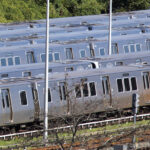
That’s because Metro has not been able to get enough 7000-series trains back into service as quickly as they hoped. WMATA General Manager Randy Clarke called it a “simple math equation.” The Metro system has lost many of its 7000-series trains – which make up 60 percent of Metro’s fleet – to a wheel issue. With the Silver Line opening up, the reduced stable of trains will need to serve 11.5 more miles of track. Fewer trains + more track to cover = less service.
But he said Metro has no intention of delaying the opening of the long-awaited Silver Line.
“The region’s been looking forward to that line for a generation,” he said on Thursday.
Metro is also crunching numbers on just how much less service would be provided. It hasn’t said if the cuts would be on specific lines, or across the entire system. Trains currently run every 8 minutes on the Green Line, every 10 mins on the Red Line, and every 15 mins on the Orange, Blue, and Silver lines.
The slower service looks like it will kick in late in October or early November. On Oct. 24, six stations in Virginia re-open after Metro finishes work to tie in the new Potomac Yard station. That adds another 12 miles of track between DCA, Huntington, and Franconia-Springfield that Metro’s trains will have to serve. Plus, Metro is running Blue Line trains more often to make up for the Yellow Line being closed for tunnel and bridge work through May.
Meanwhile, Metro’s board has not formally set an opening date for the Silver Line extension to Dulles International Airport and beyond to Ashburn, but they are getting closer. Metro will run simulated service on the line from Oct. 2-15. It is also seeking safety certification from its oversight body, the Washington Metrorail Safety Commission by the end of October.
Metro had hoped by now it would have all the 7000-series trains back in service. The trains were pulled by the Safety Commission after a derailment last fall. It has not run the full fleet of trains since.
Workers have authorization to manually inspect about 20 trains every week, but they don’t have enough personnel to manually inspect all the trains at that frequency.
To fill that inspection gap, Metro hopes to turn to a series of wayside stations to automatically inspect train wheels as they roll through the stations. That has not come as fast as expected. The transit agency originally targeted summer for the launch.
The inspection stations were a key cog of Metro’s return to service plans, but Metro has not asked the Safety Commission to authorize their use just yet.
“We really don’t want to rely on that system,” Clarke said. “And I’ve given the team direction, I want to be really cautious on that system, and especially use different environmental scenarios to validate that system. What it looks like in August, and what it looks like in January might be different.
“So we have to get that right. And then we’ll look at that as supplemental to the measurement program.”
The in-track monitoring systems have been used in freight operations, but not subways.