Jacob Fenston
D.C. officials have been struggling to get lead out of the city’s drinking water since at least 2004, when one of the nation’s worst-ever crises of lead-contaminated water was uncovered here. Now, the city may not be able to meet its goal to replace all lead water service lines by 2030, without major changes to the pipe replacement program, according to a new report commissioned by the D.C. Council.
In order to meet the deadline, D.C. lawmakers need to pass legislation requiring property owners to replace lead service lines, and make sure all such replacements are free to residents. Currently the program is voluntary, and many homeowners must pay for at least part of the pipe replacement, costing thousands of dollars.
Those changes are “fundamental starting points for the entire program,” said Elin Betanzo with the consultancy Safe Water Engineering, which authored the report. A legislative mandate, along with funding for all replacements would “remove barriers to participation, so we’re not having to convince residents to participate in the program or come up with their own funding,” Betanzo said, during a D.C. Council roundtable this week.
Under DC Water’s current plan, some 39% of lead service line replacements would have to be initiated by residents, not the utility.
“That’s a really heavy lift,” said Betanzo.
DC Water will need to replace an estimated 42,000 service lines, according to the report — that’s 14,000 more than the water utility was planning to replace under its Lead Free DC plan. Additionally, the report recommends providing water filters to all residents who currently have suspected or confirmed lead service lines, “to make sure that everybody has an immediate source of safe drinking water starting as soon as possible,” Betanzo said.
Experts and residents urged lawmakers to act quickly.
“What are you going to say to the next family whose child is diagnosed with elevated blood lead levels?” asked Neil Boyer, with the Environmental and Climate Justice Committee of the NAACP’s D.C. branch. “Are you going to say sorry? Are you going to give them your thoughts and prayers?”
DC Water, which committed in 2018 to the 2030 deadline to remove all lead service lines, also supports a legislative mandate to replace lead pipes. But, said DC Water General Manager David Gadis, “This cannot be an unfunded directive.”
Residents concerned about the possibility of lead in their drinking water can consult DC Water’s map of lead service lines, though there are thousands of properties with missing or inaccurate records. Finding out whether DC Water will replace your lead pipes, and how much it would cost, is complicated under the current system. It depends on whether the lead pipes are on public property (under the sidewalk and street), under private property (your front yard), or both. It also depends on your household size and income.
Gadis pushed back on some of the assertions and recommendations in the report. For example, he said it was more important to focus on pipe replacement – a permanent fix – rather than buying filters – an interim fix. “This is a very costly, very, very costly program to implement,” Gadis said. “We cannot implement it by ourselves, we cannot implement it on the backs of our ratepayers and and raise their rates.”
Gadis also touted the utility’s progress so far on removing lead pipes: since 2019, DC Water has replaced lead service lines in over 3,000 homes, he said, and more than half of those replacements were free to the residents, or at a discounted rate.
The report estimates the full cost of the program, incorporating the new recommendations, would be between $420 million and $628 million — within the range of what DC Water had proposed.
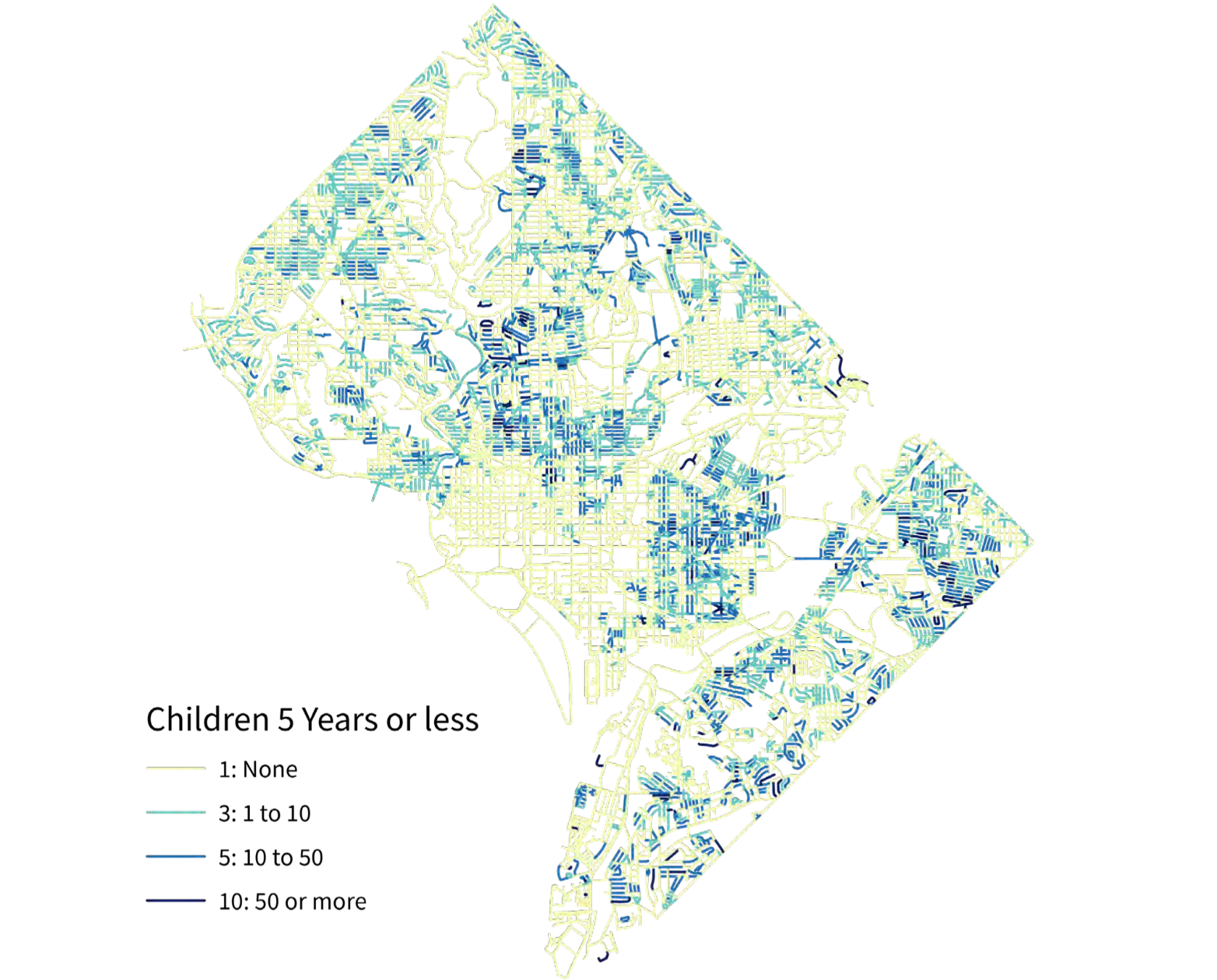
The report also recommends ways to make sure the program is equitable and reaches the District’s youngest, most vulnerable residents quickly. It recommends prioritizing day care centers, and suggests using more granular census data to zoom in on blocks where there are likely to be more children impacted by lead pipes.
DC Water’s current plan uses census tracts, which have between 1,200 and 8,000 people, while the report recommends using smaller census blocks with just 300 to 600 residents. Additionally, the report recommends prioritizing blocks with more children under 5, rather than DC Water’s current prioritization of areas with children under 18.
Lead is a potent neurotoxin, and children under six are most at risk, as are pregnant women. Health experts say there is no safe level of lead exposure for young children; even small amounts can cause behavior and learning problems, lower IQ, and other issues. Pregnant woman exposed to lead are at a higher risk of miscarriages or premature births. Low-income and Black and brown households are most impacted by lead exposure – often living in older housing, and without access to water filters and other measures that can mitigate the impact of lead.
The effort to ramp up lead pipe replacement in D.C. comes as the federal government is also focusing on the problem: the Biden administration has proposed an action plan to get rid of lead pipes and lead paint, including setting aside billions of dollars of stimulus and infrastructure funding to tackle the problem.
According to DC Water, the city has received $140 million from the federal infrastructure bill for lead pipe replacement.
D.C. Council members in attendance at the hearing were supportive of quick action to shore up the lead pipe replacement project. Mary Cheh (Ward 3) chairs the environment committee and called the roundtable; Councilmembers Janeese Lewis George (Ward 4) and Christina Henderson (At-Large) were also present. George has previously introduced legislation to mandate lead service line removal and speed up the program.
“We know the removal of lead from our water supply is urgent, and with additional federal infrastructure dollars available, now is the time to take bold action,” said George.