Elliot C. Williams
Two major arts institutions in D.C. transferred ownership of 30 Benin Bronzes to Nigeria Tuesday, part of a growing movement years in the making to return looted artifacts to their places of origin.
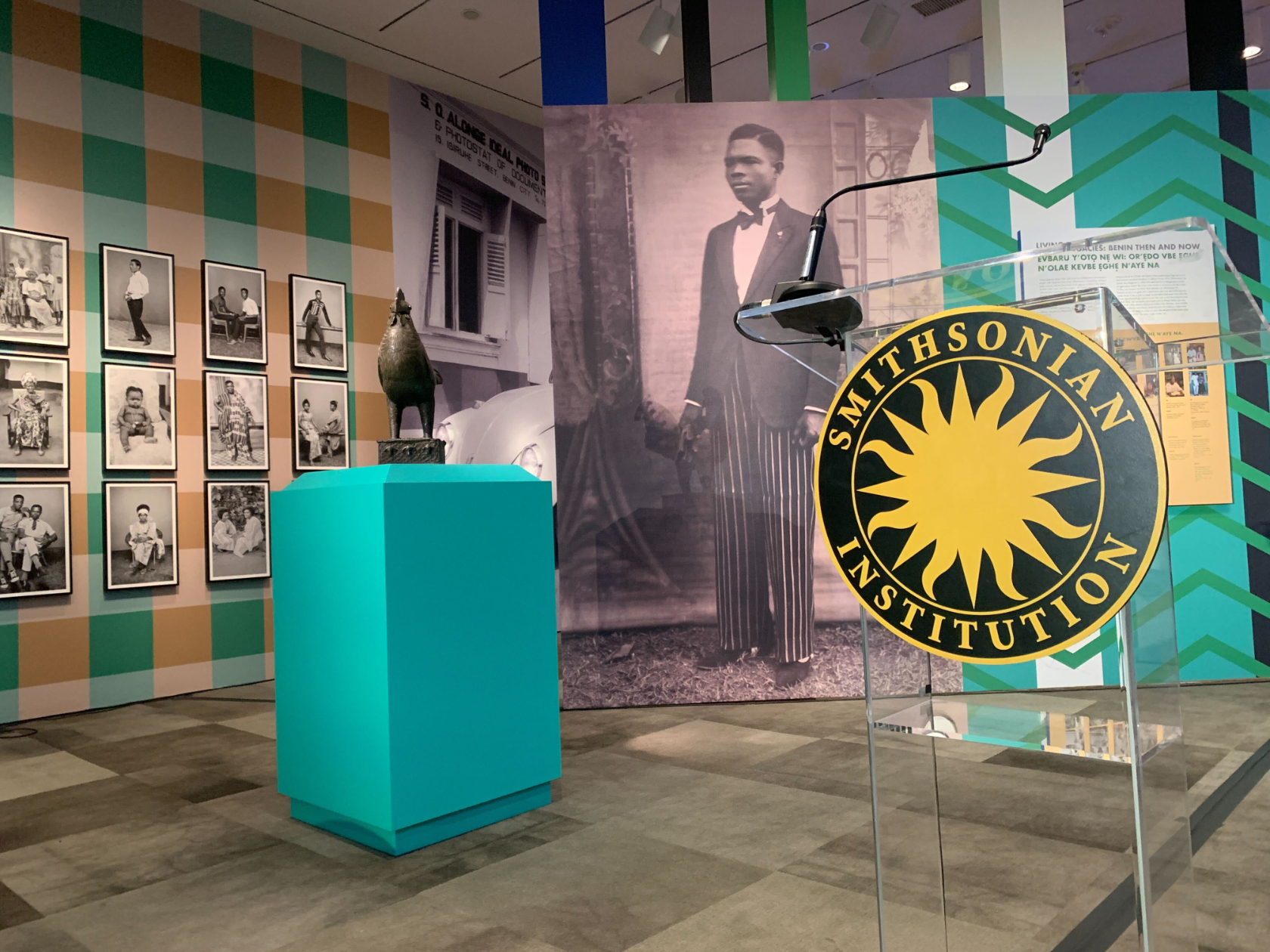
Smithsonian National Museum of African Art President Ngaire Blankenberg, Smithsonian Secretary Lonnie Bunch, and National Gallery of Art Director Kaywin Feldman addressed members of the Kingdom of Benin royal family and Nigeria’s cultural officials in a ceremony at the African art museum, making promises and acknowledging past wrongs.
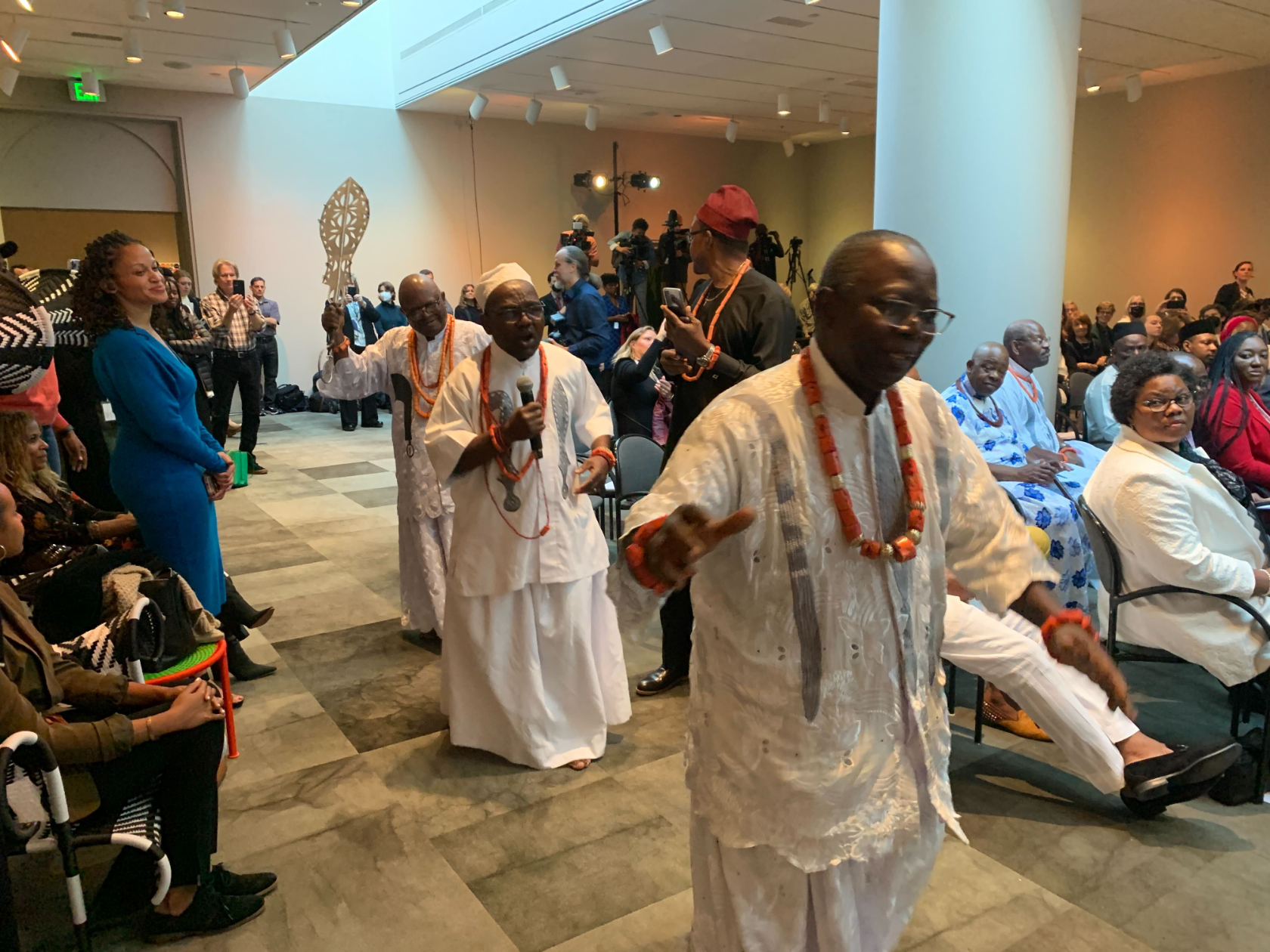
“This return sparks the beginning of a new era in our relationship with the royal court, with Nigeria, and with Africa and Africans writ-large,” Blankenberg told the gathering of Nigerian and U.S. officials. Among the crowd was the Edo Association of Washington, D.C., who performed during the ceremony to liven the mood.
But the story behind the bronzes is less upbeat.
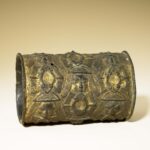
British soldiers confiscated the royal sculptures in an 1897 raid on the Kingdom of Benin, located in present-day Nigeria. The items were made not just of bronze, but also copper alloy, ivory, and terracotta, and dated as far back as the 15th century. Through auctions, donations, and other deals, the approximately 3,000 pieces made their way to private collections around the globe. The Smithsonian’s collection, for example, was donated by the Walt Disney family and Joseph Hirshhorn, who obtained the bronzes through auctions and private dealers.
This past spring, the Smithsonian’s board announced the deaccession of the bronzes as its first official action under the institution’s new ethical returns policy, an effort to analyze the provenance of millions of items in its collection.
For decades, the Smithsonian has returned Indigenous human remains and artifacts — the National Museum of the American Indian has been a leader in that effort. But critics say the process is complicated and that the 176-year-old institution has a lot of work to do before it can truly say its new policy is working. The policy is not a mandate and museum staff are only required to survey specific items upon request, the Washington Post reported earlier this year.
“We’re not going to be able to provide a lot of new money to museums to do this,” Undersecretary for Museums and Culture Kevin Gover told the Post. “We have two new museums to build and that’s going to require a lot of attention.”
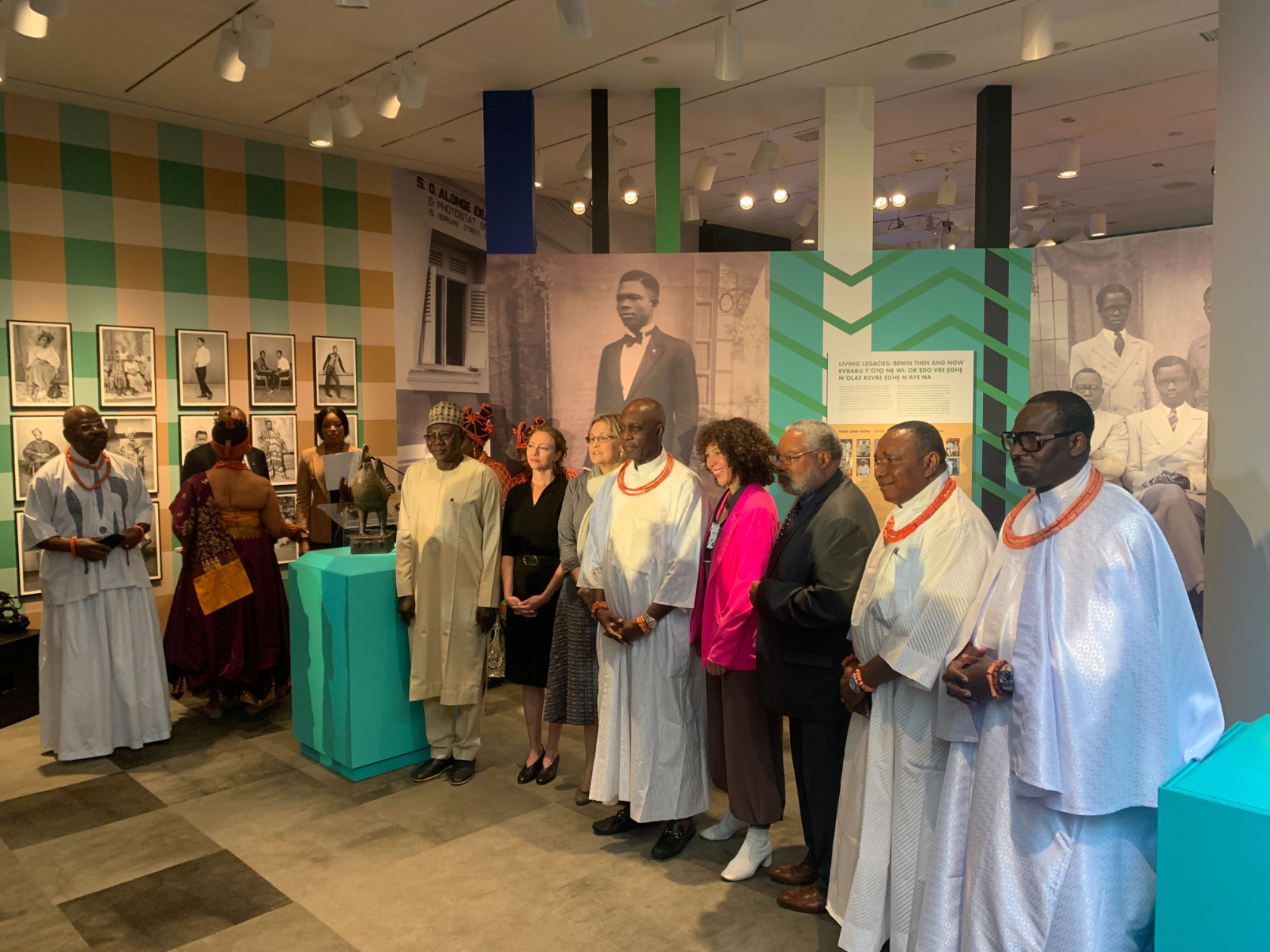
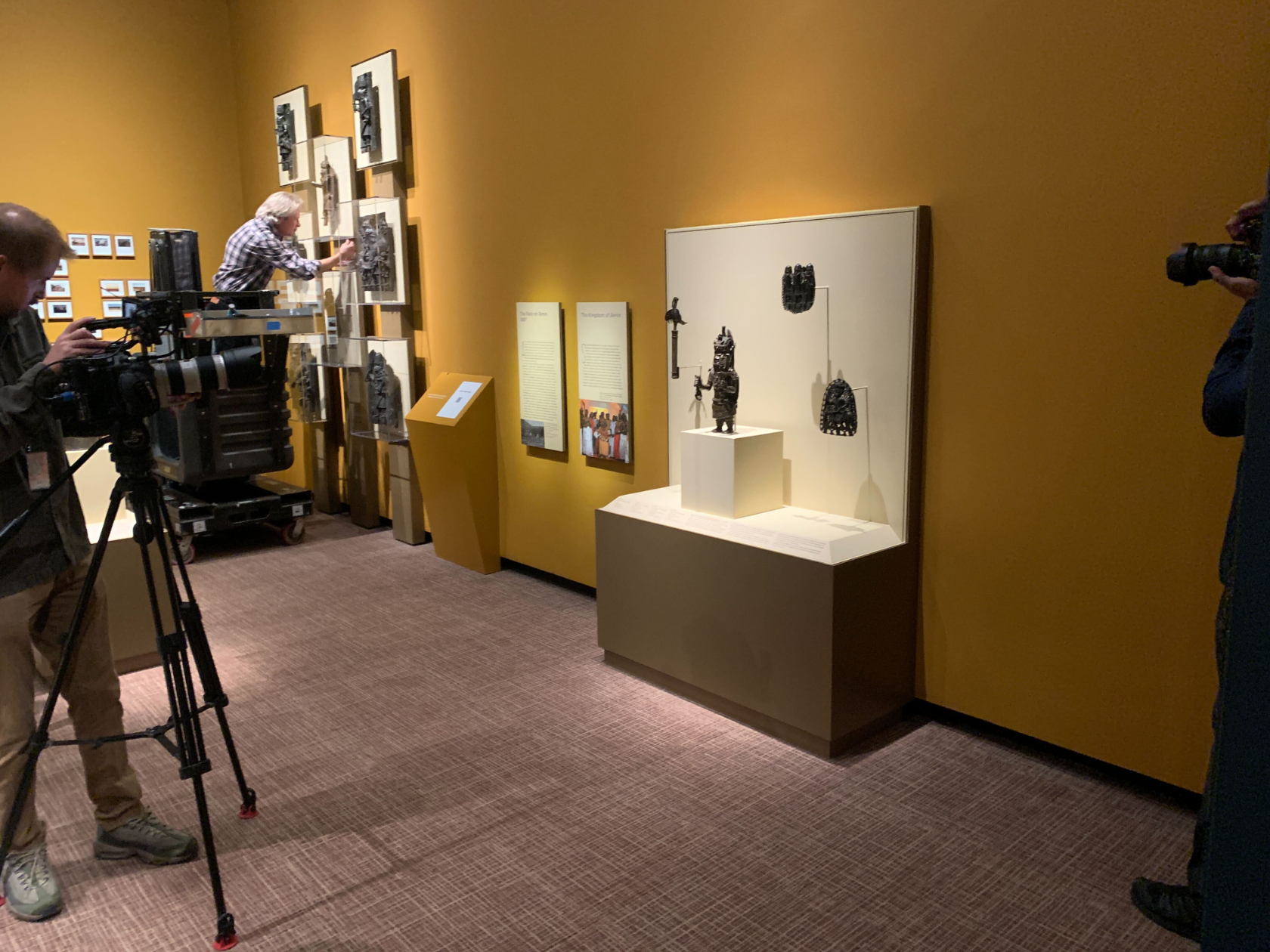
In the case of the bronzes, 20 of the statues will head to Nigeria’s National Commission for Museums and Monuments, while nine will remain at the African Art Museum on loan, as part of the agreement.
That’s not the end of the saga of Smithsonian’s Benin bronzes, however. There are six additional bronzes at the African Art Museum and 20 bronzes in the National Museum of Natural History’s collection that the Smithsonian still needs to do more research on the origin of, Bunch says.
This is the start of a larger effort, not just at the Smithsonian, but at museums globally, Bunch said in an interview with DCist/WAMU. (Museums in Germany and London have simultaneously agreed to return Benin bronzes to Nigeria.)
“I wanted to have a policy that, if issues get raised or you’re looking at collections, you can say, ‘Here’s the criteria. Here’s the process,'” Bunch says. “So I think that what this is, is just a tool that the Smithsonian will use long after I’m gone.”
At the ceremony Tuesday, the National Gallery of Art also officially signed over ownership of its sole Benin bronze, referred to as “The Fowl.” The Rhode Island School of Design Museum also transferred ownership of one of its items, “Head of a King.”
Ewuare II, the current oba (ruler) of the Kingdom of Benin — who is the leader of the Edo people in Nigeria and other parts of Africa but has no connection to the modern country of Benin — sent his brother, Prince Aghatise Erediauwa, to Tuesday’s ceremony to deliver remarks on his behalf. He thanked the American art institutions for taking this step — he also called for the Smithsonian to assist in financing a new museum in Nigeria.
That funding is unlikely because the Smithsonian isn’t a “granting agency,” Bunch told DCist/WAMU. (However, the agreement between the Smithsonian and the Nigerian agency is meant to launch a partnership that includes Smithsonian-funded research, educational programs, and exhibits in both countries.)
The artifacts the Smithsonian returned are expected to be housed at a forthcoming Edo Museum of West African Art, designed by the same architect behind the Smithsonian’s National Museum of African American History and Culture. Ewuare II said in his statement that the effort to bring back stolen works did not start this week, but began decades ago with his father’s successful request for the late Queen Elizabeth II to return a beaded ceremonial robe.
“The truth is that no argument can change looted works into un-looted works or stolen works into un-stolen works,” the Oba said.
And yet, there is a way forward.
“By returning the artifacts, these institutions are together writing new pages in history,” Lai Mohammed, Nigeria’s minister of information and culture, said at the end of the ceremony.