Colleen Grablick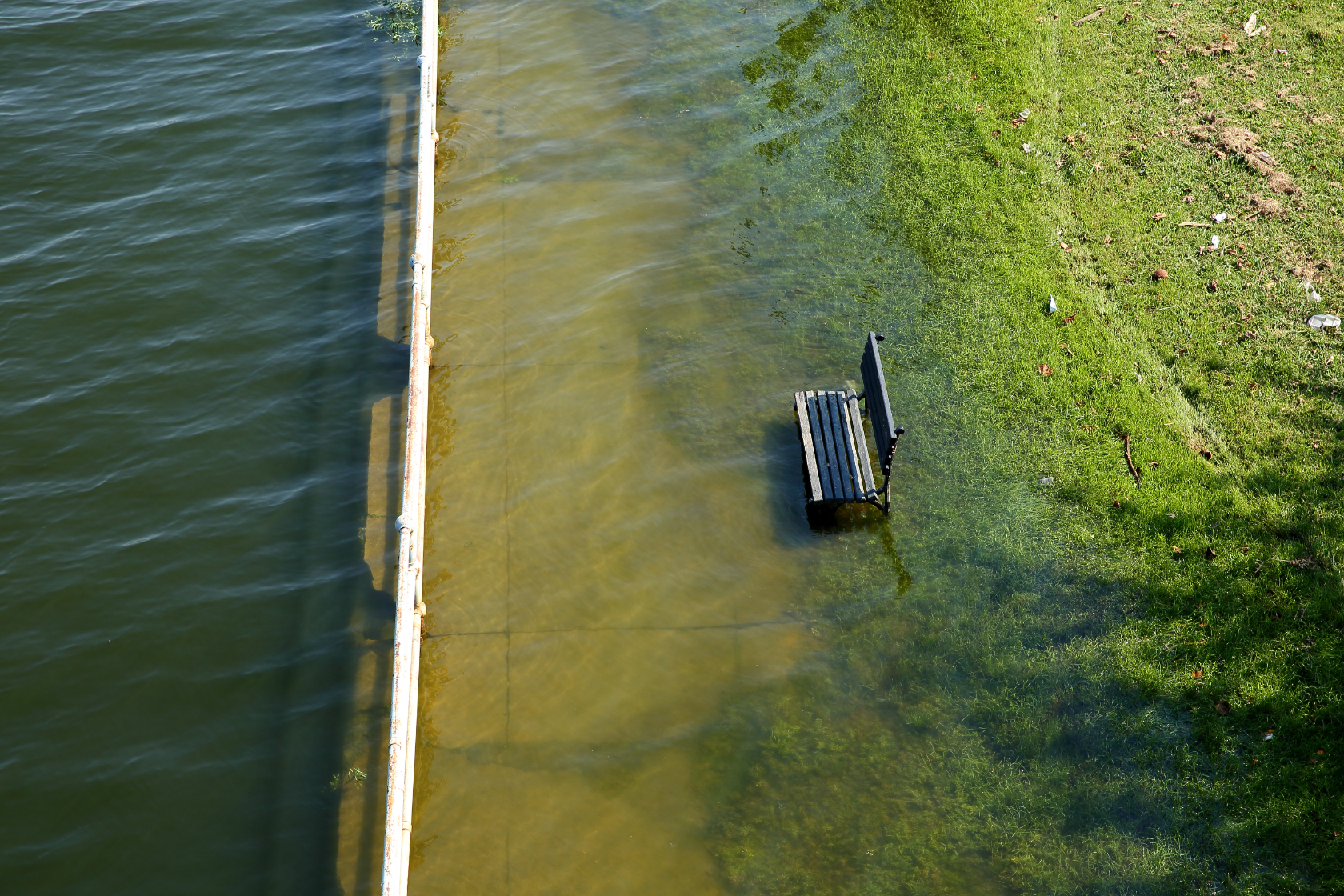
The first days of D.C. fall were gray and gusty this year, with temperatures that slipped into the 40s and rain that wavered between a drizzle and a downpour for days. The remnants of Hurricane Ian, whose forces devastated parts of North Carolina, Florida, and Cuba, dumped two inches of rainfall in the first five days of the month – already more than half of the monthly average for October, according to the National Weather Service.
While some D.C. residents mourned the loss of canceled weekend plans, Michael Allen, a 69-year-old Tennessee native who has lived outside of Union Station for the past five years, was hoping that his tarp would keep him dry in spite of its many holes.
“You make it all work,” Allen told DCist/WAMU in Columbus Circle last week, as the sun finally poked out through overcast clouds for the first time in days. “I have a tarp I wrap around myself when it rains or snows, and a 25-degree sleeping bag, belly warmers, and hand warmers in there.”
For D.C.’s unhoused residents, any form of inclement weather, even a minor drizzle, can be life-threatening. And as climate change makes extreme weather events like heat waves, snow storms, and intense flooding more common in the region (and the world), those living outside are some of the city’s most vulnerable and least supported residents, with particular gaps in service when it comes to heavy rains and flooding.
While the city provides certain emergency resources for unhoused residents, in the case of extremely cold or extremely hot weather — such as cooling centers and extended shelter hours — those living outside are often left to fend for themselves during downpours and floods. Unfortunately, climate change means this problem is set to worsen. According to D.C.’s climate projections, intense rainstorms that currently happen once every 100 years are expected to happen once every fifteen years by 2080.
While a recent analysis of a National Hurricane Center model found that even by 2080, D.C. should be fairly resilient to hurricanes thanks to a quirk in waterfront construction, increased rainstorm intensity will likely mean increased flooding, potentially resulting in displacement for both unhoused and housed residents. While the notion that D.C. is a swamp is largely a politically-motivated myth, the city is vulnerable to all three types of flooding (from rivers, coastal storm surges, and poor interior drainage systems). Each of them are projected to worsen due to climate change. As is the case with every climate change impact, communities that are already underserved will face the most severe harms.
“You can’t escape”
Allen keeps most of his belongings in a shopping cart, with plastic bags draped and layered to keep things dry. He found a tent in a trash can that he hopes to use this winter but until he finds poles to help it stand up, he’s relying on his punctured tarp.
During the day, he sits near the Post Office Building or goes inside Union Station. On the day DCist/WAMU spoke with him, he said he had only made around $2 dollars – not enough for food, let alone to afford more protective gear.
“How do I eat?” Allen says. “I can’t. That’s the point, I can’t.”
Allen used to be able to stay inside Union Station all night, he said, until Amtrak Police began removing people who didn’t have a ticket. Now, Allen doesn’t stray too far from Columbus Circle. It’s the same place that the National Park Service cleared a homeless encampment in early June citing “threats to public and safety.” While tents no longer remain, some people still live in the circle, mostly on benches.
Advocates say that when the Deputy Mayor for Health and Human Services or federal agencies like NPS remove residents from one area (usually in entire encampment clearings), many of those residents may be forced to relocate to places where it’s harder to shield themselves from worsening weather — plus, their protective items might get thrown away. Reginald Black, the director of the People for Fairness Coalition and a Lived Experience Liaison for the city’s Interagency Council on Homelessness, says that wherever someone chooses to live outside has an environmental advantage to it.
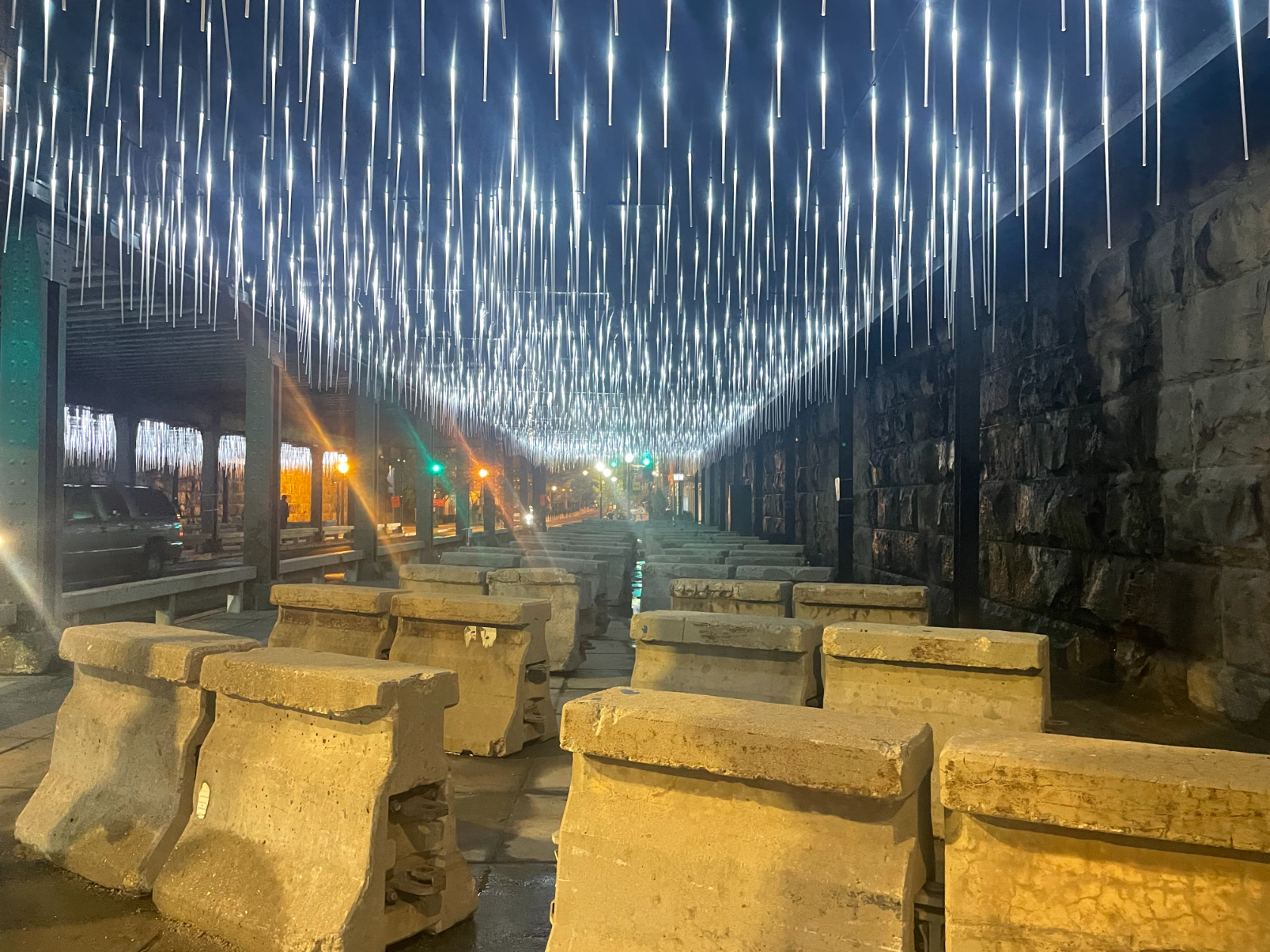
Black says the M and L street NE underpass in NoMa, one of the first encampments cleared in a pilot program started by the city in 2021, is a prime example: residents were living there because it protected from heavy rains and snow. While the pilot is supposed to connect residents to housing before the clearing, advocates says that officials had only successfully found housing for about half of the people by then. (The D.C. Council also voted against a measure to pause encampment clearings during the winter.)
“[That] had an environmental benefit,” Black said, referring to the underpass, which now contains rows of concrete barriers to prevent camping. “Now, how do you protect yourself from the rain?”
Black provides supplies like food, water, and clothing to homeless people year-round and says tents are one of the most vital resources to help people contend with the elements.
“Tents are a life-saving apparatus,” says Black, who himself experienced homelessness in D.C. for 10 years. “We know it will give a person a level of stability they’re looking for.”
But even then, residents may not be fully protected — one time last winter, he says a client’s tent collapsed under snow. The roads, still unplowed, made it difficult for the emergency outreach team to reach them.
Black worries these problems with only get worse with climate change.
“You can’t escape,” he says. “If it’s raining outside, and there isn’t an extreme weather threshold [from the city], you’re in the rain….if you’re unhoused, you cannot escape the weather. [You] don’t have money to hop on the bus and protect yourself, don’t have money to go into the train station.”
When government resources fall short
The city’s hypothermia or extreme heat plans don’t apply to rainy situations like last week, where temperatures were low, but above freezing. According to Anne Cardile, the medical director of Health Care for the Homeless with Unity Health Care, a federally qualified health center that provides care in the city’s shelter system, individuals outside can still be at risk of hypothermia, even when temperatures are fairly mild.
“As rain storms become more intense, [residents] can experience hypothermia at higher temperatures… someone who has damp or soaked clothing can experience hypothermia at higher temperatures than, for instance, snow fall,” Cardile said. “Hypothermia can be quite mild, or it can be severe and life threatening…it’s a very real risk for people, especially at the extremes of age, or individuals who have several chronic illnesses.”
Even in instances where the District’s extreme weather protocols do apply, advocates say these resources are often hard for unhoused people to access, making them skeptical of the city’s ability to contend with worsening flooding.
During hypothermia season (Nov. 1 through April 15), the city has round the clock transportation to emergency low-barrier shelters, where beds are first-come, first-served. These can be difficult to access, however, especially during intense storms that clog up roadways and make it difficult for emergency vans to reach residents who need help. Many people report feeling unsafe in shelters, or distrustful of the city’s programs. Allen, who has lived outside of Union Station, said he didn’t trust the emergency shelters.
These services are also activated during the city’s heat emergencies, but reports show they’re underutilized. A Street Sense Media investigation found that up to two-fifths of the city’s 44 cooling centers were not fully operational. Others had limited hours and none were open on Sunday. Eight out of ten Street Sense vendors, who all have experience with homelessness, said they didn’t feel comfortable going.
“Some of them require ID to access which is infuriating,” said Shannon Clark of the city’s cooling centers, which often double as libraries or rec centers. Clark runs Remora House, a mutual aid organization in D.C., with Aaron Howe. “It can be really uncomfortable for people and it does lead to harassment for people, especially if [that cooling center] doesn’t know that your doors are technically supposed to be open so that people can access air conditioning.”
A reality of homelessness, but also a potential cause
In recent years, D.C. has witnessed some intense interior flooding that ruined homes or otherwise incurred financial losses for residents — raising concerns that worsening flooding also risks increasing the size of D.C.’s homeless population.
At the Lotus, an apartment building in Northeast D.C. along the Anacostia River, flooding apartments and persistent mold have been issues for decades, according to residents who spoke with WJLA. (According to the city’s flood risk map, the building sits near part of the river’s flood plain.) In 2020, residents of more than 30 homes in Edgewood, right off Rhode Island Ave., watched as nightmarish amounts of sewage water flooded their homes – a result of a backed up sewer system that overflowed in the midst of a heavy rainstorm.
This type of interior flooding, while hard to model, will likely only intensify with climate change, with D.C’s lowest-income residents bearing the brunt.
The city uses flood risk maps to depict areas vulnerable to flooding, requiring new buildings in those areas to comply with flood proofing regulations. However, these maps only include areas at risk of tidal storm surge and riverine flooding without taking into account flooding triggered by intense bouts of rain that overwhelm the city’s stormwater pipes.
For example, Rhode Island Avenue is one of the city’s persistent flooding roadways, but it’s not in a flood plain, so any new buildings won’t be subject to flood-proofing regulations. The way flood plains are designated (i.e. not factoring in interior flood risk) is increasingly out of date, as flash floods and extreme rainstorms become more common. The city is working on developing an improved flood risk map but the work is extensive and costly, as DCist/WAMU reported in August.
Worsening interior floods in the coming decades are most likely to impact wards 6, 7, and 8 – areas with high numbers of renters, and lower income populations that may be less financially able to recover from damage or displacement. Wards 7 and 8 are also D.C. ‘s predominantly Black neighborhoods – underscoring the way a changing climate could exacerbate long standing displacement of Black Washingtonians.
“We know why there’s an over-representation of African American, Black folk in the homelessness community,” says Black. Black residents make up more than 80% of D.C.’s unhoused population, according to 2021 data, compared to roughly 43% nationwide. “There’s no difference between the unhoused person right now, and a runaway slave – they have no money, they have no property, they’re on the run, they’re criminalized … there’s so many racial overtones into that.”
The city’s Flood Task Force, a group established in 2021, found that more than 721 single-family homes are located in floodplains, with the most homes located in wards 6, 7, and 8. The group is piloting a program to reach homeowners in these areas and provide information on prevention measures (such as adding cement blocks and filling basements) but this initiative excludes renters who may be unable to afford pricey flood insurance policies. (A spokesperson for the city Department of Energy and the Environment did not return DCist/WAMU’s requests for comment.)
D.C. has made progress improving sewage draining systems in recent years, albeit slowly. Chris, an underground boring machine, has been digging a new tunnel since 2018 that will run five miles, from RFK Stadium to Bloomingdale. Once complete, the tunnel should prevent sewage overflows and also stop flooding in certain interior-flood prone neighborhoods.
According to Black, the city also needs to adapt its emergency homelessness services to the worsening climate. Response vans (which meet and transport residents to shelters during extreme weather) should have plows on them, he said, recalling a time when high water levels made it difficult to reach a resident seeking help.
“All of these things to mitigate adverse climatic events negatively impacting someone, they have to be rooted in development that moves the population of unhoused folks into more stable situations,” Black says. “Mutual aid is making sure that our people have the resources necessary to survive until they can get into housing, that we’re committed to that and we will stay committed to that.”
This article is part of our 2022 contribution to the Homeless Crisis Reporting Project, in collaboration with Street Sense Media and other local newsrooms. The collective works will be published throughout the week at HomelessCrisis.press.