 Jordan Pascale
After a week of public back and forth over the safest way to bring back more 7000-series trains, Metro has submitted another plan to its oversight body, the Washington Metrorail Safety Commission.
Metro’s previous request to return all ninety-three 7000-series trains to service with inspections every seven days was denied by the Safety Commission on grounds that there wasn’t specific testing data to back up the plan.
In its latest plan, submitted Thursday afternoon, Metro says it will run additional 7000-series cars for 30 days and submit testing data to the Safety Commission weekly to make sure they are safe.
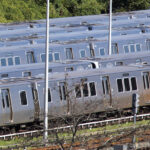
The 7000-series trains were built in two batches. Earlier trains were made with wheels pressed on at a lower pressure. Newer trains were made with wheels pressed on at a higher pressure. Safety officials say there was more movement in the trains with wheels put on with less pressure. (The wheels spreading apart led to the derailment last October that sidelined most of the trains for more than a year.) Metro says it wants to intersperse some of the cars built with lower pressure with other trains — up to 80 cars total — and run them for a month on all lines.
The Safety Commission also says tighter curves on the Blue, Orange, and Silver lines are part of the reason it’s not allowing 7000-series trains to run there yet, at least without more study. Metro counters in the latest plan that they would report data weekly to the Safety Commission. If no anomalies show up, then Metro would be able to run all trains without restrictions.
The Metrorail Safety Commission is reviewing the plan and a decision will likely come in the next few days.
Metro says it needs the extra trains to open the Silver Line extension, which adds 11 miles to the system, and also to reopen six stations that have been closed on the Blue and Yellow lines.
The Safety Commission has said Metro is only using a dozen or so of the 20 new trains it has already approved and they should meet that threshold first.
Metro is currently running 77 trains a day but would need at least another eight trains to keep current service levels across the system and add the new silver line.
The transit agency had hoped to get the six new stations, including Dulles Airport, open before the Thanksgiving travel season. It’s unclear if that goal can be met. Metro and other local bus agencies say they need three weeks to coordinate bus route changes, fix signage, and update their schedule data to feed real-time bus arrival apps.
Metro also needs to get safety certification approval from the Safety Commission, something it has not submitted yet, but would likely be a more speedy approval process since the two agencies have worked together closely on it.