Elliot C. Williams
The Smithsonian’s Hirshhorn Museum and Sculpture Garden will undergo the largest renovation to its building and central plaza in its 48-year history, its leaders announced Monday.
The major project, which wouldn’t begin until at least 2024, will include upgrades to the modern and contemporary art museum’s infrastructure and the expansion of space for exhibits and programming, as well as changes to the signature round plaza beneath the circular building.
Selldorf Architects and Skidmore, Owings & Merrill (SOM), the two firms tasked with the redesign, will also focus on modernizing bathrooms, elevators, fine art storage space, and stormwater management. (The late architect and SOM partner Gordon Bunshaft created the original Hirshhorn design.) The renovation could close the museum building for up to two years, museum officials said Tuesday.
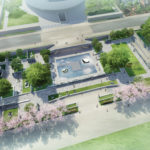
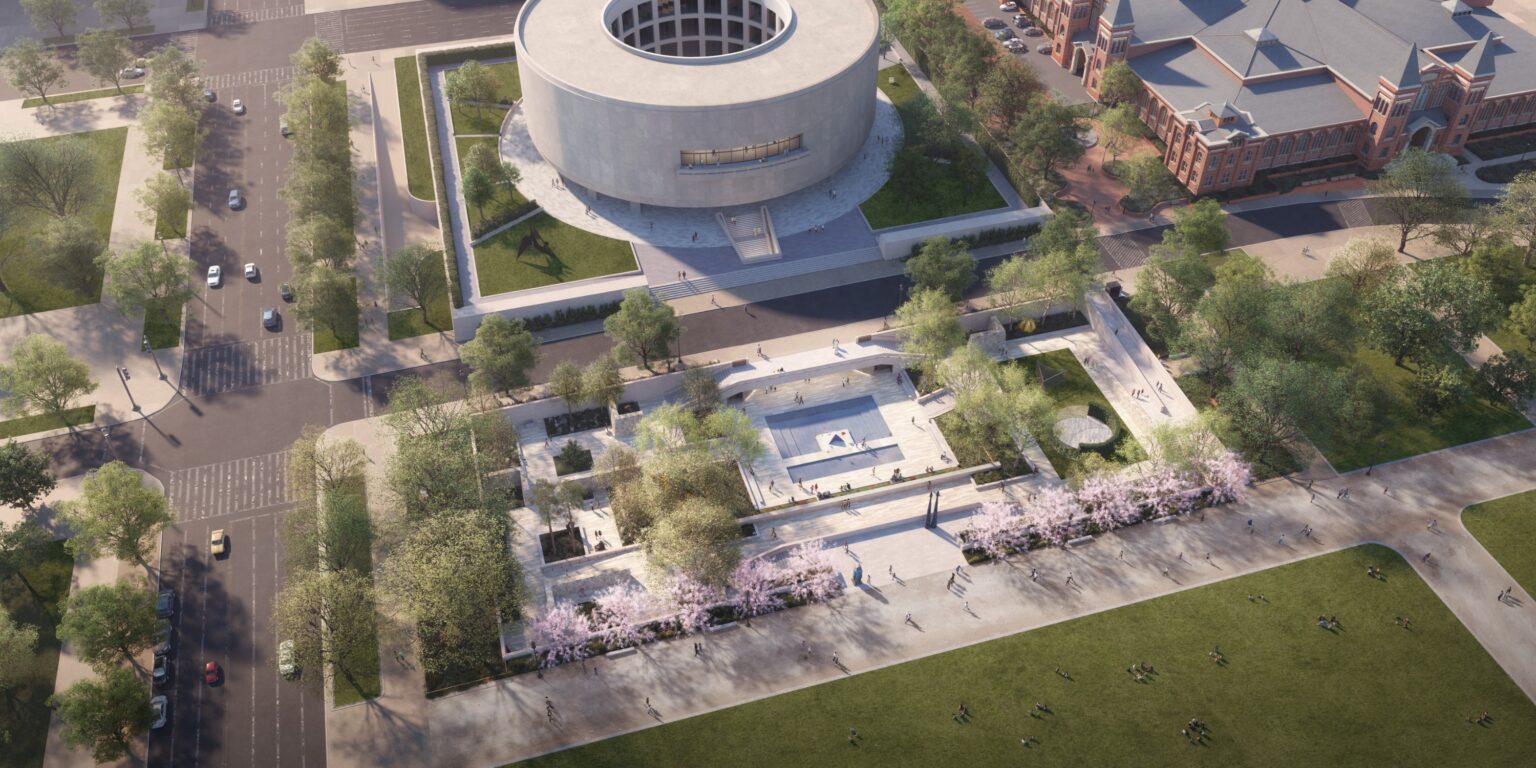
The interior and plaza renovation will be the last in a series of three projects that will overhaul the Hirshhorn, one of which — a replacement of the building’s concrete façade and roof — will be complete by the end of the year. Next will be the contentious, $60 million renovation to the sculpture garden, for which the museum will host a groundbreaking ceremony on Nov. 16. The reimagined garden is expected to reopen by 2024 or 2025, after which the newly announced renovations to the interior and circular plaza are scheduled to begin.
Hirshhorn officials predict the expansion of the sculpture garden, just off the National Mall, will increase the museum’s visitation threefold, according to a press release. The building renovation’s budget and timeline will be announced following a concept proposal from the architects and public approval process in 2023, the museum said in the release.
The goal is to adapt the museum and its garden to fit contemporary artists’ expanding creative ambitions, as well as the Hirshhorn’s growing collection of performance and video art, says museu director Melissa Chiu.
“Today, artists approach the idea of three-dimensionality with very different methods, materials, and scale,” Chiu tells DCist/WAMU. “We would very much like to have the flexibility to present performance art. The Hirshhorn has begun to collect in this field, and video art as well. The Hirshhorn has a long standing video and new media art collection.”
The project is an attempt to bring the building up-to-date with its already innovative art exhibits, Chiu adds. The Hirshhorn has seen steady increases in its attendance over the past five years, which Chiu attributes to its featured artists.
Recent exhibitions have included Yayoi Kusama’s wildly popular “One With Eternity,” a collection of the artist’s infinity mirror rooms and other pieces; a comprehensive collection of performance artist Laurie Anderson‘s work; room-filling installations from famed photomontage artist Barbara Kruger and “Pickett’s Charge” by Mark Bradford, a massive abstract work the Hirshhorn commissioned that is based on the Civil War battle and spans hundreds of feet.
“So when we say that we’d like to prepare for the 21st century, it really is with this idea of creating a space that is open, accessible, and free to all visitors, while also giving the museum the greatest flexibility to be able to present a range of art practices,” Chiu says.
While it’s not ideal for the Hirshhorn’s exhibits to be off-limits during the renovation, the pandemic taught museum leaders lessons that will be useful going forward — like keeping outdoor space available for events and exhibits when necessary, Chiu says. The sculpture garden will remain open while the building undergoes its renovations.
“It’s very intentional that we [plan to] revitalize our sculpture garden first,” she says.