 Aja Drain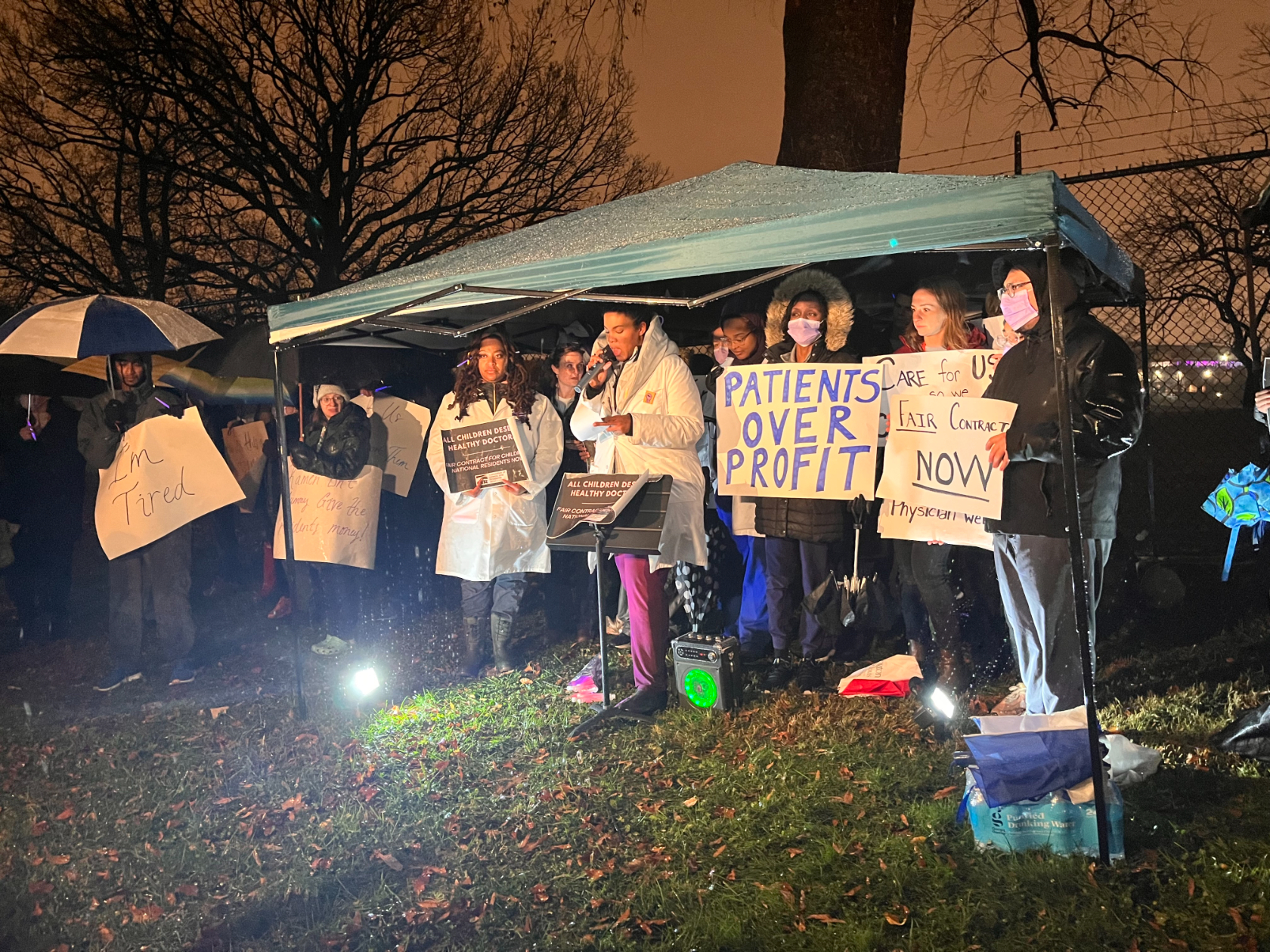
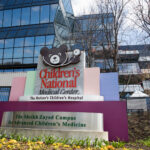
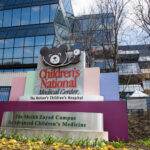
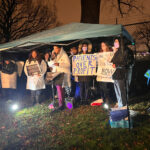
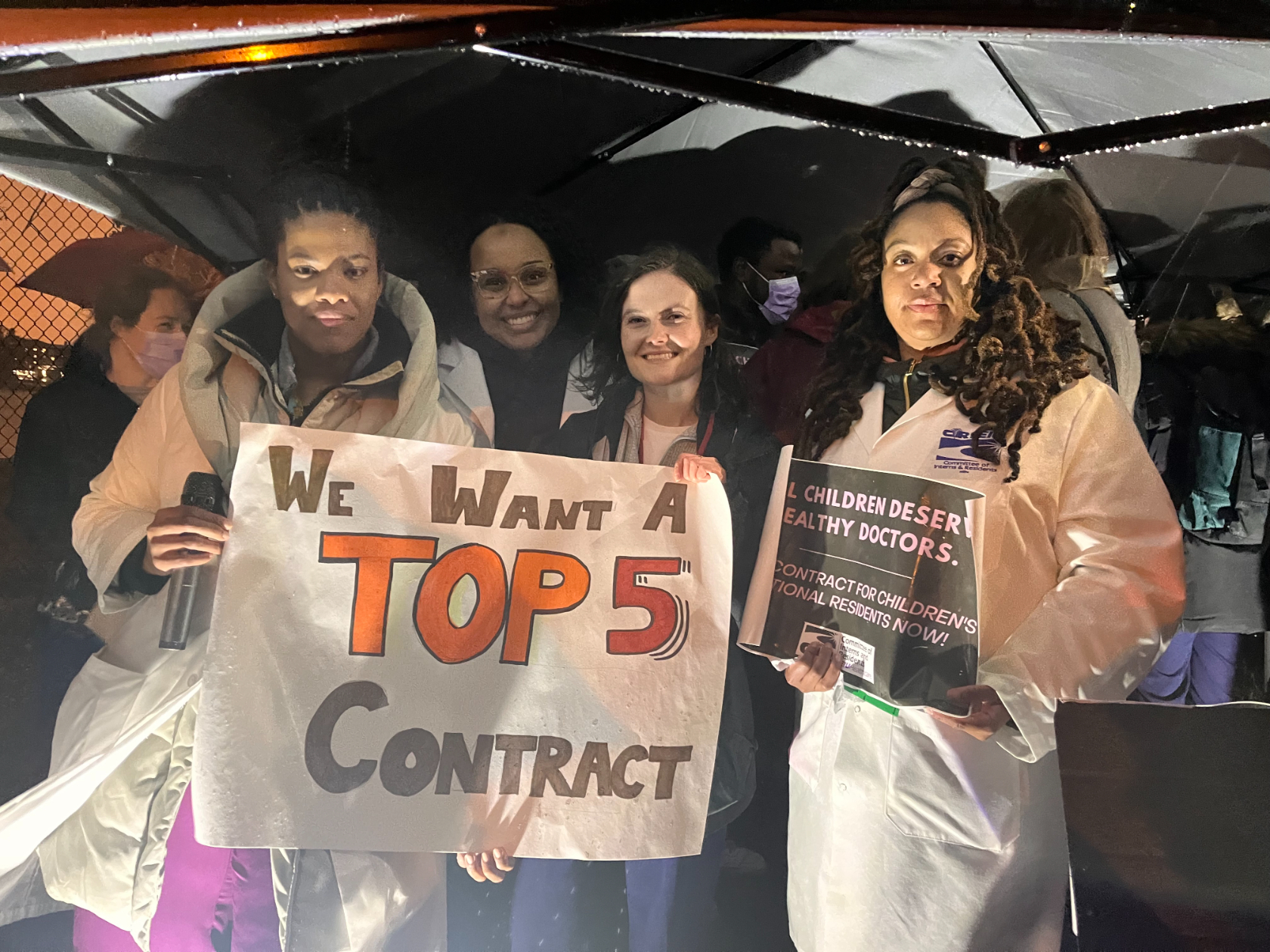
Off-shift resident physicians and fellows from Children’s National Hospital demonstrated last night, saying they’re overworked, underpaid, and stretched thin amidst staff shortages. Despite the pouring rain, almost 40 physicians gathered across the street from the hospital’s entrance in what they say is a show of solidarity in their fight for a fair contract. Physicians from Howard University Hospital and St. Elizabeths Hospital joined them at the demonstration. In recent weeks, the hospital has been pushed to maximum capacity as respiratory viruses in the area surge.
Organizers of the demonstration are a part of the Committee of Interns and Residents, a union local of Service Employees International Union (SEIU) which represents more than 22,000 interns from across the country, including in California, New York, Florida, and D.C. The 120 members at Children’s National are up for a contract renewal this year and residents say they’re demanding pay that reflects inflation, better mental health care, paid sick leave, more long-term hires to fill staffing gaps, a transportation budget, and, most importantly, limits to the number of patients a resident cares for at once.
Dr. Lydia Lissanu, a first-year resident, told DCist/WAMU at the event that one resident physician is sometimes in charge of managing 36 premature infant patients by themself overnight. “My work looks like — it looks like chaos,” Lissanu said. “We try to keep things as safe as we possibly can. But it means that we don’t have enough time to spend with patients, which is why we’re asking for patient caps.”
Lissanu says that Children’s National has always managed a high number of patients, adding that she is contractually obligated to say they are still managing things safely amidst this current surge. But she says that limits on the number of patients are essential for residents. In addition to the hospital being maxed out due to the respiratory surge, they’re having to cope with short-staffing across the board due to being underpaid, overworked, and undervalued, says Lissanu.
“There’s also not enough nurses. Not enough RTs [respiratory therapists]. Not enough PAs [physician assistants]. Not enough doctors,” Lissanu says. “It’s a worker shortage of their own creation.”
DCist/WAMU reported on the impact of nursing shortages in the region in September.
A spokesperson from Children’s National told DCist/WAMU over email that they are managing the healthcare workforce shortage, adding that the challenge is not unique to their hospital as it is a nationwide issue. They said the closure of pediatric inpatient beds across the region is putting an even greater strain on the hospital.
“We remain hopeful that this surge in respiratory infections will subside [from] historical levels which would reduce some pressure on our teams,” a spokesperson from Children’s National said to DCist/WAMU.
“We thank the residents for their hard work and dedication to our patients,” the spokesperson said. “We have made much progress at the negotiating table and we hope they focus on working to finalize the contract.”
Dr. Hannah Kilcoyne, a first-year resident at Children’s National, says that the average medical student graduate has over $200,000 in student loan debt. She says pairing that with the high cost of living in D.C. and their inadequate salaries makes paying rent difficult. She says that this year Children’s National is offering a 3.5% raise, but that is less than half the rate of inflation.
“We work on average about 70 hours a week without overtime pay, and it is not uncommon to work more,” Kilcoyne says.
Dr. Liz Taliaferro, a third-year resident at Children’s National, says the union has also proposed a mental health program to support residents, but claims that Children’s National has dismissed the idea without offering any alternatives.
“I think we’re just being asked to do what is beyond what you should ask anybody to do,” Lissanu says. “And we’re being asked to fill this gap. And if your system is really based on this indentured labor, then maybe it shouldn’t exist. But I mean, I still need to train.”
This article is part of Health Hub, DCist/WAMU’s weekly segment on health in the D.C. region. Tune in to WAMU 88.5 every Tuesday or on the NPR One app for a conversation with reporters and newsmakers about local health news.