Héctor Alejandro Arzate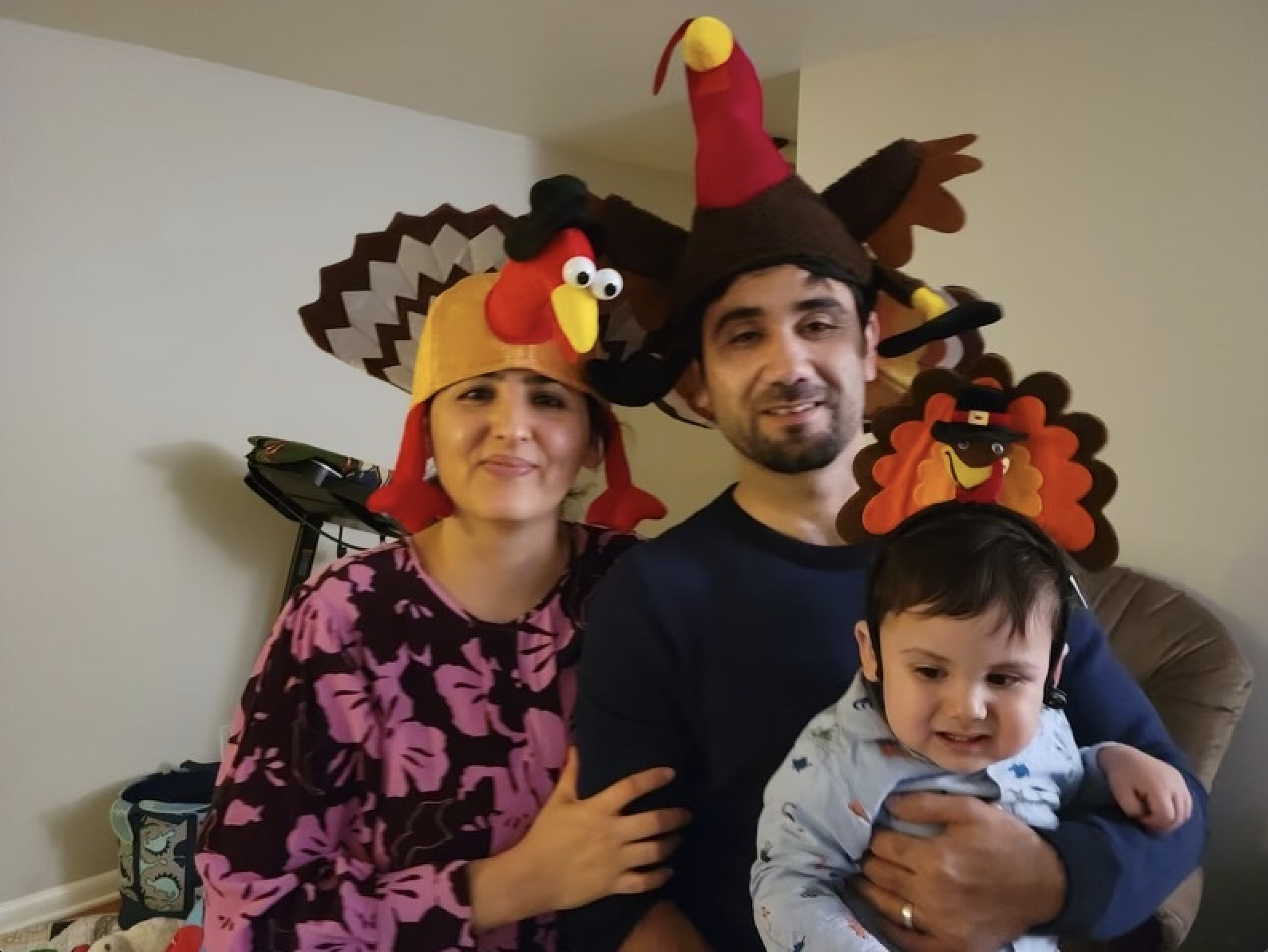
In Afghanistan, Laila Faizi-Sohail never celebrated Thanksgiving. She didn’t cook turkey or mashed potatoes. She had never even heard of pie. But that all changed when she moved to northern Virginia in August of 2020, a year before the Taliban seized control of Kabul.
Like some other immigrants, Faizi-Sohail was forced to leave everything behind when she fled her home country — her husband, parents, friends, and even her career as a physician. She was also seven months pregnant at the time. She says her first autumn in the United States was one of the most challenging times of her life.
“It wasn’t easy for me, especially [because] I was pregnant and I was alone in this country and I was fighting with lots of issues,” says Faizi-Sohail, who received a green card through the lottery process. “Everything in Afghanistan, we lost it. Our country, our home, my dad.”
Although she was missing her family and ties to her own culture, Faizi-Sohail was able to make connections after finding housing in the region. She says she got particularly close to her landlord, who invited her to Thanksgiving dinner for the first time.
“She is my family,” says Faizi-Sohail of her landlord. “I couldn’t take my emotion. I was so happy [that] someone is asking [me to sit] together, eating together and celebrating this Thanksgiving Day.”
Thanksgiving became one of Faizi-Sohail’s favorite holidays. For her, the idea that you can share meaningful dishes with those you care about most, all while being thankful, means a great deal.
“It’s a great day and you are thanking God and it’s amazing thing,” says Faizi-Sohail. “I think every country should have this culture.”
Despite the ongoing turmoil in Afghanistan, Faizi-Sohail says she has even more to be thankful for. Last year, she got a lawyer who helped bring her husband, Hedayat, over to the U.S. Now, the couple is raising their baby boy Timur together. Her mother and siblings now live about a mile from her two bedroom apartment in Arlington.
“I’m thanking to God to give me this opportunity to live with my husband and we are safe and we are healthy. That’s a big thing for me,” says Faizi-Sohail, who’s now an associate medical director for Pfizer.
This year, Faizi-Sohail and her family are once again making their way over to her landlord’s house for turkey and other traditional Thanksgiving dishes. This time, she says they’re bringing Uzbek manti, a traditional steamed dumpling. She’s also preparing Uzbek palaw, a stewed meat and rice dish that’s prepared for special occasions such as this.
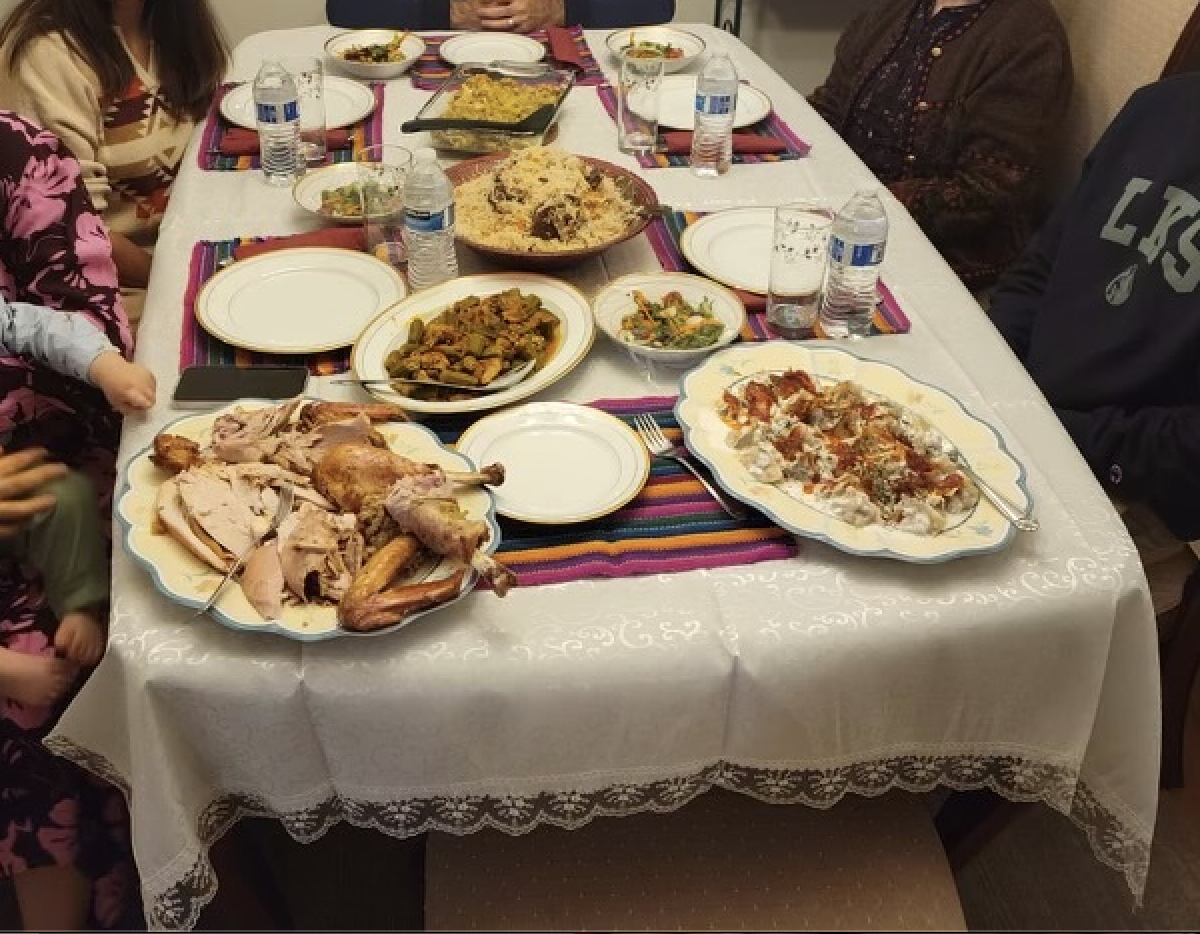
“I can show my culture. I can show what I eat in my special day. That’s why I choose this Uzbek palaw,” says Faizi-Sohail.
In keeping with the new traditions for her, she’s also trying her hand at making pumpkin pie for the first time. It’s an endeavor she says she’s been practicing for.
“In our culture, we don’t have a pie. So I’m learning from YouTube,” jokes Faizi-Sohail.
Faizi-Sohail is far from the only immigrant in the region embracing Thanksgiving by preparing dishes from their own culture, alongside the more traditional ones. Lida Soleiman was born in Iran and has lived in D.C. for about 50 years. She says she’s grown to love the staples of a Thanksgiving meal, especially turkey.
“That’s something that [Thanksgiving is] known for and joyful to have,” Soleiman. “Sometimes we put other dishes with it as a habit of Persians — they always have to have extra food around.”
One of those dishes is Ghormeh sabzi, a traditional herb stew from Iran that’s made from lamb or beef. According to Soleiman, the meat is stewed with greens, such as leeks, parsley, and spinach. She then serves it with long grain rice that’s been prepared with saffron to give it a golden color.
“I love the celebration. The whole country comes together and celebrates one thing,” says Soleiman. “Of course it reminds you of home, always.”
With all the ongoing protests in Iran, Soleiman says she feels especially moved this year by the meaning of Thanksgiving. She says she’s thankful for the freedom and opportunities afforded to her and her family.
“I just wish that one day all the Iranians, they get their freedom and they can celebrate their freedom,” says Soleiman. “I [am] thankful for the health, for the reason that we all can be together. And nobody can stop us for what we can celebrate.”
For Bayannunth Banzragch, who admittedly does not like turkey, Thanksgiving is all about family. He was born in Mongolia but moved to Arlington with his wife and children about six years ago.
“That’s my everything,” says Banzragch. “We work everyday. It’s busy. And then that’s the time, [to] spend time with our family.”
Rather than plating up turkey, stuffing, and mashed potatoes, Banzragch says he opts for buuz, which is a type of dumpling from his home country. He says he enjoys preparing it himself every year — filling it with beef or potatoes before steaming it.
“Usually [we’re] eating that special food when we have the holiday days,” says Banzragch.
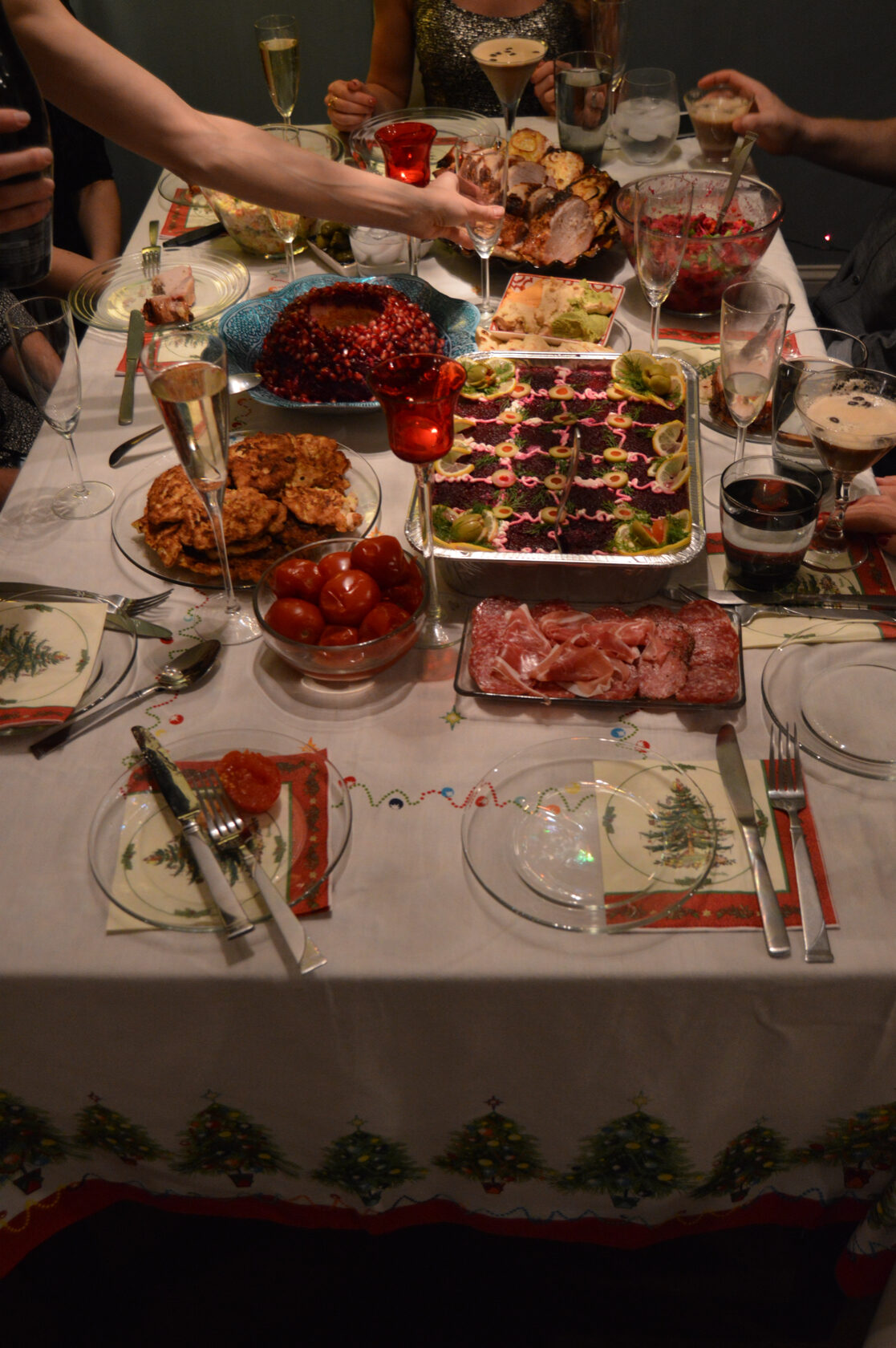
Olena Napolitano and her family, on the other hand, love all the regular fixings — including green bean casserole, sweet potatoes, and either ham or turkey. She was born in Ukraine and now lives in Springfield, Virginia, with her husband and daughter.
“We believe that when you’re in Rome, do as Romans do,” says Napolitano, who has lived in the U.S. for around 20 years. “It has to be the traditional American dish.”
Still, Napolitano can’t help but also make dishes from Ukraine, such as olivye, a traditional potato salad. Her family also prepares shuba, a sort of savory cake with layers of salted fish, potatoes, carrots, and bright red beets on top. She says these dishes serve as a reminder of her friends and family in Ukraine as the war continues.
“Thanksgiving, that’s when you give thanks for things — for your family, for things that you have, for your friends,” says Napolitano. “We think about them every day.”
Meanwhile, Carla Bustillos says Thanksgiving is all about adding your own spice. As the daughter of Venezuelan and Cuban immigrants, she prepares turkey each year by filling it with a picadillo stuffing that features ground pork, wild rice, peppers, onions, olives, raisins, and boiled eggs. She says her family serves the bird alongside traditional side dishes including mashed potatoes and salad.
“We’ve created our own recipe out of like, just integrating our traditions and what we like,” says Bustillos, who was born in Maryland. “The Thanksgiving tradition of the turkey, but also what we like as a family and as a culture.”
In addition to her take on turkey, Bustillos’ family also has a tradition of preparing lechon, which is an entire roasted suckling pig. She says her sisters will marinate the pork for two days before cooking it slowly for an entire day to serve around 7 o’clock on Thanksgiving day. The next day, they’ll fill Venezuelan arepas with leftovers.
“We stuff them with whatever’s leftover. And we have mimosas all day long. And that’s normally game day for us as a family,” says Bustillos.
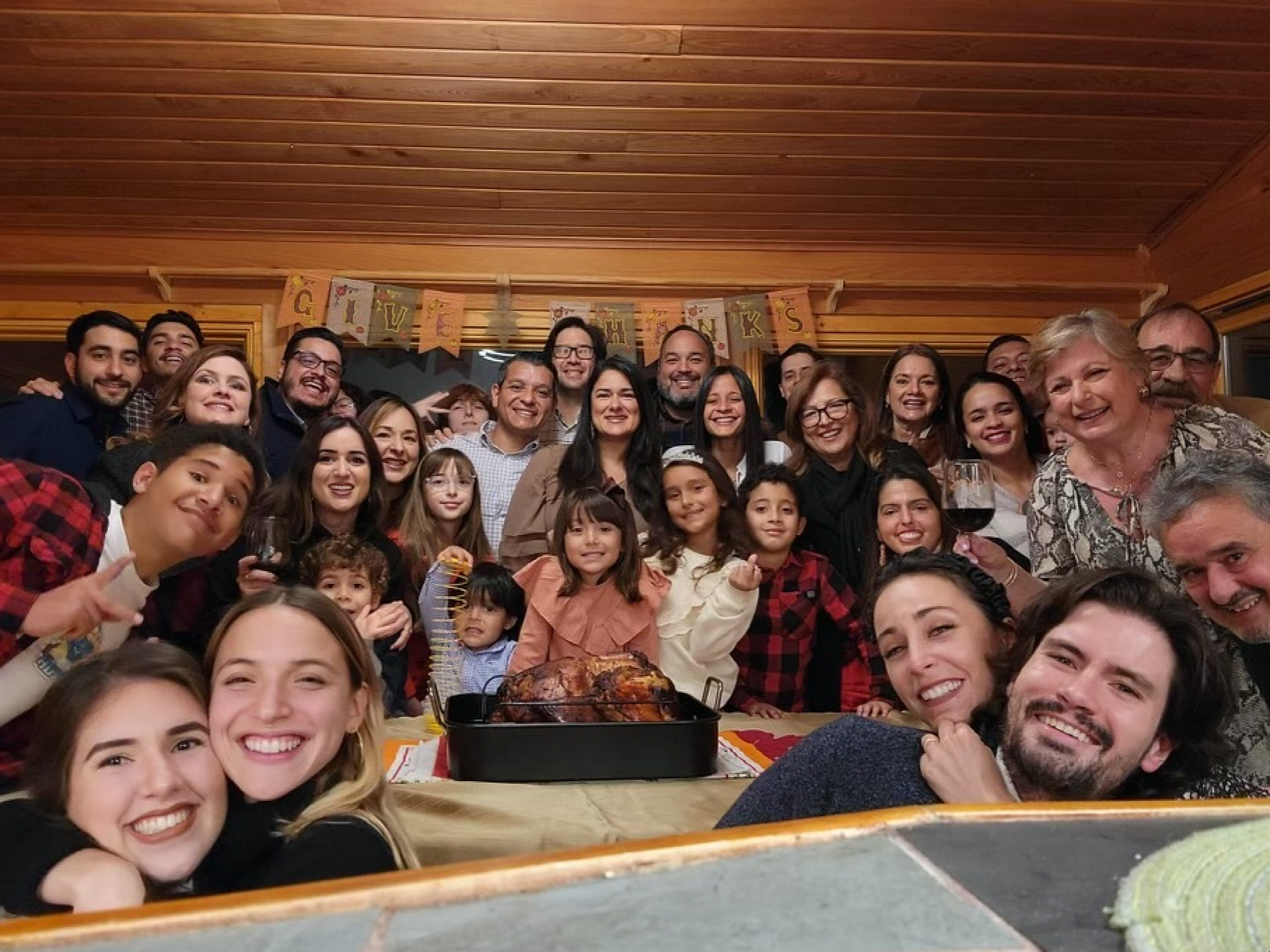
While she is a first-generation American, Bustillos says Thanksgiving was always the kind of holiday her parents celebrated with other immigrants in mind. Growing up, she says they would often invite people who had recently arrived to the country for dinner. That interpretation is how she grew to love the holiday, which has its own problematic origins in the displacement of Indigenous people.
“I don’t want to dismiss the history behind it but I think it also has a very big component of bringing people together and adopting new arrivals. And that’s how my family and I have always done it,” says Bustillos.
As someone who works with migrants, this year has been particularly challenging for Bustillos. Since April, thousands of migrants — many of them from Venezuela — have been bussed to D.C. from Texas and Arizona. She says she wants to welcome them with a dinner in the spirit of Thanksgiving on November 27 – similar to the meals her parents used to put together.
“I’m thankful for my heritage because it’s given me the sensitivity and the cultural competency, to help such a vulnerable community,” says Bustillos. “It’s about people having to leave their native land and look for new horizons elsewhere … That’s always an easier process when there’s someone welcoming you.”