Jacob Fenston
 Ryan Benk
Three years ago, Jane Fonda spent her 82nd birthday in jail in D.C. Now she’s back.
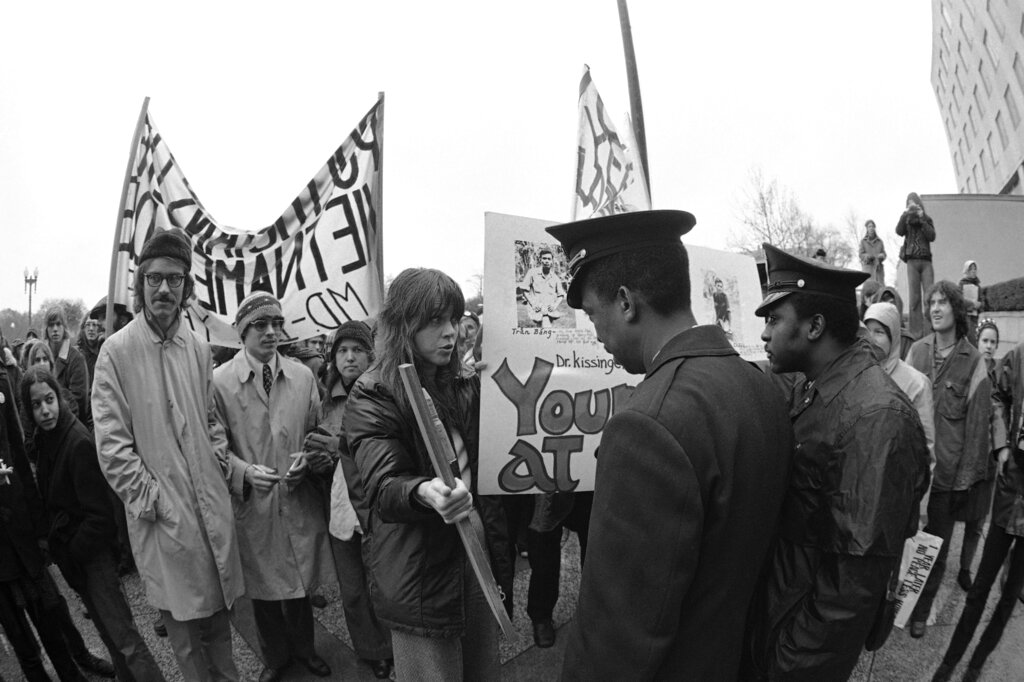
The Hollywood icon may be most famous for her dozens exercise videos, TV shows, films, and Oscar wins. But she’s also had a side career as a committed activist, dating back more than half a century — fighting for issues from civil rights to the anti-Vietnam war movement to indigenous rights. In 2019, she spent nearly three months in D.C., holding weekly climate protests, dubbed Fire Drill Fridays, after a quote from Swedish activist Greta Thunberg.
“I want you to act as if our house is on fire. Because it is,” Thunberg has said.
We sat down with Fonda ahead of her rally today at Freedom Plaza, to hear why climate change is the issue she’s now lending her voice to.
One of the last times you were here in D.C., you were arrested, you actually spent the night in jail. And I think it was your 82nd birthday? Tell me a little bit about what happened.
Well, I spent the night in jail — me and the cockroaches and my red coat, which served as my pillow and my blanket. It was a sad experience because there were a lot of other people in there too, and they belonged somewhere else and not in jail. They belonged in a place that could give them mental health care. It was sad to hear the screams and the shouts and the banging on the wall. But, you know, I’m white, I’m privileged, and nobody mistreated me. On the contrary. But civil disobedience is a way to put yourself on the line, your body on the line, in alignment with your deepest values. It’s a fantastic feeling. I realize it’s not the same for everyone, but it’s a good feeling to align your body with your values.
You recently spoke about your cancer diagnosis, and you talked about your own mortality. I just wanted to ask, with whatever time you have, why are you choosing to spend it here doing this?
Well, I’m going to spend the rest of what time I have trying to confront the climate crisis, trying to build a movement. You know, yesterday I lobbied on the Hill and every senator and congressperson that I met with said, “build the opposition out there. Make it loud. We need voices. We need you to be heard.”
They need outside pressure. So the purpose of Fire Drill Fridays is to build that pressure from the outside so that electeds will work for us and not big oil.
You spent a lot of time in D.C. in 2019 doing these protests every week. But a lot has happened since then. Of course, we had the pandemic. But in terms of climate action, Congress passed the biggest climate legislation in U.S. history. So what what’s the fight now? What do you what are you pushing for?
Well, let me just remind you that the Inflation Reduction Act, which is the legislation you’re referring to, which has hundreds of billions of dollars for the new green energy sector, which is really, really, really important. We have to build that up. But the other thing that has to happen, absolutely, is we have to stop fossil fuel development, not turn off the spigot right now because we can’t yet — the green energy sector isn’t up to scale yet, can’t assume the full burden. But we have to stop all new fossil fuel development.
The Inflation Reduction Act has the money for the for the green energy, but it also permits a lot of new fossil fuel development. And this is really bad. This is what we have to stop. We have new terminals going in in the Gulf, gas terminals, oil terminals exporting. We have to stop this. We have eight years. We have to cut our fossil fuel emissions in half and we’re going in the opposite direction. So that’s why we have to keep fighting. All hands on deck, as loud as we can, not being individually concerned in our homes, but being together and active.
That that’s one of the things I wanted to ask you about. A lot of times, people say, if you want to fight against climate change, you know, don’t go vegan. That’s not the most important thing to change, what you’re doing personally, but to elect people who are going to make systemic change. And so I wonder if you have thoughts about what people in the District of Columbia can do. We don’t have the luxury, like most Americans, of electing our own representative.
No, but you can put pressure on those that are elected. You know, you don’t always have to be just calling the elected official that represents you. The more we call and write and visit elected officials and let them know there is opposition to new oil, gas development, the better. We have to. We have to. They’re not yet feeling enough of the opposition, and too many of them are taking money from the fossil fuel industry. So we have our work cut out for for us. We have to we have to be louder than the fossil fuel industry — we’ll never be richer. And we have to get those pro-fossil fuel people out of office and elect climate champions.
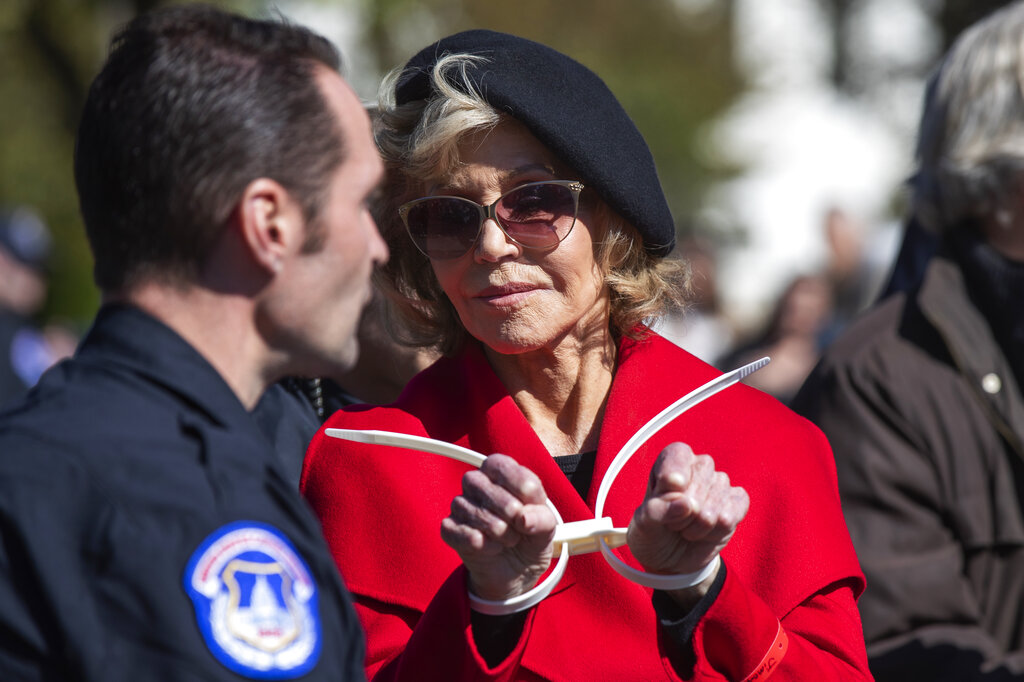
I see you brought your red coat with you this morning. You were wearing this at a lot of your climate protests.
Every climate protest. Yes, that’s my iconic red coat.
I listened back to an interview that you did in 2019. You talked about how this was going to be the last piece of clothing you purchased.
I have not bought any new clothes. I’ve been given a few pieces, but I haven’t bought anything. It’s my way of saying, “enough to fast fashion.” We have to transform our fashion industry along with farming, how we treat the soil and a lot of other things — a lot of work to do. That’s why today is a very important day. We’re back. This is a new beginning. We have a new year coming. We have eight years left. We have to raise our voices.
You’ve mentioned this eight year idea. If you can just just unpack that for us.
Yes. Well, the climate science is telling us that by 2030, we have to have cut our fossil fuel emissions in half to keep warming at a certain level, specifically 1.5 degrees Celsius below what it was prior to the Industrial Revolution when we started burning fossil fuels. That is, so that we can try to keep ecosystems from collapsing, the critical ecosystems like forests and oceans and the ice caps at both ends of our poles. Our life depends on the health of those ecosystems. That’s why it’s so important to cut emissions and cut them fast, and we’re going in the wrong direction. But if we raise enough opposition, we can stop it.
What’s next for you? Are you planning to be in D.C. regularly protesting? Will you need to get arrested again?
We will be back eventually, but we’re going to spend the next six months in the Gulf area — Texas, Louisiana. It’s the eye of the hurricane. It’s where the most fossil fuel development, the refineries are. It’s why that part of Louisiana along the Gulf is called “Cancer Alley.” These are sacrifice zones, people of color, poor people live here, people who depend on shrimping and fishing. Their businesses and their lives are being destroyed by the presence of all this fossil fuel. And so we’re going to go there to focus on what’s happening and all the new gas and oil developments that the Biden administration wants to have happen there. We want to try to stop it.