Jacob Fenston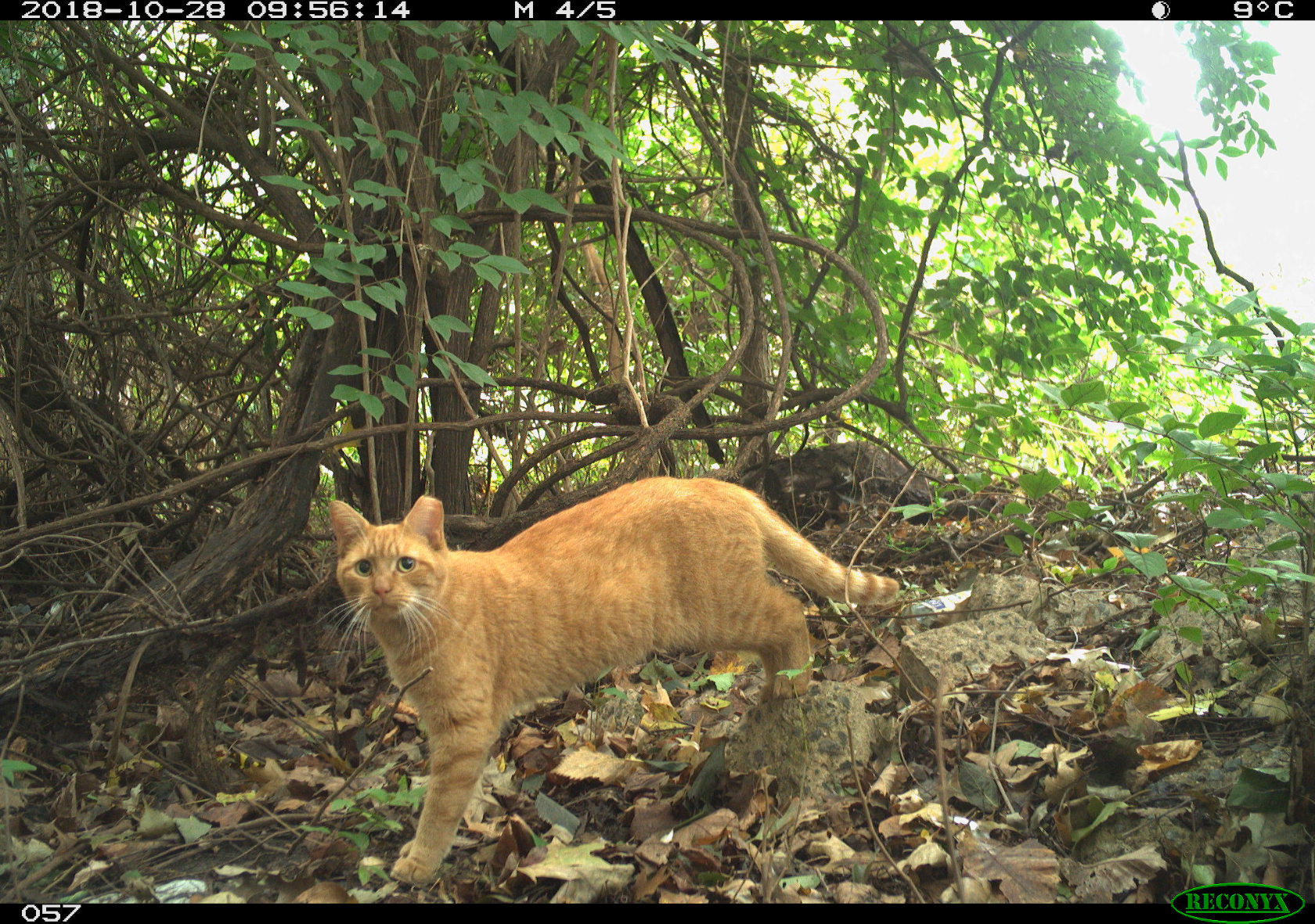
Cats may be cute, but they’re also cold-blooded killers. Scientists tell us these fluffy brutes may be responsible for the slaughter of billions of birds and mammals each year.
But it stands to reason that cats’ impact on the environment depends on where they live. New research supports that hypothesis, showing that D.C. neighborhoods near forested parks are most likely to have lots of cats coexisting with lots of wildlife. The results, researchers say, could show a way forward in the sometimes heated debate that pits cat lovers against conservationists and others concerned about the welfare of native wildlife.
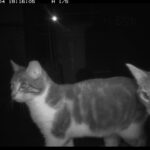
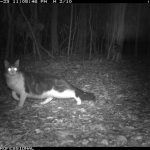
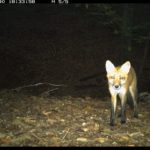
The research is based on data from the D.C. Cat Count, a three-year-long effort to catalogue all members of the Felis catus species currently residing in the nation’s capital. During the project, researchers placed wildlife cameras at 1,530 locations across the city — in alleys, on sidewalks, in people’s yards, and in public parks.
“The product was this massive dataset of cats and wildlife across the city,” says lead author Daniel Herrera. Herrera participated in the cat count working for the Humane Rescue Alliance and is currently a PhD student at the University of Maryland.
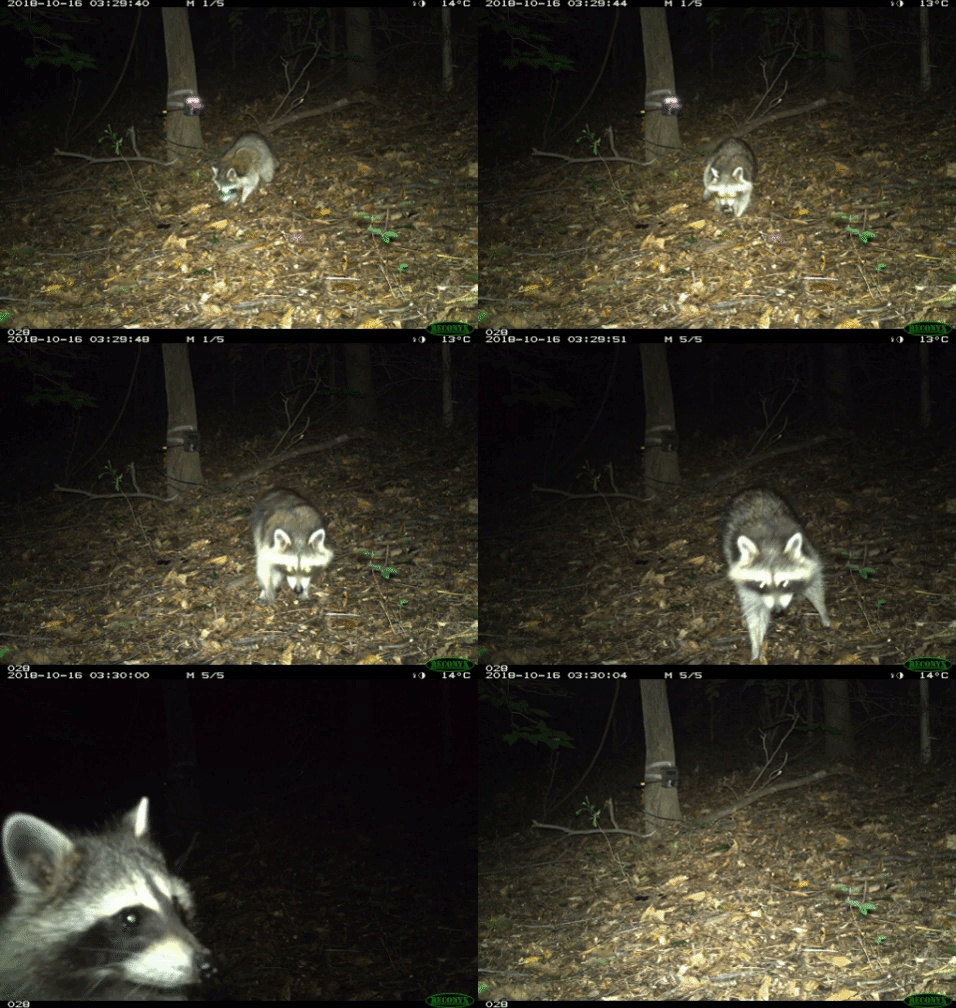
The cameras captured images of 22 species of mammals. This included 33,134 observations of domestic cats, 31,966 observations of eastern gray squirrels (many of which are actually black), 8,067 of observations of raccoons, 2,785 of red foxes, 2,407 of Virginia opossums, 1,044 of eastern cottontail rabbits, 980 of eastern chipmunks, 717 of groundhogs, and 448 of white-footed mice.
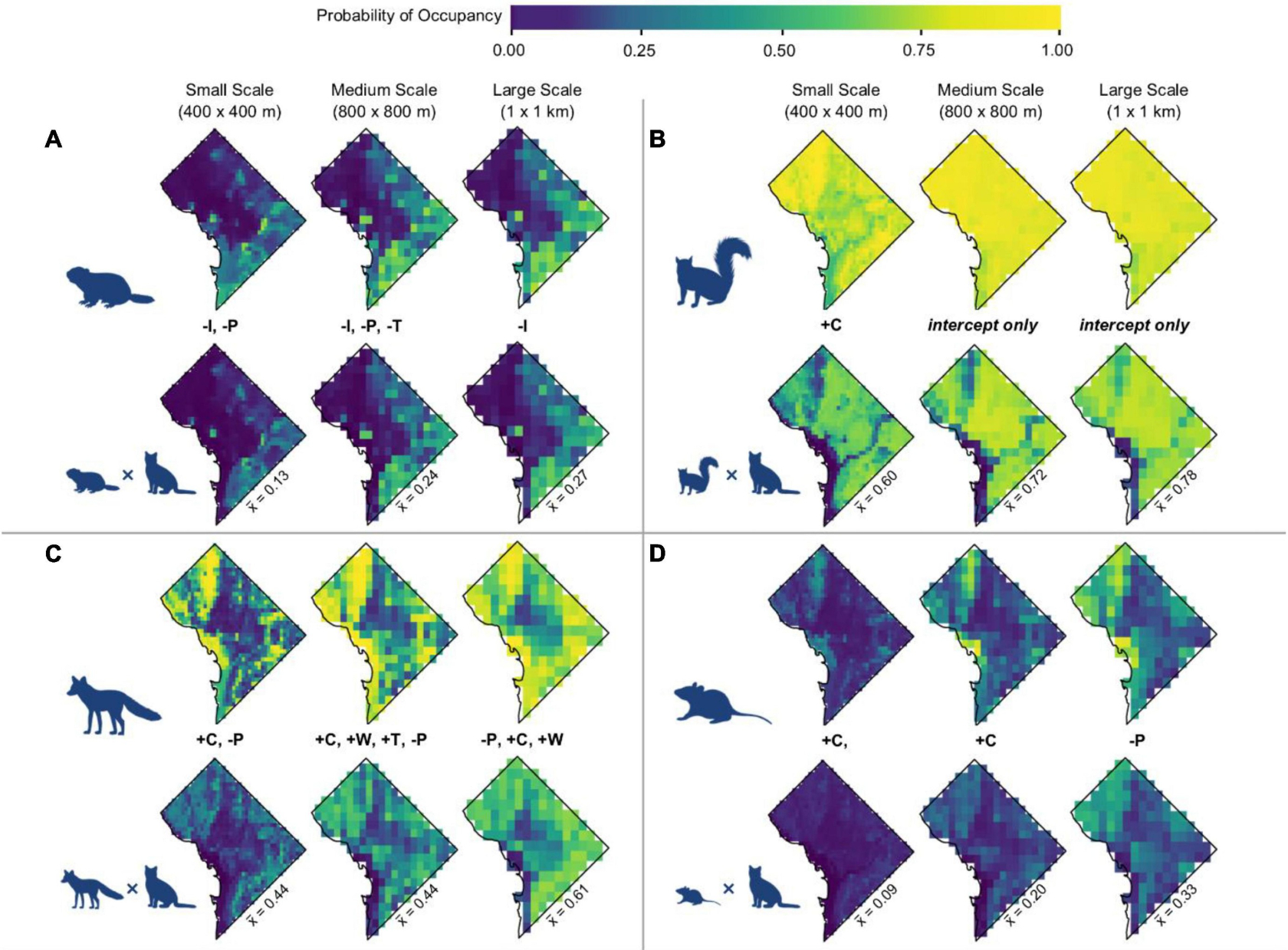
Researchers used the data to map out where outdoor cats are most likely to live in the city, where native wild animals are most likely to be, and where the two groups are most likely to overlap.
Cats, unsurprisingly, were most associated with human population density — more humans, more cats. On the other hand, cats had a negative association with tree canopy cover and water.
Wild animals were just the opposite: they were more associated with areas of high tree canopy cover and with access to water, and were less likely to live in more areas with higher densities of humans.
“So we see this partitioning spatially between cats and wildlife across the city, in theory,” Herrera says.
In practice, however, that spatial partitioning is blurred along the edges.
“Right at the fringe between the natural environment and the human environment, where you have resources that can support both populations, you’re going to see some mixing there,” says Herrera. “That’s where the risk is presumably highest.”
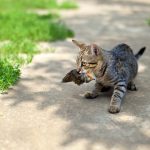
This builds on previous research using the same cat count data, that looked at images of cats carrying prey to determine where and what they were killing. The results showed that at about 800 ft. away from forested areas, cats were more likely to kill invasive rats than they were to kill native mammals. That suggests that if cats can be kept outside this buffer area, wildlife will be largely protected, the authors say.
Cats will be better off too, Herrera says, in less danger of being attacked or killed by a wild animal, or of contracting a disease.
“A family would never open its door to a potentially rabid raccoon and let that in at night to come sleep with them. But we do that with cats all the time. We don’t necessarily know what the cat has picked up out in the woods, but we let it back in at night,” Herrera says.
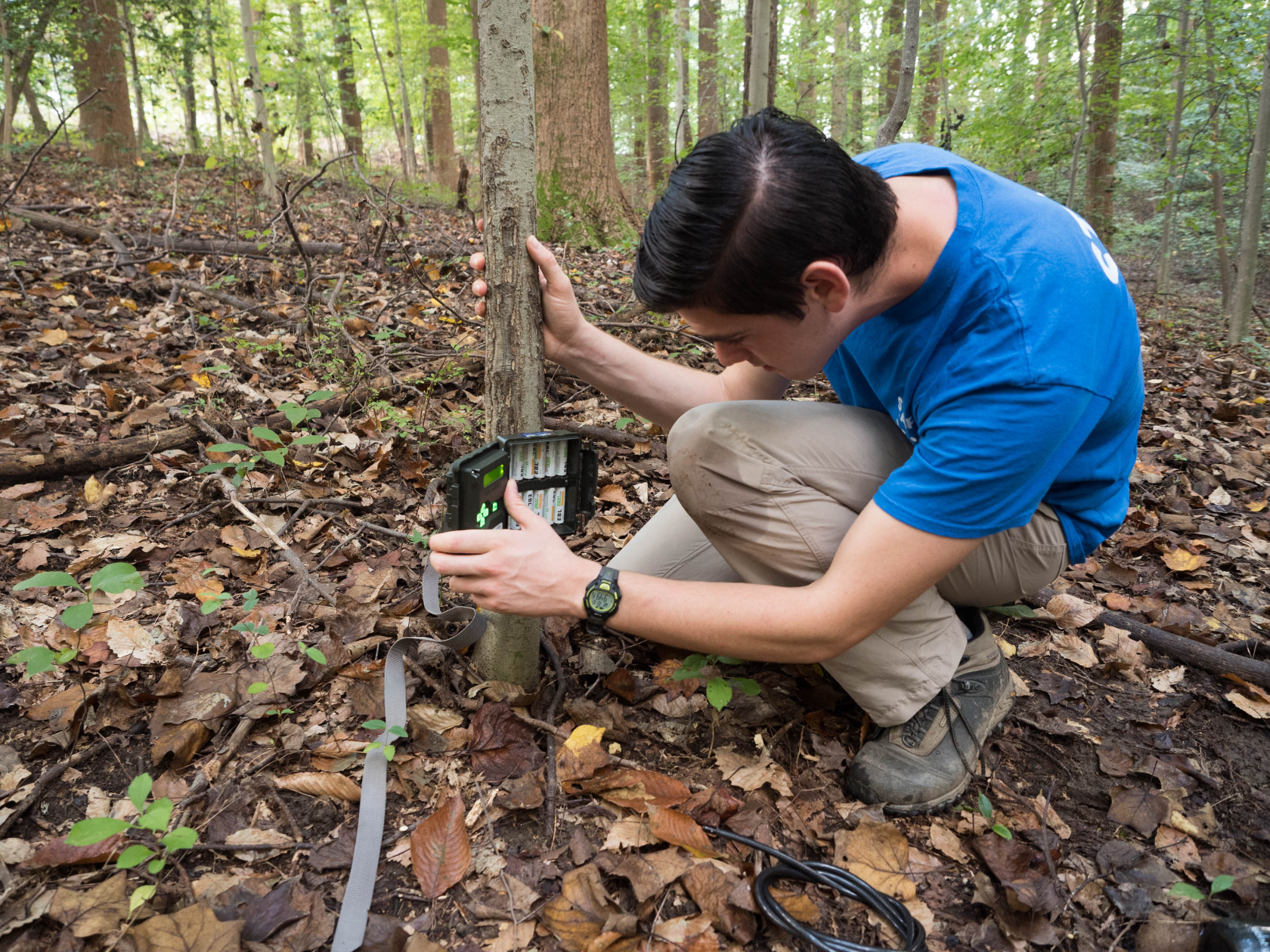 Bill McShea, a wildlife ecologist at the National Zoo’s Conservation Biology Institute, also worked on the cat count and the research papers. He says neighborhoods abutting Rock Creek Park, Anacostia Park, the National Arboretum, and other large parklands have the highest risk for cat-wildlife conflict.
“We can concentrate our efforts in areas where there’s the most possibility of overlap and the most possibilities of disease or predation effects,” McShea says.
These efforts could include public outreach encouraging residents to keep cats inside, removing feral cats from areas near parks, and not returning feral cats to buffer neighborhoods, if they are trapped and neutered, McShea says.
“We don’t have to do things across all of D.C. — that’s a large effort and a large territory to cover,” McShea says.
The study did not consider the impact on birds, as they are not likely to show up in wildlife cameras. But the earlier predation research did include birds, and Herrera says the 800-ft. buffer still applies.
There is a long-simmering debate over the impact of cats on native wildlife — especially the practice of managing feral cat populations through trap, neuter, and return, known as TNR. Proponents say this is a humane way to keep feral cat populations in check, and reduce them over time, without euthanasia. But opponents say it’s tantamount to intentionally releasing an invasive species into the ecosystem.
“The concept of outdoor cats is a very emotionally charged issue,” Herrera says. “Here we identify this common ground, where we can protect cats and wildlife alike by separating cats from wildlife habitat.”