Héctor Alejandro Arzate
Every year on Dec. 12, thousands of people throughout the Americas gather to celebrate the Virgin of Guadalupe – it’s a Catholic holiday to commemorate when the Virgin Mary appeared to Saint Juan Diego on the hill of Tepeyac, Mexico in 1531.
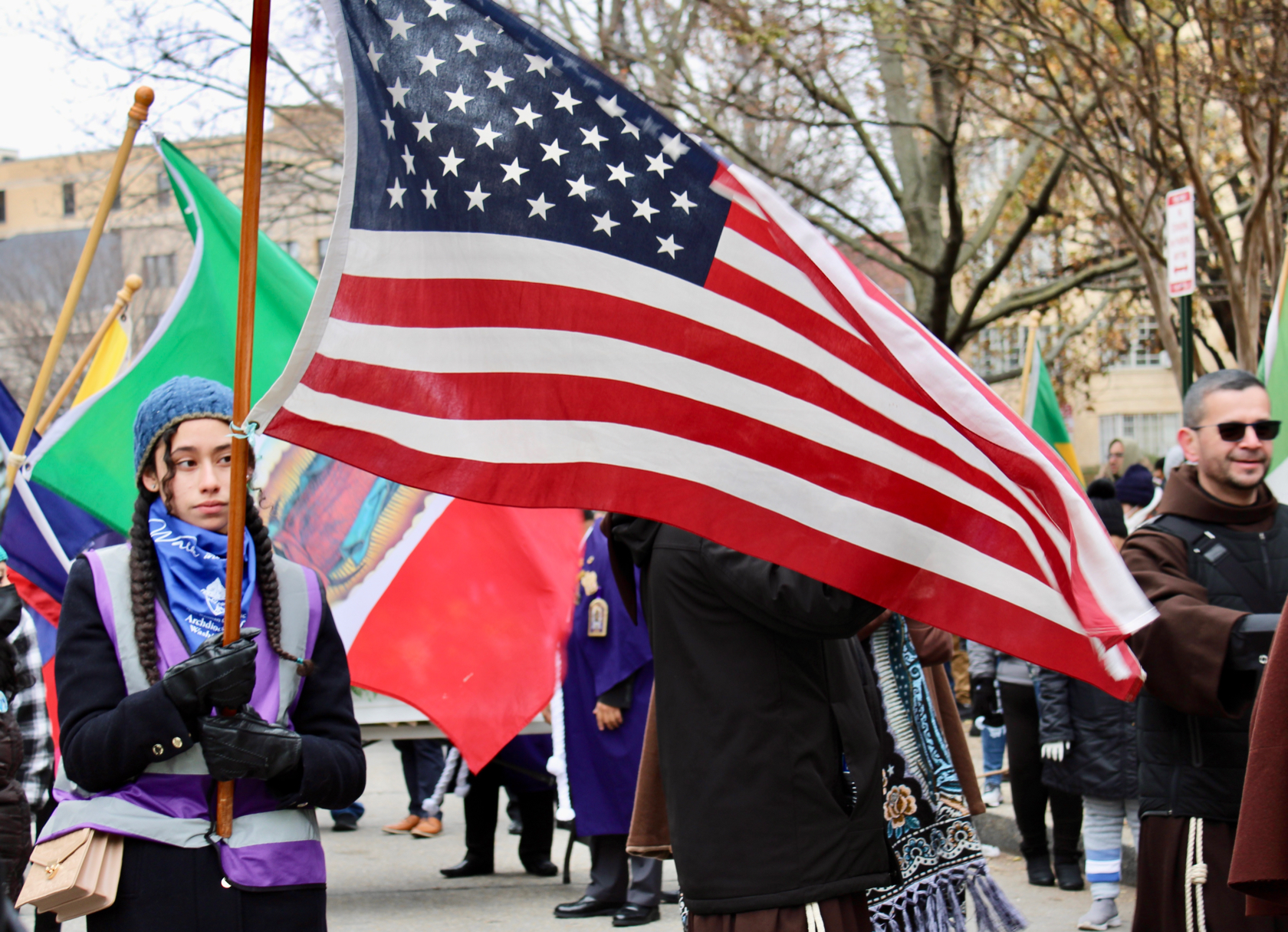
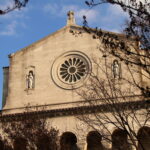
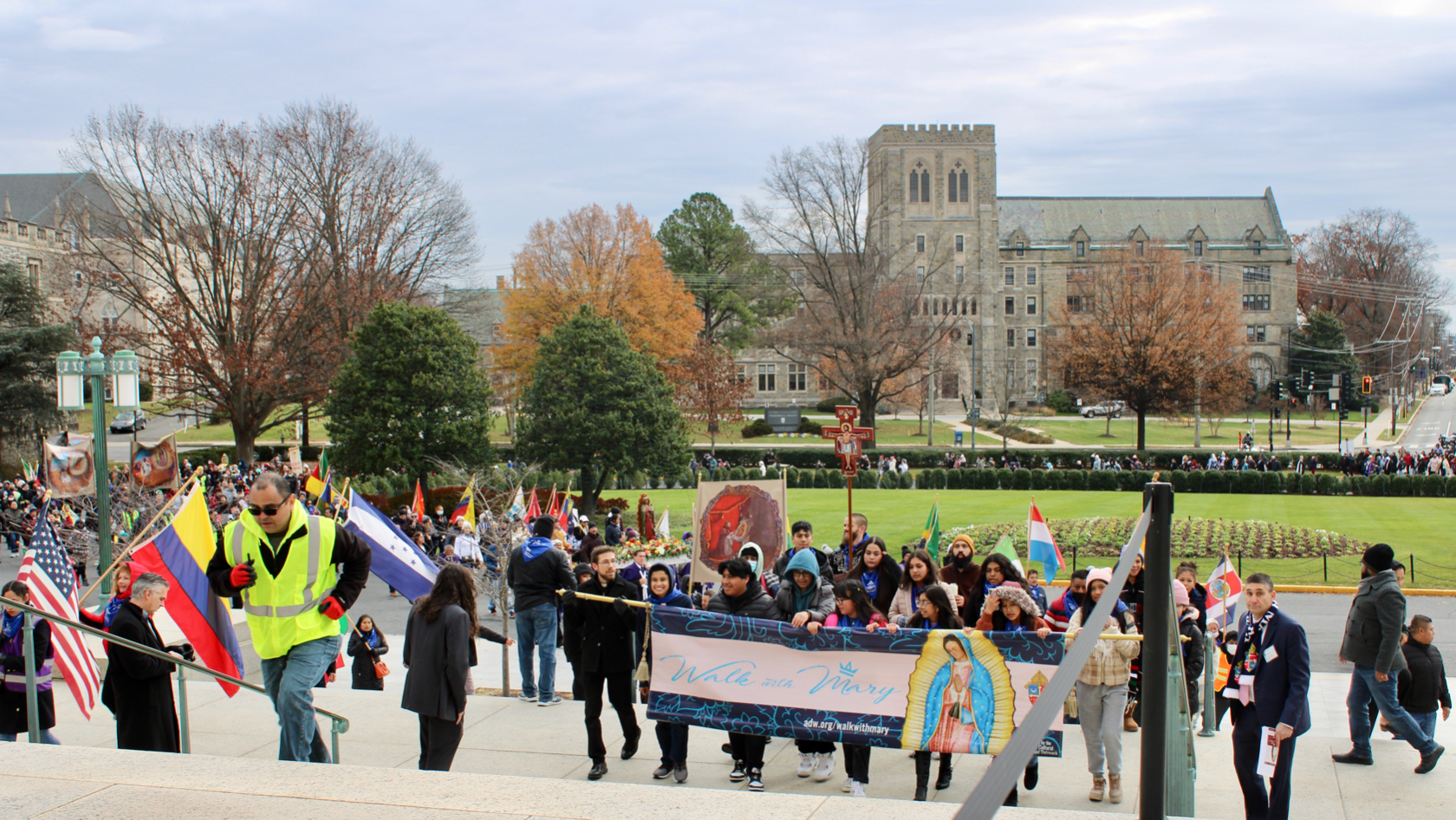
While many will make a pilgrimage to her shrine in Mexico City, some Catholics in the D.C. region choose to take part in a local, annual parade. This year it was on Saturday, and hundreds of people walked more than two miles from the Shrine of the Sacred Heart in Columbia Heights to the Basilica of the National Shrine of the Immaculate Conception in northeast D.C.
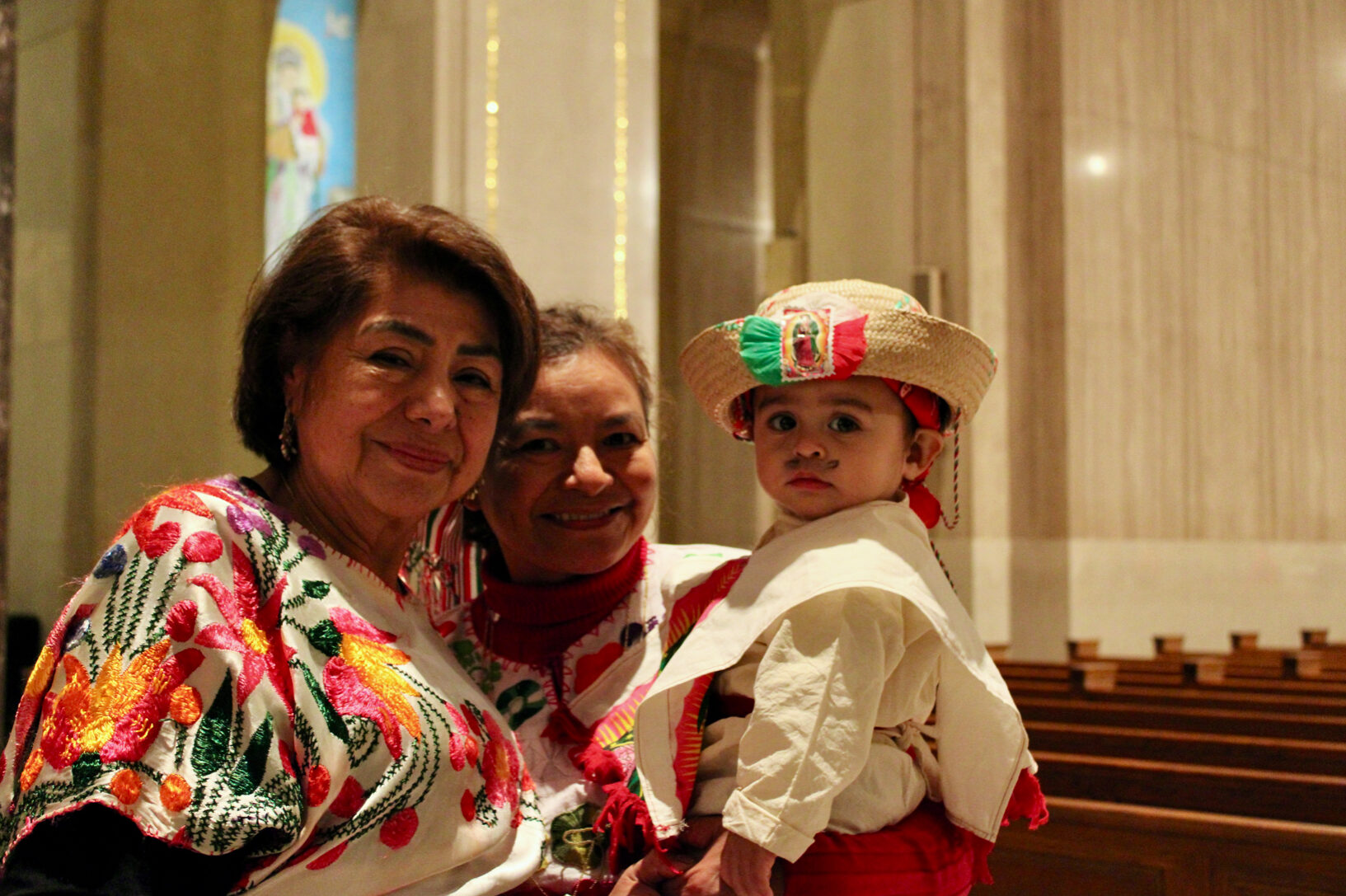
For people like Lupita Jimenez, it’s a holiday to celebrate her Mexican heritage, but it’s also a unifying tradition that she feels honored to share with other immigrants.
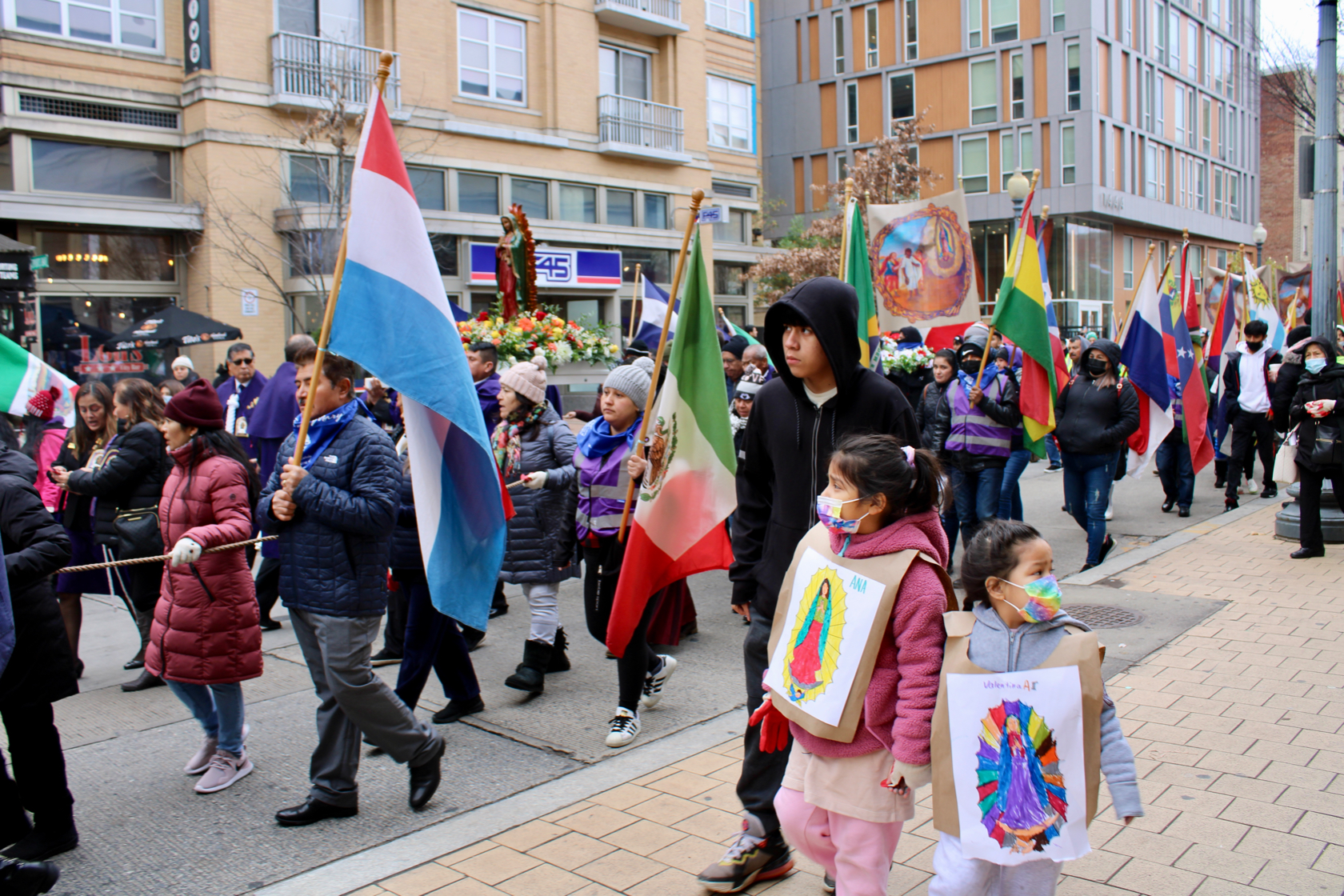
“All this takes us back to our roots,” said Jimenez, who lives in Gaithersburg, Md. “We all immigrate, leaving [behind] our family, our culture, our roots, our food.”
This year, the parade’s theme was “accompanying and praying for the migrant community,” to advocate for immigration reform, chosen by the The Roman Catholic Archdiocese of Washington.
“If you see there are many people from all places who come,” said Héctor Dominguez, who was born in El Salvador. “The main theme is for the immigrants. For the [immigration] reform that hasn’t come for all those who fight, some who die on the border, and entire families who are shattered.”
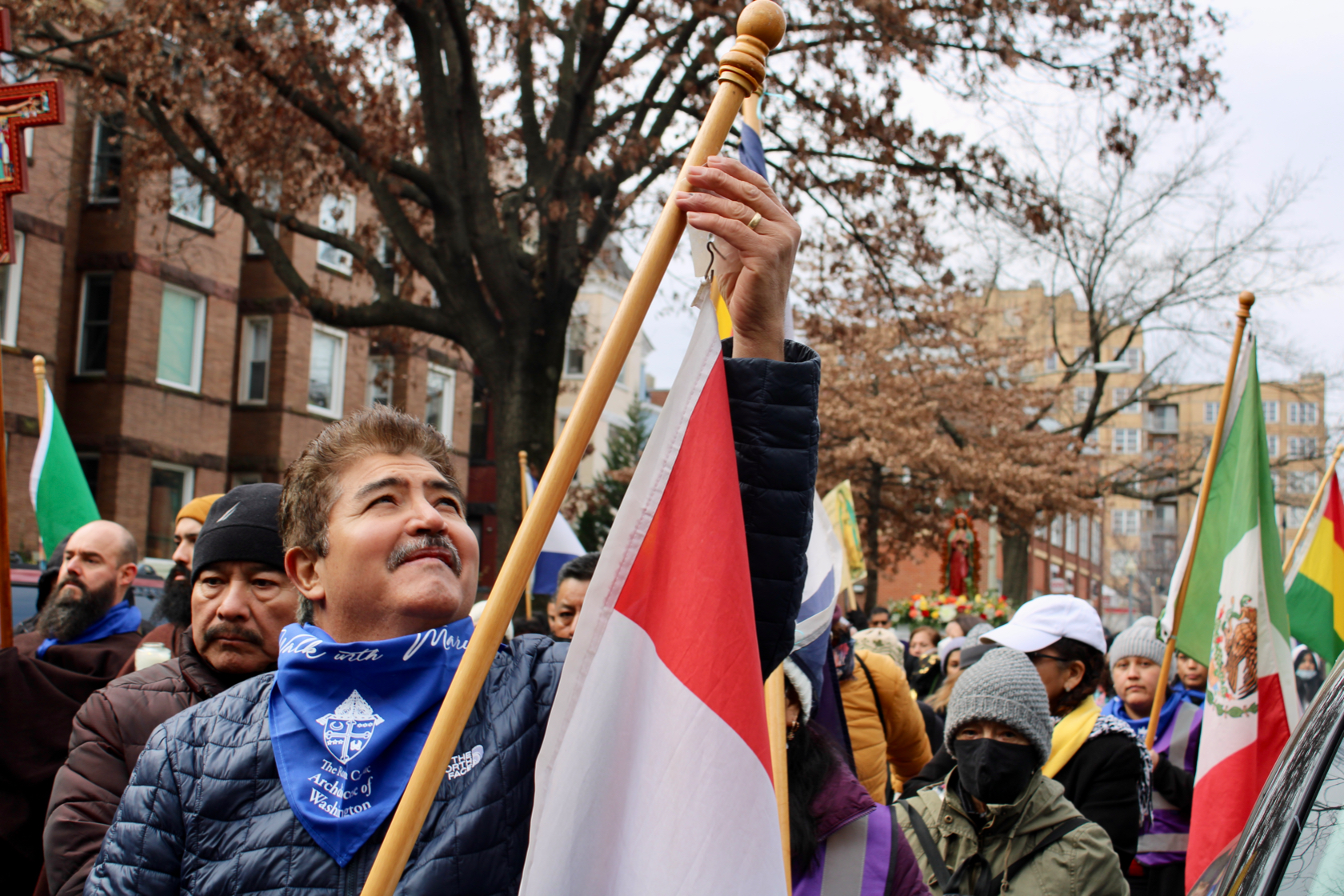
The procession was led by clergy members who carried a statue of the Virgin of Guadalupe with them as they made their way through the District streets. The march was also flanked by volunteers with the Archdiocese who carried the flags of dozens of countries, mostly from the Americas and other countries with large Catholic populations.
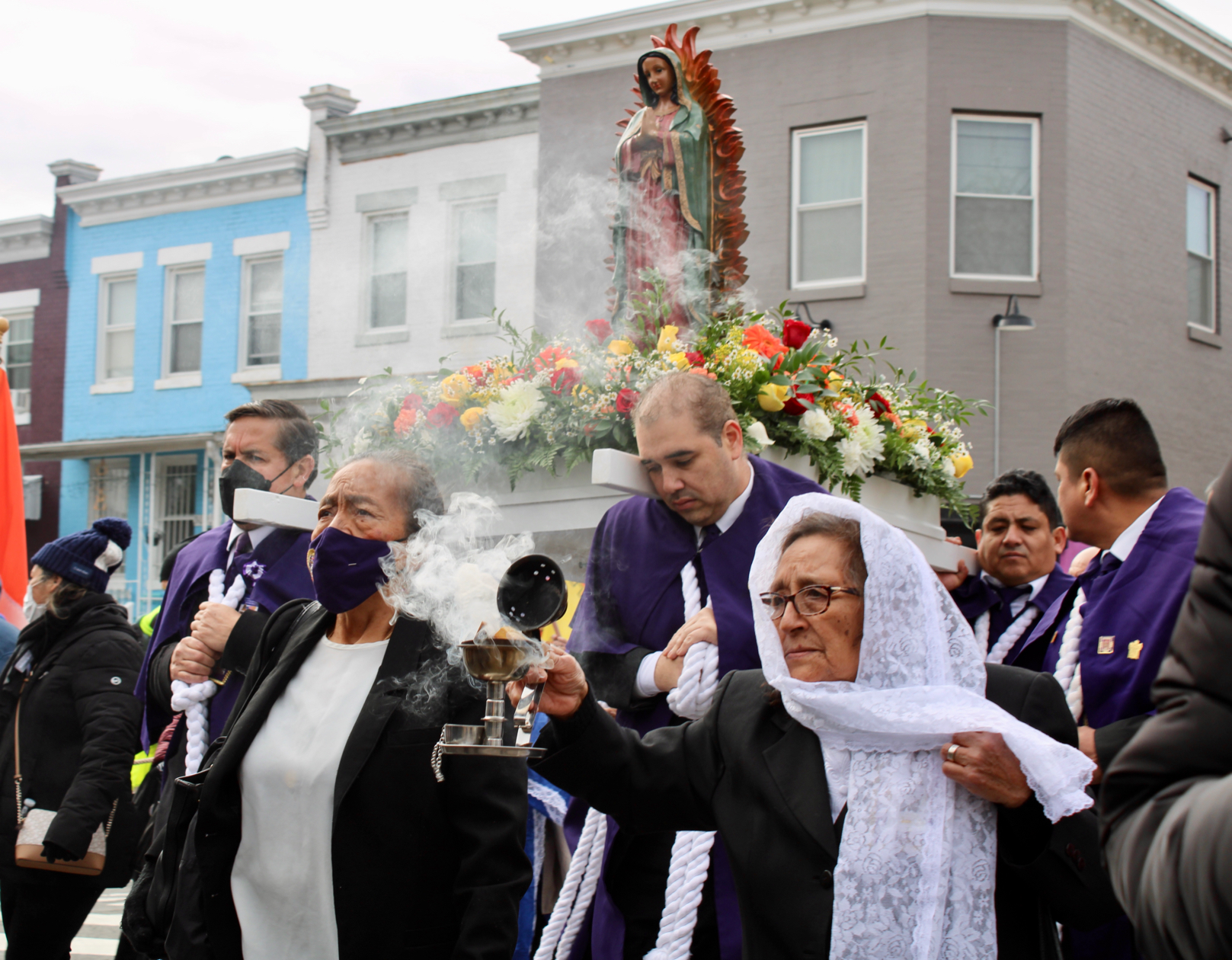
“The Virgin of Guadalupe is the patroness of all of [the Americas],” said José Moran, who was born in El Salvador. “[The holiday] is dedicated to immigrants because [citizenship] is important… There are many people who are in the dark. [Immigration reform] would benefit the country as much as it benefits us.”
As an immigrant, Lorena Herrera says her faith is deeply connected to fight for recently arrived families and refugees. She was born in Mexico and has lived in Riverdale, Md. for 16 years.
“We hope that many immigrants, like me, can have a better future in this country. Since we live here, we work here, we have our family here, our kids. I think our kids are the future of this country, and we leave it in the hands of our Blessed Mother,” said Herrera.
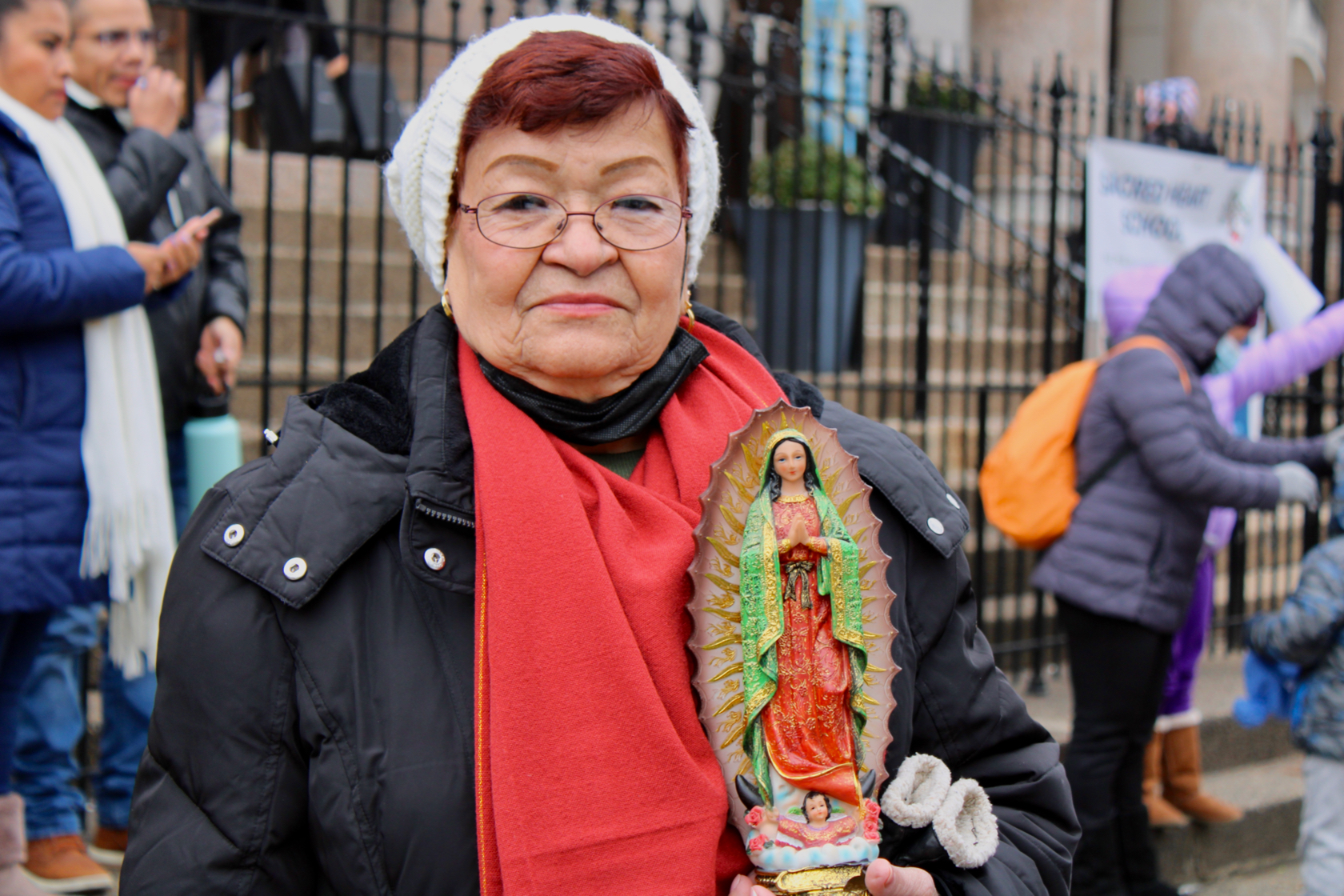
To show their devotion, some marchers carried small statues and drawings of the Virgin of Guadalupe, while others dressed in the clothing of Indigenous people like Saint Juan Diego. Among them was Briselda Cruz, who wore a scarf depicting the appearance of the Virgin of Guadalupe. She said the march is how the devout choose to welcome newcomers to the U.S.
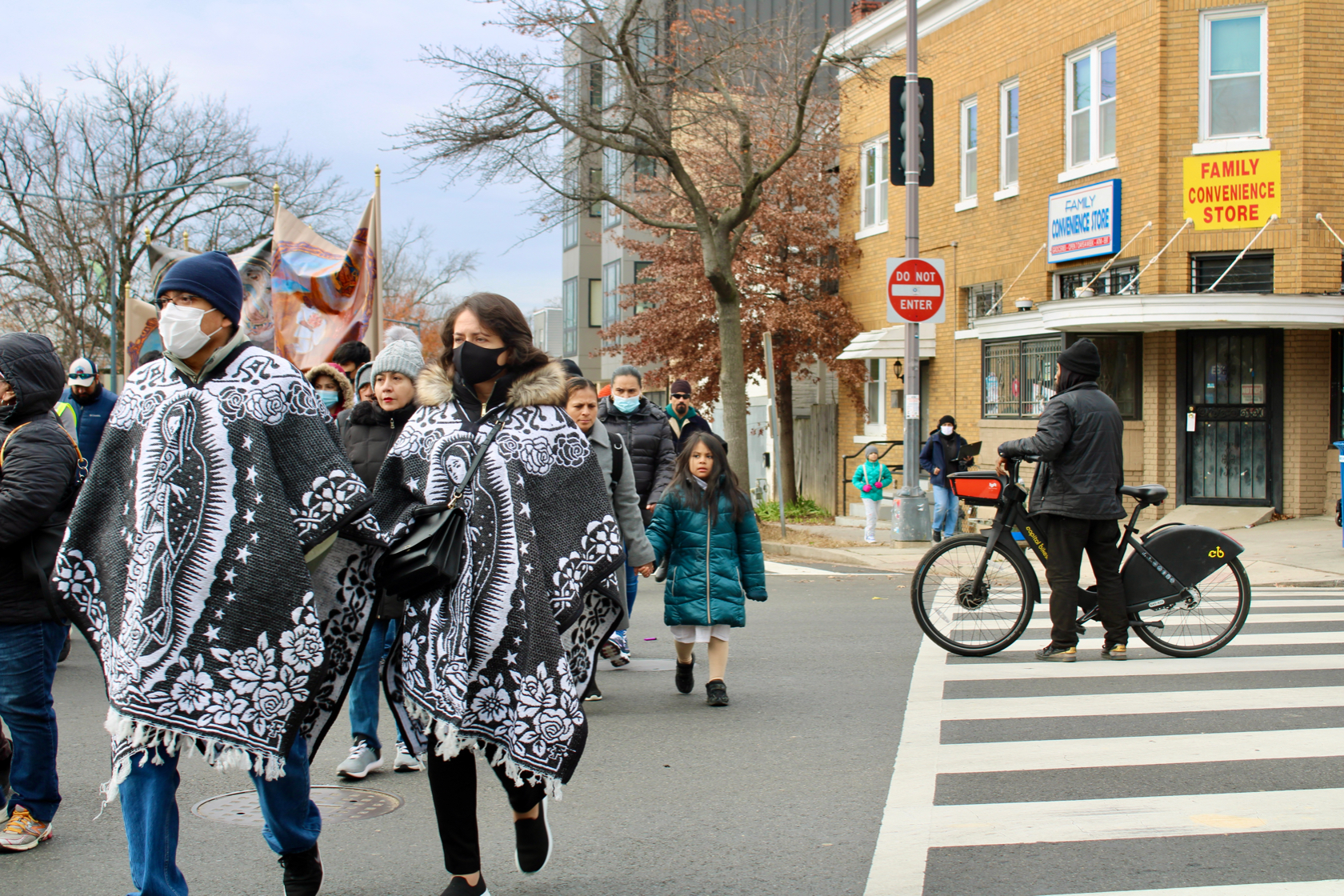
“It’s very important because in the word of God, it tells us to love one another,” said Cruz, who lives in Waldorf, Md. “That’s what we’re doing, reflecting love onto our neighbors and ourselves so that we can help those in need.”
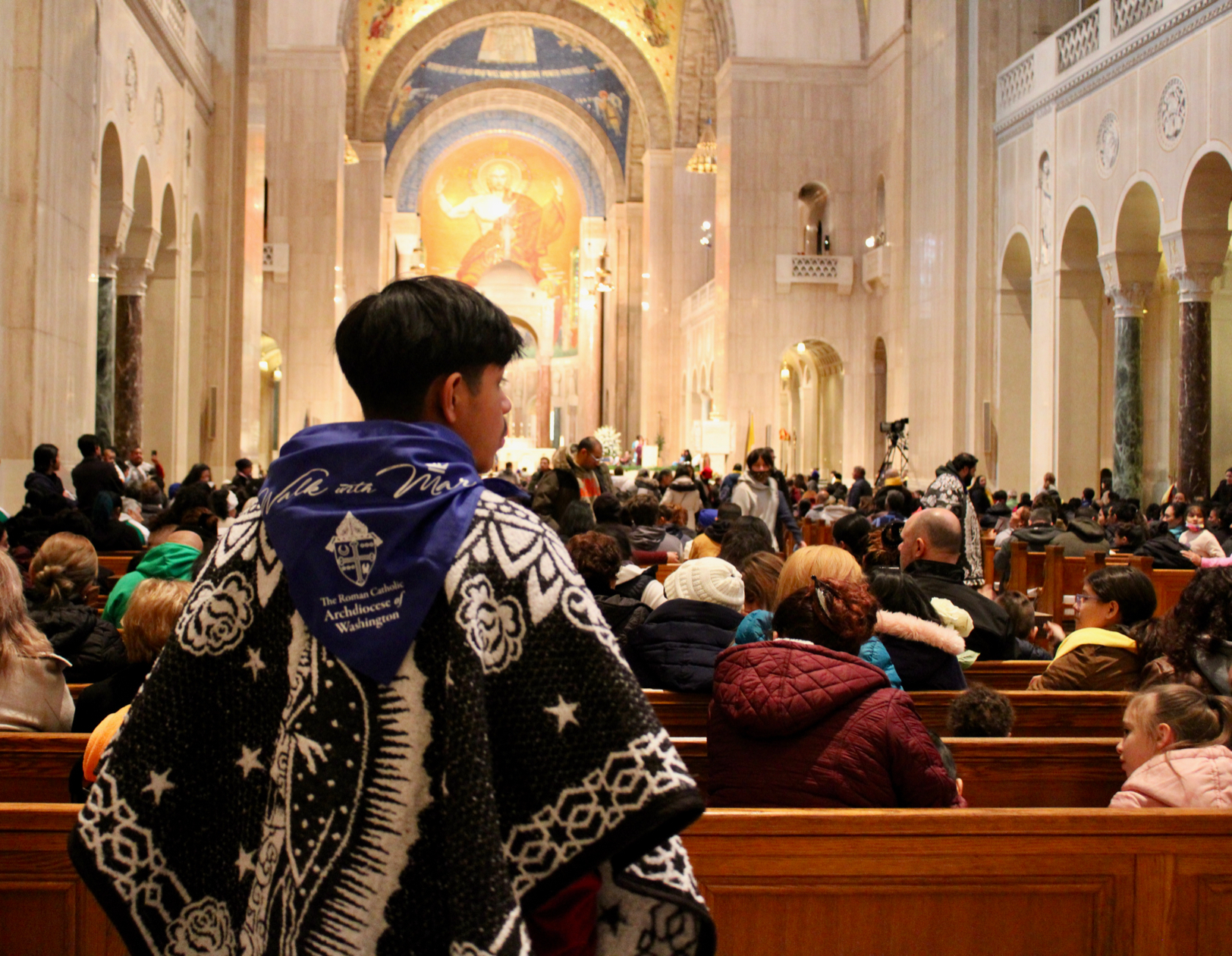
Other attendees wore ponchos, shawls, and t-shirts representing their patroness. Nelson Soto draped himself in a colorful blanket of the Virgin of Guadalupe, which he tied around his neck to represent his faith.
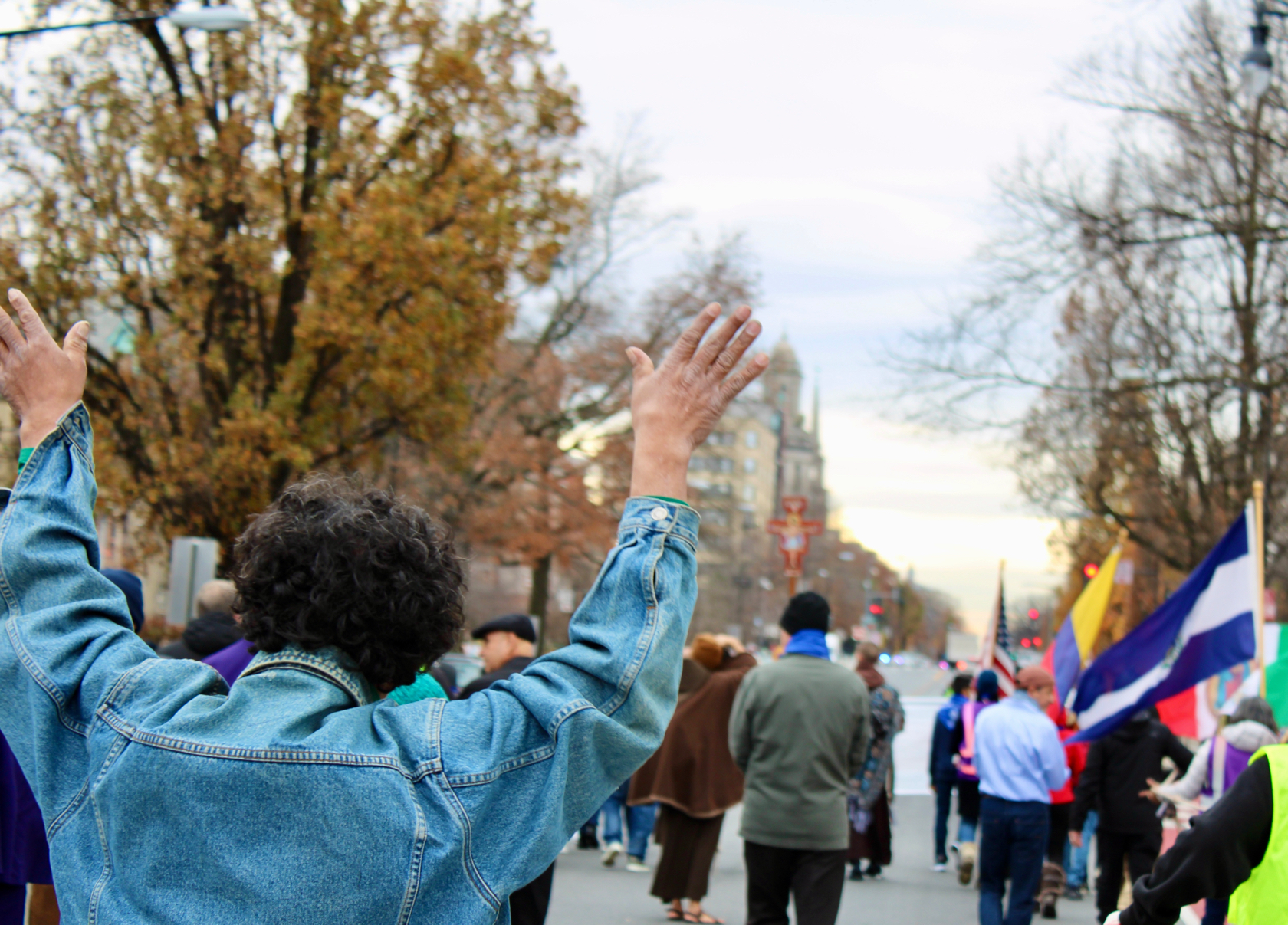
“I felt so happy to have come for the second time in a row, and I feel very happy to see so many people each year congregate or continue to walk with the Virgin,” said Soto, who was born in El Salvador. “We wish that one day, things will be better for all of us [immigrants]. So that we don’t have fear in this country because of all the laws that sometimes accuse one [for being an immigrant].”
While many of the day’s attendees were from Mexico and El Salvador, there were also immigrants from other countries – including Sabine Mafouma, who was born in Cameroon. Earlier this year, the Biden administration designated Temporary Protected Status to Cameroon, which allowed immigrants from the country to stay in the U.S. for 18 months.
“I never been here before so it’s just very amazing for me,” said Mafouma, who lives in Gaithersburg. “We know [that] racism is a human being thing, but we can’t do anything about it. What we’re doing is just to pray for peace, for reconciliation, for all good hospitality to receive so we can join all of us together in Christ.”
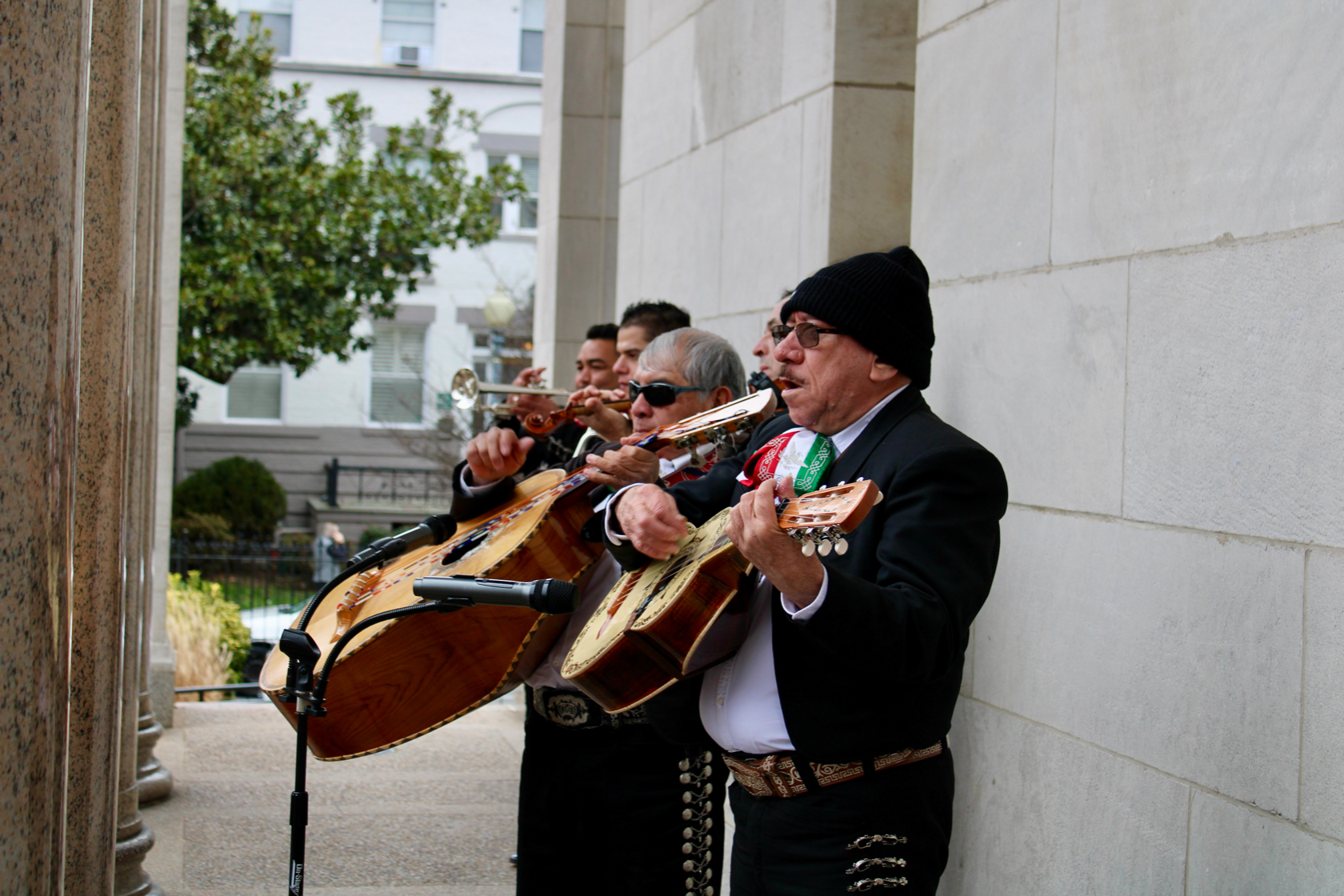
As the hundreds of marchers made their way up the steps of the National Shrine, the Silver Spring-based mariachi group, Son De América, played away. According to frontman Jorge Fernandez, it’s a time honored tradition.
“We feel like [performing is] a blessing,” said Fernandez. “So for us it’s a job but at the same time, it’s something we do with a lot of devotion and a lot of love.”
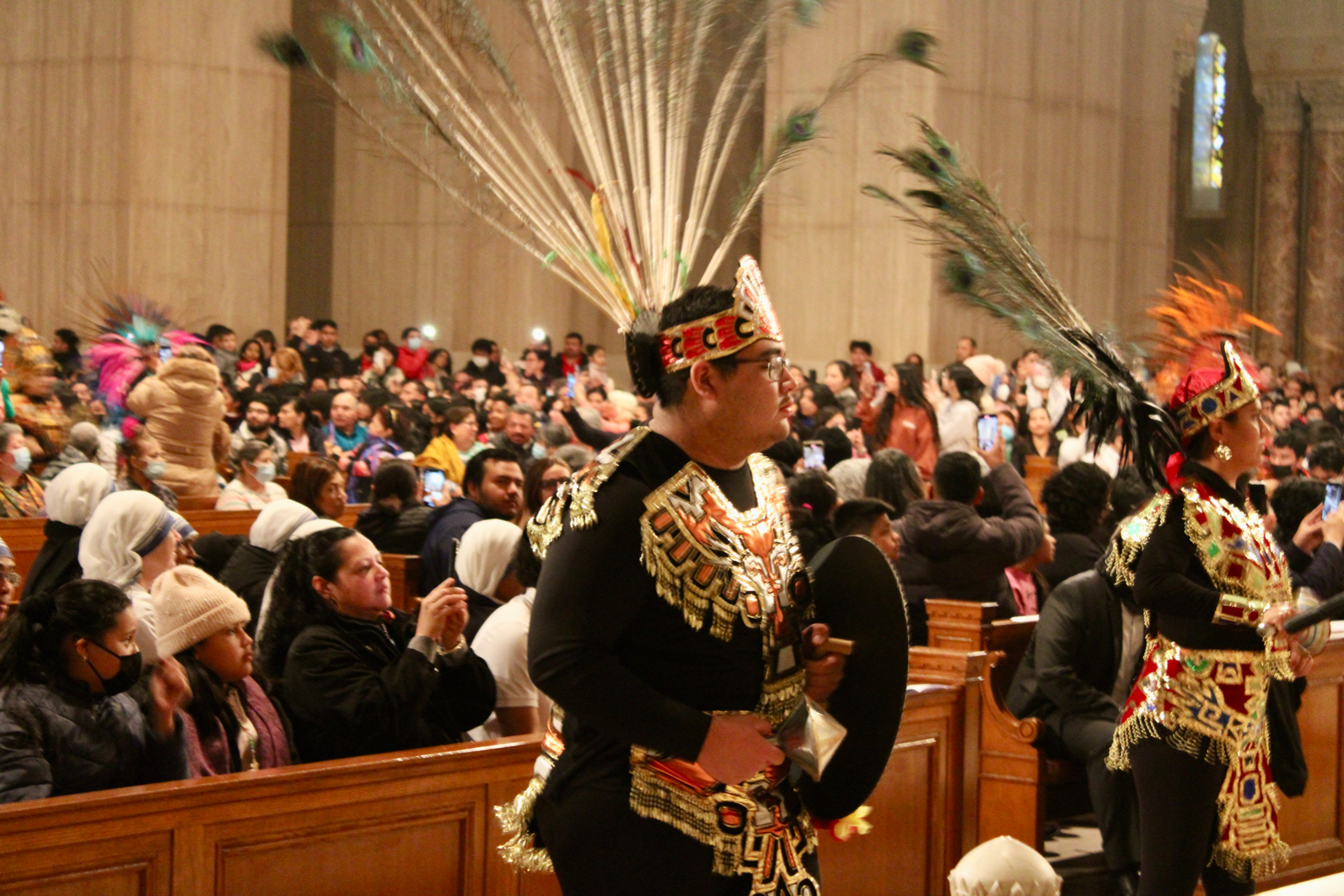
Once inside, the marchers participated in the praying of the rosary before mass. Dancers with De Colores Folklorico, a group based in Gaithersburg, performed an Azteca-style dance. An actor portraying Saint Juan Diego displayed his tilma, which is a cloak that is said to have received the image of the Virgin Mary.
Angelo Rodriguez, who’s been part of the dance group since he was a young child, said the ceremonial dance is meant to honor Indigenous Mexican traditions while also celebrating the Virgin Mary.
“I’m proud that I do this,” said Rodriguez, the son of Mexican immigrants. “I know my roots.”
During the services, Auxiliary Bishop Mario Dorsonville spoke to the impact that the Virgin of Guadalupe has had throughout the continent and called for churchgoers to continue advocating for immigrants applying for temporary protected status and the Deferred Action for Childhood Arrivals program.
“The Virgin of Guadalupe always comes to meet those who need her most, and she continues to walk with all of us,” said Dorsonville, who was born in Colombia and is the former chairman of the Committee on Migration for the U.S. Conference of Catholic Bishops.
“Our migrants and refugees are the face of [Saint Juan Diego], who has the maternal protection of the Blessed Virgin of Guadalupe,” continued Dorsonville. “She asks us to do the same. That we love each person: the sick, the poor, the laborer, the immigrant, the one who is different from us – full of stories of pain, joy and hope.”
As a Guadalupana, Jimenez says she will continue to do what she has always done: She’ll turn to her faith in hopes of a better future for immigrants both in D.C. and across the country.
“I have always said that [the U.S.] is a trampoline to realize all of the dreams of our children,” said Jimenez. “But hopefully, God willing and the Blessed Mother, that soon there will be something for us immigrants.”