Amanda Michelle Gomez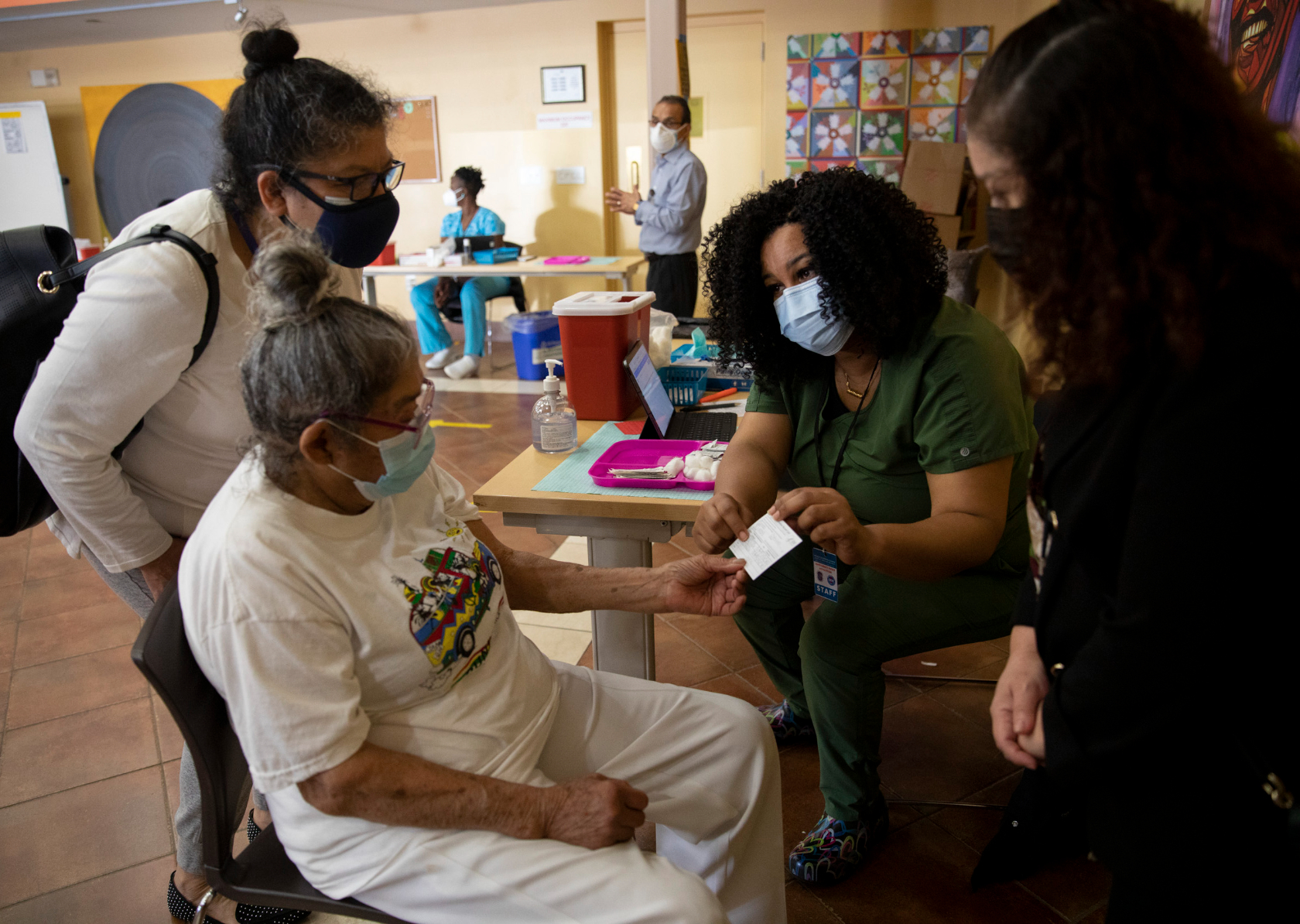
Heading into the holiday and influenza seasons last month, only 31% of D.C.’s nursing home residents and 30% of staff were up to date with all their COVID-19 vaccines, according to a new analysis from the Kaiser Family Foundation.
D.C.’s experience tracks with nationwide trends — less than half of all nursing home residents (45%) and less than a quarter of staff (22%) around the country received all their booster shots just before Thanksgiving. Maryland fared slightly better among nursing home residents, with 52% boosted, but not with staff, at 24% boosted. Meanwhile, Virginia’s booster rates among nursing home residents and staff were 46% and 22%, respectively.
The health nonprofit called the findings “concerning” given that people in long-term care facilities have a higher risk of deadly outcomes if infected with COVID-19. At least a fifth of all COVID-19 deaths nationwide are among nursing home residents and staff, by Kaiser Family Foundation’s count.
The analysis is based on Nov. 20 data provided by facilities to the U.S. Centers for Disease Control and Prevention. Facilities are expected to report the share of residents and staff that have received all their COVID-19 vaccinations, including the bivalent booster. Health experts have encouraged people to get the booster targeting the highly contagious omicron subvariants because it will restore protections that have waned since previous vaccinations.
However, uptake of the booster vaccine overall has been lower compared to the primary series. In D.C., 26% of the local population 5 years old and over have received their updated booster dose, as of Dec. 7, according to the CDC. Maryland and Virginia have lower rates, at 20% and 17%, respectively.
At Jeanne Jugan Residence, a nursing home community in Northeast D.C., 91% of residents are up to date on their COVID-19 vaccinations, while 51% of the 131 staff — some part-time, some full-time — are, according to their communications director Constance Veit
Veit attributes the higher rates not to mandates or incentives, but to staff encouraging people to get the shot and counseling those who needed to overcome any fears. Jeanne Jugan Residence also offered the vaccine to both residents and staff, having Walgreens pharmacists come to the facility to administer the bivalent booster when it became available. Some people were eager to get boosted, says Veit, with a few getting the shot at their pharmacy before the facility made it available on site in late October. All of the nurse leadership got vaccinated, many before most other people to lead by example.
The facility saw multiple deaths related to COVID-19 at the height of the pandemic, says Veit. The facility has experienced other challenges, including staffing shortages, which other facilities across the country report too.
The Kaiser Family Foundation says the federal vaccine mandate contributed to high intake of the primary vaccine series. The federal government requires nursing facility staff to be fully vaccinated against COVID-19 in order to participate in the Medicare and Medicaid programs. But that requirement does not extend to booster doses. In October, the Supreme Court declined to hear a challenge to the mandate filed by 10 states.
D.C. has its own vaccine mandate for health care workers that also does not extend to boosters. A D.C. judge ruled earlier this year that a similar mandate for government workers is unlawful.
Kaiser Family Foundation’s recommendations include updating the vaccine mandate to reflect latest booster and creating new opportunities for on-site vaccinations. While current rates of COVID-19 deaths among nursing home residents and staff remain low, the nonprofit says a spike in deaths following the holidays is possible. Last year, deaths jumped from 35 per 100,000 people in mid-November to 131 per 100,000 in mid-January.
Hospitals have already been hit hard with the influx of flu and RSV infections. COVID-19 numbers are creeping up nationwide, as has become typical during the fall and winter months. But DC Health still reports low COVID-19 case rates, as well as hospital admissions due to COVID-19.