Colleen Grablick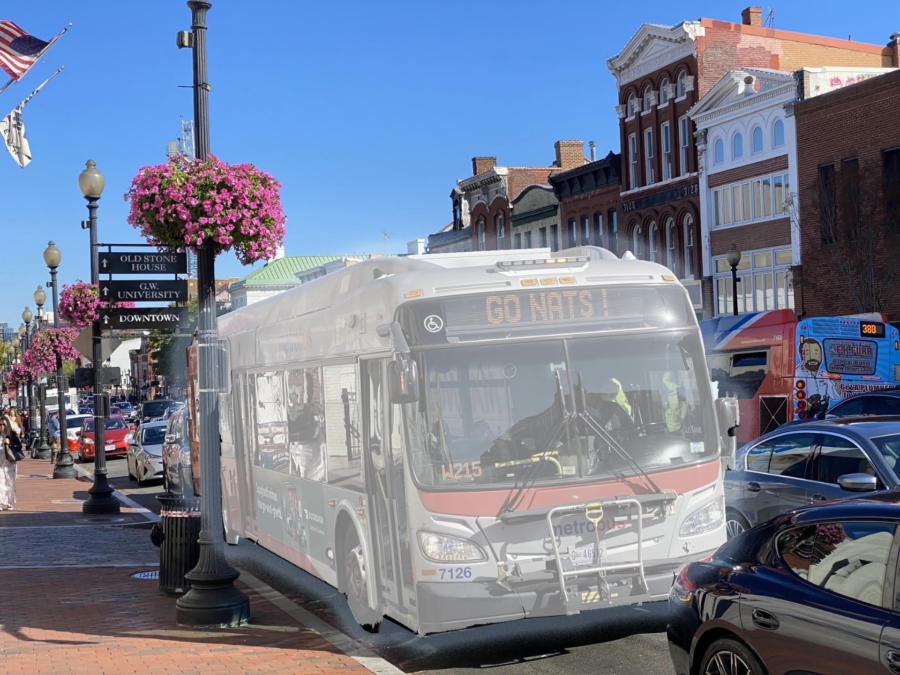
“Babe, it’s the last time, I promise.”
That’s what Metro said Friday about its chronic “ghost bus” problem, in which buses displayed on the real-time busETA website disappear from the location tracker mid-route, or simply never arrive at the scheduled stop. It’s a problem that’s frustrated riders for years, making it difficult to figure out when to the leave house or how late you’ll be for that 9 a.m. meeting. (An analysis from MetroHero, a third-party app that analyzes Metro’s data, found that 11% of all scheduled bus stops never happen).
But the transit agency says it has changed its ways.
“Nobody likes to be ghosted, especially by a bus,” Metro’s announcement states. “Today, Metrobus customers have more certainty that the location of a bus displayed on busETA is accurate.”
Starting Friday, WMATA software has been upgraded so out-of-service buses (either due to mechanical issues or operator availability) will not appear on the busETA website or other third-party tracking apps, like Google Maps and Transit. Previously these buses would show up along their scheduled route, creating the ghost bus problem. In the coming weeks, the electronic displays at bus stops should also improve in accuracy, according to the transit agency.
Ghost buses aren’t just a personal nuisance; they can set off a domino of problems for subsequent rides. Stops can get more crowded when a scheduled bus doesn’t arrive, causing the next bus to stop frequently, slowing down travel times. The solution delivers on a promise made by WMATA General Manager Randy Clarke in November, that the agency would improve its busETA technology by the end of the year and only display buses that are in service.
The good news from Metro follows a spate of recent wins for transit riders. Earlier this week, the agency announced that rail and bus service will be free after 8 p.m. on New Year’s Eve — but that’s just a taste of what’s to come in 2023, including more service in May and a low-income fare program. Last week the D.C. Council voted unanimously to approve a bill that would make all bus rides starting in the District free starting next July. The bill, which could also give every resident a $100 monthly SmarTrip credit starting in 2024, is still subject to one final vote next Tuesday to pass.