Natalie Delgadillo
As the year draws to a close — and all of us hover in the liminal space of that weird, wonderful week between Christmas and New Years — we at DCist are taking a moment to reflect.
It’s tradition, actually: Each year, we compile a list of stories that represents the best of our work in the previous 365 days.
This year, though, we’re doing things a little differently. Rather than hear about our year exclusively from an editor (i.e., me), we thought we’d gather the whole staff to tell you directly about their funniest, best, most impactful, or most meaningful reporting of 2022.
Everybody had a different answer, and picked their stories for different reasons: Some people liked being surprised by a new facet of their city, others enjoyed meeting new people, and still others loved connecting with residents who trusted them with sometimes difficult stories. This list is just a taste of our work over the last year, and it goes without saying that there’s so much more we’re proud of.
Nonetheless, we hope this list helps you reflect on your year in the D.C. area, just as it helped us. We’re excited for what 2023 has in store at DCist/WAMU and in the region more broadly.
And as always: thank you, truly, for reading. — Natalie Delgadillo, DCist Managing Editor

Voices of Wards 7 & 8, Youth Edition: ‘Some Adults Just Won’t Believe In Us’
My favorite story to work on this year was a collaboration with my colleague Dee Dwyer, who invited me to come along as we interviewed young people from Southeast D.C. about the kinds of support they felt they needed to succeed.
It’s been a year where teens and young people have been in the news for a whole host of negative things. But teens aren’t often actually interviewed and given the chance to speak for themselves. I learned so much from these young people and was so struck by their imagination, their humor, and their deep insights about what the city could do better. One kid, HaaŹari, said something I’ll never forget when he was talking about how it made him feel when his family came to his football games: “They make me feel like I’m worth them looking at.” –Jenny Gathright, criminal justice reporter

D.C. Schools Are Losing Educators. Teachers Have Solutions
This was my first major feature for DCist/WAMU, the sort that takes weeks of reporting and research. Being new to D.C. and not having covered education in-depth before, I was a little bit nervous about approaching this story, but I learned so much from the teachers and advocates I spoke to, who were very generous with their time and expertise. I’m glad that I got to focus on not just the problems teachers have been dealing with, but also the solutions they’ve been advocating to those problems. I was also able to build connections that enabled me to better report on other education-related stories, such as a recent citywide protest by teachers — Sarah Y. Kim, general assignment reporterr
The Politics Hour: April 29, 2022
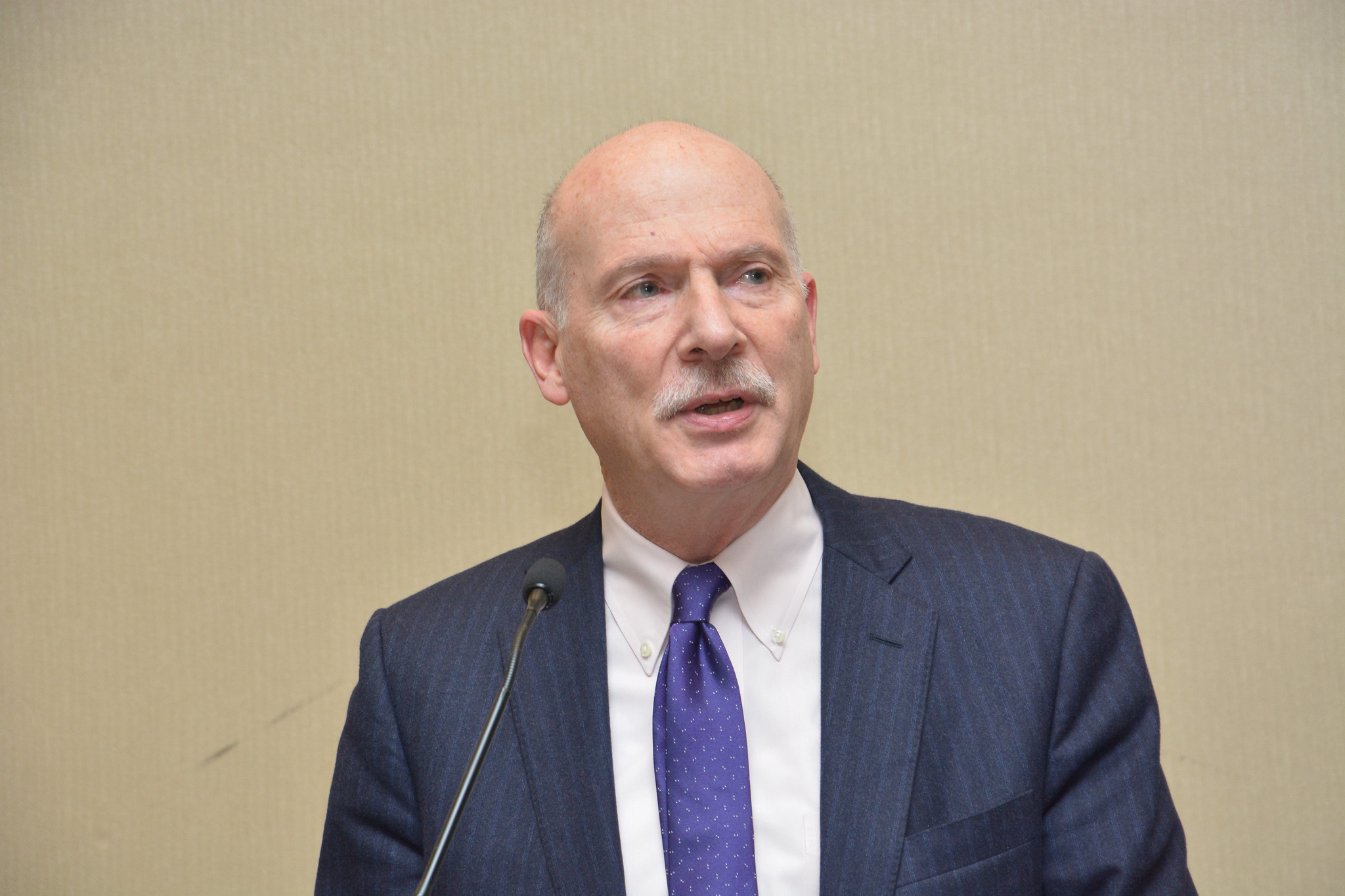
There’s nothing like having candidates on The Politics Hour. One of my favorite shows was when we had both Democratic candidates for D.C. Council Chair join us in the studio ahead of the primary. It wasn’t a debate, but a conversation. We heard where Phil Mendelson and Erin Palmer stood on issues like policing, education, housing, and taxes. We opened the phone lines to listeners. And we got to hear the candidates’ personalities as well throughout the conversation.
When it comes to booking candidates, scheduling can be tricky. I don’t know if it’s because of the respect for our show or because we got lucky, but I remember booking this was relatively straightforward. The hard part was whittling down the topics. Luckily, fill-in host Martin Austermuhle and Tom Sherwood did some rapid-fire questions to get the candidates on the record on the key issues. –Cydney Grannan, producer, The Politics Hour with Kojo Nnamdi

Meet The Silver Spring Man Donating Bicycles To Afghan Refugees
My favorite story that I worked on this year was about Manuel Vera, AKA the “Bike Dude.” I was reporting a different story about how newly arrived families from Afghanistan were struggling in the D.C. region when I met Vera at the Calvary Lutheran Church in Silver Spring. He was standing outside in the late summer heat with about a dozen bikes and his tools in hand. When I asked what he was doing, Vera told me that the bikes had been donated by his neighbors so that he could repair them and give them away to families from Afghanistan.
As the Immigrant Communities reporter at DCist and WAMU, I loved this story because it truly captured the heart of the stories I want to write and produce for our audience. It was a story about a man (himself an immigrant from Peru) supporting and welcoming immigrant families almost a year to the day that they were forced to leave their home country because of the Taliban.
Among those I’d met was Wahidullah Sahel, an eighth grader who was given a bicycle despite not knowing how to ride one. I learned about how Sahel and his friends – other children from Afghanistan – would spend hours going on bike rides outside of their Riverdale apartments. His father, Wahidullah, told me that Vera’s gift went beyond the material. He gave the Sahel family hope that their family deserved a peaceful life, one in which they could do something as easy as ride a bike. –Héctor Arzate, immigrant communities reporter
Listen: Wilson High School Photo Club Shines In Exhibit At Phillips Collection
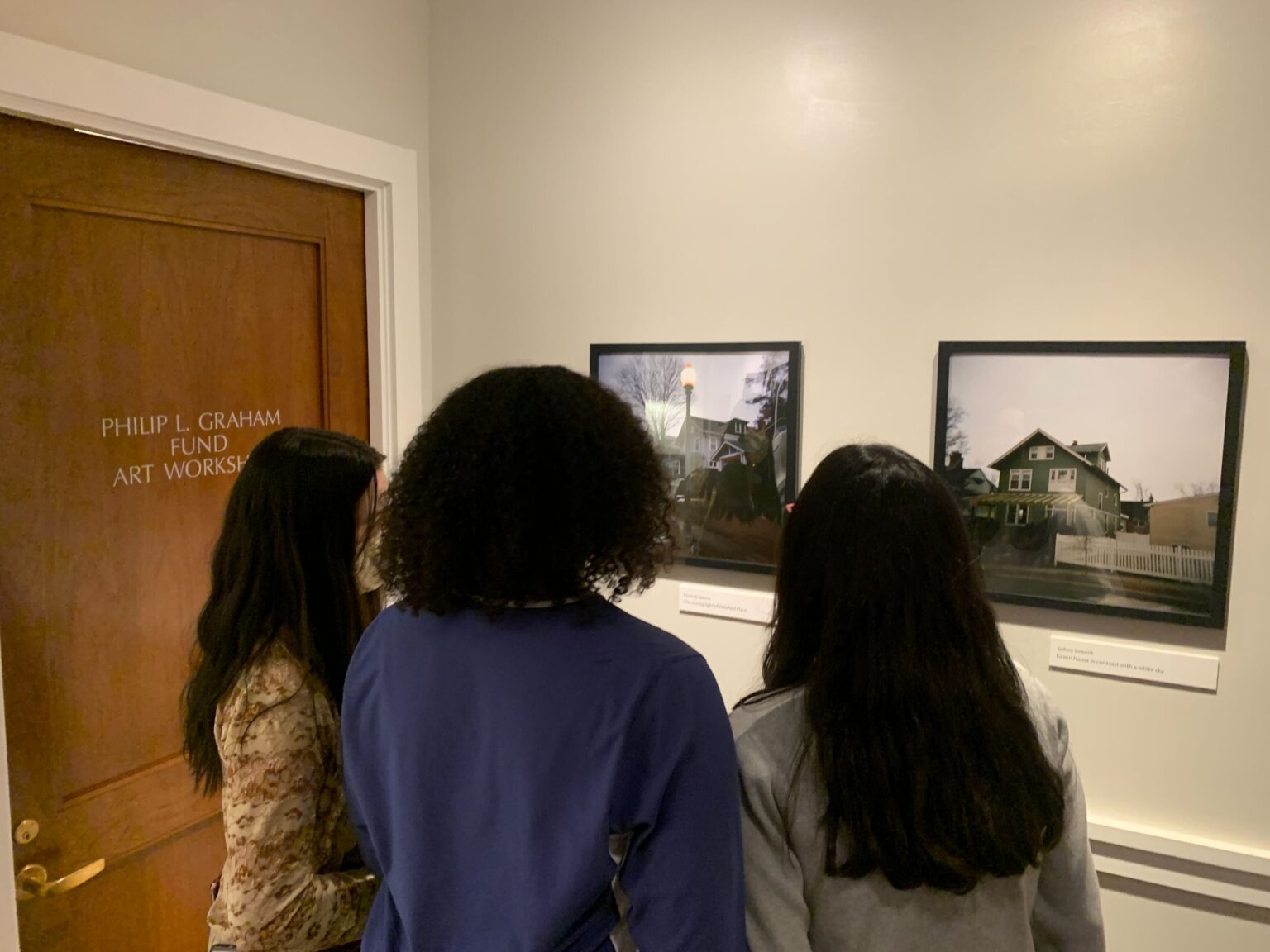
I covered the photography club at Jackson-Reed High School (then Wilson High School) and witnessed the teacher tear up as he described how meaningful it was to watch young people explore the arts and their own creativity. I thought it was so cool that this well-established fine arts museum welcomed the images of a local high school. I could tell how proud the students were and felt blessed to be able to witness their excitement and capture it for this audio/web story. –Elliot Williams, arts and culture reporter
‘A Personal Face On This Conflict’: Arlington County’s Sister City
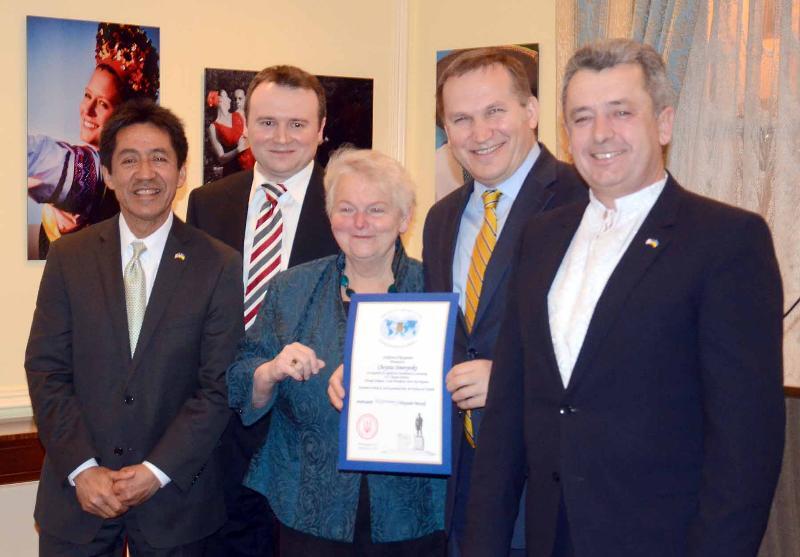
Our Northern Virginia reporter Margaret Barthel pitched this idea shortly after the start of the Russian invasion of Ukraine, and I thought it was a really great way to connect what was happening thousands of miles away with people in our region.
She interviewed 81-year-old Arlington resident Chrystia Sonevytsky, originally from Ukraine, who advocated for a sister-city relationship between Arlington and a similar-sized city in southern Ukraine, Ivano-Frankivsk. The story opens with an interview of Sonevytsky, a WWII survivor, watching the images of the current war and crying as she relives terrible war memories. The story explores Sonevytsky’s efforts to bring about the sister city partnership a decade ago, and how that relationship is giving Arlingtonians an opportunity to donate and help those affected in Ivano-Frankivsk. –Ingalisa Shrobsdorff, editor

D.C. Hotel Workers Beset By Layoffs And Reduced Hours Face Uncertain Future
I’ve reported a lot about local workers this past year — from retailer workers unionizing to direct care workers calling for increased pay — but the story that stays with me is the one I reported on housekeepers.
D.C. law required hotels to offer newly-available jobs to the workers they let go during the pandemic. But many local hotels still didn’t rehire many of those workers, or reduced their hours significantly — mainly because they reduced hotel cleaning services.
Housekeepers and their union didn’t take that lying down. Workers shared their stories with DCist/WAMU — one housekeeper could no longer keep her husband on her health insurance because of reduced hours and another housekeeper’s back started to hurt because she cleaned such dirty rooms.
Workers speaking up made a difference: the mayor and the D.C. Council ended up passing emergency legislation to set new hotel cleaning standards. –Amanda Michelle Gomez, general assignment reporter

This story about the Riversdale Museum was my second time ever reporting in the field. When I walked up to the Calvert mansion, awkwardly clutching my microphone and phone full of questions, I had no idea what this story was going to be. I was grateful to have Tyrone Turner, our amazing photojournalist, by my side.
Three hours of exploring the grounds turned an empty page into a rich, complex story about race, the Prince George’s county community, and the history of enslaved workers in Maryland (a history that many didn’t know about until this story was shared). The most poignant part of the story was learning that the museum had a genealogy project connecting descendants in Prince George’s County with their ancestors.
This was also my first feature story, and as an early-career reporter, the first time I could synthesize researching, interviewing, and of course, narrative writing. It seemed so overwhelming at first, but to see it all come together and share it with our audience was incredibly fulfilling. And to top if all off, some people actually visited the museum because of my article! That’s why we do what we do: to connect and shed light on the awesome things that are going on across the region. –Aja Drain, general assignment reporter

Traffic Violence Changed Their Lives. They Hope Drivers Heed Their Warnings
It’s not fair to call this story my “best” or “favorite” of the year. It is in fact the hardest and worst ongoing story I’ve covered. But it is one of the most important, too.
Traffic violence has gotten worse in our region in recent years, although statistically we are doing better this year. But even if 30 people are killed in traffic crashes this year, that’s 30 families and groups of friends that have a huge hole left in their lives.
I set out to interview as many people as I could that had gone through the grieving process as a result of a tragic traffic crash — either as a family who has lost someone, or a person living through a crash themselves and grappling with the effects.
It was deeply moving to have these people open up to me in such an intimate way. It is not easy to relive trauma and share a story like that. But what I hope listeners got out of it is that when we are behind the wheel we have an enormous responsibility to keep all of us safe. Because if we don’t take it seriously we can scar each other and the community forever. –Jordan Pascale, transportation reporter

Arena Stage’s Molly Smith Reflects On Choice, Retirement, And Her Final Act Of Theatrical Protest
Although I was very gratified to work with many WAMU/DCist staffers editing their stories this year, I think my favorite goes to the first piece I worked on for radio, this interview with Molly Smith of Arena Stage. I knew that Molly’s retirement warranted coverage, and she had such a great directorial swan song in “My Body, No Choice.”
This was the first piece I conceived of for air and my editor and producer Ryan Benk taught me so much about how to structure the interview to make it the best it could possibly be for radio. Turning the interview into a web story was also fun … not everyone lends themselves to Q&A style but it worked well here and made for a great piece on DCist as well.–Rebecca Cooper, arts and food editor

D.C. Is Falling Short Of Its Taxi Accessibility Requirements. What Went Wrong?
I do my fair share of complaining about traffic, but I learned so much about the higher bar that our wheelchair-using neighbors face when it comes to getting around the city from reading Amanda Michelle Gomez and Sarah Y. Kim’s thorough piece on taxi accessibility.
Through interviews with advocates, drivers, city officials, and wheelchair users, they unpacked how a 10-year-old D.C. law to make taxis more accessible failed residents. “I leave the house, honestly, much less than I used to,” one advocate told them about her struggles to get a cab that can accommodate wheelchairs. This team effort, edited by Abigail Higgins, is one of my favorite pieces of reporting we published this year. –Lori McCue, breaking news editor

With Change Afoot At Freedom Plaza, Skateboarders Rally To Save Their Mecca
I’ve been in D.C. long enough to know that downtown isn’t exactly a hub of countercultural movements or distinct subcultures. But a chance tweet earlier this year made me realize I was missing something in plain view.
In March, the National Capital Planning Commission announced a sweeping plan to transform a stretch of Pennsylvania Avenue from Freedom Plaza to the U.S. Capitol. I jumped on Twitter to express a degree of relief; Freedom Plaza, which I walk across often to get to the Wilson Building, has always struck me as an uninspired and barren piece of public space. The tweet drew angry responses from skateboarders who not only use the plaza often, but also see it as the hub of the city’s skateboarding community and something of a global landmark.
My uninformed tweet became a vehicle for a story on what skateboarders see in that expanse of marble, and why they’re concerned about any of the possible changes in mind for it. The story isn’t just about a fight over public space, but also about who defines whether public space is good or not — and whether they are heard.
This, ultimately, is what I love about local journalism: you never stop learning new things about the place you call home. — Martin Austermuhle, D.C. reporter
‘Maybe I Need To Scream Louder’: Why A Fairfax Student Organized A Gun Control Protest
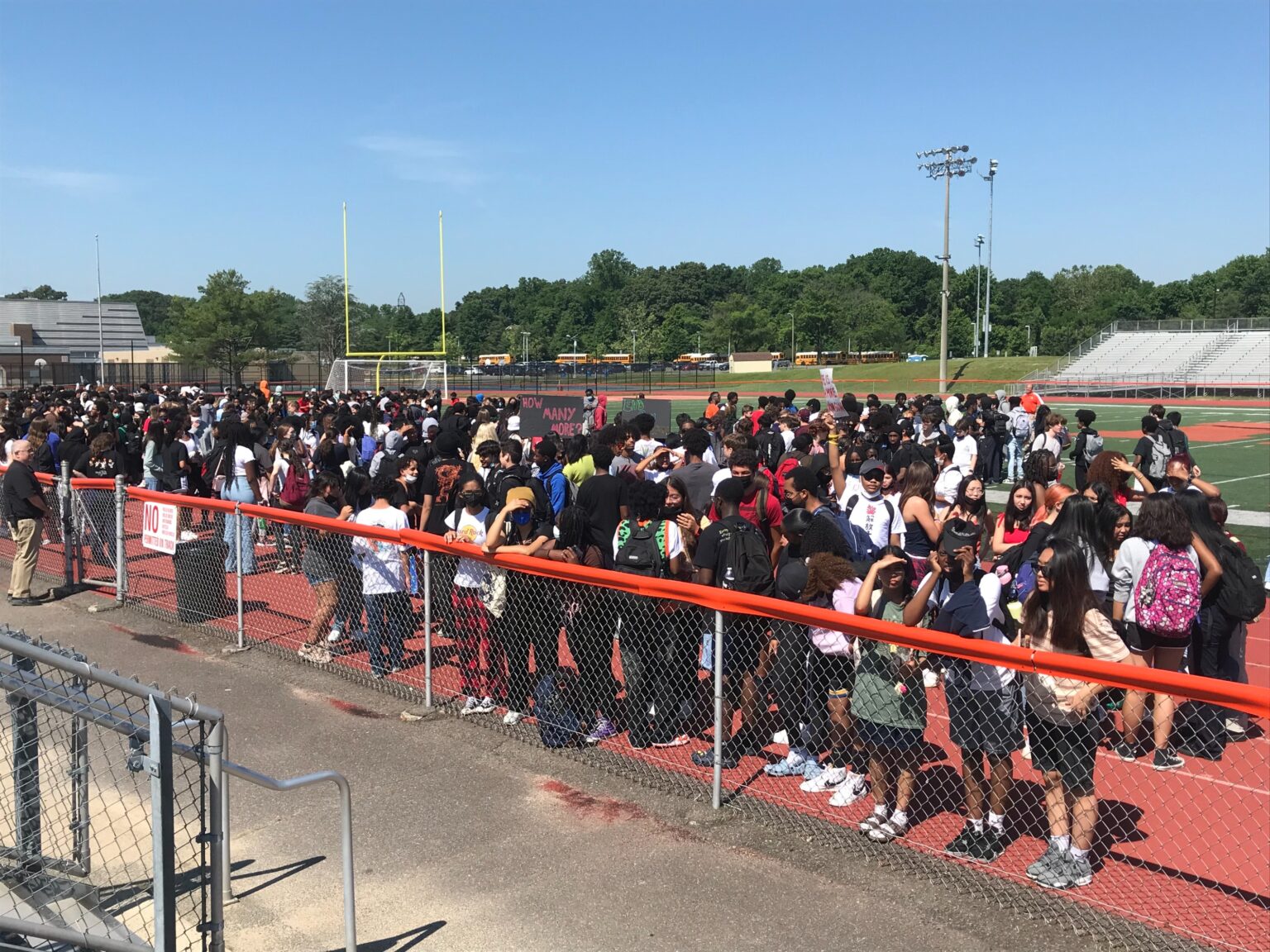
This year, the story that I can’t get out of my head is a radio interview I did with Norah Nijbroek, a Fairfax high school student and a gun control activist. Nijbroek organized a walkout at her school in the wake of the mass shooting at an elementary school in Uvalde, Texas. She told me about what it’s like being a student with the threat of school shootings hanging over her head, and how hard it was to convince her peers to come out and protest for gun safety because of widespread fears that the action could be an easy target for yet another shooting.
I asked her what keeps her going with her activism, even as the school shooting toll continues to mount. I’ve thought about her response after every mass shooting since then. “I keep thinking, maybe if I scream loud enough, something will happen,” she said. “Maybe I just need to scream a little bit louder.” — Margaret Barthel, Northern Virginia reporter
Editor’s Picks

There’s An Angry Turkey Attacking People On The Anacostia Riverwalk
What a joy of a story by our environment reporter Jacob Fenston. This angry bird, which harrassed cyclists and runners along the riverwalk for months on end, lives rent free in my head to this day. So do these excellent lines from the story:
“A large, aggressive male wild turkey has been terrorizing cyclists, runners and walkers on D.C.’s Anacostia Riverwalk Trail for at least the past five months, knocking riders from their bikes, reportedly sending one person to urgent care, and eluding animal control officers, crossing state lines and flapping across the Anacostia River in a multi-jurisdictional pursuit.
It’s a story of resurgent wildlife — a species once wiped out making a comeback in the metropolis — but also the story of one particularly angry bird.”

D.C. Family Says A Shoddy House Flip Punctured Their Dreams Of Home Ownership
This moving and enraging story from former WAMU Housing reporter Ally Schweitzer chronicles the heartbreak of a family who thought their dream was coming true, only to have it shatter before their eyes. After years of effort and saving, the Richardsons moved into their dream home — and found it riddled with dangerous problems, including a mouse infestation and black mold.

The Pieces Have Come Together At The Capital Checker Club’s Adams Morgan Clubhouse
This lovely story by general assignment reporter Colleen Grablick is one of my favorites of the year simply because it’s so unique to D.C. I think our jobs can be distilled this way: reflect the region back to itself, in service of the people who live here.
This evocatively written story does just that in its reflections on a decades-old D.C. institution: The Capital Pool Checkers Club.

In D.C., Preventing Rabies After An Animal Encounter Can Cost More Than $15,000
This story by former WAMU host/reporter Rachel Kurzius is such an excellent example of the fruits of curiosity. After a wild fox attacked multiple people on Capitol Hill (and was subsequently captured and euthanized), Rachel had a question: Do all those people the fox bit have to get vaccinated for rabies? How does one access the shot?
In the course of her reporting, Rachel discovered that an incident like this in the District could end up leaving someone in medical debt.

‘My Kids Are In Pain Now And Need Relief Now’: How Local Families Cope With Sickle Cell Disease
This story from Tamika Smith, with beautiful photography by Tyrone Turner, is worth reading AND listening to in full. Prince George’s County families are struggling to get pain management for their children suffering from sickle cell disease.