 Jenny Gathright
For 35-year-old Derek Floyd — an artist and mentor who works in D.C. — 2022 brought what he described as a “consistent stream” of loss.
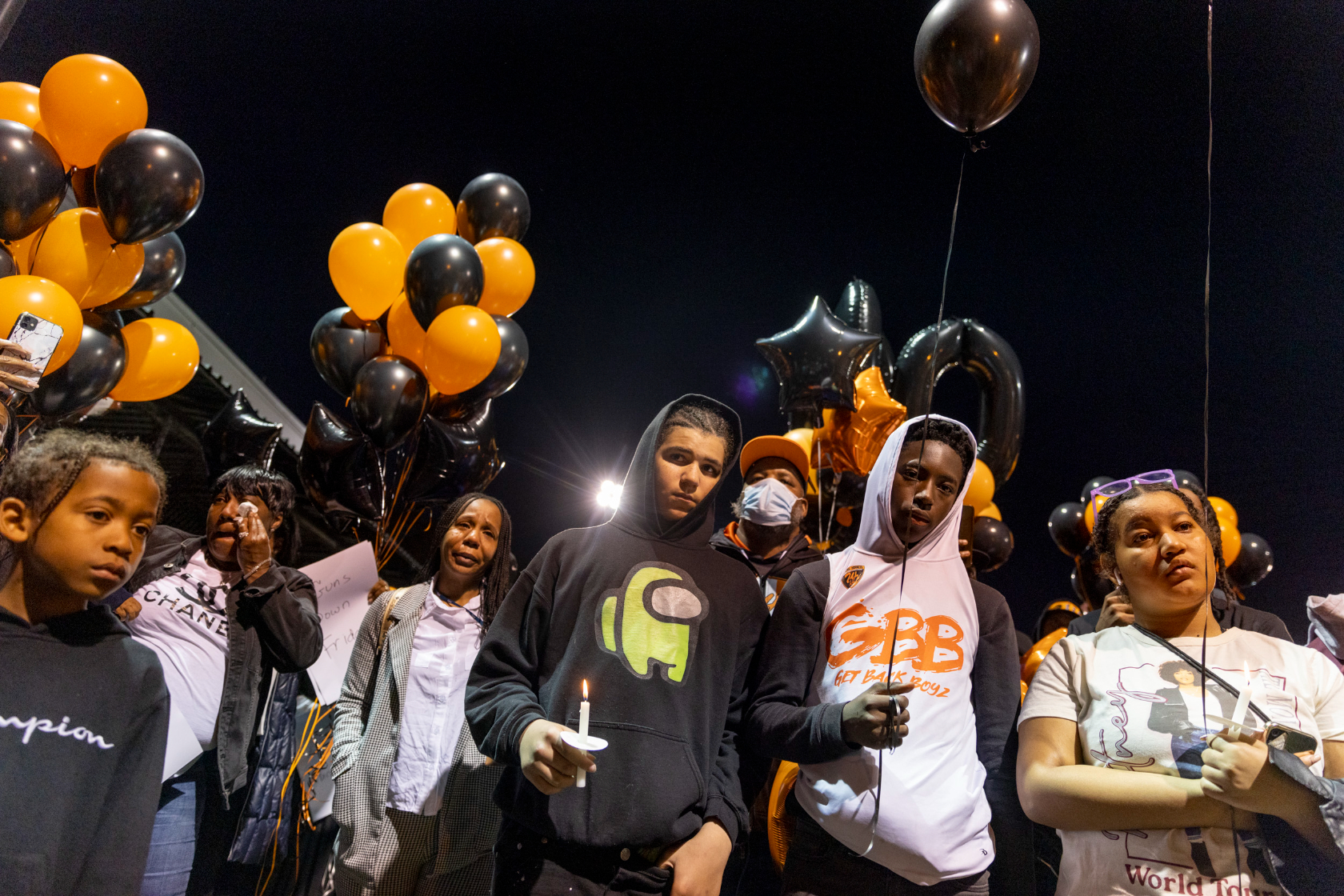
In February, one of his childhood friends was murdered, a woman he’d known for 30 years. Floyd would go on to lose several other loved ones during the year — including, in October, a child he had mentored for years, 14-year-old Antione Manning. Floyd met Antione through the youth football team he coached in the Barry Farm neighborhood of Southeast D.C., where the boy grew up.
“He was just a leader at an early age,” Floyd says. “He knew that people followed him. He knew that even on the football field or off of it, he commanded a certain presence. His mother did an amazing job of filling him with a sense of identity, a sense of self.”
Antione’s death was part of a tragic trend this year, as an increasing number of teens fell victim to gun violence. According to the Gun Violence Archive, which tracks gun violence across the country, 18 teens were fatally shot in D.C. in 2022, more than double the number of teens killed in the previous year.
In fact, Antione wasn’t even the only child at his high school to die by homicide this year– weeks after his death, his classmate Jakhi Snider was also shot and killed. Since the boys’ deaths, Floyd says he’s been struggling to help the teens in Antione’s neighborhood — who considered the teenager a close friend — cope with their trauma and grief.
“They have seen the value of young life deteriorate before their very eyes,” Floyd says. “These kids are mentally in a bad place.”
The uptick in teen killings comes as the total number of murders in the city is down compared to last year. Two hundred and three people were murdered in D.C. in 2022, a 10% decrease from 2021, when 226 people died by homicide. It was the first year since 2017 when homicides in the District fell over the previous year, according to D.C. police data.
Despite the drop, murders in the District are still high compared to recent history: If you remove 2021, 2022’s numbers remain higher than any other year since 2005. (Taken in even broader context, violence is significantly down compared to what the city faced in the ‘90s, when D.C. averaged twice as many homicides as it had this year. Between 1990 and 1995, for example, D.C. averaged 435 murders per year.)
Advocates and officials working closely on the issue say the city has made progress on its efforts to reduce violence, pointing to increased coordination among violence prevention groups and expanded collaboration among the many different city agencies focused on the problem. Still, they’re disturbed by a significant uptick in killings among teenagers, and overall, they believe the city could still stand to improve its ability to reach all of the people at highest risk of being a shooting victim or suspect — which experts say will be key to a sustained and significant drop in the violence.
A majority of homicides in the District involve guns, and researchers have found that the city’s gun violence is largely concentrated among a relatively small group of Black men with shared experiences and risk factors. Many of them are involved in neighborhood crews, have been arrested or incarcerated before, and have previously been the victim of a shooting or are connected in some way to another shooting.
Overall, D.C.’s poorest neighborhoods have been most affected by the trauma of gun violence. The city’s Northeast and Southeast quadrants see a disproportionate amount, while majority-white and wealthy Ward 3 sees a slim share. Ward 8, which is more than 90% Black and where more than 23% of families live below the poverty line, experienced more homicides than any other ward of the city this year. This disproportionate effect, experts say, is the result of generations of trauma, systemic racism, and disinvestment.
In Antione’s neighborhood, for example, Floyd says “all they see is violence.”
“We don’t want to look at it like that because we think we’re above it as America, but we’re not,” Floyd says.
Still, shootings and gun violence did begin trending down as the year went on, according to Linda Harllee Harper, Director of D.C.’s Office of Gun Violence Prevention.
“2022 started very hot in terms of [violent crimes involving guns]. January was the month with the most incidents, and fortunately it’s been going down since then,” she says.
By May, Harllee Harper said, the tide had changed, and levels of gun violence dropped below what they had been in 2021.
Still, for the hundreds of families who are grieving a loved one killed in 2022, the decline likely means little.
“When you start talking about, ‘Well, we’re seeing a decline here,’ it feels to me, as a person who’s been in this work for a long time, a little disrespectful to the families that we know are grieving and have lost loved ones this year,” Harllee Harper says.
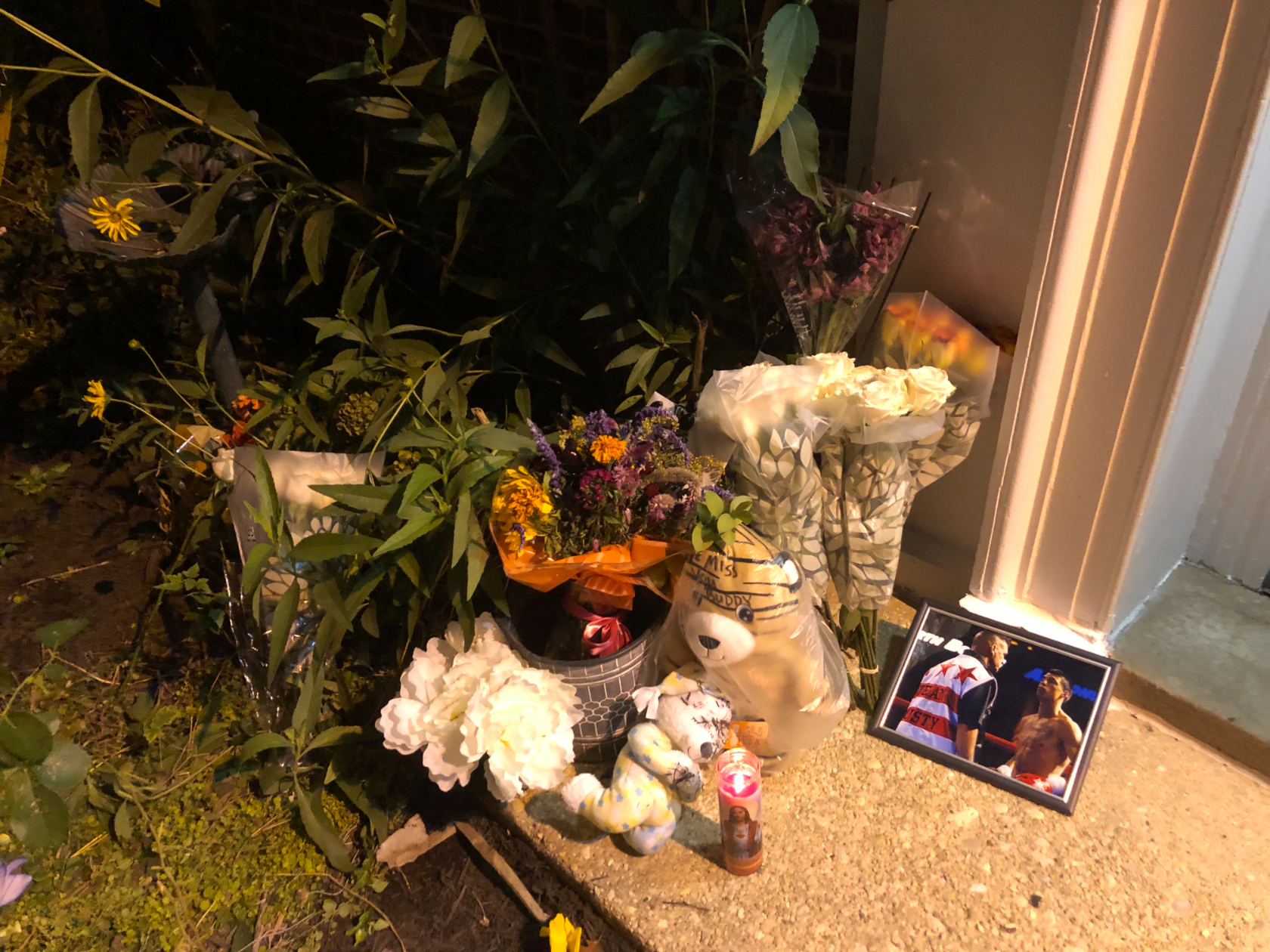
Among those murdered in the District in 2022 were legendary D.C. boxing coach Buddy Harrison, fatally shot by his home in Naylor Gardens. And Jason Ford, a landscaper who was killed after what appeared to be a petty fight while he was on the job. And 18-year-old Akira Wilson, a senior at Jackson-Reed High School who was fatally shot in a hotel room in Northeast D.C. “She was going to be her greatest, and now she can’t,” her mother told the Washington Post.
In the District, the average age of a homicide victim or suspect in recent years has tended to hover around 30 years old. From the preliminary data available for 2022, that trend remained, with most homicide victims tending to be in their 20s or 30s. But the District also saw a disturbing rise in killings of teens last year.
Those children included 15-year-old Chase Poole, who was killed when a shooting broke out at the popular Moechella musical protest. And Andre Robertson Jr., also 15, who was fatally shot in broad daylight while he was sitting on his great-grandmother’s porch in Northeast. There was Antione, who was fatally shot on Halloween. And then Antione’s classmate, Jakhi, who was fatally shot less than a month later — remembered by loved ones as a loyal friend who loved dancing and telling jokes.
Floyd, who mentors teens and middle schoolers across the city, is frustrated that the positive influence he and others try to have on kids is often outweighed by the negative influences around them.
“I could give you a speech,” he says. “But when I leave here, someone else will give you a gun.”
“I can give you a hug. I can take you on a trip. I can do all that,” Floyd continues, but sometimes, it isn’t enough. “The influences are so strong [that] this world that I’m telling them about — where if you have knowledge of yourself and pride in yourself, you can make it out — I might as well be talking to them about Wakanda. It’s a movie.”
Harllee Harper also sees this negative peer pressure at play. While news coverage about crimes involving teens tends to focus on the teens themselves, she says it’s often the case that an adult is involved behind the scenes. “We should know that there’s almost always an older person in the background … who are guiding, leading, and advising these young people,” she says.
Moreover, Harllee Harper says, it’s disturbing how often young people are on the receiving end of what she describes as an “endless flow” of guns into the city. As of mid-December, a Metropolitan Police Department spokesperson told DCist/WAMU that police had recovered more than 3,000 firearms in the course of their work in 2022.
Still, amid the continued trauma of violence in the city, 2022 was also a year where residents and officials coalesced around solutions.
The city commissioned and published a data analysis of homicides in the District – and subsequently released a strategic plan to reduce murders. At a D.C. Council roundtable in December, Interim Deputy Mayor for Public Safety and Justice Kevin Donahue said the city has implemented, or is in the process of implementing, a majority of the plan’s recommendations, which include:
- hiring more violence prevention workers and raising their salaries
- improving data collection, and
- increasing coordination by instituting two weekly calls: one with police, supervision agencies, and corrections agencies, and one with all of the non-police violence interruption workers in the city.
In recent years, experts who have examined D.C.’s gun violence prevention efforts have concluded that the city has adequate resources to tackle the problem and a talented violence prevention workforce. But their top criticism of the city has been that its gun violence prevention efforts have lacked coordination.
Harllee Harper says that this year, the city made strides in that area — particularly with regard to the second weekly call with violence interruption workers and agencies. Each week, this group reviews all of the shootings in the previous seven days, with the goal of preventing retaliation and trying to reach people who need services in the aftermath of an act of violence. She says this kind of collaboration has helped the city reach people more easily.
For example, Harllee Harper says, if a violence interrupter on the call says they’re trying to locate a particular person to get them services, there’s often “somebody in that room that knows them, that went to school with them, that coached them, that was incarcerated with the father.” It’s a time when the tight-knit nature of the city and the large reach of its growing network of violence prevention workers comes in handy, she says.
Harllee Harper also touts improved access to behavioral health services for high-risk individuals and survivors of gun violence in need of services: She says the city has contracted with two providers that allow them to offer therapy to people on the same day they ask for it — something that was not possible before.
“[D.C.’s Office of Neighborhood Safety and Engagement] now can just pick up the phone and get [the provider] to reach out to that person immediately,” Harllee Harper says. “If I say I’m ready today to receive that help … tomorrow I may say forget it. That window is very short. And if I say I’m ready and you take weeks to connect me, I’m going to lose that trust and belief and hope that something can be done.”
With a boost of funding in the budget, the city was also able to expand access to the Pathways Program, an intensive life coaching and employment program for people identified as being at a high risk of being involved in gun violence. And for teens, the city expanded its hallmark Summer Youth Employment Program and started offering new after-school programs through its Department of Youth Rehabilitation Services.
D.C. also launched a new program called the “People of Promise,” the goal of which is to provide life coaching and services to 230 people considered to be at the highest risk of being a victim or a shooter. After it launched, some in the community found it controversial and were distrustful of the idea of what they saw as a “hit list” for police. Some violence interrupters argued that if these people found out they were on an official government list, it would hurt efforts to gain their trust.
Harllee Harper said that as of December, 154 people identified as “People of Promise” were currently active in the program and had been reached by a mentor who was helping them access city services. And Harllee Harper said 42 of the people of promise are now actively employed — a huge victory, she said, particularly because many of the people in the program have never been formally employed before.
However, 29 of the residents on the People of Promise list were incarcerated by December. Harllee Harper acknowledges this was disappointing, but also says it was difficult to avoid for a group of residents identified specifically because they were involved in cycles of violence.
“We didn’t reach them in time, or they weren’t ready to be reached,” she says. Some were actively engaging with the program but were arrested for crimes they allegedly committed before they started working with the program. At least two people identified as “people of promise” were killed this year, according to the Washington Post, leaving family members questioning whether the city could have acted with more urgency.

Organizations outside of government also played a significant role in expanding violence prevention efforts this year.
Peace for DC, a private violence prevention fund, launched an intensive course for D.C.’s growing violence intervention workforce and graduated two cohorts from the 12-week program. Students, who work to prevent gun violence in neighborhoods that experience the greatest trauma from it, say the program is helping them better serve their communities — and better take care of themselves while doing it.
During December’s D.C. Council roundtable on the city’s strategic plan, representatives from Peace for DC said they were still looking for clear leadership from the city on implementation of the plan — but said they were seeing progress, particularly when it comes to collaboration among violence intervention programs and government agencies that have historically struggled to communicate well.
“I’ve been working in this field for the last three years, and this year has been my first year that I’ve seen more willingness to partner with the other sides,” said Nakeda Gilbert, Peace for DC’s Director of Learning. “I think that we’re heading in the right direction, but we do need a leader to [spearhead] that in the right way.”
And smaller, neighborhood-based organizations got access to mini-grants of $5,000 through D.C.’s Building Blocks program, which continued and expanded this year.
Mr. Strong, a participant in a Life Skills program that received Building Blocks funding, said the course he took with Asiyah Timimi was key to obtaining permanent employment for the first time. Strong, who preferred to be referred to by his last name to speak candidly about his involvement in the program, said that before he took the course, he struggled to keep jobs long-term. He had worked construction, worked at a restaurant, volunteered at a rec center, and gotten jobs through a temp agency. But he was looking for a career.
Through Timimi’s course, he said, he practiced job interviews and learned how to put together a resume. Ultimately, he got a job with D.C.’s Cure the Streets program in Anacostia, the neighborhood where he grew up. He’s now stayed at that job for about four months, and he feels it’s going to be permanent for him.
He said programs like Timimi’s course are deeply connected to the goal of violence prevention, because they get people ready for jobs and careers so that they can be productive.
“It gets you ready for the real world or how to code switch and conduct yourself when it’s business time,” he says.
But many of this year’s homicide victims never got to properly celebrate the strides they were making in their lives.
Antione, for example, was working hard to bring his grades up, as his principal shared at his funeral. He had dreams of playing football at Archbishop Carroll. His mentors and loved ones saw how hard he was working.
“The change was right around the corner,” Floyd says. But “for many of us … we don’t have tomorrow. All we have is right now.”
The pain of the loss of Antione and so many others reverberated across the city — in part, because the District is so tight-knit. The world of youth football, for example, is small.
Harllee Harper says she sees this in her work and her personal life. Her 17-year-old son, who plays basketball, knows kids who have been killed – he’s played with and against them across the District.
“Particularly in the Black community, I just feel like we’re all traumatized,” she says. For every homicide victim, in addition to family, “there are the teachers, the coaches, the friends, the fellow students, the doctor … who tried to save you at the hospital, the neighbors who are used to seeing you around, the communities that know your whole entire family.”
That closeness means it feels like the entire city is reeling and grieving from a cascade of loss. But this closeness, she says, can also be a superpower for prevention.
“I think that we’re at a place now where we are talking to those who are doing the work on the ground and sharing the data, showing them what communities are hot, having a real dialogue about what communities are feuding, what we’re hearing in the community and connecting those dots,” she says.
Amidst the devastation, she says, that offers her some hope.