 Jordan Pascale
Residents, Advisory Neighborhood Commissioners, and D.C. Councilmembers are concerned about changes the District Department of Transportation made to the traffic safety improvement request process for things like speed bumps and stop signs in residential areas. Some worry that past work they’ve put into highlighting traffic problems will be for nothing.
It’s the second change to the process since 2021 when Mayor Muriel Bowser and DDOT Director Everett Lott announced changes, heralding a more streamlined process to get traffic safety projects done more quickly amid rising traffic deaths – especially among children. The program allowed residents to submit requests directly to 3-1-1, which handles requests for safety improvements, without going through an ANC. But that doubled the number of requests in DDOT’s queue, and the department didn’t have the resources to meet the demand for changes, according to DDOT officials who spoke on background. The requests were processed on a first-come, first-served basis.
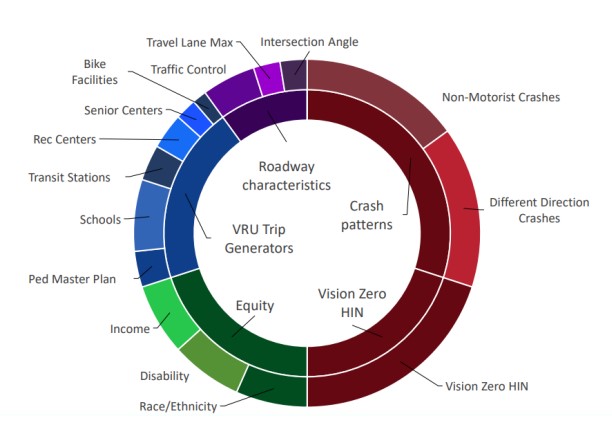
Now this year, DDOT is adding a new scoring and prioritization step, with a focus on equity, to make sure improvements are happening where they are most needed first.
Officials say they will do 800 traffic studies over the next year. Studies do not guarantee work will be done. Meanwhile, DDOT did a record 950 installations last year and seemingly 2,200 studies, according to Open Data D.C. and other documents. Studies do not guarantee work will be done. DDOT announced the first 200 study locations on a map here. They will be completed within 130 days.
DDOT also changed the name from the Traffic Safety Investigations program to the Traffic Safety Input program, noting a shift that residents can provide input, but aren’t guaranteed an investigation into their concerns.
Residents who previously submitted requests received emails early this year that their issues were closed without warning. Almost all of the 2,300 requests were closed, but DDOT says they will remain in the system until the scoring system ranks them in the top 200, which will then be evaluated. DDOT has said that every request will be investigated – it just might take longer.
Still, residents and ANC said they were confused, upset, and frustrated by the news. Colin Smith got an email that his request to check out the fast, busy intersection at Georgia Avenue and Eastern Avenue NW was closed. The intersection is near a Target and a major park. He says he often walks with his child to get to both locations and has had several near-misses with cars.
“It’s incredibly frustrating,” Smith said. “It’s like DDOT saying, ‘you recognize this as a concern, but we don’t think that you can actually recognize these (problems) – we trust ourselves more than we trust your experience of living and walking in this neighborhood… our algorithms say that this intersection is not dangerous enough to merit our attention now despite your repeated experiences with cars almost hitting you.’
“It just feels a little bit dismissive.”
ANC 5C07 Commissioner VJ Kapur has submitted more than 100 requests in his neighborhood in recent years. He said residents know their neighborhoods and live with the consequences of bad street design everyday.
The first constituent email to land in my official inbox was from a neighbor on 26th St NE asking about a four-way stop at 26th and Irving Sts NE. I had personally put in SR 22-00506748 seeking the same mitigation/location on 10/20. The SR entered the “TSI 2.0” pool on 1/6. pic.twitter.com/MV1SJbkoyh
— Commissioner VJ Kapur (@vj5c07) January 8, 2023
“There are blocks where folks are looking out their windows all day and seeing driver behavior,” he said, noting that dangerous streets make neighbors feel less safe walking or biking. “I don’t presume that the agency goes to every intersection and spends all day every day looking at them the way we do.
“So the resident input in that sense is pretty important. Additionally, we are the ones who are the most at stake.”
In a statement, DDOT Director Everett Lott said it’s the department’s goal to improve the safety of all road users.
“The prioritization allows the agency to focus resources on areas in which additional planning and/or installations can most effectively improve safety,” Lott said. “TSI 2.0, along with DDOT’s robust portfolio of safety programs ensure we are building and maintaining a safe, equitable, and sustainable multimodal transportation system.”
Councilmember Charles Allen, the new head of the transportation committee, will get a briefing on the issue this week and the topic will be part of the committee’s oversight hearings with DDOT in the coming months, according to Allen spokesperson Erik Salmi.
Councilmember Janeese Lewis George (D-Ward 4) expressed her concern in her newsletter.
“I agree that we need greater equity considerations in how DDOT manages traffic safety requests and that it is important for DDOT to be able to prioritize the most dangerous streets and intersections for faster interventions,” she wrote. “However, I have several concerns about DDOT’s new system.”
She noted there is “little transparency about how prioritizations are actually made” and the system “seems to eliminate community input, which can be critical in identifying issues that do not show up in the data at first glance.”
Lewis George said it’s not acceptable that residents’ concerns aren’t guaranteed to be looked at by DDOT and that they may languish at the bottom of a pile of other requests.
Meanwhile, everyone interviewed said that if it is truly a resource problem at DDOT, they should be given more money to complete the necessary work.
“You can tell what people care about by what they fund,” Colin Smith said. “So if the argument is that the funding is not there, I think they need to say ‘we need more funding.’
“Let’s actually make D.C. a safe city for pedestrians and bikers – not just a city for people in their cars.”