Amanda Michelle Gomez
People have come to expect rising costs of, well, everything after the past few months. But the latest trend, the $15 non-alcoholic cocktail, appears to be pushing it for some locals. Even factoring inflation and a tight labor market, some diners are still wondering: Aren’t we paying a pretty high price for glorified juice?
To be fair, not all non-alcoholic cocktails hit that $15 mark. Service Bar’s cranberry citrus cooler goes for $9 and spicy house ginger beer goes for $7. D.C.’s even getting its first non-alcoholic bar, and drinks on average will be priced anywhere between $6 to $15, according to Washingtonian.
Non-alcoholic cocktails seem like a great option for people who want to partake in the full dining experience but don’t want to drink liquor. But there’s also a pretty common perception that these drinks should cost less than those containing alcohol. So DCist/WAMU asked a few local beverage directors to explain their restaurants’ double digit prices.
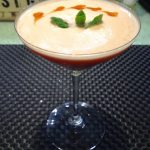
Will Patton of the Michelin-starred restaurants Bresca and Jônt offered a breakdown on how much it costs to make one of their drinks, the Pear Collins, which is priced at $12:

The ingredients in a Pear Collins cost Bresca $2.40 per drink, according to Patton. Industry standards dictate that the cost of everything in that pour, and even the glass itself, should be 18% of the menu price. (Doing the math, the Pear Collins should cost $13 and some change.) That’s the standard because the other 82% accounts for labor, rent, utilities, and other operating costs, Patton says.
The costs to make a non-alcoholic cocktail (or any drink) will increase for a restaurant if an ingredient is more labor intensive, Patton says. The Pear Collins is not especially labor intensive, but another drink Bresca is introducing this weekend, a Kombucha-styled cocktail, takes more work because it contains lacto-fermented carrots. It’s a ten-day production, he says, requiring more of a worker’s time and energy, on top of the $60 worth of carrots the restaurant acquires from a local farm.
Although Bresca’s new non-alcoholic cocktail is more labor intensive, Patton plans to price it similarly to the restaurant’s other three options, $12. Non-alcoholic beverages account for 3% of Bresca’s beverage sales, he says. (That figure also accounts for coffee and tea, which he estimates is half of those sales.) “I can have those be not cost effective, because at the end of the day, they’re not going to move the needle considerably,” Patton says. “I want to make sure that they’re more price accessible rather than like priced ‘properly.'”
Even though spirit-free cocktails account for a small percentage of total beverage sales, that number is increasing. Bresca’s non-alcoholic beverage sales made up just 1% of beverage sales this time last year, says Patton, who attributes the increase to the introduction of a non-alcoholic beverage pairing menu that launched six months ago. The impetus for a non-alcoholic cocktail menu wasn’t necessarily demand, but the availability of more interesting options from spirits manufacturers and suppliers and thus opportunity for creativity, he adds.
Another reason, he says: “If you’re in hospitality, you’ve been trained to like never say no. So if someone’s not drinking, how can you say ‘Yes’ to them if you are only offering something that they can’t buy.”
The bar director of Michelin-starred Michele’s, Judy Elahi, agrees with Patton. “We can’t just give people who don’t drink alcohol tea and soda. We want them to have that same experience,” Elahi says. “You have to look at the demand of every single guest. And if somebody doesn’t drink for religious reasons, personal reasons, or they just are on dry January or on a break, they should be able to get a great cocktail from you.”
Elahi explained that the double-digit price of a non-alcoholic cocktail is largely because of the spirit, which can range between $20 to $30 per bottle, comparable to alcoholic spirits. Take Storm’s Brewing, a non-alcoholic cocktail on Michele’s menu that costs $14. The drink takes 2 ounces of a non-alcoholic spirit called Bare — which, at $25 a bottle, means each drink costs at least $2 to make per glass.
What’s behind the cost of zero proof spirits? Samantha Kasten of Umbrella Dry Drinks, a local non-alcoholic bottle shop, says it relates to their production. For example, Spiritless: Kentucky 74. They make the bourbon, and then they “take the next step through reverse distillation to remove the alcohol,” she says. “So that’s an added expense.” Kasten hopes as more restaurateurs purchase zero proof spirits, wines, and beers, the price of all of them will go down.
If a restaurant is charging $8 for a virgin mojito that’s simply soda water and mint, Kasten says she can understand why patrons would feel cheated. That’s something akin to a mocktail, which she defines as a cocktail that uses no spirit alternative.
“Unfortunately, we just tend to pay a little bit more in our in our society to be a little healthier, which is kind of backwards,” Kasten says. “But until it becomes more normalized, things will probably still be a little bit higher price point.”
As some patrons like to point out, they could buy that bottle themselves and make the cocktail at home for $2. But hey, there’s a reason they are in a restaurant in the first place, Elahi of Michele’s, points out. “You could, but then you’re the one that’s working,” Elahi says. “So a lot of the restaurant costs — with you sitting down in the chair, with you ordering your drinks, with you ordering your beer — is not the actual cost of the spirit. It’s the whole show.”