Elliot C. Williams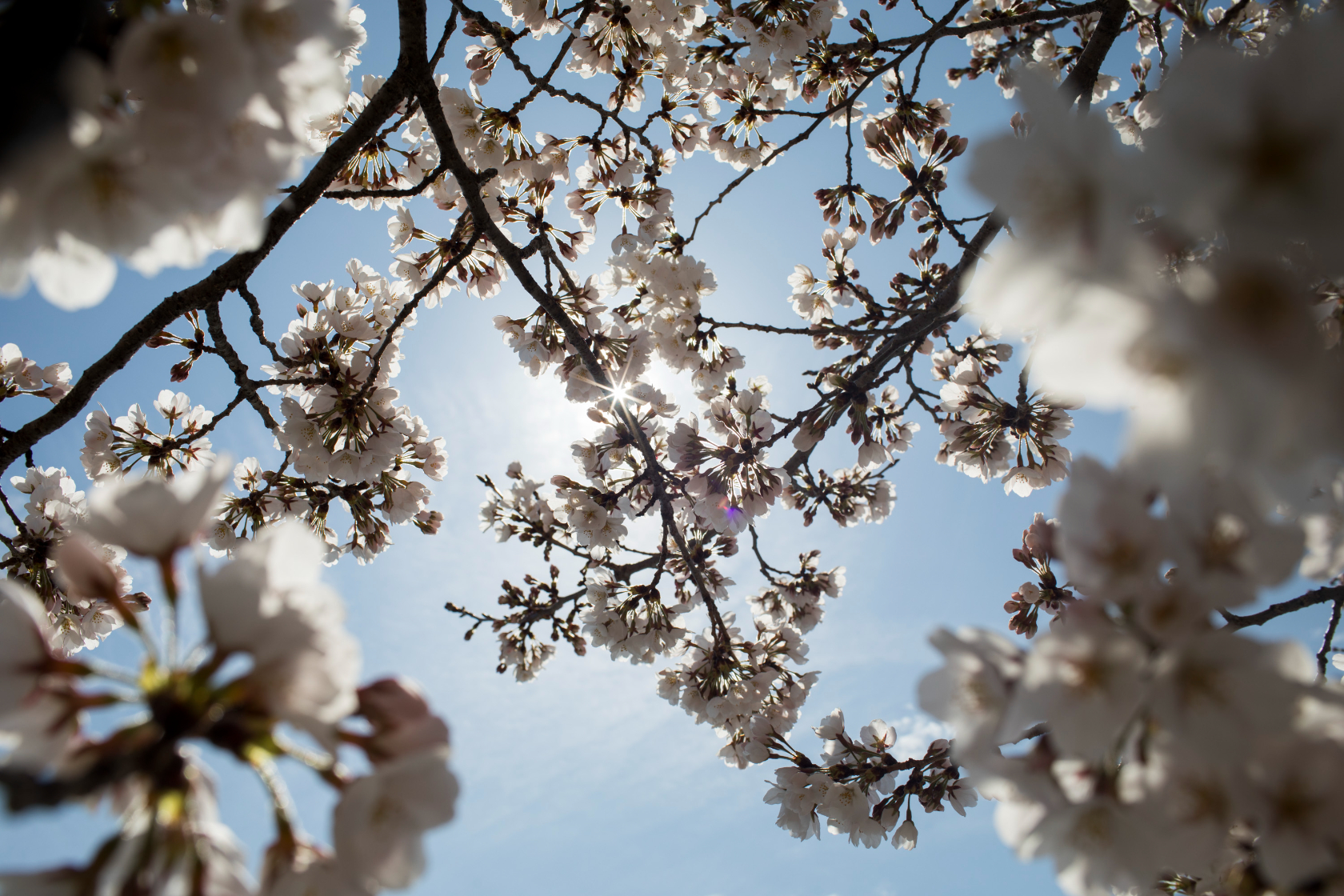
The weather has been unseasonably warm this month, with temperatures averaging in the upper 40s. This week, the temperature will hit nearly 60 degrees. Or, as the Capital Weather Gang put it, January is feeling more like March across the D.C. region. Naturally, residents might wonder what effect the temperatures might have on one of the area’s most popular tourist attractions and Instagram selfie backdrops: the cherry blossoms.
An early indicator for the future of the beloved blossoms? Other plants in the area.
Some snowdrops are already starting to appear in patches around the Tidal Basin, according to WTOP meteorologist Chad Merrill. The bulbous plants typically appear in February and are able to survive freezing temperatures and snow, per Merrill. Things aren’t so easy for the Yoshino trees. An early blossoming of the distinctive blooms could spell trouble if followed by a cold weather pattern that damages them and brings an early end to peak bloom (when 70% of the Yoshino cherry blossoms are open).
The National Park Service starts tracking the trees as soon as they go dormant, but it’s still too early to know anything definitive about when the cherry blossoms will reach their full bloom, according to NPS spokesperson Mike Litterst. While the Yoshino tree blossoms aren’t showing any signs of coming out early, plants like forsythias are already starting to blossom.
“What people are probably seeing that they’re mistaking for the cherry trees are the Japanese plum trees,” Litterst says. “They are the earliest flowering fruit trees that we have on the National Mall.”
A few of the pink-blossomed trees are already in bloom near the WWII Memorial, about two weeks ahead of schedule. “They’re out early, no question about it,” Litterst says.
One variety of cherry tree reaches full bloom in the late fall or early winter if it’s warm, and Litterst says some of those trees already showed their flowers in mid-December, which might have confused some National Mall visitors.
Peak bloom for the Yoshino trees that line the Tidal Basin most often takes place between the last week of March and the first week of April; it all depends on weather patterns in the weeks leading up to that final stage. While it’s still too early to predict the exact date, peak bloom has been trending earlier in recent years due to unusually warm weather in March. The National Park Service typically announces the peak bloom date about five to 10 days beforehand, when the blossoms reach peduncle elongation — the fourth stage out of of six in the bloom cycle.
Here’s what we know about our current weather patterns: D.C. is on track to have the second warmest January in recorded history, with an average temperature of 47.4 degrees during the first half of the month, according to the National Weather Service. Measurements at Reagan National Airport have been 8.9 degrees higher than average this month, says Brian LaSorsa, a National Weather Service meteorologist.
“That doesn’t necessarily mean we’re going to have a warm rest of January or February,” LaSorsa says. “On average, we’ll probably have above normal temperatures over the next 10 days. It doesn’t mean we won’t have any cold weather then. It just means the average will be above normal for this time of year.”
The climate prediction center shows there’s a chance of colder air hitting the region in late January, LaSorsa adds.
Last year, the cherry blossoms reached peak bloom from March 21-24, about a week earlier than the typical timeframe (March 28 to April 5). The earliest peak bloom dates over the past two decades came in 2012 and 2020, when the blossoms reached their peak on March 20, according to NPS data.
The peak bloom date usually coincides with the National Cherry Blossom Festival, which runs from March 20 to April 16.