Rachel Kurzius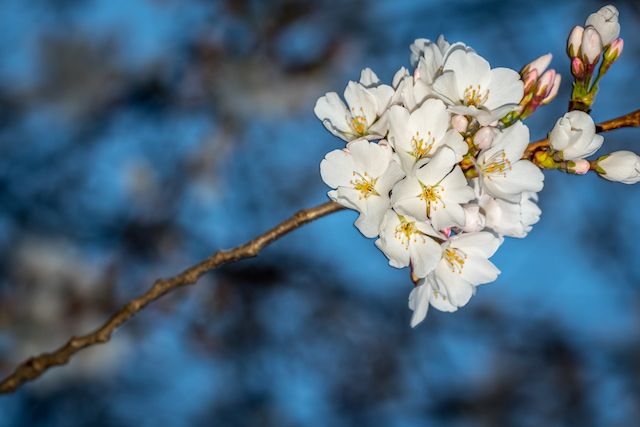
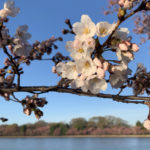
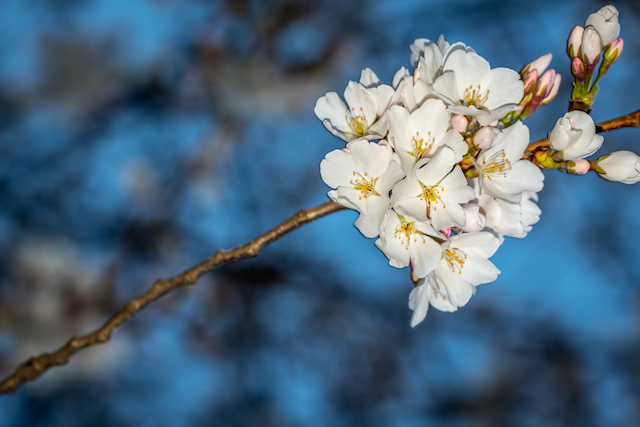 Photo by Mohamad.
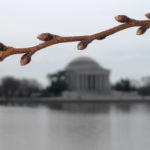
Despite the freezing temperatures this week, half of the famed Yoshino cherry blossoms have survived. Meaning half of them died. How people choose to frame it says a lot about whether they see the glass half-full or half-empty, really.
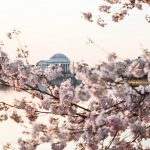
There will still be a peak bloom for remaining Yoshino blossoms, which will happen sometime next weekend, the National Park Service estimates. Peak bloom means that 70 percent of the trees are in full bloom.
“We do anticipate that there will be some fewer blossoms than normal and the color may not be as dense as we’ve seen in past years around the Tidal Basin,” said Gay Vietzke, superintendent of National Mall and Memorial Parks, at a press conference Friday afternoon. She added that, despite the damage to some blossom, it would be “as spectacular as ever.”
“It has been a wild weather rollercoaster the past couple of weeks,” said Vietzke. “While those warm days in early March really accelerated the bloom process, bringing many of the blooms on the Yoshino trees that are around the Tidal Basin here to the very verge of their bloom, the cold temp that followed not only slowed that process, but we fell to temperatures that began to damage the blooms.”
At 27 degrees, about 10 percent of the blossoms are damaged. But go three degrees lower, to 24 degrees, and there’s a potential for damage of 90 percent of the flowers, according to NPS.
“The snow event wasn’t a big concern,” said Mike Litterst, NPS spokesperson. “But temperatures on Tuesday provided the deep freeze we were concerned about.” The blossoms at the puffy white stage—the fifth of six stages—were nearly all lost to the cold, he said.
In addition to the Yoshinos, the Kwanzan variety of cherry blossom tree is the second most populous at the Tidal Basin. It blossoms about two weeks after the Yoshinos, and because its blossoms are still protected by their buds, NPS doesn’t expect that to change.
However, when it comes to estimating peak bloom this year, Litterst warned that NPS was in “uncharted territory,” noting that “with the loss of 50 percent of the blossoms, we lost 50 percent of our data points.”
Initially, with the warm temperatures, NPS said peak bloom could be the earliest on record, then revising the date back by five days as the weather got colder.
The National Cherry Blossom Festival, which began earlier this week, has so far been unaffected by the precarious blossom situation.
“Tourism has not been hurt at all,” said Diana Mayhew, president of the festival. Indeed, all of the suspense may have led to more traffic for the festival’s website, which she says is up 20 percent over the same time last year.
“It’s still going to be well-worth coming down,” said Litterst. “It’s still going to be the traditional start of spring.”