 Jenny Gathright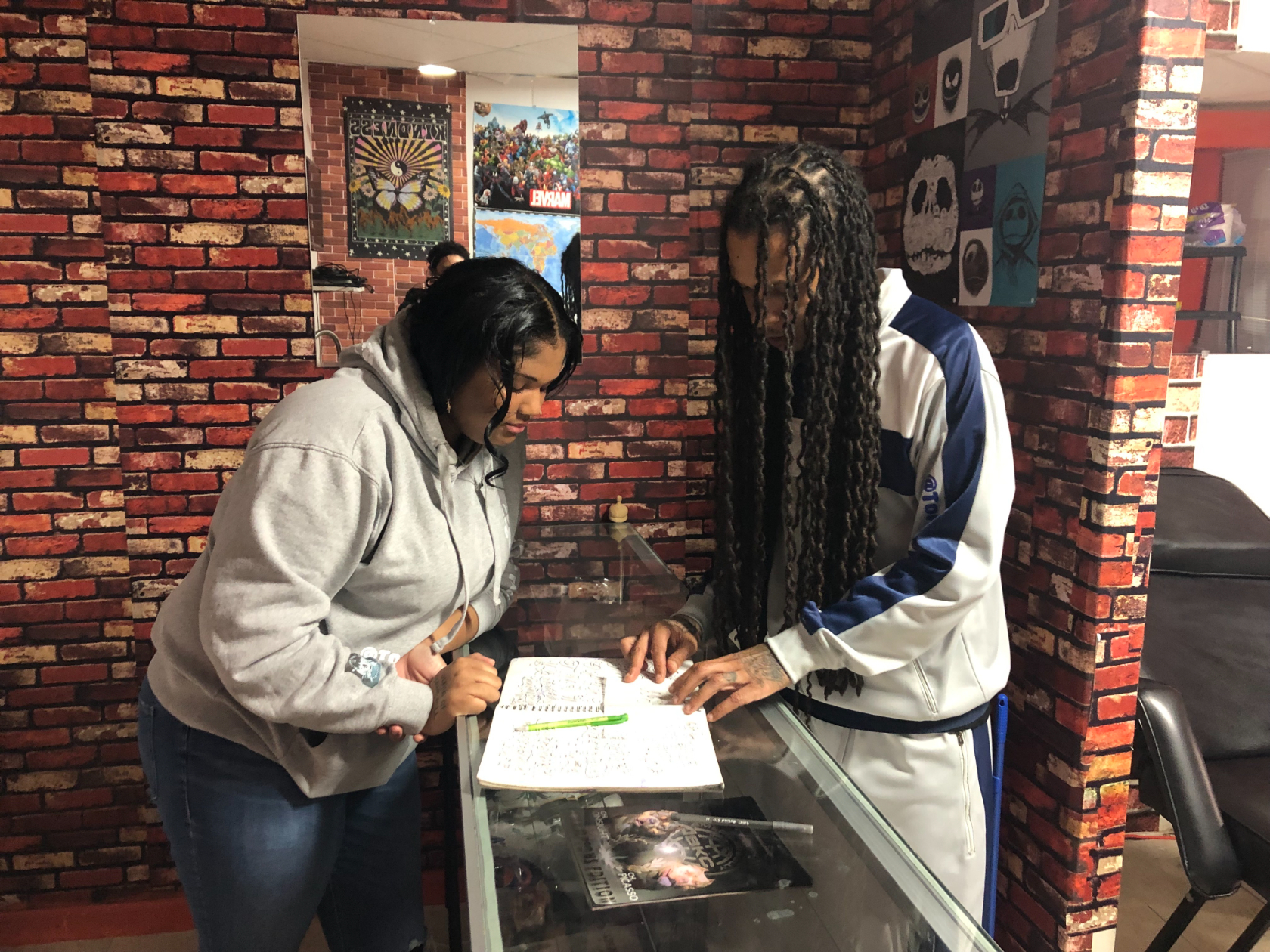
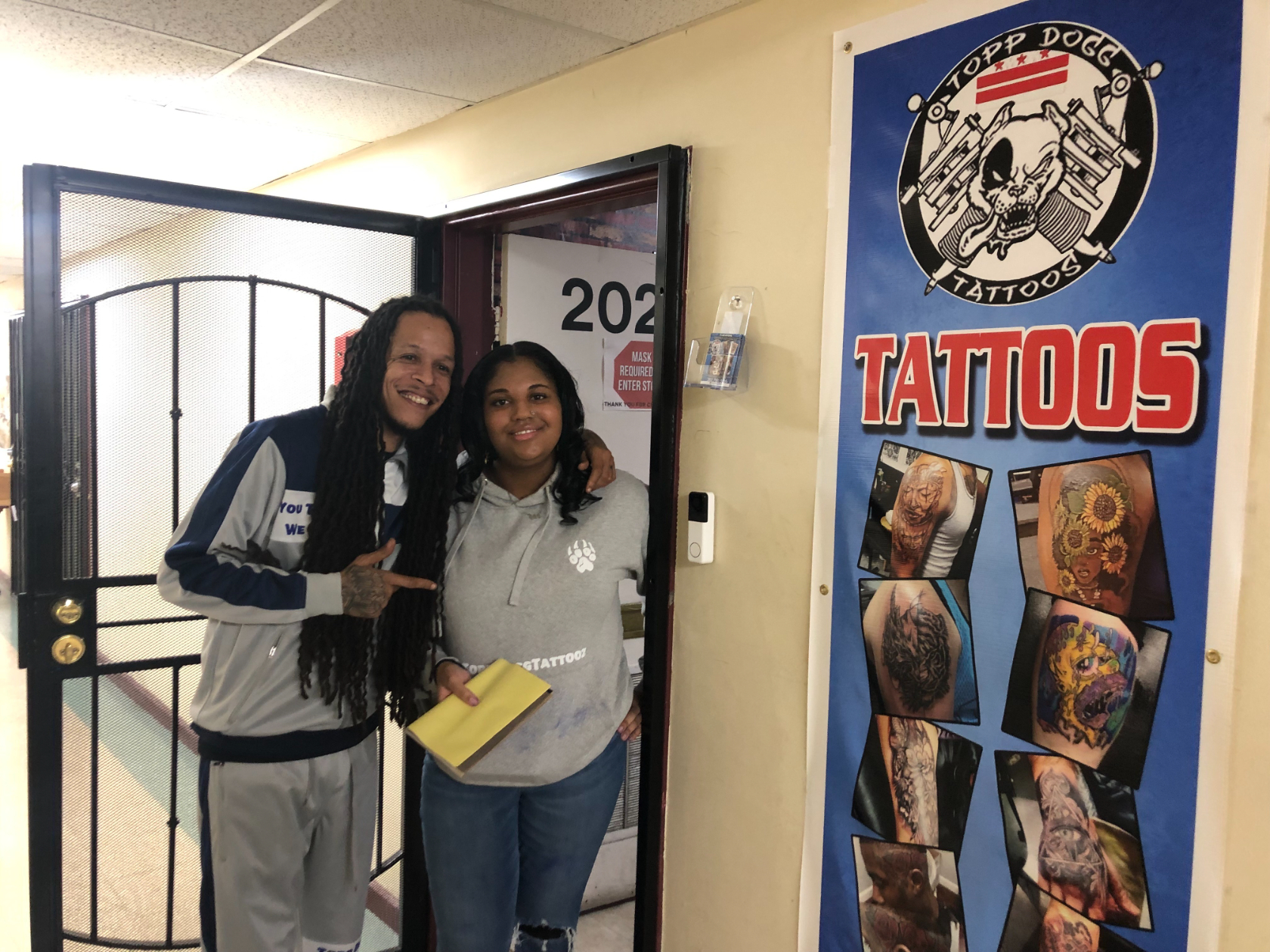
Daryl Moore-Stone, the owner of Topp Dogg Tattoos, says becoming a tattoo artist saved his life.
He grew up in D.C. in the ‘90s, which he describes as “some of the roughest times for a youth to grow up.”
He started selling drugs. By the age of 18, he had a felony on his record.
“A lot of stuff I was doing, it wasn’t because I liked doing it, but it was because I needed the money and I wasn’t getting hired. I tried to get good jobs, but I just never could,” he says. “So when I tell you tattooing saved my life, it literally saved my life.”
Now, a couple decades after learning to tattoo in his early 20s, he owns two tattoo shops in the D.C. area — one in Capitol Heights and another in Hillcrest Heights.
And he’s also dedicated time to mentoring young people, trying to pass on the method he used to change his own circumstances. Moore-Stone now estimates that throughout his 20-year career, he’s mentored at least 40 people. In recent years, he’s developed a more formal relationship with D.C.’s Department of Youth Rehabilitation Services, the city’s juvenile justice agency. He still remembers the first DYRS-committed youth he mentored.
“I took him in,” he says. “Now he’s the father of three kids. He’s literally living good off of his tattoos. He’s doing really good.”
For many years, DYRS has worked to connect young people in the juvenile justice system with career and vocational mentors. But last year, they expanded these opportunities by opening after-school programming at two sites they call Achievement Centers to all D.C. teens — not just those who have committed crimes or gotten in trouble. DYRS’s community-based program also includes job training, which is how Moore-Stone met his latest apprentice, Destiny Brown.
Brown, 18, was assigned to a DYRS program after she signed up for the Summer Youth Employment Program, the city’s long-running summer jobs program for teens. Brown, who says she has painted her whole life, got interested in tattooing after getting her first tattoo last year. A DYRS employee managed to get her into a tattooing class with Moore-Stone, who ultimately offered her a job as an apprentice.
Brown said that as a kid growing up in Northeast D.C., the Rosedale Recreation Center in her neighborhood was a center of activity for her and her peers. But as they grew up, people started going less, and she saw violence increase.
“They need to improve rec centers,” says Brown, “because that’s where everybody used to be.”
But Brown says experiencing DYRS programming, which she found largely by accident, has made her appreciate some of what the city is offering to teens.
“It feels crazy, kind of,” Brown says. “It happened right at the perfect time…I’d never even heard about DYRS, but they was doing all this amazing stuff for the youth … it’s a lot of good programs, but people don’t really hear about them.”
As of her interview with DCist/WAMU in early December, Brown had tattooed four clients, and was hoping to grow her list. The next skills she wants to master are coloring and shading, which are more difficult than line work. She says transitioning from painting to tattoos wasn’t too difficult, especially with an effective teacher.
“I feel like I can express my artistic side…I want to be able to do that for as long as I can,” she says.
Brown says the experience at Topp Dogg Tattoos has taught her that she always wants to have a job that’s connected to her passions.
“In general, I just want to be able to enjoy whatever I do,” she says. “People be stressing, not liking their jobs that they do. I don’t want to [be like that].”
DYRS Director Hilary Cairns emphasized in an interview that though capacity isn’t unlimited, the Achievement Centers — the program that led Brown to Moore-Stone — are an available option for young people looking for after-school programming. Through the Achievement Centers, youth also have access to other kinds of classes, like barbering and technology. And above all, they get access to trusted adults who can help them reach their goals.
“This is their passion, and they serve as mentors and ears for young people,” said Cairns. “They provide an environment, both physically and emotionally, for young people to be successful here.”
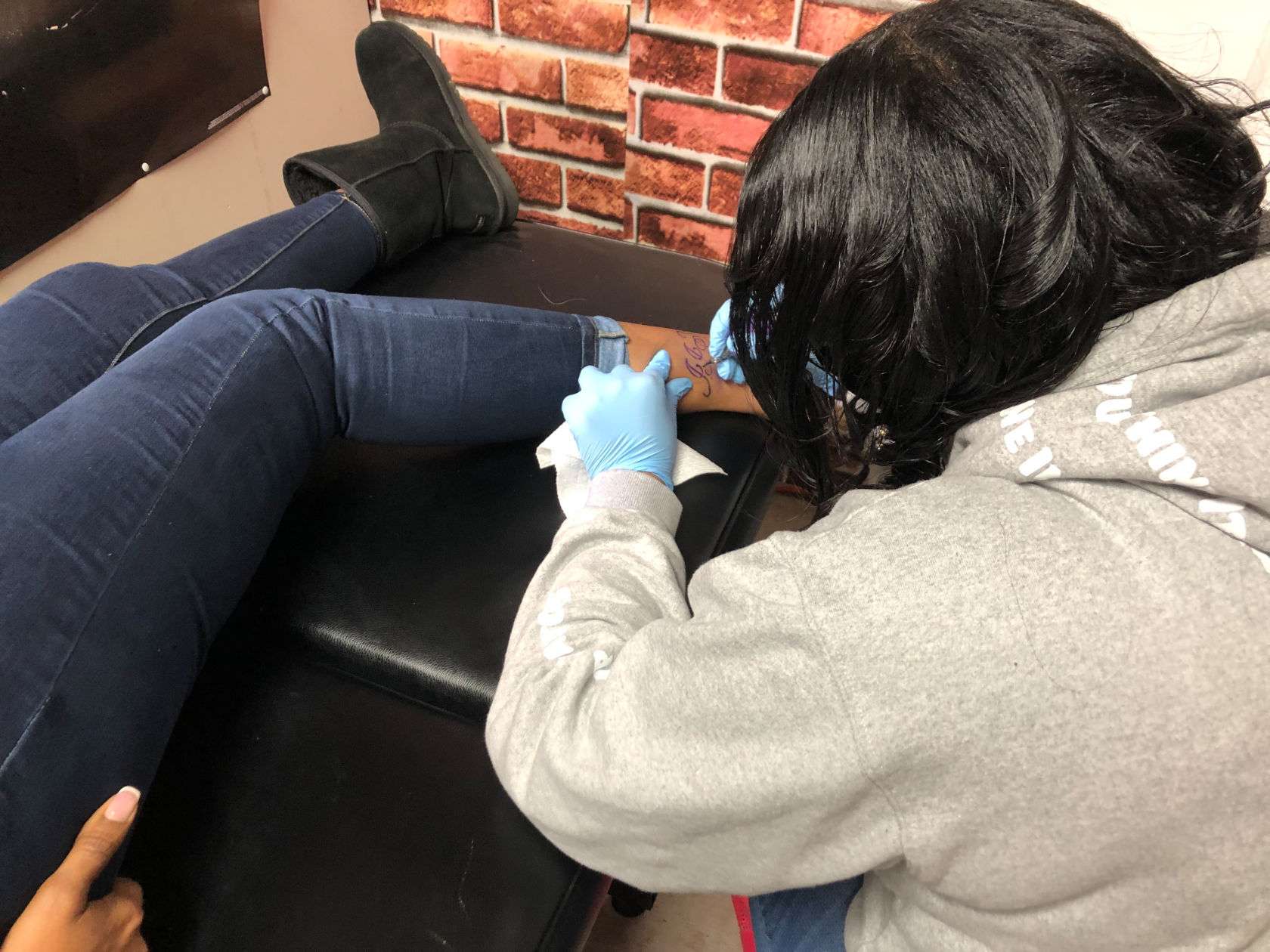
As Brown spoke with DCist/WAMU, she was focused on prepping her latest client for an ankle tattoo. She said that in addition to pursuing her passions, one of her main goals was to save money — a luxury others in her family haven’t had.
“Basically, my mom and my big sister, they spend a lot [of money] because they have children,” Brown said. “They just spend it on their children but they don’t really do anything for themselves. I want to [save money] for me, and for my mother and big sister.”
As she started the tattoo, her mentor Moore-Stone looked on with pride.
“Tattoos are about confidence,” he said. “You see the difference in her line work. You can see the difference in her confidence. I’m super proud of this girl right here.”