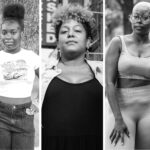
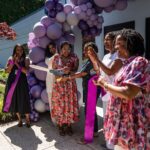
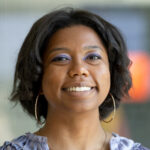
 Aja Drain
 Dee Dwyer
For many women, and especially many Black women in America, motherhood comes to mean something broader than rearing their own children — it encapsulates labor performed in service of a whole community.
In our region, Black women living in Wards 7 & 8, in particular, exemplify the concept of “othermothering” or community mothering — providing support and care to their neighborhoods, often at the cost of their own well-being. The practices of community mothering and “othermothering” are not exclusive to Wards 7 and 8, or to the Black community for that matter, but they mold themselves to the unique struggles of Black people as a whole.
“Othermothering” means to accept responsibility for a child that’s not one’s own in an informal arrangement, according to retired Professor of African and African American studies Dr. Stanile James at Arizona State University.
While othermothering usually happens on a small scale and is more focused on one-on-one personal relationships, “community mothering,” says behavioral scientist for the Centers of Disease Control Dr. Arlene Edwards, is larger in scope, trying to solve problems for an entire group, not just a few people.
For example, after her 11 year-old son Davon was shot to death at a 4th of July community cookout in 2020, Ward 7 resident Crystal McNeal cares for adults and children who experience gun violence. “So I’m not going to lie, I haven’t been taking care of myself because I be so worried about the community,” she says.
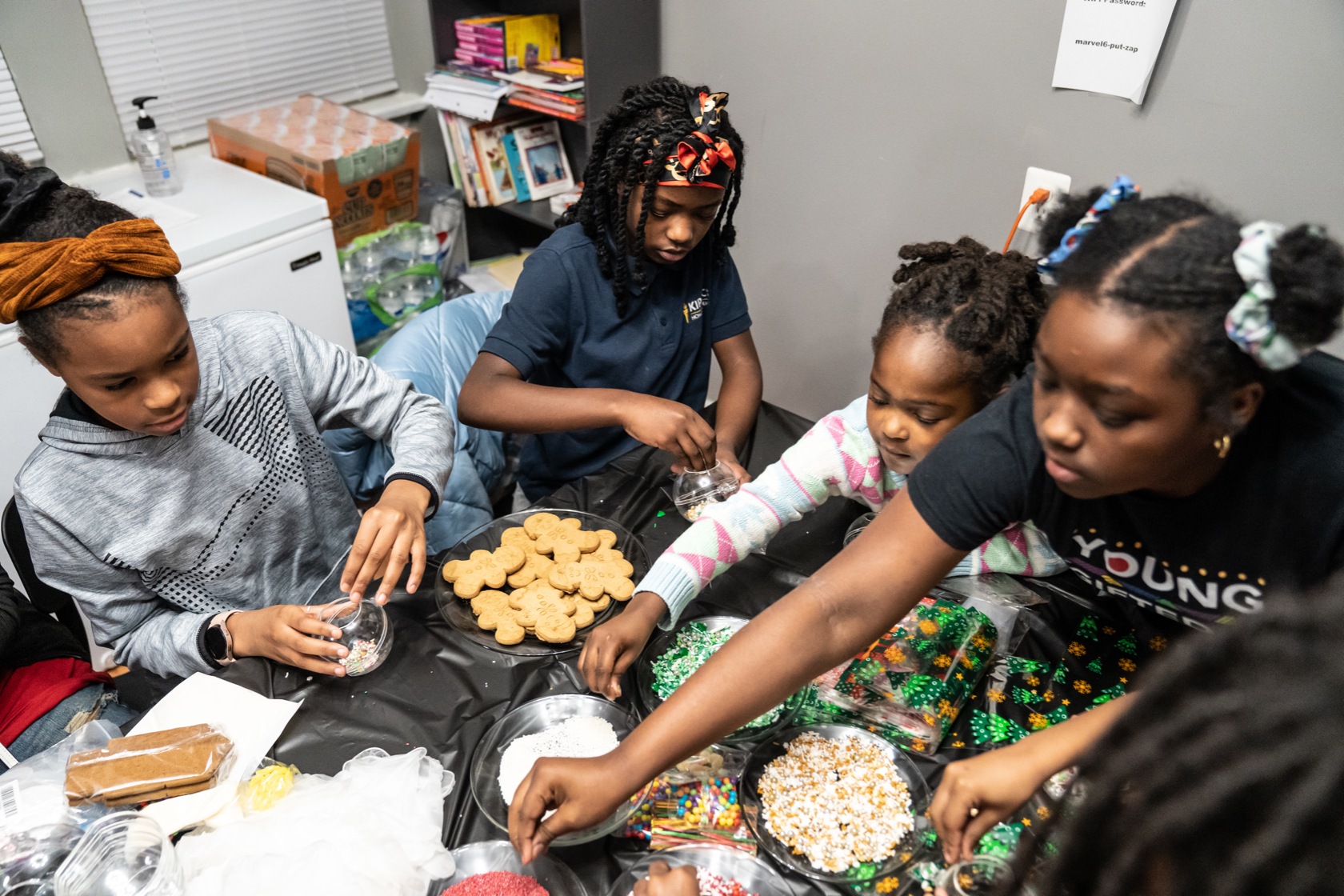
As both Resident Council President and a family engagement specialist at Washington Highland Family Success Center in Ward 8, Julia Tutt supports families with after-school programs for kids and connects community members to resources.
Tutt says there are a lot of beautiful Black women, both inside and out, in Wards 7 & 8, and everywhere, but they aren’t necessarily made to feel that way. “They need to know that they are important for many reasons. As mothers…we are doctors, counselors, teachers , we wear many hats. I sit here and I watch the young [ones] all the way to the older, they feel like they got to do certain things to be seen and they don’t.”
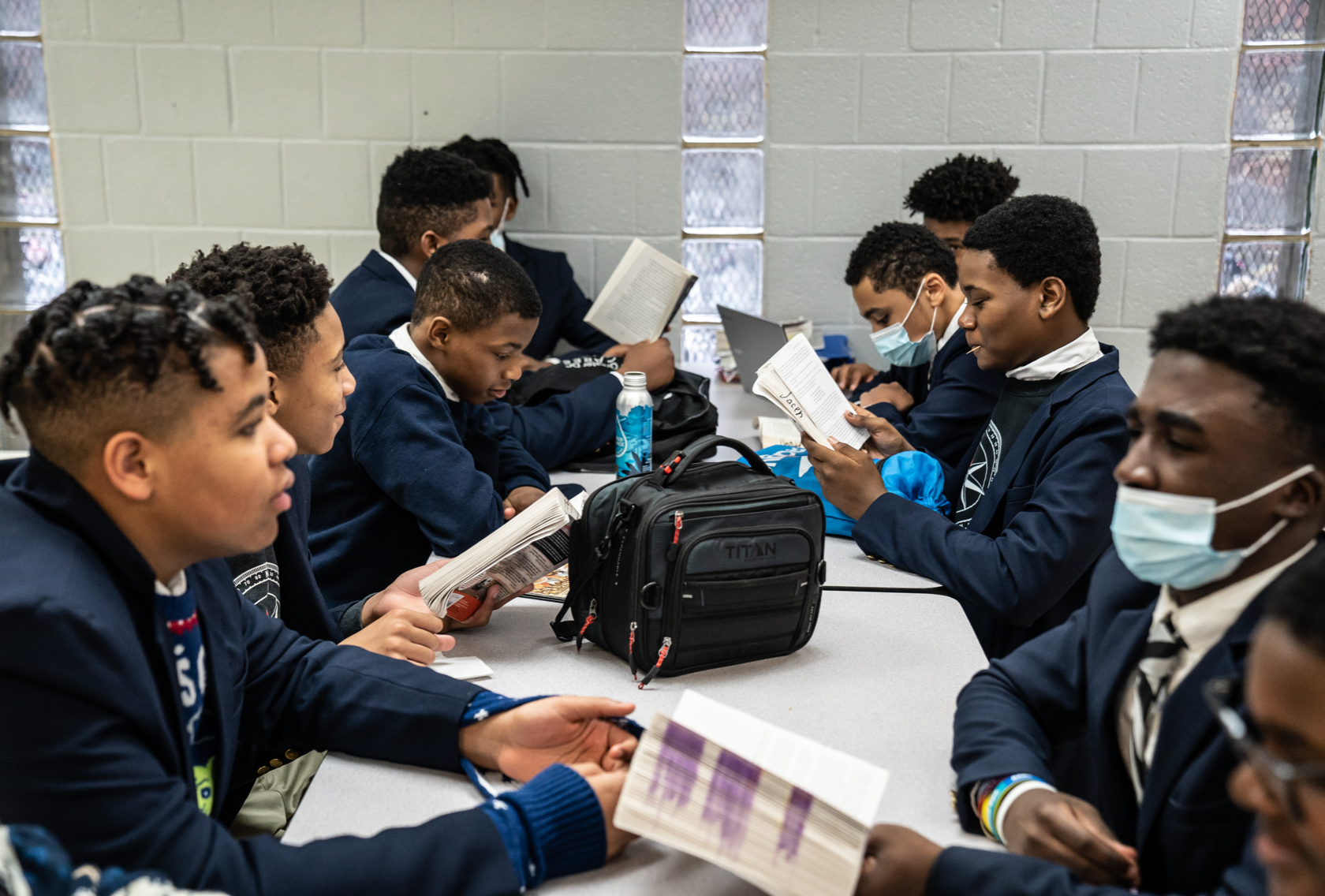
Lenora Felder is the Dean of Instruction, Upper School at Statesman College Preparatory Academy for Boys in Ward 8, and steps in to provide support well outside her job description, like advice, transportation, and even notary services.
“There are some kids who I fulfill the role of an aunt, some, you know, like a mom,” Felder says. “We have kids who don’t have mothers. We have kids who have mothers, but they may be on drugs.”
“I think most of all they confide in me a lot, ” she adds. “They know that I speak for them, I advocate for them. And when they have ideas, they know they can come to me, and we get it done.”
The phenomenon of othermothering is anything but coincidental.
In pre-colonial West African tradition, Dr. James notes that family and community structures had a collectivist approach, emphasizing support of one another instead of just focusing on themselves. “The Western world, particularly in the United States, we’re sort of the lone cowboy riding off into the sunset type thing,” James says. “But [the pre-colonial West African] thought process is more of ‘I am because we are.’ Not ‘I am because I am.’’’
Elements of these practices were carried over to Black communities in the United States during slavery to adapt to the needs of enslaved African-Americans, James says.
“We have a situation where family life is intentionally unstable. The mother could be sold off, the father could be sold off, and the children could be left on their own. And what we saw was that oftentimes the women in the community, the enslaved community, where these children were left alone, would take on the responsibility of caring for them,” she says.
Today, it’s at the intersection of Blackness and poverty where othermothering and community mothering fill a unique need. James says that in lower-income communities, society has historically not been concerned with those needs. For example, she says that residents concerned with safety may not be able to rely on the police department to take care of them. When people are in trouble, she says they can’t rely on the government or other institutions to support them. So they have to create those resources themselves.
“I don’t think anybody sat around and said, ‘Okay, let’s just have othermothering,’” James says. “It’s a response to what the situation is, you know, how are you going to do this?”
And the power of that response can create long-term change, with community- and othermothering also serving as direct forms of political action. James says one example was Arkansas state president of the NAACP Daisy Bates who practiced othermothering with the Little Rock Nine. Bates would meet with the students every morning before they went to school and dealt with the vitriol from white protestors that antagonized them. And Bates would be there after school too, providing care but also support and fuel to the radical act of integration.
However, this tradition is not without its pitfalls. The perception of Black women in society and the amazing feats they achieve have led to the characterization of “Strong Black Women”– the idea that Black women are naturally resilient and self-sacrificing.
“This trope of the ‘Strong Black Woman’ can be very dangerous to the well-being of Black women,” James says, and modern research supports her point.
“The assumption is that she’s strong; she doesn’t need any help. She’ll make a way out of no way,” she adds. “And while that may be true, it does not speak to what her needs as a person are. You know, who takes care of the strong Black woman?”
This is pressure that’s only exacerbated in lower-income communities when there is seemingly no one else left to do the work. James says women may feel dispensable, but they don’t have to be alone. From West Africa to slavery, othermothering and community mothering were about the community in the first place and leaning on others to support one another. It’s not just about Black women giving, but a reciprocal exchange.
“There’s an exchange between you and the community that is mutually beneficial, and you’re a willing participant,” Edwards says. “I think that is one of the key things, that this is something that is recognized by Black people and resonates with them to the point where they’re willing to do something, even if they don’t have a lot themselves.”
Black women in D.C. are seeing the need and filling it themselves – fulfilling an unspoken tradition. In this edition of voices of Wards 7 and 8, we’re spotlighting Black women who have become pillars within the community to share not only what they do, but who they are and what they need.
Responses have been lightly edited for length and clarity.

India Blocker-Ford – founder, Indy B’s mentoring and modeling organization in Ward 8
In our community we don’t have a lot of things, and nobody’s going to give us anything. This is where I was born and raised, so I bring everything that my community wants to them, and I feel like we have to be a village. So, we are the village.
It’s very inspiring to see black women on the front lines, and I think that we are making a difference. I know that women can’t teach a boy how to be a man, but I feel like we do the best that we can by teaching on what we know and what we think they need to know, and also by bringing different things to our communities. Black women, we are strong. We are born to be tough, and we are built for tough. We take those things that were instilled in us and we instill them into the community and therefore make our community great.
You have some people that truly believe in the mission you are trying to accomplish, and they want to be a part of that sisterhood. So, my pride, some of my community members, my God sisters, my family, my children, we all just come together and it’s like, I don’t have to tell them what to do, they already know what to do. It’s like something that we all want. We all know what we need. And it’s like, boom, we all just come together and just do it. And everybody’s just so, I don’t know, they just automatically know how to make you happy.


At first, I feel like I used to put everything before me, before my self-care, trying to build something for a community that didn’t really have anything – that’s my community. [I was] trying to raise four kids as well. First, I had pulmonary embolism and almost lost my life. I had heart and lung surgery – and then after that, I had a hysterectomy. So, I knew right then and there that if I wanted to live, to continue to be the person that I am, I had to take care of me. So I started taking trips. Sometimes I might just book a hotel and go to it for a weekend and just be and not think about the community. I hang out with my friends. I just enjoy the moment.
Yeah, we definitely don’t have the support in Ward 8 that we deserve. We don’t have the support that we need, just being out here, striving and trying to make the best of our situation. The men, they stick together and it’s like they have everything, and we are overlooked. So I just feel like they need to stop overlooking us and come and ask us, ‘Is there anything that we can do,’ you know, give us the resources that you have as well, because we all have the same mission. We all have the same passion. And some of us are really, really passionate about it. And we’re not in it for the money. We’re in it to make sure that we make a change in our community.
It’s messed up because it’s like we support them 100%. We are there for them. Whatever they’ve got going on, we make sure we are part of it, We try to get out there and we fight with them. But then when it’s time to fight with us it’s like ‘oh, they’re women.’ But as women we get the job done, we do the work, we make this work look like anybody can do it. And we do it even raising kids.

Julia Tutt – family engagement specialist at Washington Highland Family Success Center and Resident Council President, Ward 8
I was a running for resident council, president, vice president, secretary and treasurer. I said hmmm, can I make a difference? I wrote a program I thought could be a success, it was a life skills career center. I always wanted to do for less fortunate inner city kids. I said, if I’m the president, I can get some stuff done for these kids who can’t read and write, things of that nature. I put my name on the ballot, at first I put secretary, I’d always been a secretary or a receptionist. Then I said, I don’t want to do that, I want to have direct contact with people because I’m a people person. I like working with the homeless. I ran for president, I said I might not get it, but I’m going to run. I got the position eight years ago. It’s a four year position. I ran have been [on] ever since. I didn’t grow up in the Whaler Place community. I’m actually from East Capitol Street. In 2008, I moved here and I’ve been here ever since.
The residents trust me. I saw there still wasn’t enough people coming out to [community events]. I started doing pop-ups and giving out gift cards, we had hot dogs and sodas. Kids could get their faces painted if you signed up, hair cut, or your daughter [could] get her hair braided. That’s what made them start coming out. I met Victor Battle with Cure the Streets and a couple more people. They said they were able to help stop the violence in the area. We partnered up having pop-ups every week. We’d play music, people would come out and dance. We’d have fun. Martha’s Table, A Wider Circle would give me donations. I got the people to come out to the community center. I noticed, a lot of them wouldn’t fill out the paperwork. They’d be like, I’ll do it later, can I bring it back to you? I said something isn’t right with this, I need to bring a literacy program over here. I thought about different substance abuse programs, it’s a lot of drug use around here.



When I was little, some things happened to me at home. I had to leave at a very early age to survive in the streets, at 12 years old. I was sleeping in the woods, in a laundromat. Around that time, Greyhound bus station and a trail were right across the street from each other off of New York Avenue. I used to go in there and wash up. I’ve seen a lot while I was in the streets. I’m 65 years old. I don’t look like I’m 65 years old, but I’ve been through a lot. I’ve got a strong will because I never did any drugs. If I tell everything that happened to me, they wouldn’t believe some of the stuff.
We had a round table [discussion] with some young ladies. A girl said, ‘I can’t get a job because I got felonies.’ She said, ‘Why are you looking at me like that?’ I [told her] you can get a job. I said, ‘Sweetie, I’ve had 135 years, 28 felonies at one time, my first time ever getting locked up in 1985.’ The Judge said I wasn’t coming home. But guess what? Since 1992, I’ve been home. When I came home, guess where I was working? D.C. Superior Court, the court that gave me 135 years. I passed my parole officer on the escalators one day. He said what? The amazing thing, the judge who sentenced me, I could tap in and go right in his chamber, sit in his face and talk to him. He didn’t even know I was one of the ones, he sentenced. I went to prison. I had multiple charges – bank robbery, accessory to bank robbery, receiving stolen property, aiding and abetting. I was 28 years old. I see the kids out here, I say, if you don’t get those ones now, you will lose them.
I see black women in our community struggling. A lot struggle with abuse. I wish that men would talk to the women better. Where we live at, it’s mostly single women. A lot of the young guys target them because their self-esteem is so low. I wish there was somebody that could come in and build them up, tell them something different because there’s a lot of beautiful black women in Ward 7, 8, everywhere. They need to know that they are important for many reasons. As mothers…we are doctors, counselors, teachers , we wear many hats. I sit here and I watch the young [ones] all the way to the older, they feel like they got to do certain things to be seen and they don’t.
Never settle for nothing less than the best for yourself or for others.

Lenora Felder – Dean of Instruction – Upper School, at Statesman College Preparatory Academy For Boys
Our school is an academy for boys. The school is built on the idea that black and brown boys need a place where they feel welcome, where they’re held to a higher standard, and the curriculum is built for their needs. We use a boy’s centered pedagogy that that builds in everything that boys need, and also uses all of the research – from asking black and brown boys questions like, what are the reasons why you don’t come to school? What do you need to come to school? What do you want your classes to be like? The idea is to actually give them a place where they feel welcome and they feel that the school is built for them. So then we can give them what they need to be strong boys who become strong men, who come back to their communities and take over the communities.
I often talk about when you are an educator, you kind of have to create a persona, and that persona does not have to be who you are as a person. I am childless, no kids. I don’t have any nieces and nephews, nothing. But when I’m at school, I’m Ms. Felder. All the kids want to hug me. They want to be a part of me, want to sit in my office and talk to me. I think that I recognize kids as little humans, little people. So, I talk to them, I give them attention. But they also know that I have high expectations, and that not only do I have high expectations, I actually know what I’m talking about. So, there’s no subject that I can’t help them with.
I think most of all they confide in me a lot. They know that I speak for them, I advocate for them. And when they have ideas, they know they can come to me, and we get it done. So, I think that they respect me as an intellectual, but also as someone who’s an like an auntie in their family, some of them even call me that. I think I have a good mix of the ‘I’m an administrator who is responsible for making sure that you have adequate and high-quality instruction, making sure that you have a great cultural experience, but you also can tell me about your problems.’ I think I’ve got a good mix of that.

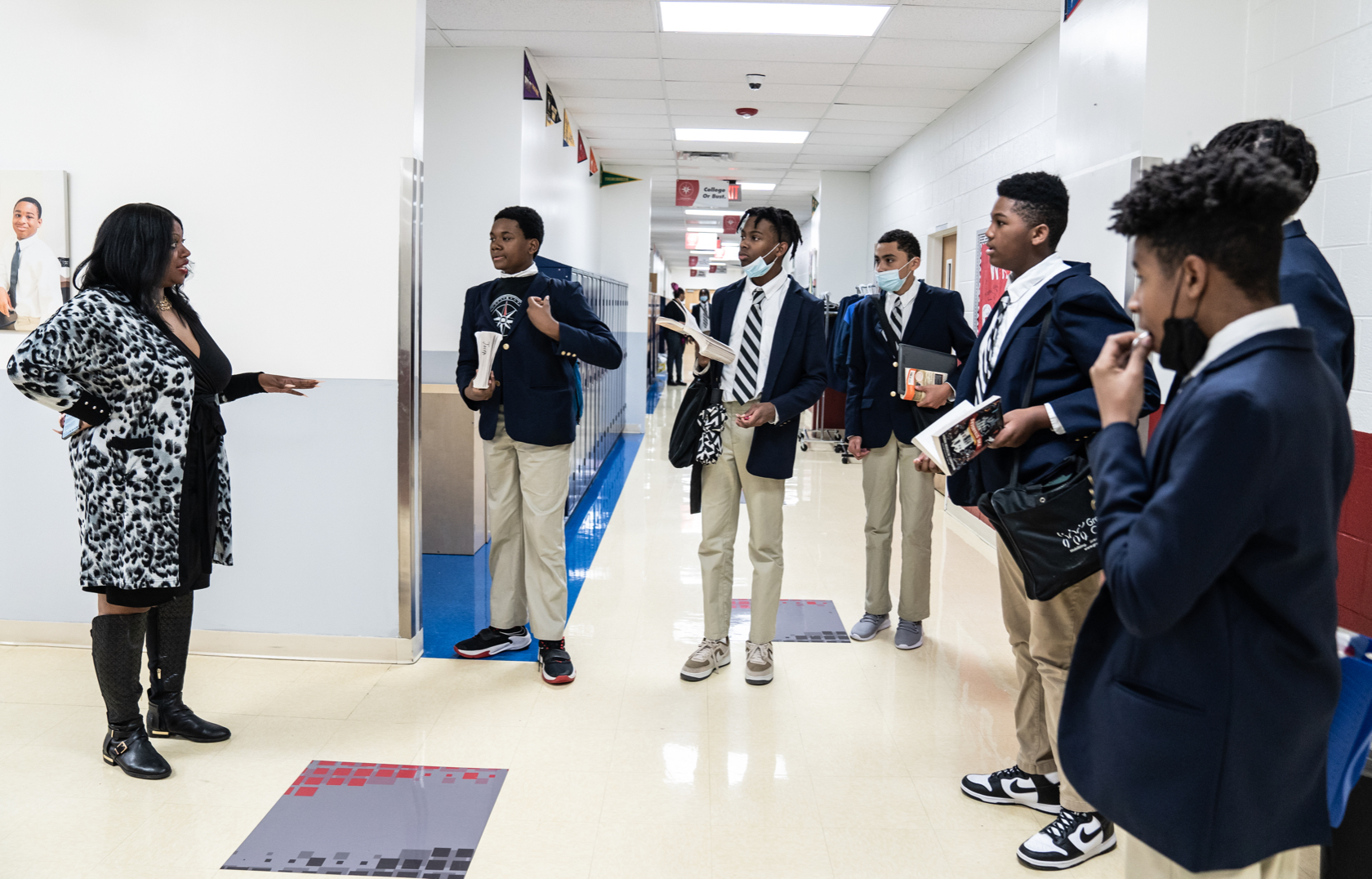
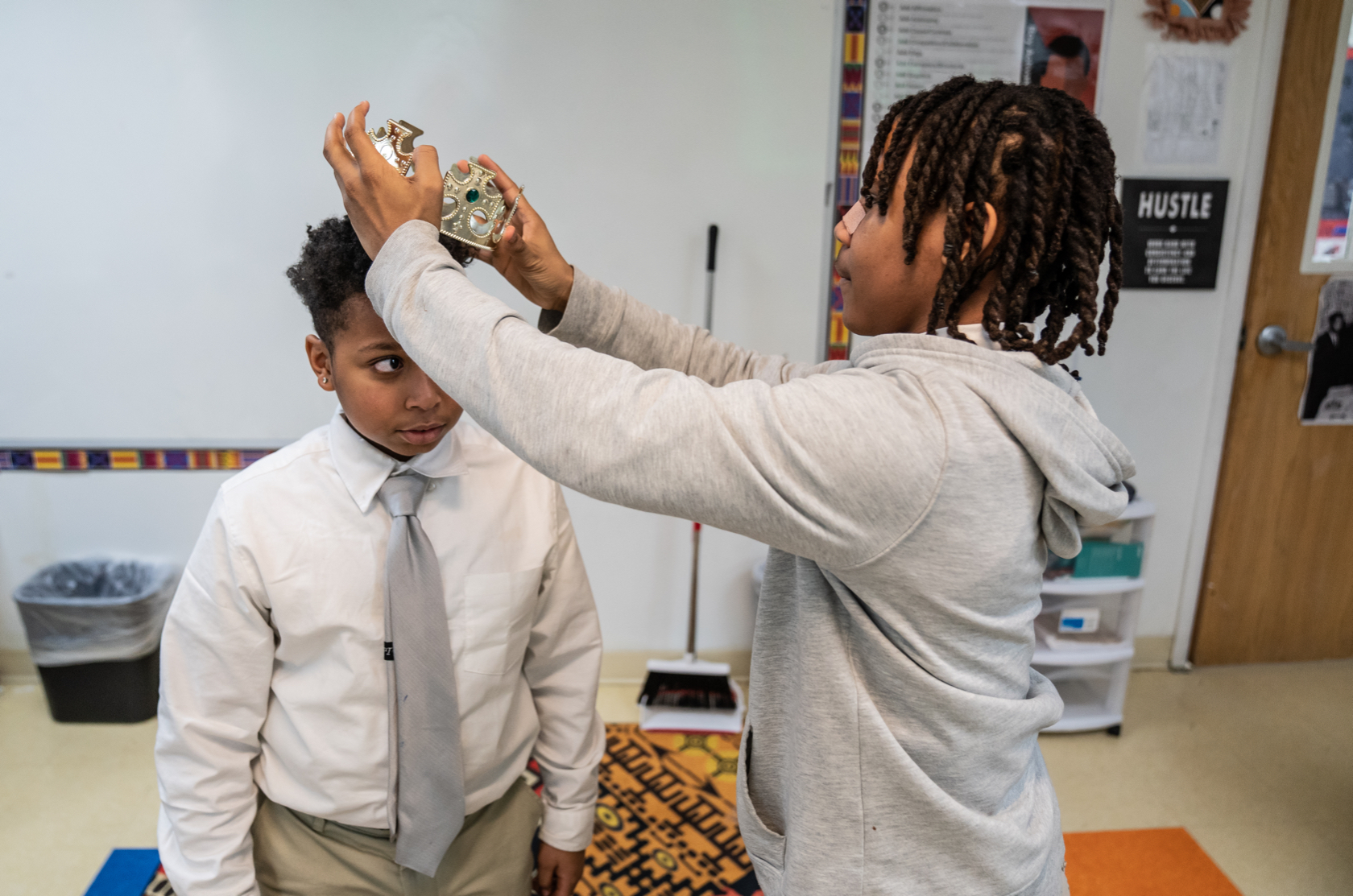
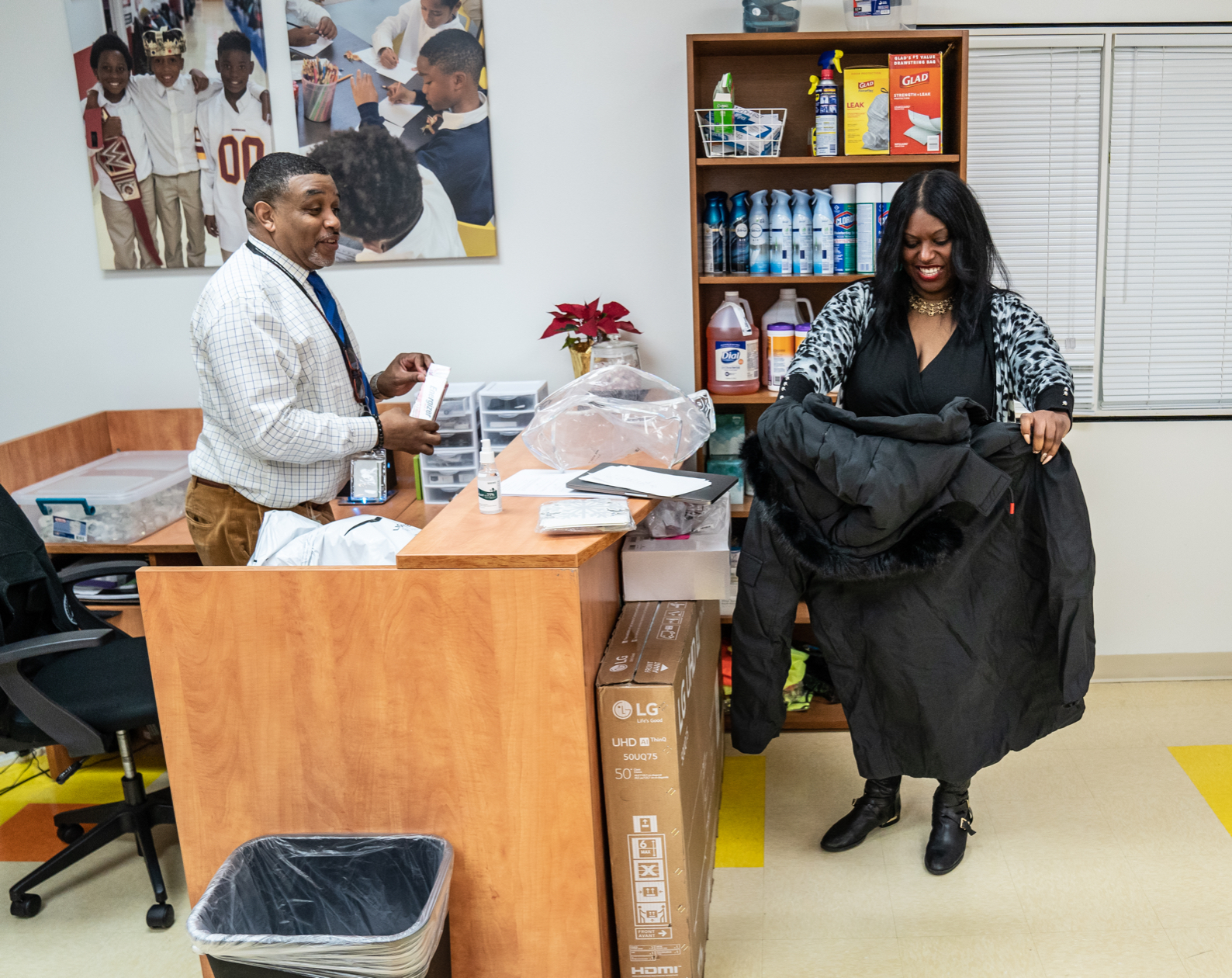
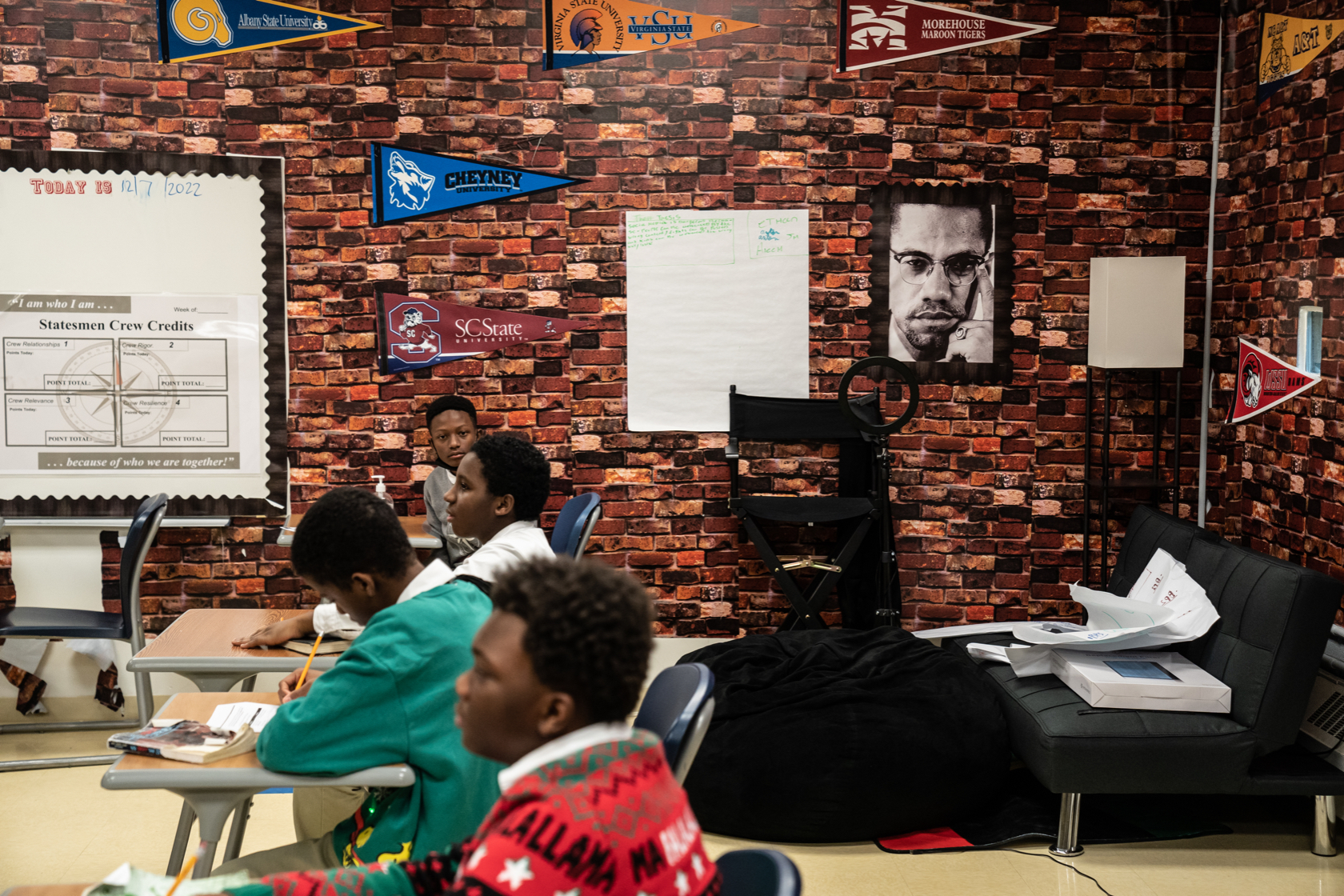

I think the first thing comes with understanding in any way, whether it be education or any business – you have to know who your target audience is. These are people who don’t have the benefit of a village in the way that people in higher socioeconomic status may have it. You can’t come into a Ward 8 or Ward 7 saying I’m only going to be an administrator. You have to understand that you adapt to what the people around you need. And so, there are some kids who I fulfill the role of an aunt, some, you know, like a mom. We have kids who don’t have mothers. We have kids who have mothers, but they may be on drugs. They you know, for some kids I’m just like a consigliere.
I think you just have to be very cognizant of what the needs are and be amenable, to be whatever they need to get what you need from them. I need them to focus on their studies and actually perform, you know.
So, you do find yourself in different roles for different people. But again, it’s that and creating the persona of who you are at the school to fit the needs of the mission of that school. It’s just something that you accept, and you just keep being amenable to because at different times you need to be different things, and if you’re truly committed to the mission, then it’ll be something that’s very easy to adapt to.
With black women especially, there’s always this thing where you don’t want to be a mule or martyr, but you want to find a way to lend yourself to the community in a way that makes sense and that’s going to get to the actual mission that you want to achieve. So, I think that you have to be understanding of that. But the key to me is to not bite too much of the problem off, you know, just take a piece, because I think if everybody takes a piece, then it’ll be able to get done in a way that’s not killing yourself in the process.
They call me the “queen of self-care”. I have very hard boundaries for one. I always say, once I’m done [with] work, I’m done [with] work. Everything that I want to do is beyond that. I set hard boundaries – when I leave work, I’m now Lenora. And no, the parents are not going to call me – they do not have any boundaries. They will call you at ten, eleven at night and expect you to handle their issues. I completely cut that off. I am always at a spa, getting a massage. All kinds of things. I just do different things that I know are important to my healing. And I think that it’s important that every single person realize, like, what is the thing that you can do that turns your mind off and you can tune into you? And I’m very deliberate about finding those things and just sticking to them and not letting anything get in the way of those.
Black women especially, we unfortunately have been holding up the community and community values. But what I think is missing is black men as the lead of it and being the face of it. And I think it’s important for many reasons. One, because when they’re the face of it, they’re more apt to move it forward, and all the work is not put on the women. But it also provides some of the balance that women need, or at least I think that women should have. And you get to have balance when you don’t always have to be the one out front. But that doesn’t also mean it doesn’t mean that you’re not as powerful.
Oftentimes we [Black women] think, ‘Oh, I’m not a damsel in distress.’ Sometimes you need to be a damsel, but you don’t have to be in distress – because just the idea of being a superwoman is, they die early. And so, you don’t have to be everything to everyone, because that means for most women, especially black women, you do that at the expense of yourself, so you’re nothing to yourself. And so, I would say, be everything to yourself. And give pieces of yourself to the community, knowing that there will be other people who will give pieces of themselves. And together you’ll have a whole community.
Tanya Whitaker – President, STAT DC
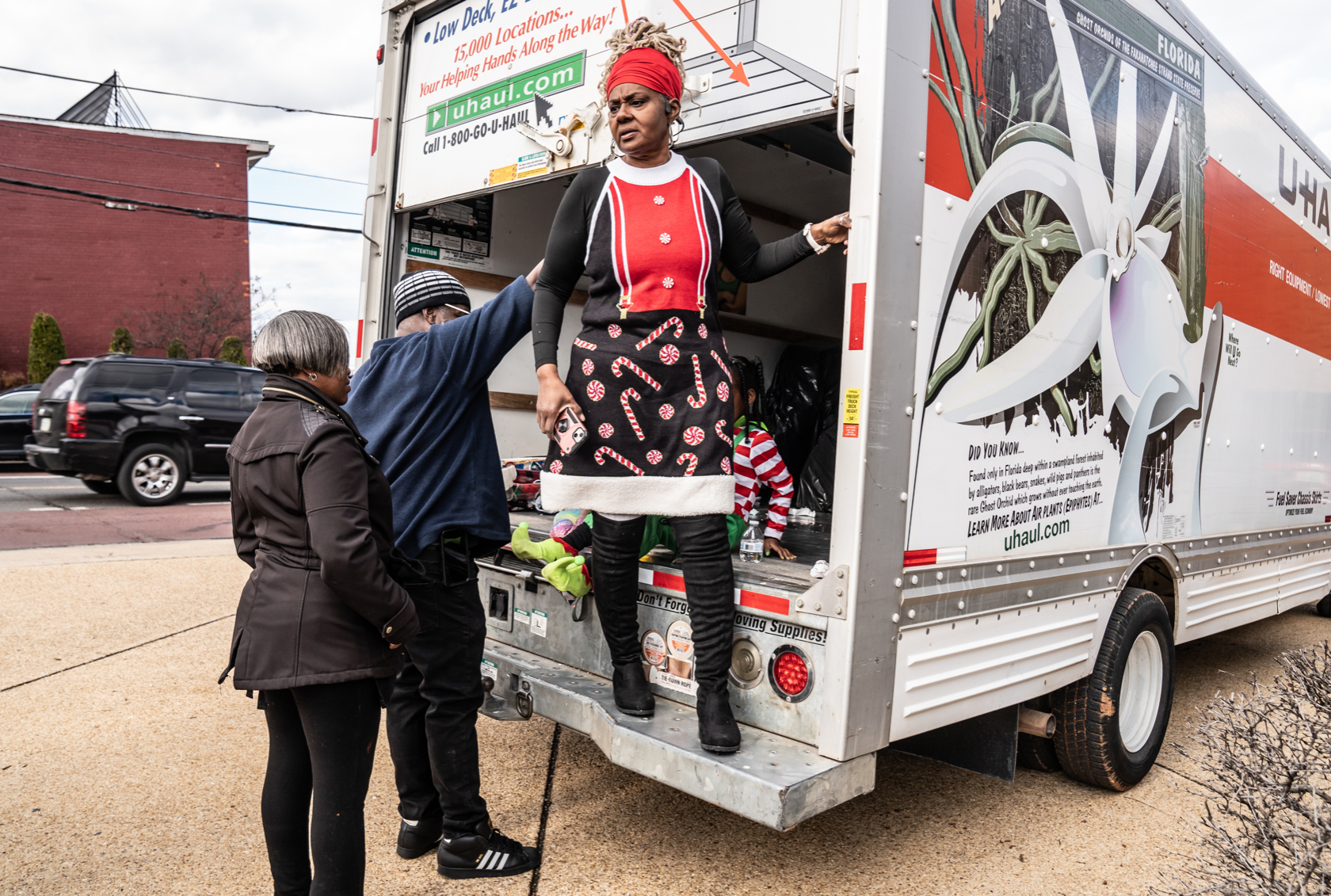
We just want to eradicate food insecurity, so that’s how it started. It was just a need. Like don’t try to reinvent the wheel, just see which way the wheel is moving and jump on. And we’ve been met with a lot of gratitude. And so that’s great. STAT, it’s much more than food. We’re giving away toys. We’re going to do industry recognized credentials, food, furniture, clothing, rental assistance, mental health, transportation, the whole gamut.
That is our backbone. That is our very essence of who we ( Black women) are – nurturers. And so, I believe when you see a woman, especially a woman of color, you have to find out their background because it was an uphill battle. You know, it’s a male run society. And so, me personally, I’ve run into that where when I tell them this is my company, they’re like, ‘Oh, but you’re a woman.’ or, ‘You’re female.’ So, there’s a lot of stereotypical obstacles that we have to face. But the thing is, we endure. and we have so many balls in the air that we that we can juggle it. And it doesn’t matter. We’re going to make it happen.
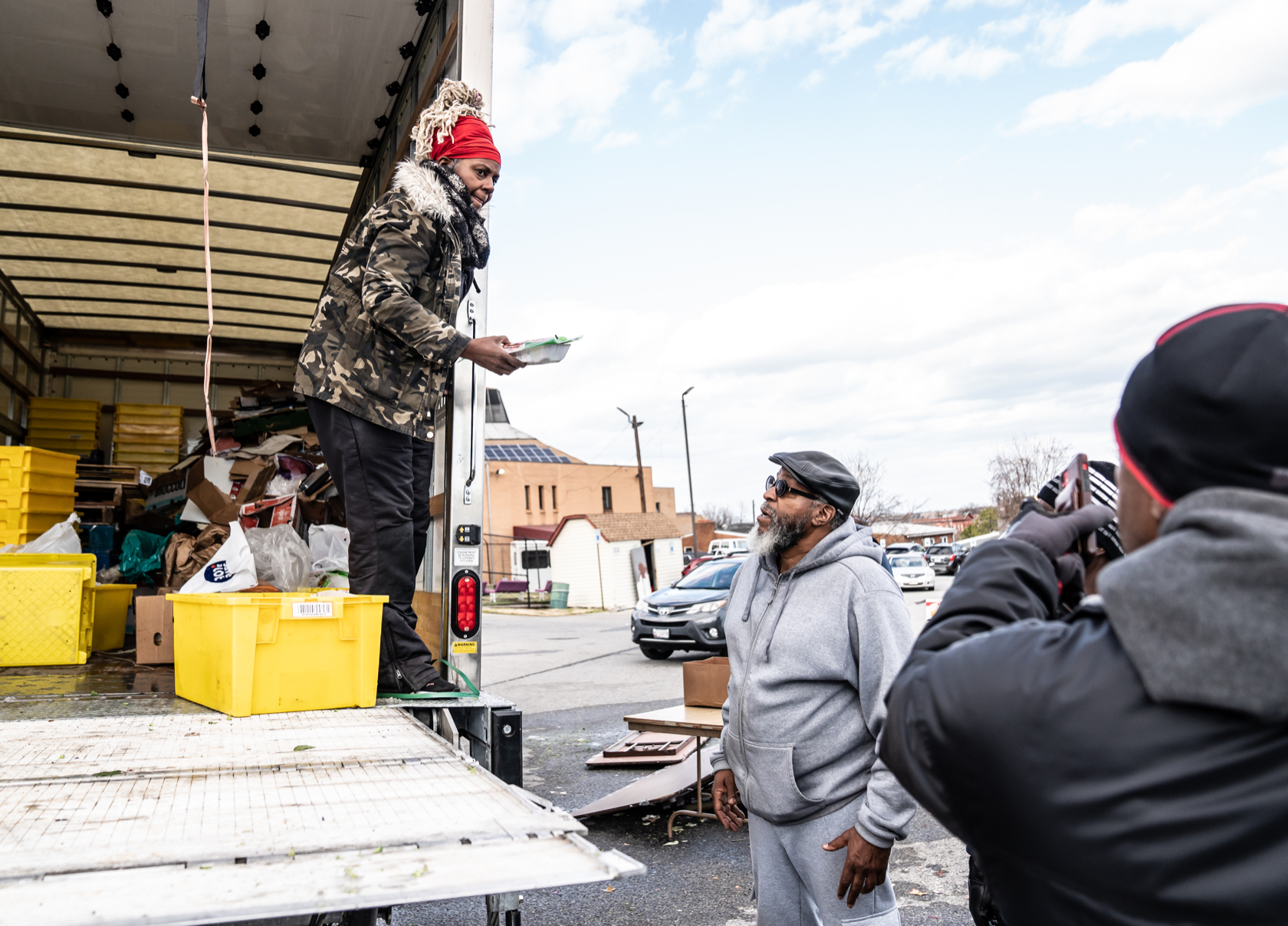

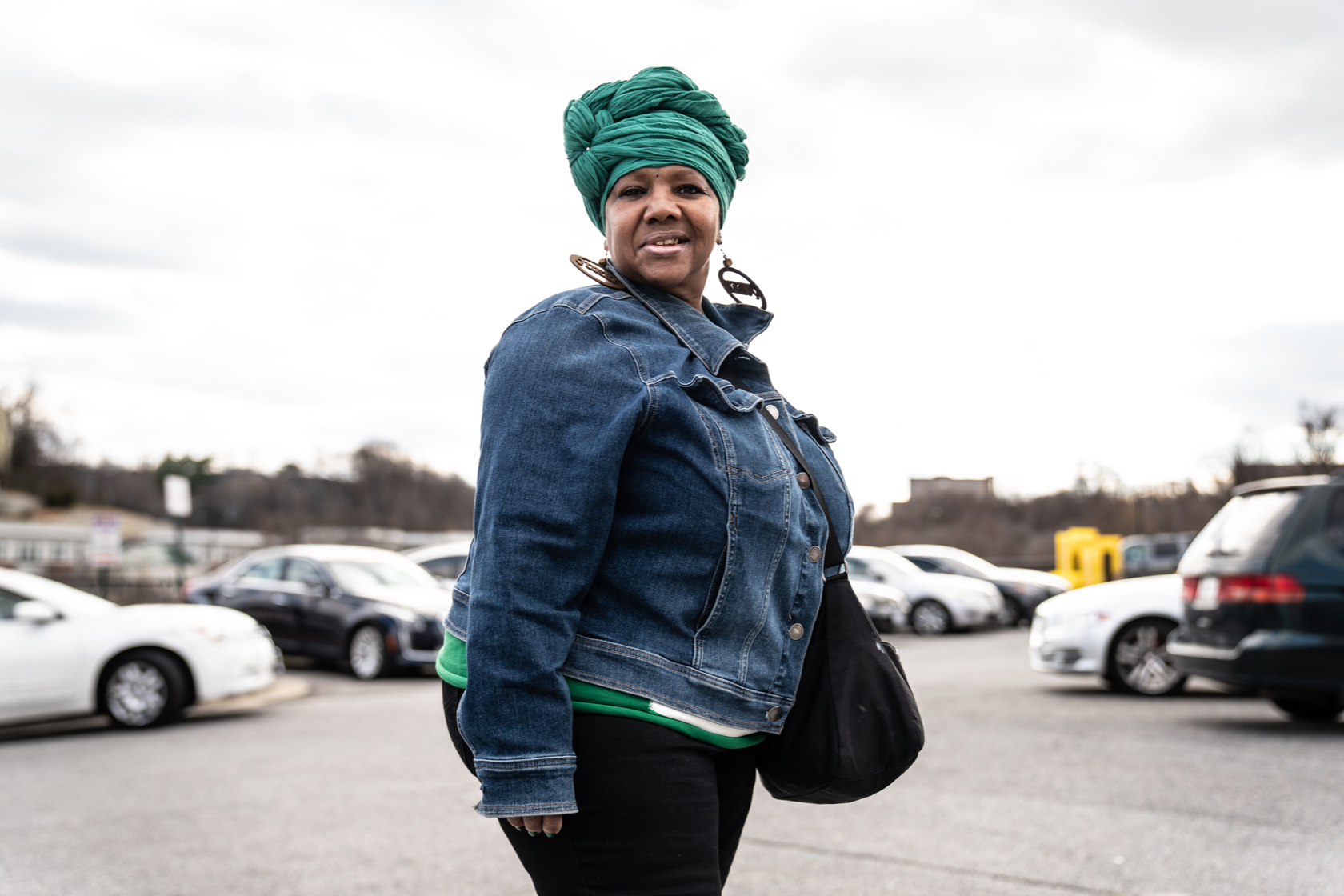


But let me just be very clear. This would not happen without the team. So I’m very purposeful to make sure that everything is not about Tanya, but it’s about branding, STAT development center, because what you’re going to see is so many amazing people rise to the to the call and that and that’s what we need. I was telling someone that you see me, but I’m like a triangle. I’m stronger behind me than in front of me. It’s the force behind me, that is the push.
So, I believe it starts when you are a kid. I just had a conversation with one of my old high school classmates. And because we were bussed, I used to be on 495 and the tractor trailers used to come pass. And I said one day, my name is going to be on that truck. I knew it. I didn’t know why or whatever. So, it’s your purpose – it’s just honing in on that purpose of why you’re here. And so, when you find it, the doors are open, right? Don’t shy away. Don’t shy away, because here’s how you know that you’re supposed to do it. When you tell somebody you want to do this, ten people will tell you it’s impossible. That’s how you know you’re supposed to do this. Because God is not going to give you a vision without the provision. And it has to be bigger than us.
I think we create a legacy. My grandbaby is here. And if you ask her what is she at STAT, she’ll tell you ‘I’m the CEO’ because I show her, this is your future. If you go on my website, it’s pictures of her, you know, a pulling a pallet, because you have to lay the groundwork. We don’t just give out anything. You understand why, why she’s so important. Why that kid is so important.
You pass the torch, but you hold the torch until they can do it, you know? I’m hoping until I’m laying vertical, I’m driving one of these trucks!

Crystal McNeal – community advocate who lost her young son to gun violence
So I’m not going to lie, I haven’t been taking care of myself because I be so worried about the community. I’ll be like, ‘Okay, I’m gonna take a break this week,’ and then I’ll get a phone call that a 13- year old just got killed by raking leaves or a fifteen year old just passed away from walking through the alley. So it’s like, I never get a break because I’m always trying to help them out and I’m always trying to find them different support.
So after I lost my baby (Devan). I thought, like, hey, it will slow down, stop. Because he had over 3000 people at his funeral. The candlelight vigil, you couldn’t even move.
But after this happened to my child, you just see kids passing and passing. When is it gonna stop? Or is it gonna stop? Like you can keep on doing peace meetings and events…marching. That ain’t gonna stop people from doing what they’re gonna do. Because it’s like they want to live up to their name, these fake, wanna be gangsters.


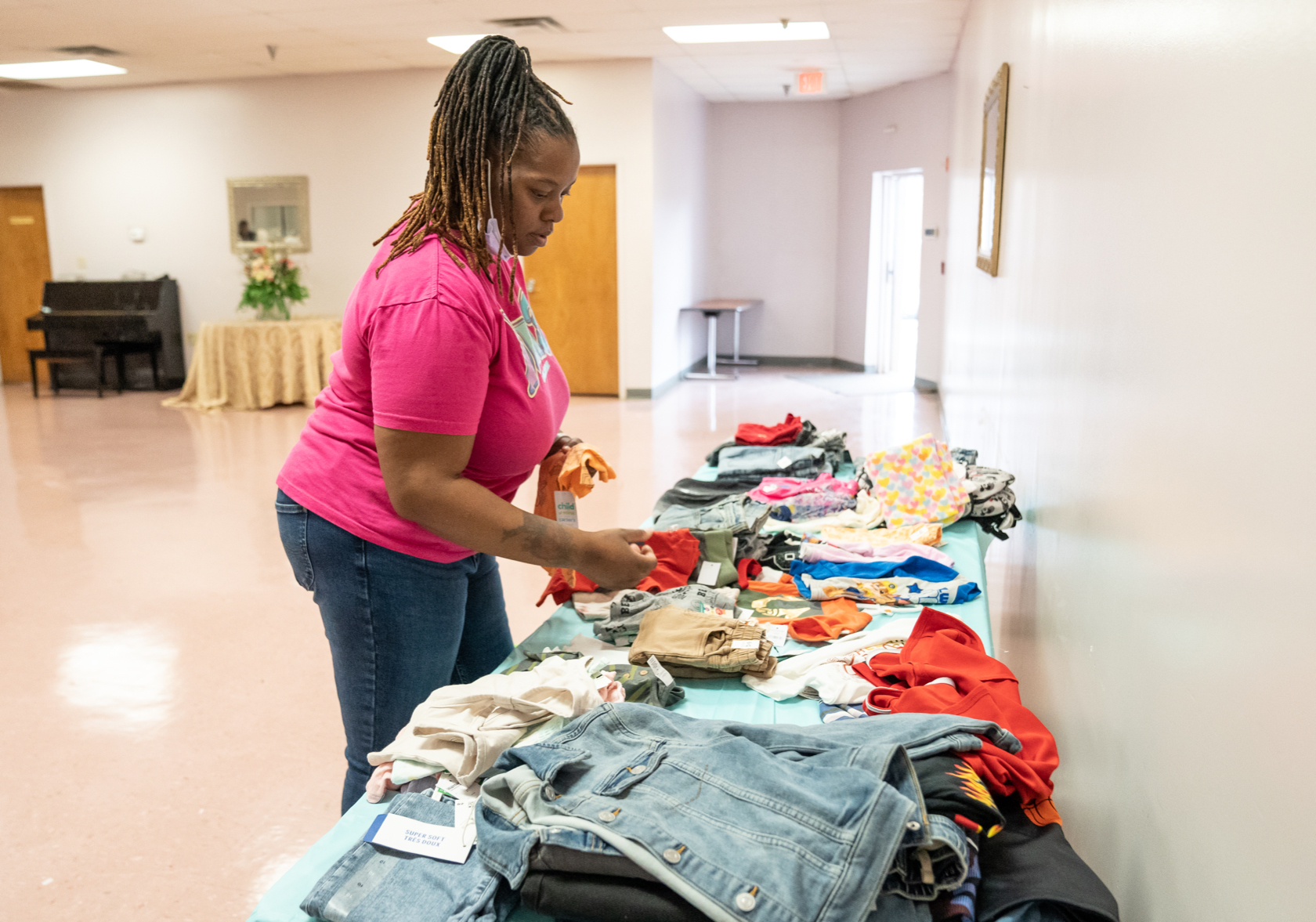


You just have to do what you gotta do. Like sometimes, I feel like giving up because I don’t have all the support that I need, but then I reach out. [I say] just keep on pushing, don’t ever give up. Do what you’ve got to do. Always reach out to other women because we, have so many resources out here,
Like it was hard for me trying to do this event. I was like, if I’ve got to come out of my own pocket to do this event, I’m going to do it because everybody didn’t have any funding. I had to wait to the last minute, but it came through. So that was a blessing.
So that’s my goal is now, just keep on pushing. Never give up – reach out to other women. Like if we come as one… I mean, the mothers out there, we help each other out.