Jacob Fenston
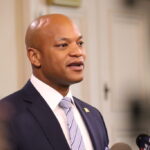
Maryland Gov. Wes Moore (D) is calling for increased spending in his recently released $63 billion budget, including investing $1 billion in cash reserves on education and transportation projects.
In a press conference, Moore called the budget proposal “bold without being reckless.”
Moore’s budget for fiscal year 2024 calls for speeding up the transition to a $15 minimum wage, at a cost of $218 million, and making permanent the extension of the enhanced earned income tax credit and the child tax credit, at a cost of $171 million. These anti-poverty measures would make for a more “competitive and equitable economy,” Moore said.
“This budget positions Maryland to build a competitive, thriving and deeply and rooted economy that includes everyone, while advancing the critical priorities of education, health and the environment.”
Moore acknowledged that current budget surpluses are unlikely to continue, as the possibility of recession looms and federal stimulus dries up. Maryland ended fiscal year 2022 with a $5.5 billion surplus, and fiscal year 2023, which runs through June, is projected to end with a $2.3 billion surplus. Those surpluses are largely due to factors that will probably not repeat themselves in the next fiscal year: unprecedented funds from the federal government, and higher than expected personal income tax revenues.
Despite spending increases, Moore said his budget would still set aside a rainy day fund of $2.5 billion, plus a budgetary cushion of $820 million.
The budget proposes using $500 million in cash reserves for the Blueprint for Maryland’s Future, a program created by the General Assembly in 2021 to close the education achievement gap in the state. Another $500 million from state reserves would go to transportation capital projects.
Moore linked transportation to economic mobility. “We are making sure that we are creating pathways for people to go from where they live to where opportunities lie,” the governor said.
Moore’s budget would also increase K-12 education funding by 9% per student and boost funding to support low-income students by 32%
The budget proposes boosting funding for environmental programs, including $103 million for renewable energy programs, a 15% increase, and $52 million for energy efficiency grants, a 44% increase.
For the first time in eight years, both houses of the Maryland General Assembly and the governor’s mansion are all controlled by Democrats. While Democratic lawmakers applauded Moore’s budget proposal, Republicans raised concerns about the cost of increased spending.