Martin Austermuhle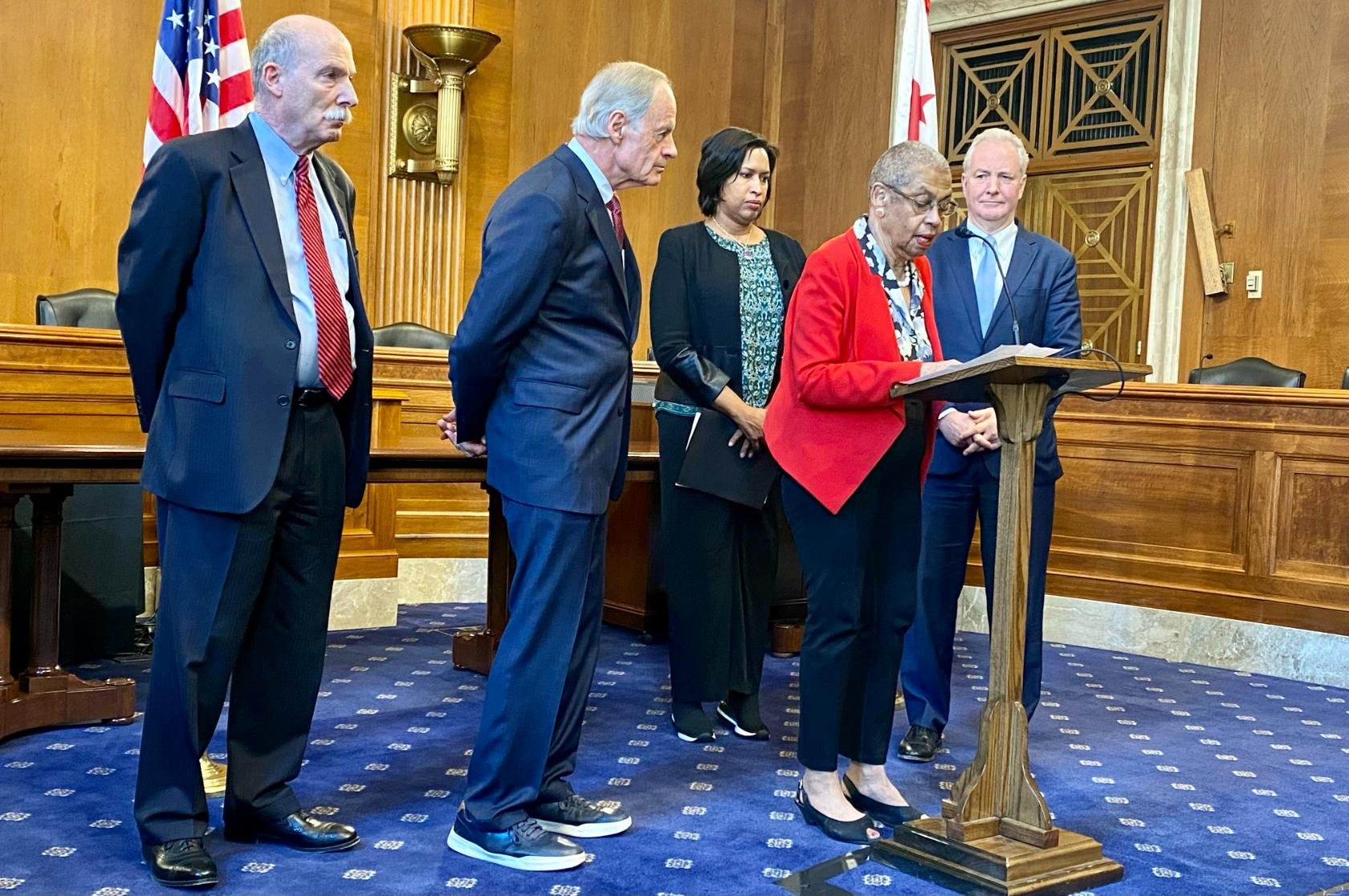
Sen. Tom Carper (D-Delaware) on Tuesday introduced a bill that would make D.C. the 51st state, following a similar measure introduced in the House of Representatives by D.C. Del. Eleanor Holmes Norton.
“These citizens do not have a voting representative in either chamber of Congress. They pay more federal taxes per capita than citizens of any of the 50 states but have no say in how those taxes are actually spent. They serve in the military and can be sent to battle in a war that they had no say in fighting,” said Carper, who has spearheaded the fight for D.C. statehood in the Senate for the past decade.
“This is wrong and not consistent with the values that we hold dear as Americans. This isn’t a Republican or Democratic issue — it’s an issue of fairness,” he added.
Still, there is the issue of Republican control of the House of Representatives, a political reality which hung over Tuesday’s announcement like a wet towel. While a statehood bill passed the House on two occasions during the four years of Democratic control, there’s little to no chance that Republicans will take up the cause. In fact, some Republicans have spoken candidly of further interfering in the city’s local affairs, going so far as to float the idea of ending the District’s self-governance by repealing Home Rule altogether.
“Let’s talk about the elephant in the room. With Republicans in control of the House, our work to pass this bill will be even more challenging,” said Carper.
And while Democratic support for statehood has grown over the years in the Senate (even extending to former senator and current President Joe Biden), Carper’s bill has never gotten a full vote in the chamber, let alone in the Homeland Security and Governmental Affairs Committee on which he serves. On Tuesday, Carper said the reason no committee vote has been held was because of other pressing issues in the Senate, but that with those cleared away, there was more opportunity for that vote to happen. “This year I think we’ll have more room to take it up,” he said.
At the same time, D.C. officials are preparing to go on the defensive, especially if Republicans attempt to take action on local issues. Two have already said they want to overturn a recently passed law that would allow non-citizens to vote in local D.C. elections starting in 2024, and others have expressed interest in taking aim at the recent overhaul of the city’s criminal code.
Democratic senators say they will work to defend D.C. in those instances, but also conceded on Tuesday that there’s only so far they might be able to go. In the past, local D.C. issues have become bargaining chips in negotiations to prevent government shutdowns, and Sen. Chris Van Hollen (D-Maryland) predicted that could happen again. That’s especially the case with budget riders, the D.C.-specific provisions inserted into federal spending bills that target city programs and laws. (Currently, riders prohibit D.C. from spending any money on abortions or to legalize the sale of recreational marijuana.)
“We will fight hard to prevent any backsliding,” Van Hollen said. “What happens often is we’re in a position where Republicans can threaten to shutdown the entire government if riders that have been on for years do not remain. We will continue to work hard to remove those riders. But when you have some members of the House and Senate who are willing to shutdown the government… obviously that illustrates the fundamental challenge we have here.”
Despite the challenges ahead, Carper said he remains optimistic that D.C. statehood will eventually come to pass.
“Bit by bit, public opinion has changed. I think the key issue is not to quit,” he said. “I’m one who believes that some of the hardest things to do are the most worth doing.”