Black history and culture is ubiquitous in D.C. — many locals have visited the Frederick Douglass National Historic Site in Anacostia or the Smithsonian’s National Museum of African American History and Culture at the National Mall. But the impact Black culture has made on the Washington region goes beyond historical sites and museums; the long history of Black entrepreneurship in D.C. has led to a thriving Black business community, one that spans fashion, food, music, wellness, and other areas.
In addition to providing jobs and making the District a dynamic place to live and enjoy life, many of these Black-owned businesses are working to share and preserve Black culture. Though that culture should be celebrated all year round, Black History Month in February provides a time to reflect on these contributions.
You may have heard of Black-owned bookshops like MahoganyBooks or Sankofa Video, Books & Café, but here are a few other businesses — both well-established and fairly new — to consider patronizing this February and beyond.
Khismet Wearable Art
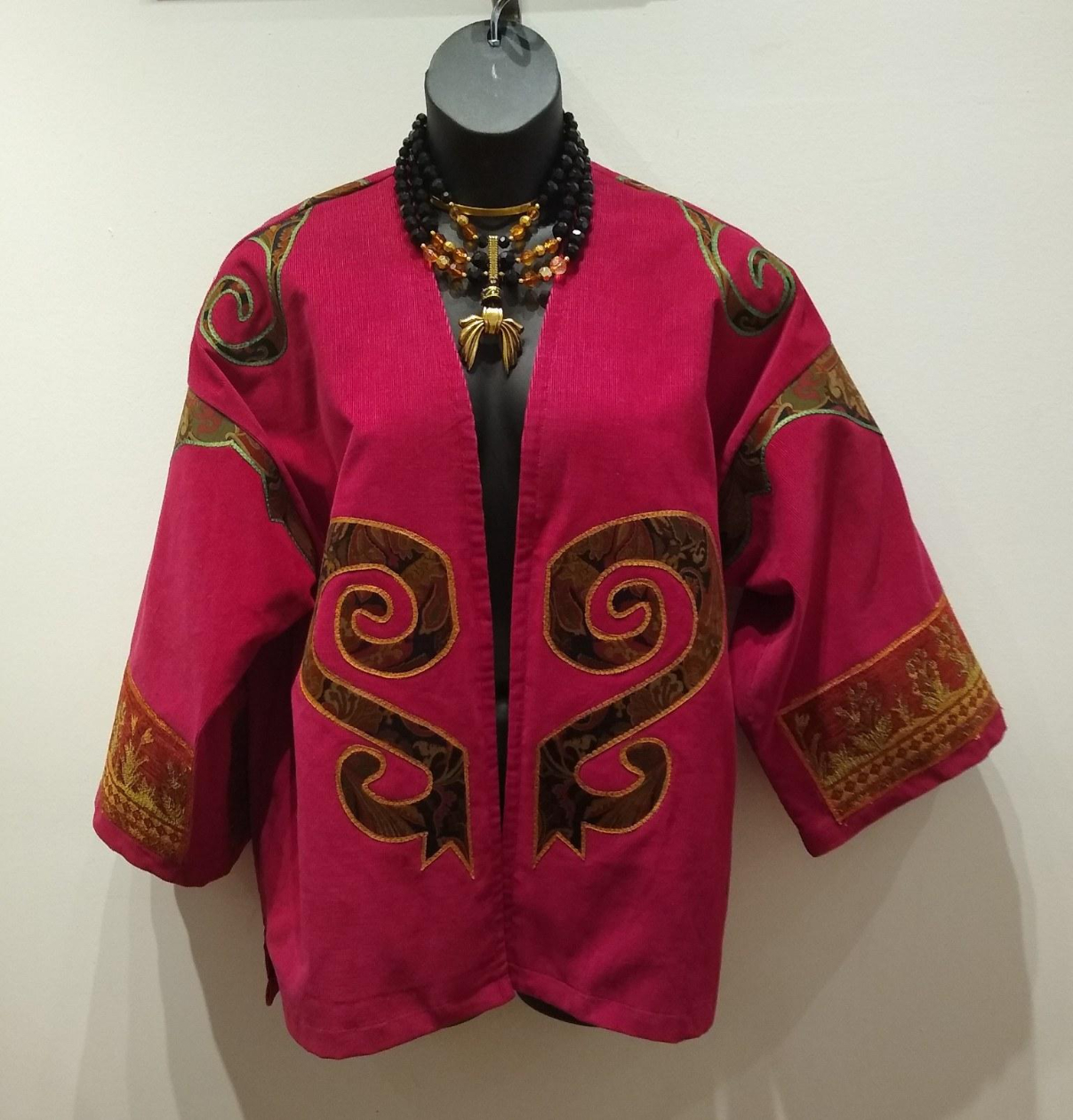
Based out of the Anacostia Arts Center, fashion designer and textile artist Millée Spears runs a small clothing boutique in this predominantly Black neighborhood. True to its name, Khismet Wearable Art offers hand-woven garments with creative African designs. The business officially launched in August, but Spears says she spent decades beforehand incubating her project and honing her craft.
There are two major motivations that go into each piece of clothing Spears makes: tradition and modernity. Spears aims to “capture the eye and heart of the wearer” by presenting traditional West African textiles in new and interesting ways — while still keeping it all handmade. She says the African symbolism on her shirts, dresses, and other items is meant to start a conversation.
“I feel that over time people have become familiar with certain symbols from West Africa,” Spears says. “By presenting it on wearable art, I think it will make them question and delve more into the meaning of it.”
One of the goals Spears has for her business is to promote sustainability, which is why all Khismet’s clothes are made with materials grown, woven and printed in Ghana. The items are constructed to last a long time rather than be thrown away after a few years.
“I believe that Africa is the new frontier for sustainable fashion,” Spears says. “”Moving forward we as humanity have to embrace that which is sustainable.”
Spears will showcase her textile talent Feb. 18 as part of an event at the Anacostia Arts Center called Afro House: Spirit Fest. She will host a demonstration about the spiritual intentions behind West African fabrics and show attendees how to wear the fabrics.
Spears has big plans for her business. Though she enjoys serving customers in Anacostia, she hopes to reach out to even more people with a planned Etsy shop and website to expand the business.

Ethnicitees Cultural Marketplace
Clothing company Ethnitcitees and its founder Sean Montague have been in the business of raising awareness about the accomplishments of Black people throughout the diaspora since its founding in 1992. Montague’s t-shirts, hoodies, jackets, and other items are printed with important Black historical figures design and are handmade.
The idea to start Ethnicitees came to its founder more than 30 years ago when he used to teach art for Baltimore City Public Schools. Montague recalls assigning his students to draw Black heritage posters — something he used to do when he was in school — and learning young children knew very little about Black history besides Malcolm X and Martin Luther King, Jr. That motivated him to start a business where he could use his artistic talents and love of history to teach people about their culture.
“I thought that was very disturbing,” Montague says. “I was taken aback by it, but it proved to me that the school systems go out of their way to block the teaching of African American history. The continuous struggle to make certain that our heritage is not forgotten is what Ethnicitees is all about.”
Montague’s clothes feature faces of well-known luminaries such as Sojourner Truth, Harriet Tubman, Frederick Douglass, Marcus Garvey, Benjamin Banneker, as well as lesser-known figures, printed on the front of the clothes and brief histories of their lives on the back. Montague is always working on new designs; creating a new product takes up to eight weeks while he carves the portrait on the linoleum surface, researches the history and prints the items.
“It’s very important that every culture knows where they came from,” Montague says. “Learning where we come from and where we’re headed shows that you can accomplish anything because those that broke down the door made it possible for generations now and generations to come.”
Baltimore County-based Ethnicitees is mainly an online store at the moment after closing a Bowie Town Center location in October, though it also pops up regularly at events around D.C. Montague says he’s thinking about getting back into having a retail presence, and also looking to expand into making apparel for fraternities and sororities. In terms of the designs themselves, he’s working toward carving a design of Black History Month founder Carter G. Woodson and including more African symbols in future prints.
People will be able to buy clothes from Ethnicitees during Black History Month at a number of upcoming events and pop-up markets that Montague plans to announce on the company’s Facebook, Instagram and website.

Yinibini Baby
For those looking to shop a Black-owned business for children’s products, Yinibini Baby in the Brookland neighborhood of D.C. is the place to go. Founder Soyini George is an artist who draws illustrations that are printed onto T-shirts, bibs, and other baby clothes. She sells clothing for children ranging from newborn to six years old as well as products like books, affirmation cards and dolls.
George was born and grew up in D.C. and many of the designs featuring her illustrations are inspired by her own experiences living here. Through shirts like “My Neighborhood DC” depicting D.C. neighborhoods through a child’s eyes and “OK Narwhal, Brush Your Tooth” portraying a narwhal brushing its tusk, she uses her clothing and illustrations to tell stories and teach children valuable life lessons.
“Storytelling is my brand,” George says. “I want to share these stories from my childhood because I know that other people may have very similar stories that they tell their children.”
That storytelling aspect of Yinibini Baby pops up in other products like the book My Rainy Day Rocket Ship that portrays Black characters. With these items, George wants to make sure Black children feel seen.
“Being a Black-owned business gives me the ability to offer products that normally wouldn’t be found or offered to Black children,” she says. “I’m very intentional about making sure children see themselves when they visit the store.”
Next up for Yinibini are the release of several new T-shirts and some wooden toys, including a Spanish and English bilingual wooden block set. For Black History Month, her store will be highlighting products celebrating Black heroes.
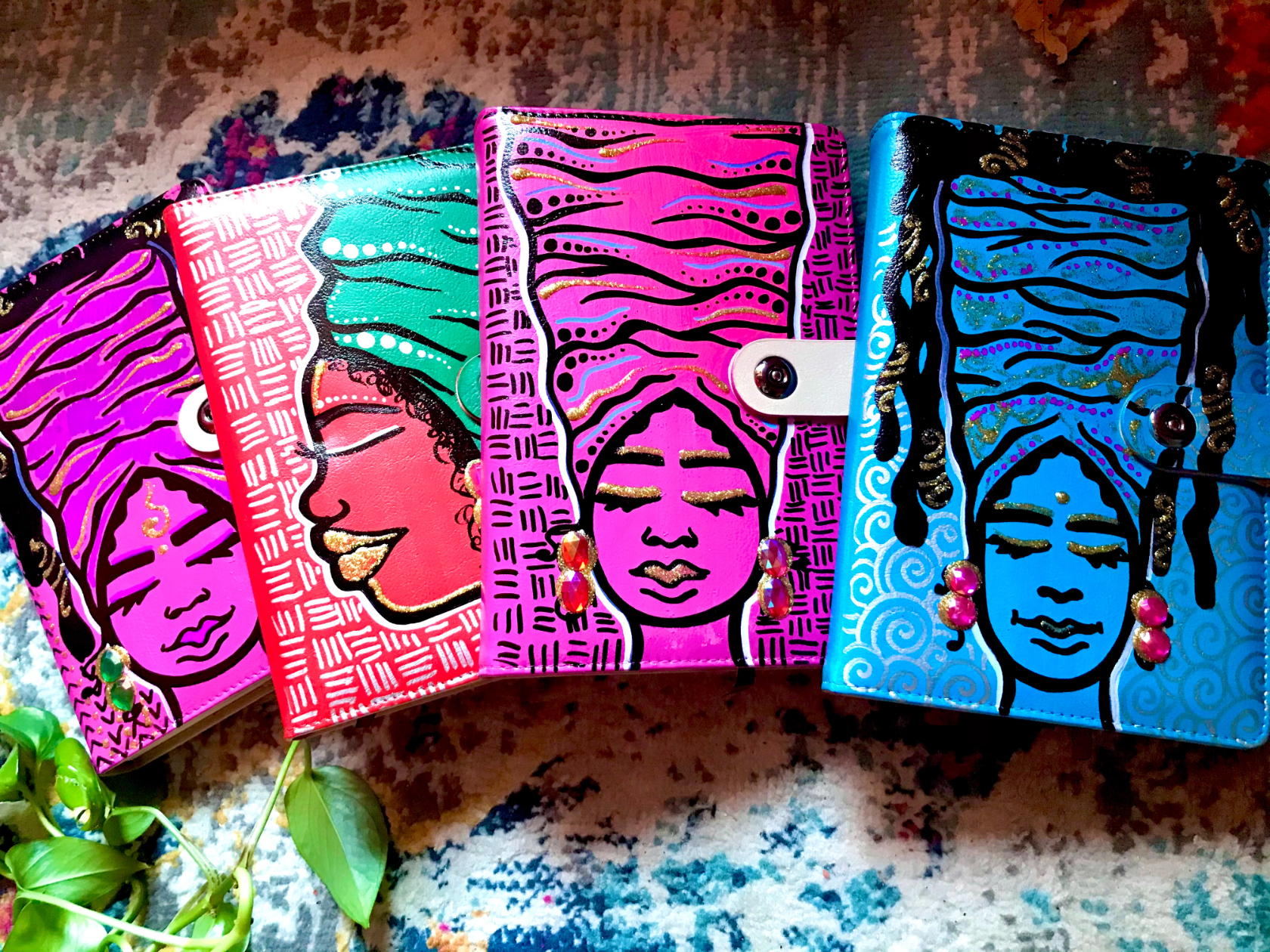
OM Journals
Those looking for a gift — or somewhere to jot down their own thoughts — may want to check out OM Journals from Letitia Muhammad and her daughter Nazirah. OM sells refillable journals that are hand-painted, making each one-of-a-kind.
The main goal of their business is to combine art and journaling for a functional art, to make journals people can use to express themselves and assist in their own healing. Many of Letitia and Nazriah’s paintings on the journals depict the faces of Black people or symbols from African cultures, something they find can play a role in the user’s healing process. The journals are both a reflection of the culture of the painters and oftentimes the customer, she adds.
“People have told us when they bought our journals that they feel an energy when they open them,” she says. “ It makes you feel good knowing that you’re helping heal someone.”
Nazirah and Letitia are especially gratified that the journals are popular with Black women, who have been excited to see that there are Black artists making art that reflects them.
“They seem to be grateful that they can support their community and, at the same time, have a product that they’re actually going to use,” Narizah says.
One of the goals Letitia and Nazirah have for their business is to further expand the healing part of it. Since some people may not know how to journal and where to start, they want to start giving customers journaling prompts or a workbook that comes with their journals. They’re even thinking about organizing journaling workshops.
Letitia and Nazirah’s journals can be found on their Etsy shop as well as at Shop Made in DC in Georgetown, the Smithsonian National Museum of African American History and Culture, and the Anacostia Art Gallery and Boutique.
Ghana Jollof
People familiar with West African cuisine know that jollof rice is one of the most popular dishes from the region. Luckily for D.C. residents, a new restaurant is coming to bring another option for this staple to the area. Afua Mintah, owner and general manager of Ghana Jollof, is expanding her Virginia business with a new location inside the Mall at Prince George’s in Hyattsville.
Once a teacher for Prince William County Public Schools, Mintah decided to start a restaurant in 2020 amid the pandemic because she felt as though there wasn’t any African representation at the Potomac Mills shopping mall in Woodbridge. Now that her business is growing, Mintah says she’s able to serve the families of her former students in a different way with her Ghanaian food.
Ghana Jollof sells mostly jollof rice, but its menu also includes curry, kebabs, and Caribbean-style dishes. Mintah learned how to cook jollof from her family and now she’s excited to share that culture with the people of D.C.
“We are proud of ourselves to do this,” she says. “The DMV area is so diverse. We have people from all walks of life come to our restaurant and surprisingly there are a lot of people who have visited Africa before.”
Mintah wants to continue to expand and hire more employees. Ghana Jollof currently has locations in Woodbridge and Fredericksburg, and the Hyattsville restaurant is expected to open in a couple of weeks. For Black History Month, she hopes people who maybe have never sampled jollof come to her restaurants and try her food.
“Come in, we’re open to everyone,” Mintah says.