Jacob Fenston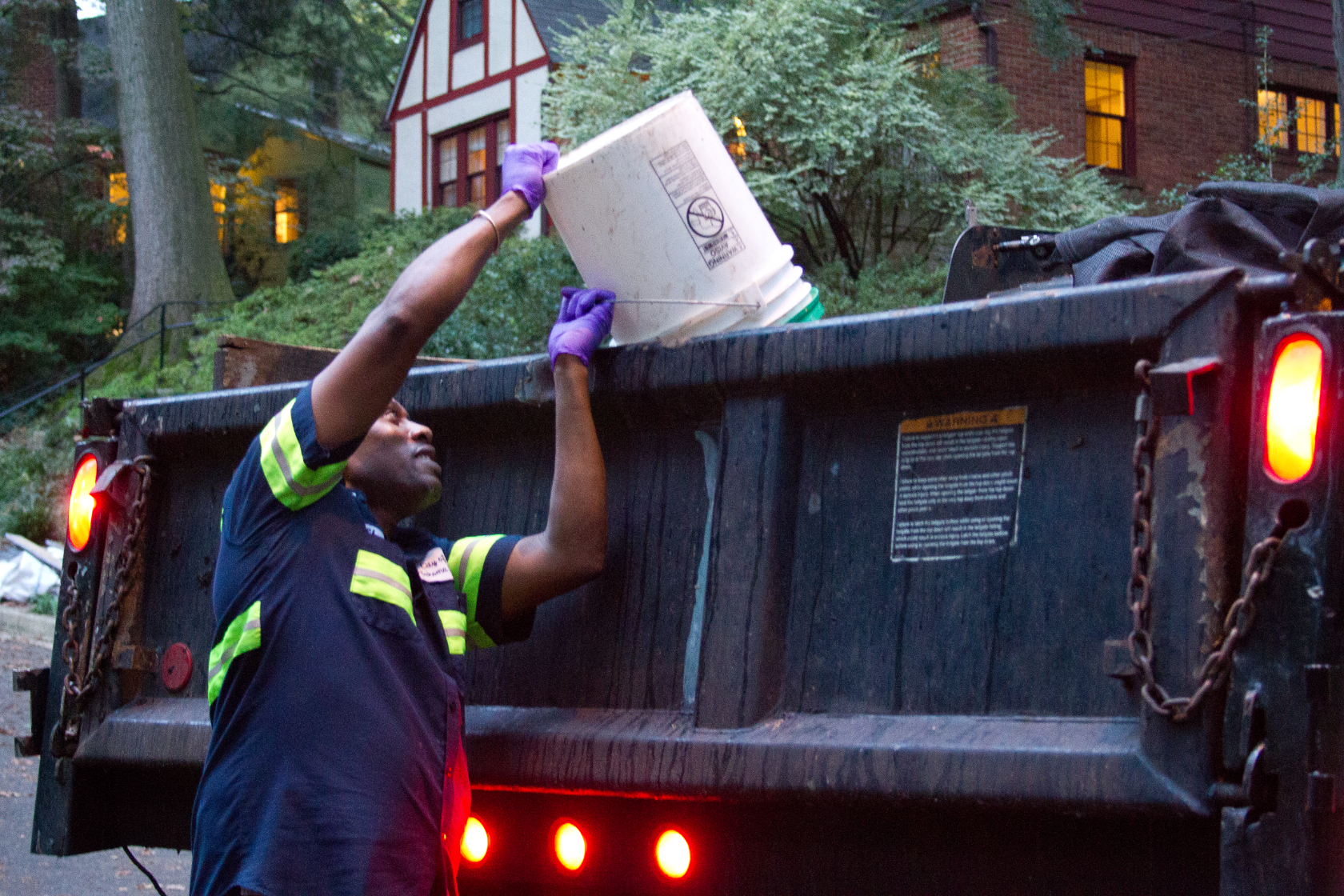
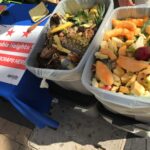
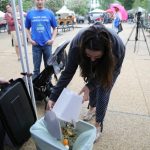
If you’ve ever seen people lugging buckets of food scraps to dump at D.C.’s compost drop-off sites, you know there is a pent-up desire among District residents to recycle their food waste. Last year, 128,000 people used the 10 drop-off sites around the city, composting nearly 450 tons of material.
Now, the District is planning to launch its first curbside compost pickup program, following the lead of neighboring jurisdictions including Prince George’s County, Arlington County, and Montgomery County.
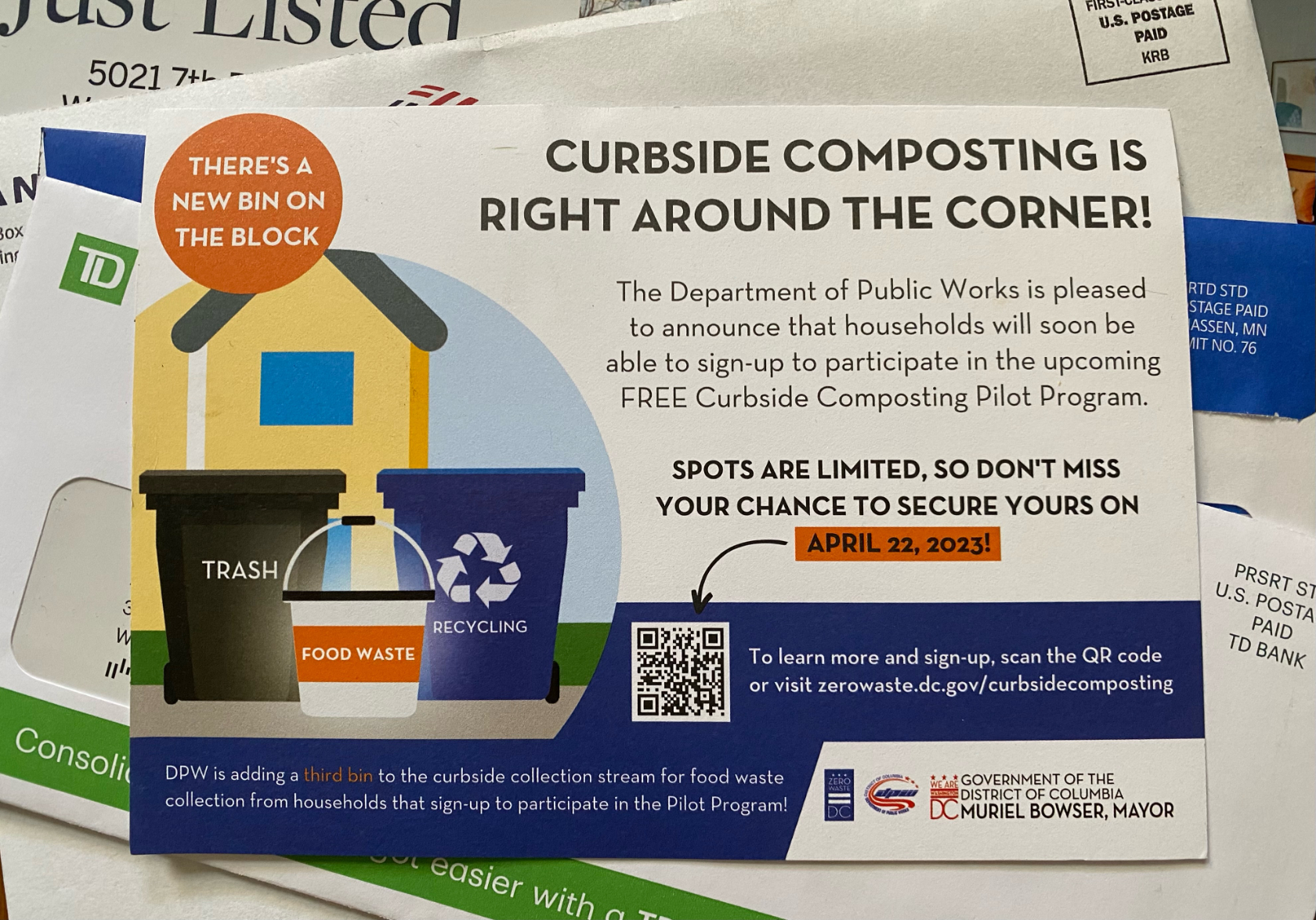
The pilot program will start sometime this summer, though officials with the Department of Public Works were unable to specify an exact date. It will be open to up to 1,500 households in each ward, for a total of as many as 12,000 participants. That’s equivalent to 11% of the 105,000 households in the District served by DPW. The city only collects trash and recycling (and soon food scraps) from single-family homes and buildings with three or fewer apartments. Larger residential buildings contract with private companies, and will not be eligible for curbside compost collection.
Online signups will open starting April 22 at 9 am, and participation will be available on a first come, first served basis.
The pilot program has been a long time coming. The District first started looking into a curbside program in 2017, with a feasibility study. That study proposed creating a 10 to 20 acre composting facility within the District to process the food waste. However, finding such a site has proved challenging.
For the pilot program, the District will hire a private company to collect food scraps on a weekly basis and haul the material out of the city for processing, though officials have not yet selected a contractor.
The pilot was supposed to launch this spring, but DPW officials say the program will be delayed a few months due to “procurement issues.”
“The process has been slower than we would wish,” admitted Blake Adams, manager of DPW’s Zero Waste DC program, during a D.C. Council hearing this week. “We have a good plan in place for attack to launch the program as soon as we possibly can. We have all the funding and resources to be able to put on a really great program in the summer.”
The curbside pilot program will keep roughly 6,000 tons of food waste out of landfills and incinerators, according to DPW. It’s a step toward the city’s goal to divert 80% of waste by 2032, instead recycling, composting, or reusing the material.
“This is really exciting,” said Ward 1 Council Member Brianne Nadeau, in an interview with DCist. “It’s long overdue, certainly. The District is behind other jurisdictions in the country that are leaders on this, and so we really need to catch up.”
Officials have not released details about when or how curbside collection will be expanded to the rest of the city. The 2017 feasibility study proposed expanding collection over the course of two years, reaching the entire District by 2025.
D.C. could potentially collect between 88,000 and 148,000 tons of organic material, according to the feasibility study. That exceeds the current capacity of any processing facility in the region.
Environmentalists in the city are excited about the arrival of curbside composting. Cathy Plume, with the D.C. Chapter of the Sierra Club, says backyard composting or food waste drop-off sites are not possible or practical for many residents. “If we’re really going to address waste diversion in D.C., it needs to be easy for everybody.”
Neil Seldman, a longtime D.C. advocate for recycling and composting, says composting — rather than trashing — the city’s food waste will be a big win for the climate. “It means the material will not cause pollution in the landfill, because it’s the organics that when they decompose, yield methane gas.”
Methane is a greenhouse gas that is many times more potent than carbon dioxide, in terms of its short-term warming effect on the planet. Landfills are the third-largest source of methane emissions in the nation, so getting food waste out of landfills would have a big impact on reducing emissions.
Around the region, jurisdictions have approached composting in different ways. Howard County and Prince George’s County were pioneers, building large, county-owned compositing facilities a decade ago. Others, with more limited open space, have chosen to send their food waste to neighboring counties to be processed — Arlington food waste, for example, is trucked to Prince William County be be processed.
This story was updated to include a quote from Brianne Nadeau and newly released information about signups.