Amanda Michelle Gomez
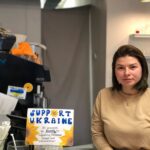
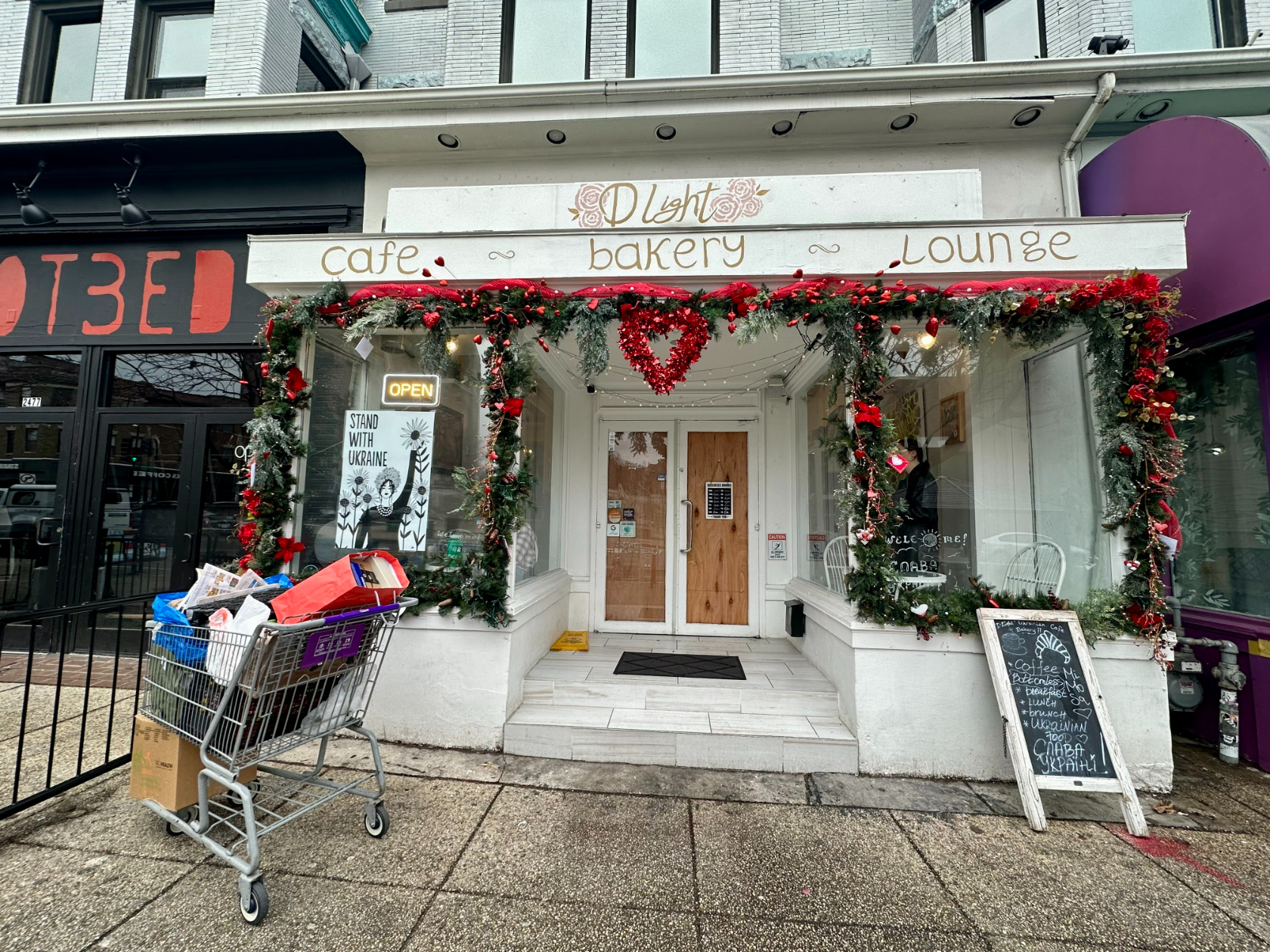
The burglary at D Light Café & Bakery in late January was yet another incident that made Vira Derun feel less safe at her business. She runs the café in D.C.’s Adams Morgan neighborhood with her sister, Anastasiia, and can recount multiple incidents in recent times that alarmed her.
Last summer, Derun says a man punched a patron’s dog after she declined to give him money. Another time, last fall, she says a man who seemed to be under the influence showed his gun to patrons who were sitting at the café’s outdoor tables. No person was physically harmed during either incident, according to Derun, but people were shaken up. The patrons sitting outside all ran inside the shop, and Derun quickly locked the door behind them.
“It’s concerning, but it’s like you never know when a brick’s going to fall on you,” Derun tells DCist/WAMU. “I wouldn’t walk here by myself at night.”
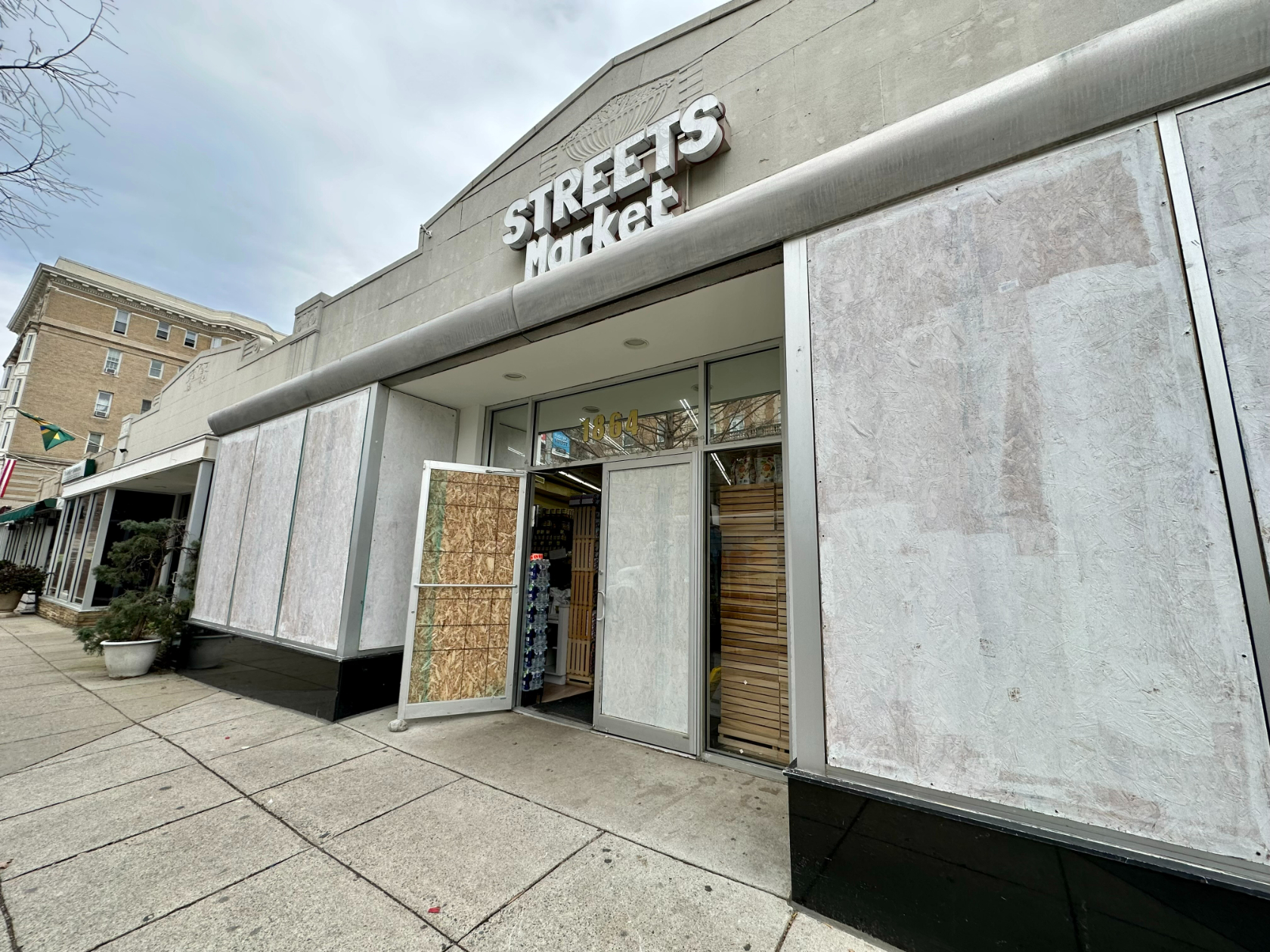
No one was hurt during the burglary on Jan. 27 either, but the café’s glass door was shattered, and their payment machine and piano were stolen. Derun says they are keeping it moving — insurance covered all but the piano, and the owners installed a new security system. While Derun isn’t fear-ridden and is ultimately grateful for her community, she cannot help but feel like something’s different.
“It seems that we are less protected,” says Derun. “My mental state is not that concerned with this. But I would say that it’s dangerous. It’s more dangerous than it is in other areas of D.C. in my opinion.”
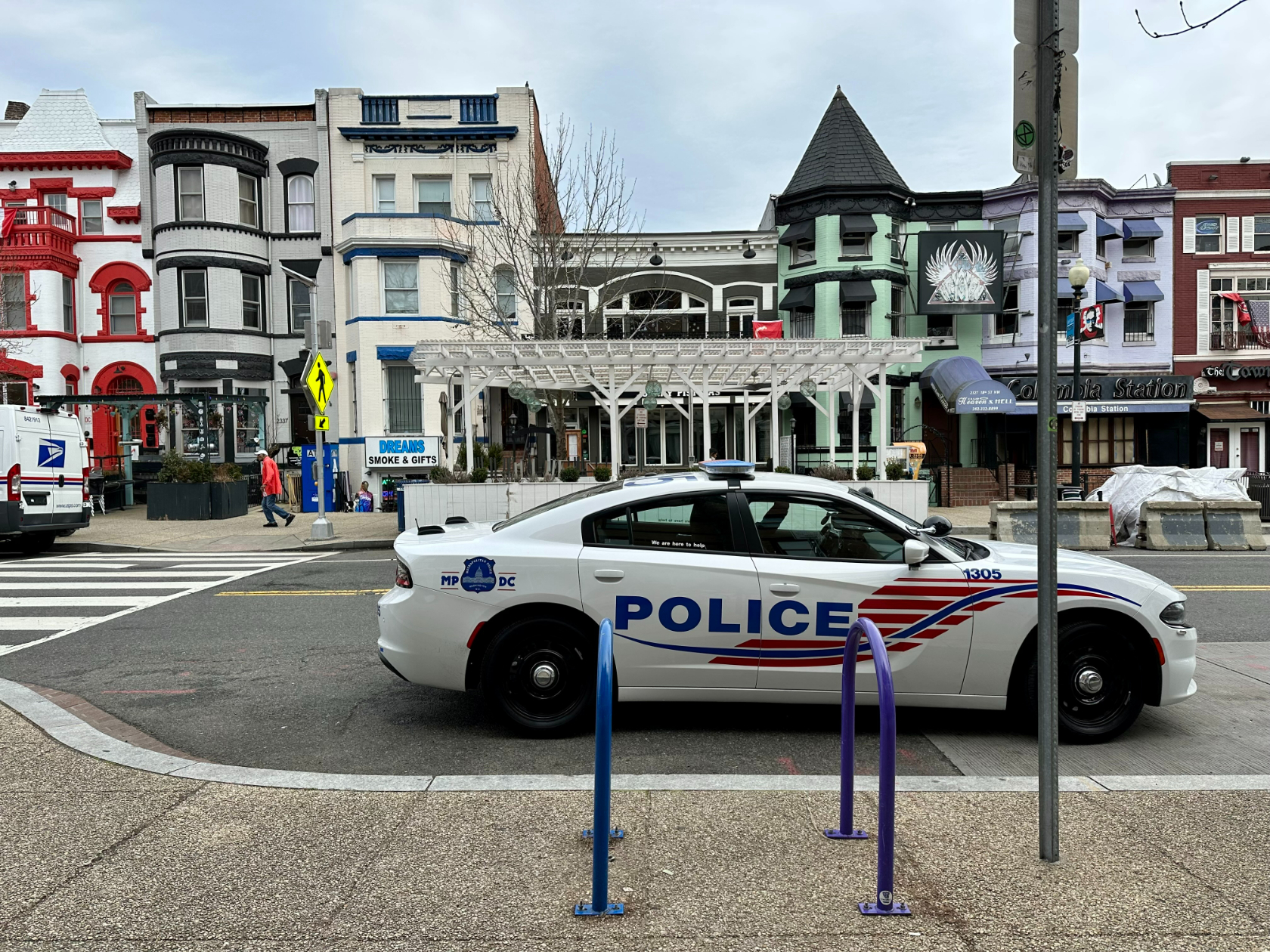
It’s hard to square the café owner’s comments with police reports of Adams Morgan, but Derun’s sentiment is shared by many residents, workers, and business owners of the neighborhood. According to police data, both violent and property crime is down over the last seven years, compared to the seven years before, in Adams Morgan, a relatively affluent and increasingly white-majority neighborhood in Northwest that’s well-known for its commercial corridor along 18th Street, where D Light Café & Bakery sits.
Adams Morgan has even been perceived as one of the city’s “safe” neighborhoods, making several lists to that effect alongside Dupont Circle and Georgetown, in part due to its amenities and low rate of violent crime. Violent crime in Adams Morgan is down 50% compared to this time last year, per crime reports of the police service area, continuing last year’s citywide downward trend. (Violent crime so far this year is down 15% compared to the same period last year.) But a spike in burglaries and window-smashing at neighborhood businesses this year, as well as other forms of property crime, has some community members feeling on edge. Property crime is up 36% in the area, mirroring statistics citywide. (Property crime citywide is up 33% from last year.)
Gun-related offenses across the city also reached their highest levels in 2021 and 2022 in nearly a decade. When people talk about crime, they recall shootings and the sounds of gunshots, including those not in their neighborhood, which can take a psychological toll.
Adams Morgan residents disagree on what the response should be, but are increasingly seeking tougher law enforcement. Others are hesitant about that, fearing an over-policing of minor crimes will relentlessly target poor or Black and brown people. It would seem that Adams Morgan has become a microcosm of the growing frustrations with the lack of accountability on even minor crimes.
What locals feel doesn’t always square with the overall crime data
At a public meeting at Goodwill Baptist Church last Thursday, residents’ concerns were on full display. The 7 p.m. meeting was held by Kalorama Citizens Association, a longtime volunteer group known for trying to limit liquor licenses to restaurants and taverns and to keep the SunTrust Plaza public for events like a farmers market.
The meeting attracted roughly 100 people, most of whom were white, as well as a few public officials including Third District Police Commander James Boteler, D.C. Council Chairman Phil Mendelson (D), and the neighborhood’s Councilmember Brianne Nadeau (D-Ward 1). Boteler kicked off the meeting, saying that despite the burglaries and vandalism at a handful of businesses, Adams Morgan has one of the lowest crime rates compared to the other seven service areas in the district, which includes Columbia Heights, Dupont Circle, and Farragut North.
“Some of the lowest crime in the entire city. You guys are doing something right,” he told the crowd, many of whom expressed skepticism of his claims. (Boteler later clarified to DCist/WAMU that he was not including recent property crime. He also said that any crime is all but certain in a densely populated neighborhood like Adams Morgan.)
Over the course of three hours, dozens of residents took to the mic to share why their own sense of safety had been undermined, naming everything from public drug use to package and auto thefts. People lamented the number of guns on the street but rarely cited shootings or homicides, given this type of crime is relatively uncommon in the area. Two fatal shootings in December were the first in Adams Morgan since 2019, according to The Washington Post.
“There’s a lot going on, a lot of little stuff that’s building,” said an older man, adding that his car had been broken into. “The recent robberies and things like that, that is like just a crescendo of things that everybody’s been feeling. I choose to live in the city, and with that comes some risk, right? And there’s always a randomness to crime… but it was random. This is steady and predictable and something’s going on on a regular basis.”
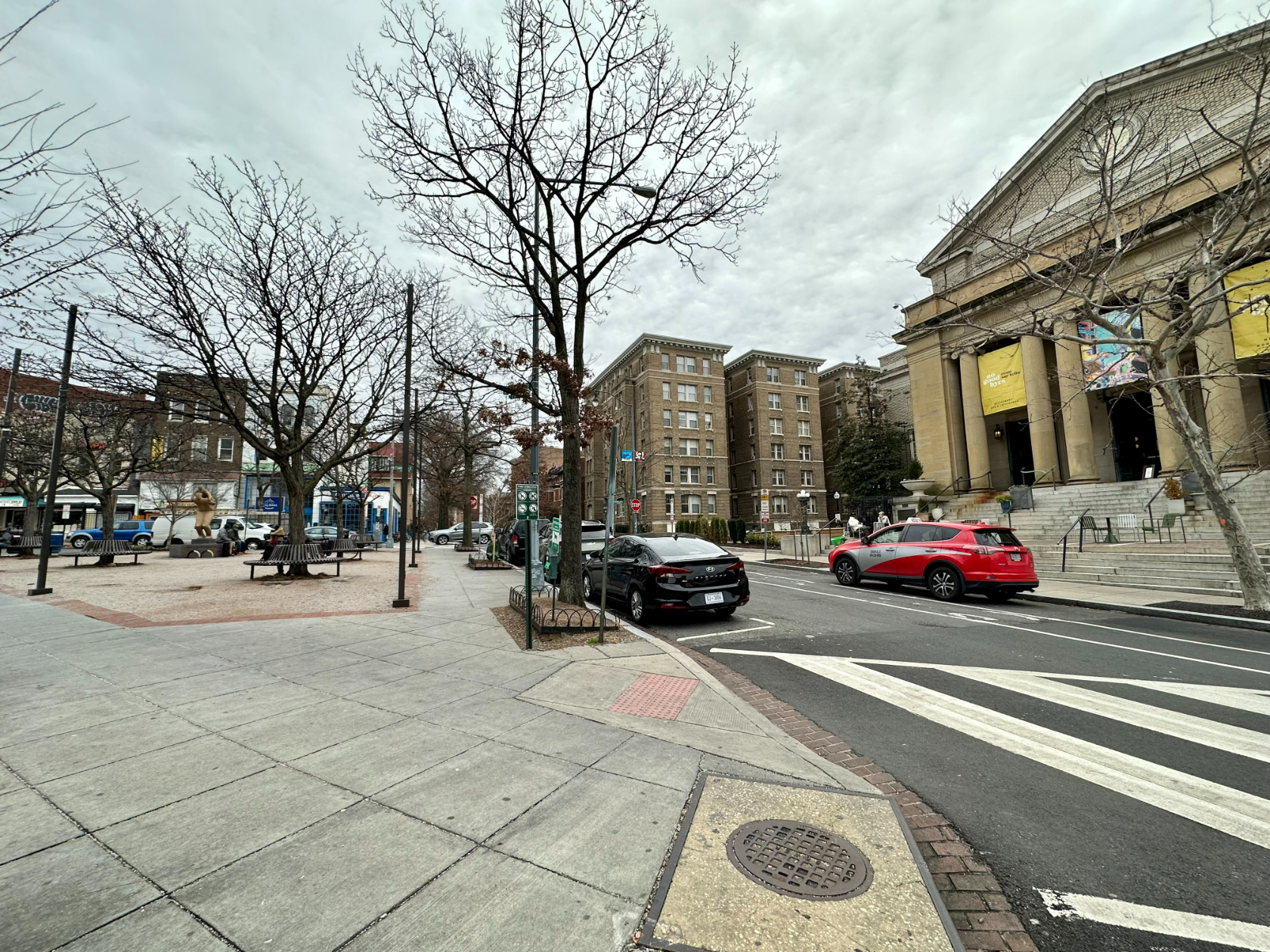
Another woman believed all of D.C. was degrading. “I’ve lived in the city on and off since the late 90s and I’ve never seen so much obvious mental illness on the street, open drug use,” she said, as the crowd applauded in agreement. She recounted a time when she saw a man drinking alcohol in the early morning at Unity Park along Columbia Road. “It’s heartbreaking. But this is also not what we want for our neighborhood,” she said.
Boteler acknowledged people’s feelings, saying the neighborhood and city at large are struggling with “quality-of-life” crime. “At a time where the District government and the Metropolitan Police Department touted a crime reduction last year, it sure doesn’t feel that way when you walk the streets of the city,” he said. “I’ve been a police officer now for only about 24 years and I myself just feel something different in the air.”
https://twitter.com/amanduhgomez/status/1626389980774891522
The feeling is palpable, albeit not universal.
“People need to relax,” said an older man who was passing the time at Unity Park on Sunday afternoon. He declined to give his name but says he’s a native Washingtonian and lives nearby. He was lounging on a park bench with another man, who was younger, and contrasted his all-black getup with a brightly-colored bomber jacket. The younger man also declined to give his name but said he’d grown up in the neighborhood and was among the kids that the Madam’s Organ owner had taken to the beach to escape the city.
Both said they felt safe in their neighborhood, and believe some of the residents who don’t are new and simply not taking the time to get to know all their neighbors.
“People are walking past [the park] and assuming things,” said one of the men.
“If people are, say, smoking in the park. They’re not hurting anyone,” said the other. “Mind your business.”
The men, both of whom are Black, believe people’s fears are colored by classism and racism. They wondered why the young white people who get belligerent at 18th Street bars on Friday and Saturday nights aren’t under the same scrutiny when they stumble back home. The younger of the two harkened back to when he was a kid and his neighbors called the cops on him and his friends for playing basketball at night, even though he said the sport kept them out of trouble.
“People are afraid of their own neighbors,” he concluded.
Madam’s Organ owner Bill Duggan echoes his neighbors. “I feel 100% safe,” says Duggan, who opened his bar in 1992. “There are people that move into a neighborhood because they think it’s lively and vibrant. If you have an edgy neighborhood, there are going to be certain things that happen. But then they have a kid and they want it to be Bethesda. My thing is if they want Bethesda, it’s not a very difficult move.”
Duggan empathizes with neighboring businesses that have been burglarized and vandalized, including D Light Café & Bakery. But he’s concerned with how the neighborhood might respond.
“When you have pretty abject poverty sitting right next door to some pretty conspicuous wealth, there’s going to be tension. But it doesn’t have to be aggressive, antagonistic tension,” says Duggan. “I definitely do not want to see my neighbors scapegoated because of the color of their skin.”
Locals debate how to respond to the moment
At Thursday’s community meeting and in interviews with DCist/WAMU, people called for increased police presence or arrests and prosecution of minor crimes – even public drug use. One individual called for a youth curfew (research finds no evidence of the policy reducing crime), while another called for civilians to patrol the streets (the effectiveness of neighborhood watch groups is mixed).
Only one resident who self-identified as a police abolitionist spoke. “I really don’t believe that MPD is going to solve this problem. Clearly, there are a lot of problems that we’ve all expressed.” A few more also called for public services for people who are homeless or have untreated mental illnesses.
Prior to the pandemic, Adams Morgan had a significant police presence. The police service area saw a 40% reduction of police officers, from 25 to 15, according to Council Chairman Mendelson. Ward 1 Councilmember Nadeau says the Third District, as well as the First District, which includes downtown and the waterfront, have the highest number of officer vacancies.
“So there’s a lot of people out there right now making the argument that it’s council’s fault that we don’t have the police that we need,” Nadeau tells DCist/WAMU. “But if we have funded the slots and they’re not filled, that’s really a different thing.”
The Adams Morgan Business Improvement District also used to hire off-duty officers to patrol the area on Fridays and Saturdays, from 11 p.m. to 5 a.m., through MPD’s Reimbursable Detail Subsidy Program. Business owners would reimburse the nonprofit for the monthly payments. The nonprofit also hired a reserve MPD officer as a consultant, who’d ensure every overnight slot had been filled with an officer interested in overtime work.
The nonprofit’s executive director Kristen Barden tells DCist/WAMU that they stopped participating in the program in March 2020, when businesses temporarily closed. Barden says they currently have “no plans” to restart the program because it was “expensive” and businesses “aren’t interested in paying for it again.”
Businesses can enroll themselves, but a MPD spokesperson says no establishments in Adams Morgan are currently participating in the program.
During a meeting held by the nonprofit on Valentine’s Day, Police Captain Riley Hong said businesses along U Street NW and Ninth Street NW dominate the program. While they have been able to fill all the slots nowadays, Hong acknowledged cancellations may occur due to a department-wide shortage of officers, a national trend linked to retirement, pandemic departures, and hiring struggles. (The year the pandemic started MPD had roughly 3,800 officers; this year it is down to 3,300.)
A member of the nonprofit had asked Hong how to organically get officers to visit individual businesses. “They will generally gravitate to where they feel that connection. They don’t feel like they are intruding or making staff feel uncomfortable,” he responded, adding that he’ll work on scheduling visits in the hopes that relationships form.
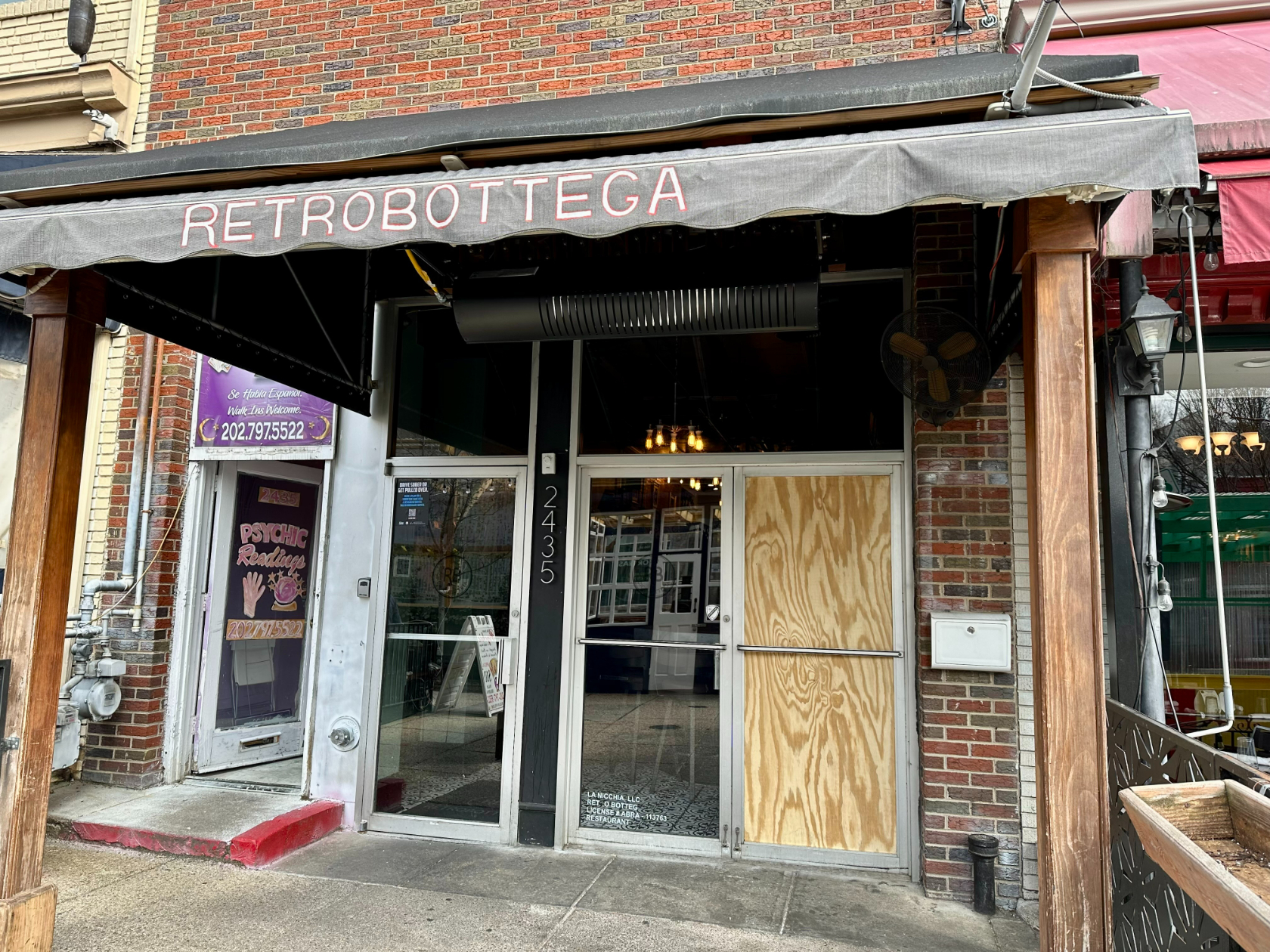
Derun of D Light Café & Bakery and Duggans of Madam’s Organ both say they wouldn’t pay for overtime cops to patrol the neighborhood, particularly given other mounting expenses from labor to inventory. “Ten percent of everything I sell goes to pay for public safety and city services. We should not be supplanting them,” says Duggans.
Derun says the police response time is too slow. She says when she called the police after someone tried to steal their donation box, cops arrived 20 minutes later. “When they came they were like, ‘Well, what do you want us to do?’ I don’t know, do your job,” she recalled.
Perry’s Restaurant owner Saied Azali shares similar frustrations, saying he often sees cops sitting in their cars instead of walking around and forming relationships. When they do make arrests, he says nothing comes of it. An individual assaulted him outside his restaurant, he says, after he asked him to stop sleeping on the patio. According to the police report, the suspect fled; the case remains under investigation with no arrest, per a spokesperson.
“And what happens? You press charges. Two seconds later, the guy is out. What kind of law is that?” he says. “I understand the homeless. I understand they [are] down on their luck. I’m for them. I understand they don’t want to go to shelters. Somebody needs to help these people. The government needs to help these people.”
Azali says he’s never felt this unsafe in Adams Morgan, where he’s long lived and worked.
“I’ll go to the dry cleaning, I’ll go to the grocery store, it’s not safe to go to these places,” he says. “There’s people hanging out there, even the 7-Eleven down there. It’s very scary walking into any of these places. I understand the law of loitering and all of that, but if you are hassling people, that’s a different story. These little petty crimes become big crimes later on. And that’s why they have to stop the petty crime.”
According to Columbia University law professor Bernard Harcourt, who’s studied “broken window” policing, while more police presence and surveillance will likely have an effect on the neighborhood, there’s “no evidence” that cracking down on misdemeanors or minor disorder will lead to a reduction in violent crime. He says this in part because disorder is tricky to define. Smoking marijuana in a park, for example, could be seen as disorderly to one individual but not to another. (While possession of small amounts of marijuana is legal in D.C., public use is not.)
“We all need to be very attentive to people’s sense of security and safety, which is really important,” Harcourt says. “It requires a balancing and it requires some creativity, but certainly it doesn’t require falling back on old, discredited theories that have such an impact on persons of color.”
Chairman Mendelson says the fear Adams Morgan residents have expressed is understandable and widespread across the city. But he doesn’t think the solution should be “going after people for smoking dope in public.” And while some residents have chided the council for their lack of a plan to address the recent crime, Mendelson says slow arrests and prosecutions of crime, from gun offenses to package theft, is the problem. This problem predates staffing troubles.
“Crime is really easy to demagogue,” Mendelson tells DCist/WAMU. “What will make a difference is adequate police resources to close cases. Right now, 50% of homicides do not get solved. At least not in the same year they occur. 75% of robberies do not get solved in the same year that they occur.”
The police did make an arrest over the weekend for some neighborhood burglaries and robberies. Commander Boteler tells DCist/WAMU the police connected the suspect to incidents at a liquor store and Subway. Boteler believes one or two more people are responsible for the other incidents but police have made no more arrests. The U.S. Attorney’s Office for D.C. filed charges against the suspect for armed robbery and possession of a firearm during a crime related to the liquor store incident. According to court documents, the suspect is being held at D.C. Jail.
A spokesperson for the U.S. Attorney’s Office says they remain “committed” to prosecuting burglaries, robberies, and other property crimes “where we are presented with sufficient evidence to prove the crime beyond a reasonable doubt.”
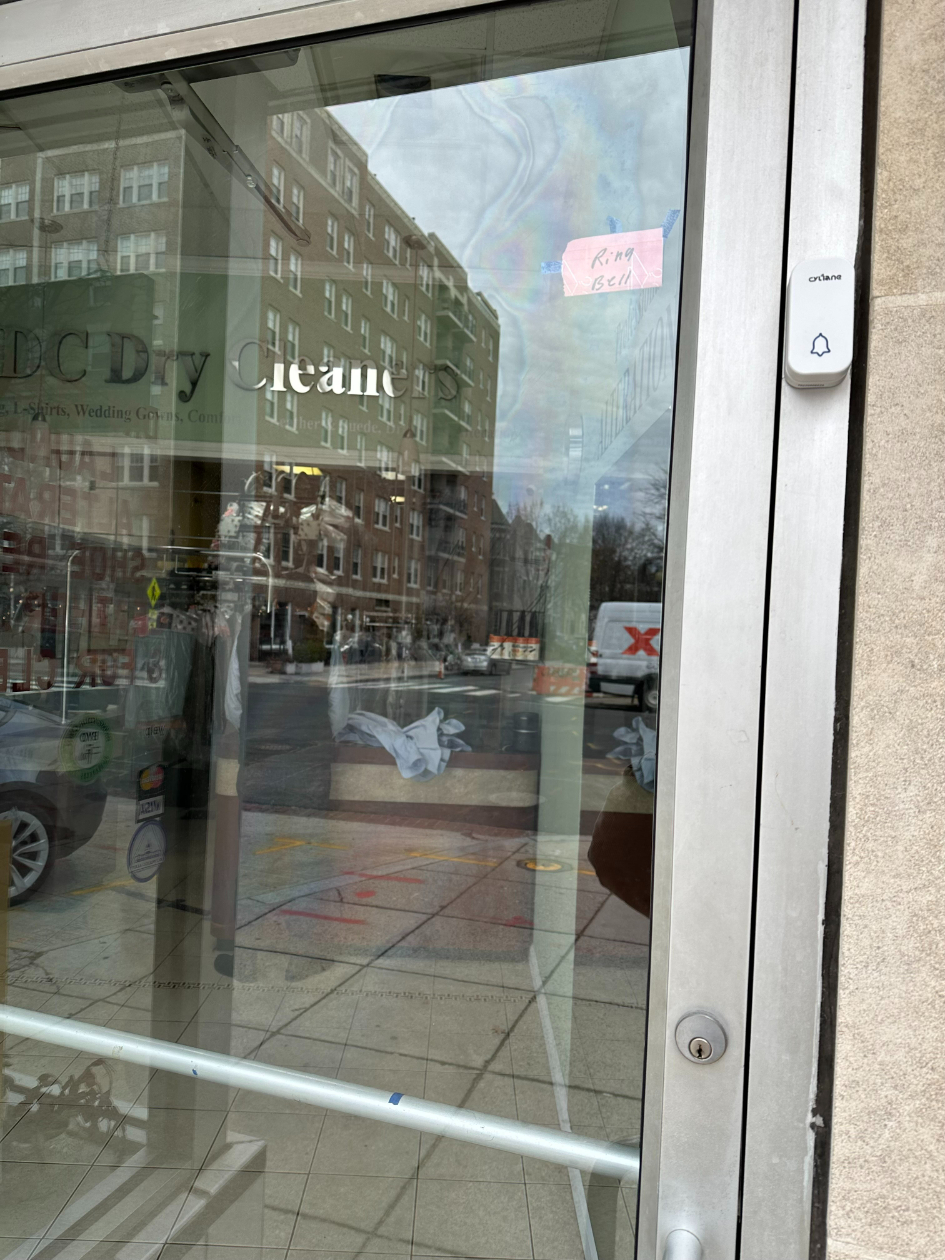
A swift arrest and prosecution would calm Cathy McNeal’s fears but not entirely. McNeal says she was robbed at gunpoint while working at DC Dry Cleaners on Columbia Road earlier this month. McNeal is somewhat surprised that the dry cleaners was burglarized, saying she thought Adams Morgan was “a well-put-together community” when she started working there just after Thanksgiving.
Anyone who wants to enter the dry cleaners now has to ring the doorbell to be let in. The door’s locked. McNeal says her boss added the extra security but the measure isn’t foolproof.
“The way of the world nowadays, there’s crime everywhere,” says McNeal. “That’s the way we live now. And that’s what you have to do is just, you know, keep up with what’s going on around you, beside you, and behind you.”