 Jordan Pascale
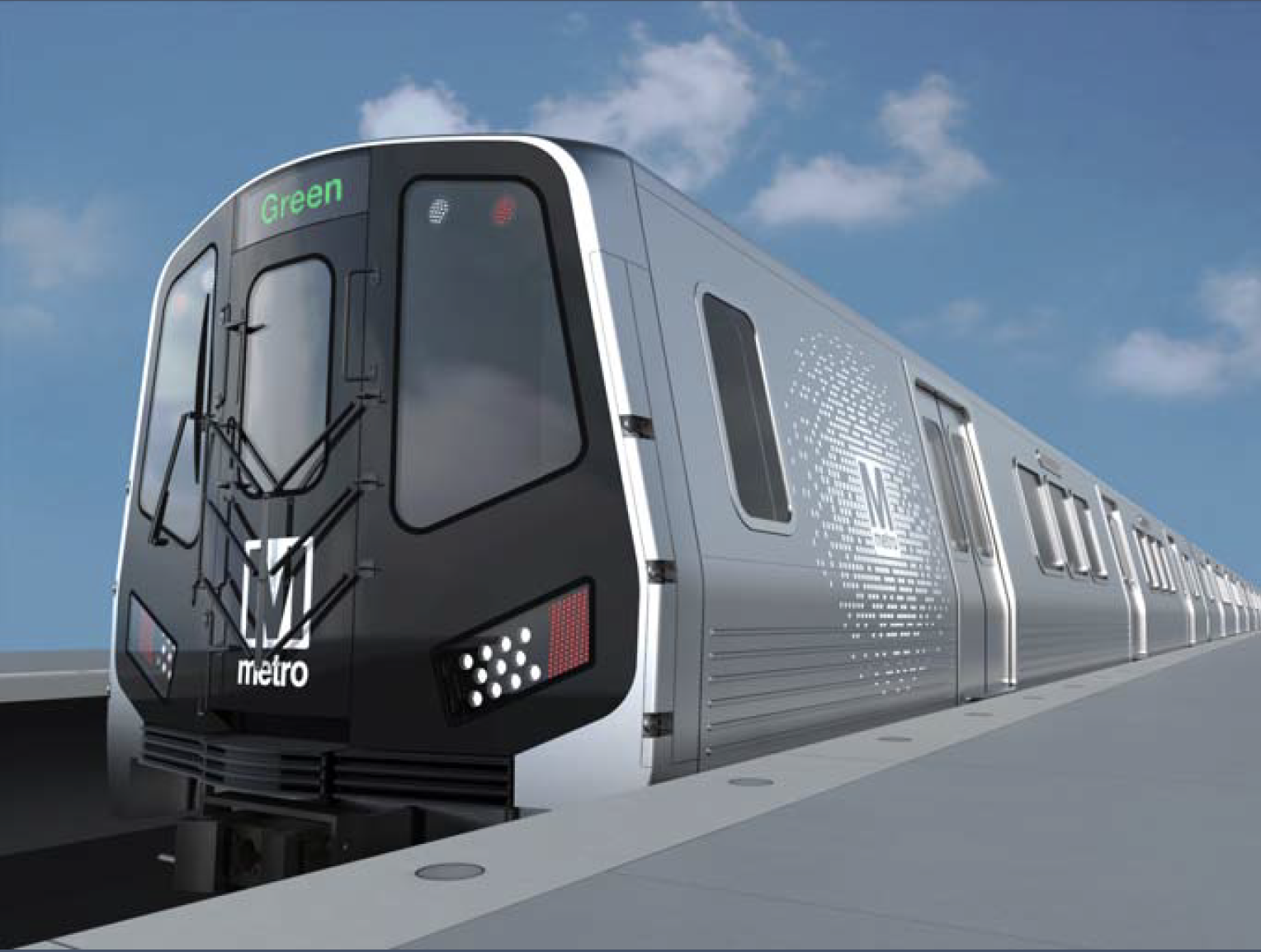
Metro is exploring a drastic change to its upcoming new 8000-series trains: an open gangway. Open gangway trains have no doors between cars, allowing riders to freely move through parts of or the entire length of the train. It can improve train capacity, and provide more space for people who use wheelchairs and people with bikes, strollers, or luggage. Loading times can also decrease as people have more places to spread out. One odd sensation of riding on an open gangway train is that you can see the train bend as it rides around a curve.
The concept has been used for years in London, Paris, Toronto, China, and other places internationally, but the idea has been slow to roll out in the U.S. New York’s MTA will start to use open gangway trains this year and Atlanta’s MARTA is also set to get open gangway trains in the near future.
During a board meeting Thursday, Metro General Manager Randy Clarke said the transit agency was exploring the technical feasibility of the idea and will be getting feedback from the public, Metro’s accessibility committee, and its rider advisory committee.
“One of the things the senior team and I’ve been talking a lot about is how do we get our agency to be as close as we can to international and domestic best of the best standards and operate that way,” Clarke said. “And sometimes if someone is doing something better, it’s okay to cut and paste and learn from them and move forward.”
He also said Metro wants to make the right decision on trains that will last the next 30-40 years.
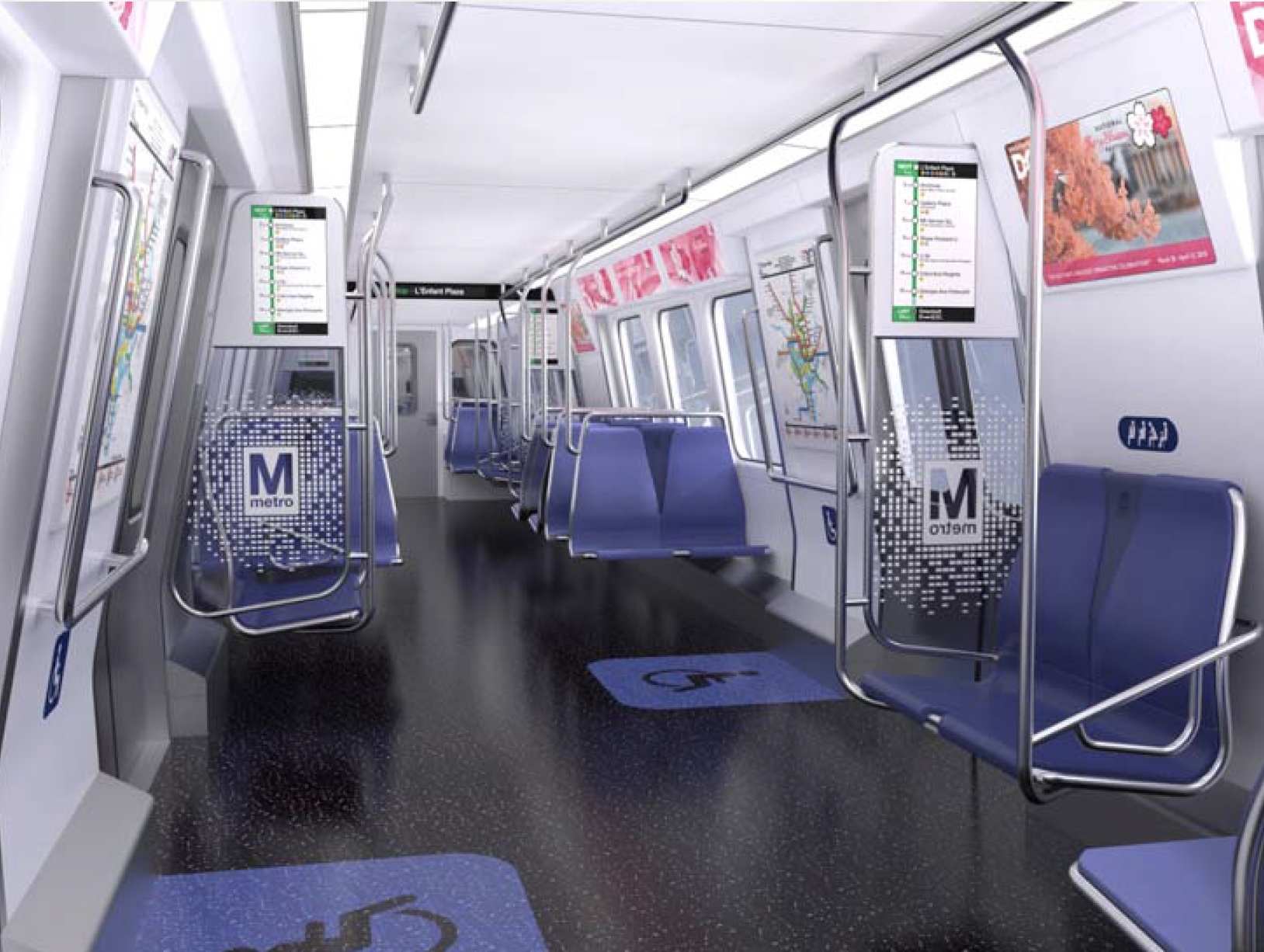
Metro previously said the 8000-series trains would be a subtle evolution of the 7000-series, adding more digital screens, charging ports, and more handles to hang on. Back in 2018, Greater Greater Washington reported that Metro wouldn’t look at open gangways because the curves on Metro’s system mean that opening the cars up “would not yield any significant increase in capacity.”
Clarke said his staff is working on the technical aspects of the idea. Some challenges include deciding if the entire train can be an open gangway, or just two or four car lengths of open gangway paired with another set of open gangway cars would work best. Maintenance could also be an issue. Metro doesn’t currently have a shop that can service all eight train cars at one time, so it would either have to extend a shop or have connected pairs of open gangway trains.
“We’re working through all that kind of stuff,” Clarke said. “But there are huge advantages to this overall, and that’s why it’s kind of an industry best practice on the major world-class systems that are out there.”
The trains will be assembled near Hagerstown, Maryland, and are set to start rolling off the assembly line in 2025. Metro and public officials celebrated the groundbreaking for the factory late last year.
Clarke said he’s unsure if that schedule is still on track given supply chain concerns.
“I think we’ve just got to be honest that every major procurement and everything in the world supply chain is hit,” he said. “So I expect us to probably have some schedule impact on our case, I mean, regardless of (if Metro chooses open gangways).”
Some riders on social media were excited about the idea while others were concerned about how the design changes safety. Some said they didn’t want marijuana smoke to waft through an entire train, instead of being limited to a single car. Others wondered where they would go in a mass shooting or if they were getting harassed. Switching to another train car wouldn’t be an option.
But the main benefit will remain capacity and distribution. It’s unclear how much more space Metro trains could gain, though other systems have seen 10% capacity improvements. Meanwhile, riders will no longer be stuck in packed cars and can freely move to where space is available during their trip.