 Jordan Pascale
Metro is holding a series of pop-up events through the end of the month so riders can weigh in on the design of the forthcoming 8000-series trains.
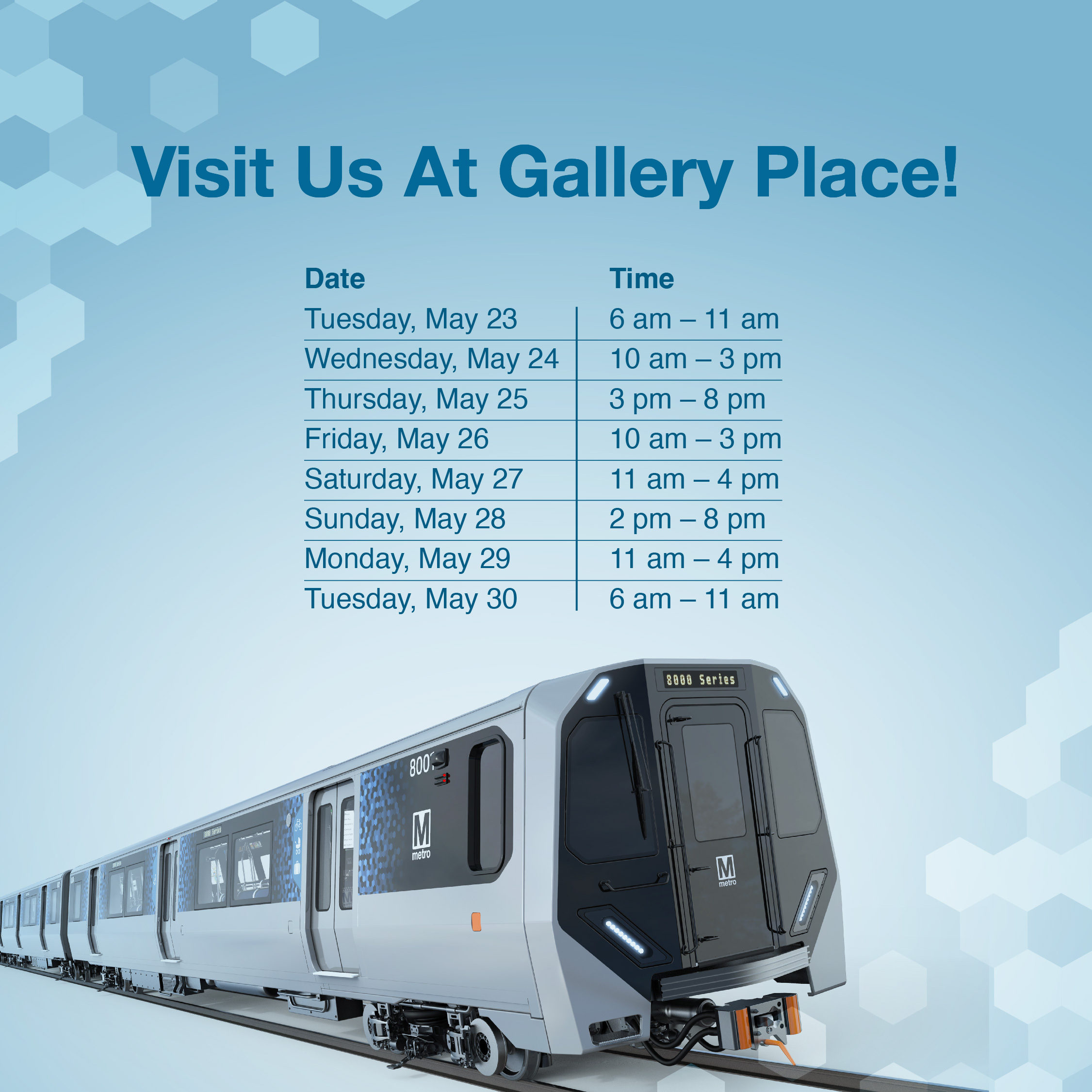
The gallery, with samples of the seats, floors, and more, is being held at the Gallery Place station near the faregates at the Capital One Arena/7th and F Streets exit.
The trains will have new features like open gangways that allow you to walk the length of two cars. They will also have more space for bikes, luggage, and strollers. They’ll feature security cameras, digital info screens, charging ports, improved ventilation, and a different seating configuration. Read more about those design elements here.
But at Monday’s event, Metro was looking for feedback on a more granular level as well — down to the materials they use.
Nahom Debessay, project manager for the new trains, says they want rider feedback since these are generational investments.
“We want these trains to be aesthetically pleasing for passengers because these trains are probably going to be in operation for 40 years,” he said. “So it’s a long-term commitment and we want to make sure we get the design right.”
WMATA General Manager Randy Clarke says he wants to lean into transparency and engage the community, so he wanted to give people a chance to touch and see what the vehicles look like and be part of the design process. So here’s what seems notable and different from Metro cars of the past:
Exterior

The exterior is similar to the 7000-series trains — mostly silver but with a new blue and black design on the outside. Debessay says they’re calling it a “confetti” design.
Clarke said he thinks it looks cool and modern, but at the same time, “all those things only matter if it’s safe, frequent and reliable.”
Metro is also aiming for larger windows to make it easier to see into and out of the train.
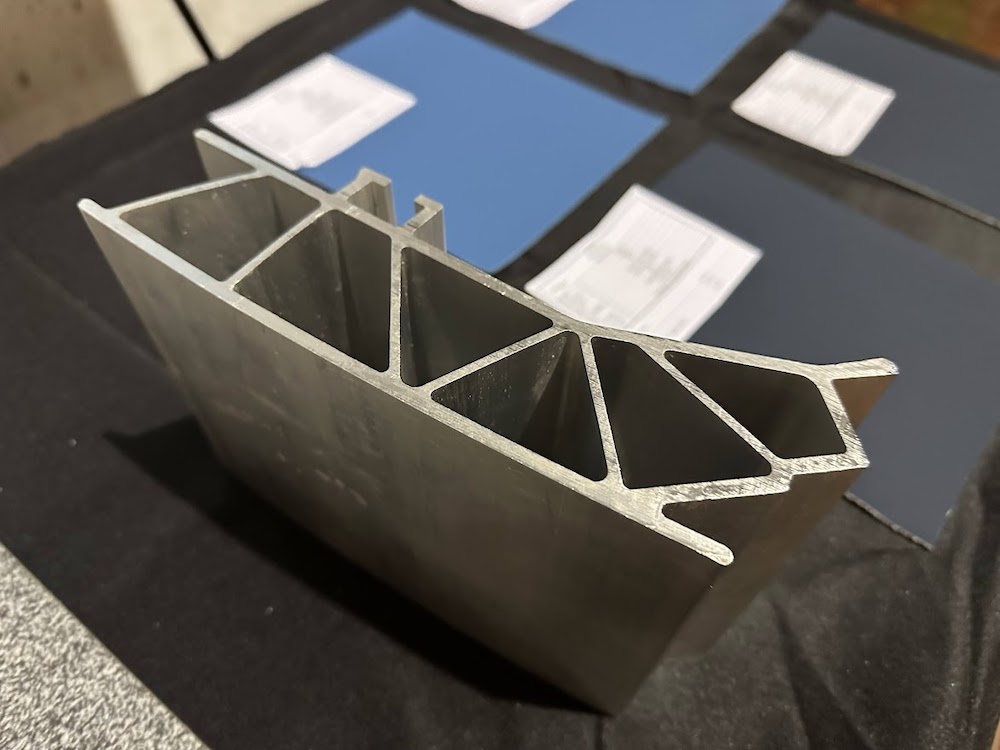
Meanwhile, the trains will be made out of honey-combed aluminum instead of stainless steel, which cuts down on weight and saves on electric costs for operating. Metro says it will save about 1,000 pounds of weight per car.
Clarke said it will lead to $10 million in energy savings over the life of the vehicle.
“So it’s not only environmentally better, it’s fiscally better,” Clarke said.
Metro says both the 7000-series stainless steel cars and the 8000-series aluminum cars meet industry standards for safety.
Floors
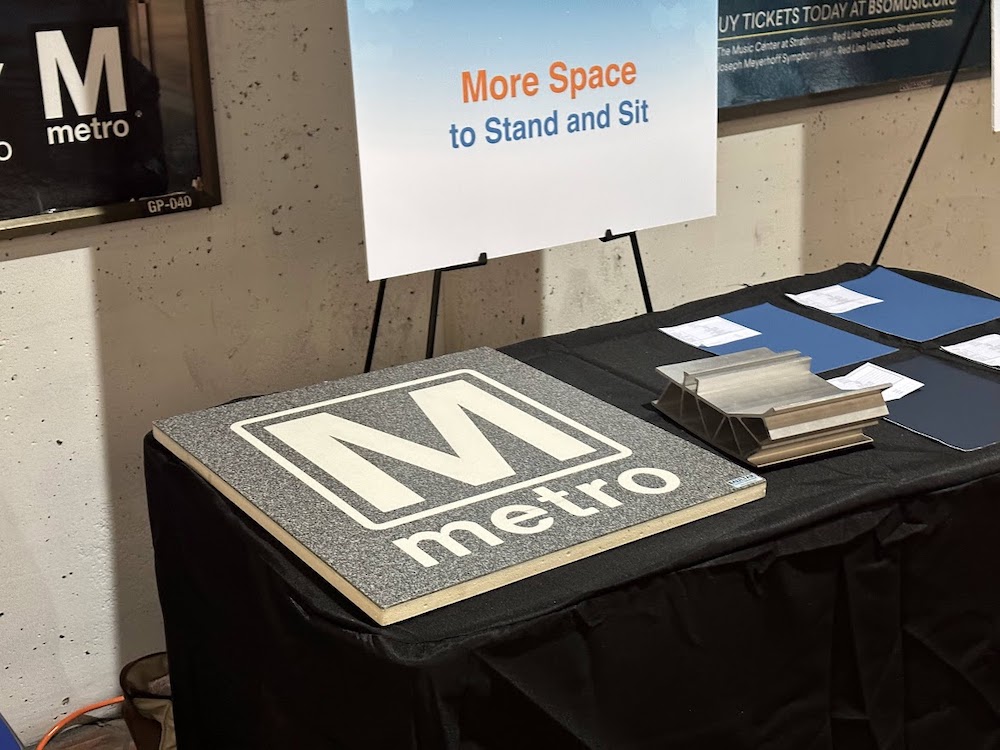
The grey-speckled floors will use radiant heat to cut down on energy costs.
Radiant heat means the floors are heated, like a bathroom floor in fancy homes, and it keeps the heat more concentrated. They’re heated to 86 degrees, which is warm to the touch. You can put your hand on the sample at the gallery.
“It (better) regulates the heat in the vehicle,” Debassey said. “So you don’t have places that are super warm and super cold and when the doors open every time, all the heat doesn’t leave.
“So our energy efficiency goes up, which means we’re more cost-effective, better environmentally, and the customer feels better and not as sweaty in the winter.”
Metro previously tested these floors on a 6000-series train.
Seats
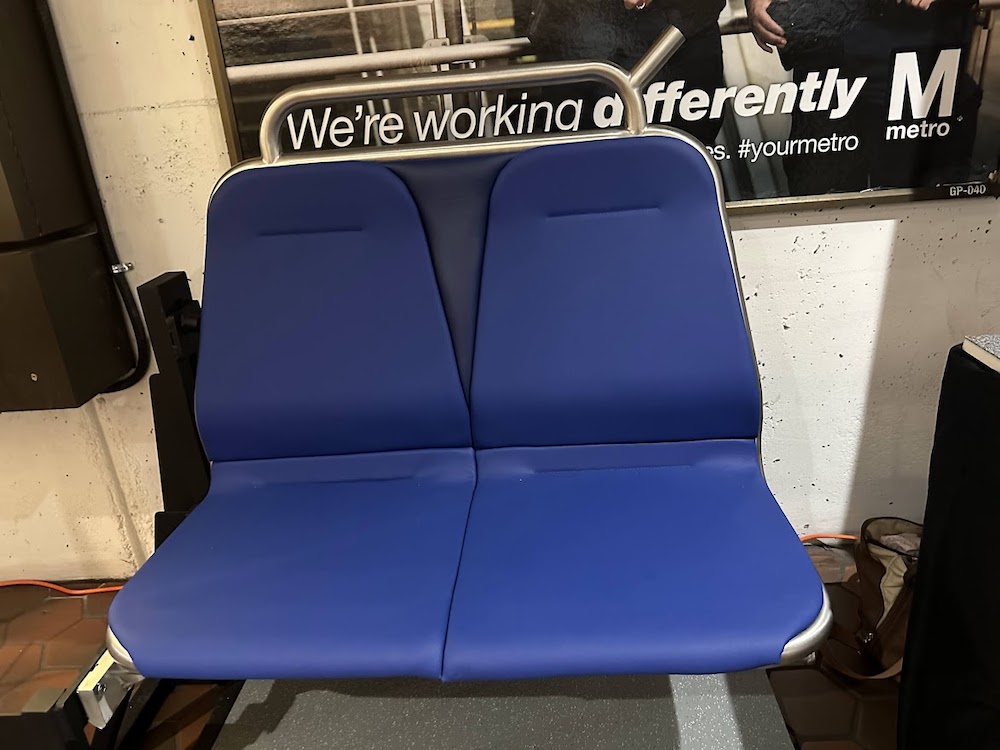
The seats are pretty similar to the 7000-series, using the same vinyl colors, Baltic and Night, and the same overall design.
But the layout of seating will be different with more seats along the wall instead of sticking out into the aisle. That arrangement will cut down on the total number of seats: 110 vs 130 on older cars. However, it will allow more overall space with 222 people total for the 8,000 series vs 191 people total in older trains.
Metro’s board will hear a presentation and make some final decisions in June. The new trains are supposed to arrive in Metro railyards in late 2025 and be ready for passengers in 2026.
You can still check out the display at the following times: