Martin Austermuhle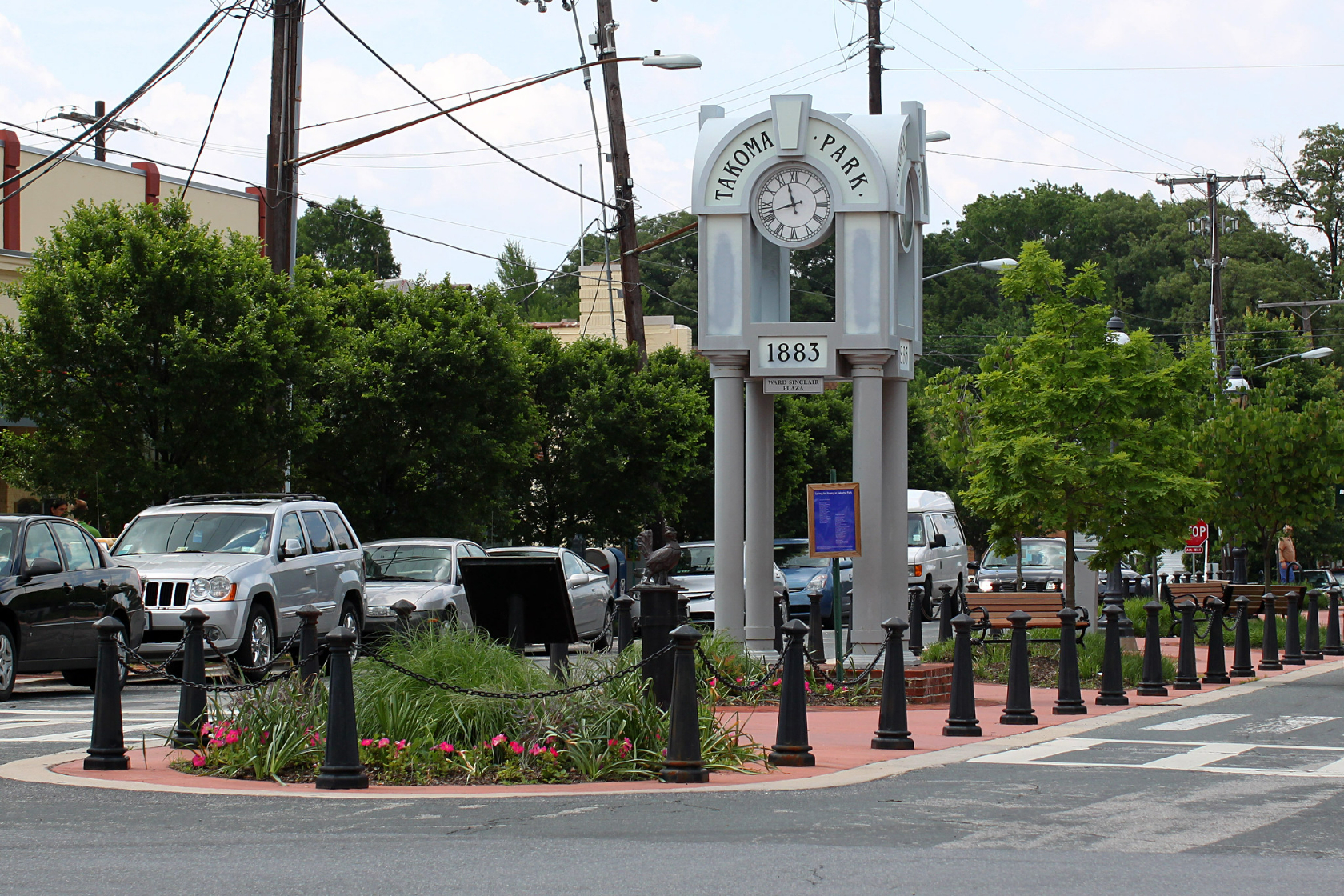
Earlier this month, prime time Fox News polemicist (and former D.C. resident) Tucker Carlson darkly told his audience of millions what he sees as an existential threat to the country.
“We have tens of millions of illegal aliens… living in the United States, and our elections are determined by tens or hundreds of thousands of votes. So if they can all vote, we’re done,” he said. “Why aren’t people outraged about this?”
Such outrage is part and parcel of Carlson’s nightly show, but this time it was more locally targeted: he was referring to a bill passed by the D.C. Council late last year that will allow non-citizens, including undocumented residents, to vote in local elections starting as early as 2024.
“How is this not the most obvious attack on democracy?” he asked, calling the bill “philosophically repulsive.”
And Carlson isn’t the only one who feels this way. Republicans in Congress have mobilized to block the bill from taking effect, arguing that it would dilute the value of a citizen’s right to vote, incentivize illegal immigration, and even allow foreign agents from adversary nations like China and Russia to sow chaos in the nation’s capital by swinging local elections. The council has been called “radical” for even considering the idea (if adopted, D.C. would be the biggest jurisdiction in the country to successfully expand the franchise to non-citizens), and the drumbeat against it even pushed 42 House Democrats to vote with their Republican colleagues earlier this month to block the bill.
While the proposal has spawned legitimate debate over citizenship and the rights it confers, not to mention political engagement and local governance, some local officials and historians say the idea of letting non-citizens vote isn’t particularly “radical.” Not only were immigrants allowed to vote in many states early in the country’s history, they say, but it has also been adopted by some towns and cities across the U.S. — including a number just over the border from D.C.
“Immigrant voting is older than the national pastime, baseball,” says Ron Hayduk, a political science professor at San Francisco State University and the author of “Democracy for All: Restoring Immigrant Voting Rights in the United States.” And it’s as American as apple pie, because it wasn’t just the 13 colonies that originally allowed it. It was 40 states.”
A long history
Hayduk says he first came across non-citizen voting when he worked as an elections official in New York City in the 1990s; his job was to help underrepresented communities engage in local elections. And that included non-citizens, since from 1969 to 2002 New York allowed anyone to vote in school board elections, regardless of whether they were a citizen or not. (The practice ended when the school board was disbanded.)
As he came to learn, and recounts in his book, New York’s experiment in expanding the franchise was consistent with early American history and ideals.
“The idea of no taxation without representation, that government should rest on the consent of the governed and that the people are sovereign, those sorts of ideas really fueled the idea for popular government. But they also were the basis for immigrant voting. What mattered then, as I learned, was not citizenship for voting rights. If you were a white male property holder, you were qualified to vote regardless of citizenship,” he says.
Non-citizen voting also served a practical purpose: it was used as a means to entice newcomers to move to newly acquired western lands and territories. The practice gained steam, and with the large number of immigrants arriving in America, they actually constituted a significant voting bloc in many new states.
But growing opposition to immigration in some quarters in the late 1880s and early 1900s prompted many states to reconsider non-citizen voting; in 1926 Arkansas became the last state in the country to ban non-citizen voting at the state level. But the practice wasn’t completely eliminated: non-citizen voting remained in place in local elections in some municipalities across the country.
‘It’s important for everybody to feel that they are part of the system’
After the 1990 census, some residents of Takoma Park, Maryland charged with redrawing the boundaries of the city’s electoral districts stumbled on a problem: some of those districts had roughly the same number of people in them, but wildly different numbers of registered voters. The difference came down to where non-citizen immigrants, who could not vote, had chosen to live.
And so the next year the “Share the Vote” campaign was launched to correct the problem by allowing those non-citizen residents to vote in local elections. (Takoma Park is part of Montgomery County, but is an incorporated city with its own mayor and council.) The campaign was spearheaded in part by former County Councilmember George Leventhal and current Rep. Jamie Raskin (D-Maryland), who at the time was a law professor at American University.
“When it comes to local issues — you know, what’s the recycling policy going to be, and are we going to build a new park or a new sidewalk? — anyone who lives in town, it seems to me, has an equal interest,” recalls Leventhal of the campaign to expand the franchise to non-citizens. “People are elected to represent all the residents, not just all the citizens. And if you live in a community and pay taxes, should you not have a voice in the most local of decisions that affect your neighborhood, regardless of where you were born or what your passport says?”
But for as progressive as Takoma Park has come to be known, the question divided the community. In a non-binding referendum in Nov. 1991, non-citizen voting was narrowly endorsed 1,199 to 1,107. Three months later, the Takoma Park City Council approved a change to the city’s charter to formalize non-citizen voting in local elections.
While critics could deride that move as mere nonsense from a historically progressive community that declared itself a nuclear-free zone in the midst of the Cold War, Takoma Park wasn’t even the first Maryland suburb to allow it: the towns of Somerset, Barnesville, Martin’s Additions, and portions of Chevy Chase had already allowed non-citizens to cast ballots in local contests.
As it was being debated in Takoma Park, the idea of non-citizen voting jumped across the border into D.C. Frank Smith, at the time the councilmember representing Ward 1, a popular destination for Latin American immigrants, proposed legislation to allow non-citizens to vote in city elections.
“It’s very important for everybody to feel that they are part of the system,” he told The Washington Post, citing the 1991 Mt. Pleasant riots as an example of tensions that can build when large groups of people feel unrepresented. “The ones who want to stay here, who pay taxes and send their children to school here… deserve to have something to say about who their leaders are.”
But the idea dates back even further in D.C. In the mid-1970s, shortly after the city was granted an elected mayor and council, Ward 1 residents tasked with helping create the system of Advisory Neighborhood Commissions that exist today floated the possibility of letting non-citizens vote in those elections. (ANCs are unpaid elected officials at the neighborhood level; there are currently more than 350 of them, each representing some 2,000 residents.)
‘There are certain things only citizens can do’
With Takoma Park somewhat leading the way, non-citizen voting has since expanded to other incorporated towns and cities in the Maryland suburbs around D.C. In 1999, Garrett Park — another Montgomery County town of roughly 1,000 people — expanded the franchise to non-citizen residents. In 2016, Hyattsville lawmakers voted to permit non-citizens to vote in local elections; the next year Mt. Rainier followed suit.
In 2021, the Vermont cities of Montpelier and Winooski adopted ordinances allowing non-citizens to vote in local elections, though the franchise was limited to legal permanent residents (also known as Green Card-holders). Around the same time, lawmakers in New York City passed a bill allowing Green Card-holders and other non-citizens authorized to work in the U.S. to vote in local elections, making it the largest jurisdiction in the country to make such a move. Last year, voters in Oakland approved a measure to allow non-citizens to vote in school board races; San Francisco had adopted a similar proposal in 2016. Earlier this year, a state representative in Connecticut proposed non-citizen voting for local races, and a new bill in Illinois would let non-citizens who have kids in public schools vote in school board elections.
Still, debate and legal battles around expanding the franchise to non-citizens has been fierce. Last year, a judge overturned New York City’s law allowing non-citizens to vote; a similar legal challenge has put San Francisco’s law in jeopardy. Locally, in 2017 the College Park City Council debated allowing non-citizen voting, but it failed because proponents couldn’t get a super-majority of lawmakers onboard. And even though College Park is just down the road from other Maryland towns that endorsed non-citizen voting, it was a difficult and divise debate.
“I can see the both sides, both as an immigrant, as and as an elected official,” says Fazlul Kabir, a six-term member of the council and naturalized U.S. citizen who was born in Bangladesh. Kabir unsuccessfully pushed for the issue to be put to a referendum.
“I can see that the non-citizens, immigrants, they actually pay taxes that contribute a lot to our local communities. They live with us, our neighbors. They work here. They raise their families here. Some of them even start businesses here. And many of them send their children to school here. But their voices are not heard when it comes to local policymaking. So that’s one side of the story I can relate to,” he says.
“On the other hand, there can be a strong point to be made that allowing non-citizens to vote at a local election can potentially dilute the value of citizenship. There are certain things only citizens can do,” he adds.
When the D.C. Council debated the non-citizen voting bill late last year, the only note of dissent came from then-councilmember Mary Cheh (D-Ward 3), who worried that recently arrived non-citizens wouldn’t have the connection to the city or its culture she believes is necessary for participating in local elections. The bill also drew opposition from the editorial board of The Washington Post, as well as from liberal publications like The New Republic. “Making citizenship more speedily attainable is a more durable and holistic solution than merely divvying up the rights associated with citizenship in a piecemeal fashion,” opined writer Matt Ford.
Still, various council colleagues pointed out that criticisms of non-citizen voting based on the idea that non-citizens haven’t been part of the community don’t hold up to scrutiny; a recently arrived college student is allowed to vote in local elections within 30 days of moving into the city, after all. And Hayduk notes that historically, access to voting helped build ties to communities and local culture.
“People gained access to voting rights before citizenship. And in fact, the logic was that you’re going to encourage people to learn about their and become invested in their local communities, be better prepared to become citizens,” he says. “And it did facilitate citizenship. It was seen as a pathway to citizenship, not a substitute for citizenship.”
Undocumented, but represented?
The D.C. Council’s bill did take a sudden turn late last year that has further fueled debate around it — the measure was amended to extend voting rights not just to legal permanent residents but to any non-citizen, including undocumented immigrants. (Similar bills dating back as far as 2013 would have reserved voting rights to Green Card-holders.)
“It was very clear from the testimony that there was a great deal of interest in incorporating undocumented residents,” says Councilmember Brianne Nadeau (D-Ward 1), the bill’s author. “And the discussion around it was very persuasive, which is to say the whole idea behind the bill is to give voice to people who live here, work here, and pay taxes here. That includes a large number of undocumented residents. So it’s somewhat arbitrary to cut it off that people who are Green Card-holders, if your goal is to expand access to local elections.”
And D.C. wouldn’t be an outlier — almost all of the Maryland jurisdictions that allow non-citizen voting do not distinguish between legal permanent residents and undocumented ones. Still, the change only further fueled Republican opposition to the bill in the House earlier this month, with multiple representatives arguing it could allow foreign diplomats to cast ballots (and “sow chaos”) in local elections.
“The law makes no exception for foreign diplomats or agents who have interests that are the opposite of ours. Under this bill, Russian diplomats would get a vote. Chinese diplomats could get a vote. The CCP is already infiltrating our culture, our farmland, and our skies. But the D.C. City Council would let them infiltrate our ballot boxes,” said Speaker of the House Kevin McCarthy during a floor speech.
Leventhal thinks the argument is largely a scare tactic, and not dissimilar to one made by a Republican critic of letting non-citizens vote in Takoma Park, who warned a decade ago that “if Osama bin Laden was alive today and he moved to Takoma Park, he could register to vote and hold office.”
“I don’t think that there’s a strong intellectual case to be made that, you know, Russian infiltration would affect local decisions on, you know, park maintenance and recycling,” says Leventhal.
Fernanda Ruiz, who was born in Mexico but came to the U.S. 17 years ago and is now a legal permanent resident in D.C., thinks there’s little distinction between a Green Card-holder and an undocumented immigrant when it comes down to local matters. They likely both work and pay taxes, use local services, and are impacted by local decisions, she says.
“Your elected officials are going to have power in making decisions about how your money is invested and which projects are supported. And that’s why I feel like it’s important for us to be able to decide who should represent us right and who does align with our values with what we care about and what we know that it’s needed in our communities,” she says. “Even if you’re undocumented, you’re a member of that community and your elected official is still going to make decisions that impact your life. Or [someone] may be undocumented, but their children are American citizens and are not yet eligible to vote. So you should be able to also represent the interests of your kids.”
As the council moved towards final passage of the bill, proponents made one last point: the measure would expand voting representation in a city that little of it.
“In the District we understand disenfranchisement. It’s personal. We know what it feels like to be taxed without representation, that people we didn’t elect make decisions that deeply affect our lives,” said Councilmember Charles Allen (D-Ward 6). “In the current climate, with the Supreme Court’s radicalization, greater polarization in Congress, and the degradation of democratic values being promoted in voter suppression laws nationwide, self-determination and local governance take on even greater importance here in the District.”
The path forward
Congressional Republicans have mounted an attempt to block D.C.’s bill, with the House giving the go-ahead to a disapproval resolution in early February. The Senate has until mid-March to follow suit. Republicans also have the power to block the bill in other ways, most likely by prohibiting the city from spending money to implement it for the 2024 election cycle.
And even if it does take effect, the impact on local elections could well be minimal. Some immigrant advocates have warned that some non-citizens will avoid taking advantage of newfound local voting rights over fears that it could jeopardize their immigration status in the future. In Hyattsville, which started allowing non-citizens to vote in late 2016, there are more than 10,000 registered voters on the rolls for local, state, and federal elections — but only some 200 on the voter registry for city-only elections.
Still, the idea of expanding local voting rights remains potent, and letting non-citizens vote was part of a broader discussion of electoral reform in Rockville earlier this year. (That discussion has included letting 16- and 17-year-olds vote in local elections, which Takoma Park currently allows.)
Ultimately, Hayduk says the debate over voting rights for non-citizens will continue to spread, but just as happened in the past, opposition will largely be linked to broader discussions around immigration and what it means to be an American.
“It sparks ideas and interest in immigrants today,” he says. “They think, ‘Jeez, it was fine for the Irish, the Germans, the Italians, the Jews, Slovaks, Russians. But why not me? Why not us? And so people are rediscovering this history and they’re demanding, or at least seeking, their full inclusion on more equitable terms.”