 Jordan Pascale
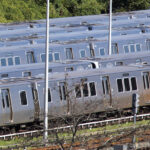
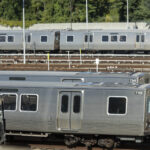
Metro says it is planning to re-press all 5,984 wheels on its 7000-series trains, a process that will take an estimated three years and cost about $55 million.
Internal and external engineering experts told Metro that increasing the amount of pressure applied to the wheels is required for the trains to be fixed. Metro will need to develop a plan and get agreement from the Washington Metrorail Safety Commission before doing the work at its maintenance shops across the region. Metro has budgeted money to pay for the fix.
It’s one mitigation that could help address the issue, but both Metro and the Washington Metrorail Safety Commission have said there are multiple factors that contributed to the crash and additional analysis is ongoing.
In October 2021, a 7000-series train derailed near Arlington Cemetery. The Washington Metrorail Safety Commission told Metro to remove all 93 of those types of trains from service until it could figure out what happened. An investigation found that the wheels on one of the cars had moved just a fraction of an inch farther apart than they should have. One person was injured in that incident near Arlington Cemetery on the Blue Line.
The trains were sidelined for months before slowly returning. Metro is now running about a third of the 7000-series trains on any given day. In late January, the transit agency was allowed to reduce the intervals of measuring the wheels to every seven days. They previously had to measure each axle every four days to catch any movement in the wheels.
On Tuesday, the National Transportation Safety Board released a preliminary set of documents on the incident but did not definitively say what was the cause of the derailment. Both Metro and the Washington Metrorail Safety Commission have said several factors contributed to the derailment.
“We appreciate the NTSB making the technical reports available so that we can develop our plan to begin repressing wheels on these trains at a higher standard, including the fit onto the axles,” Metro Chief Operations Officer Brian Dwyer said in a press release. “We are preparing the technical documents and training plan, while we collaboratively advance the next version of our return to service plan for approval by the Washington Metrorail Safety Commission.”
The NTSB documents include a technical report from engineering firm Hatch-LTK which identified “microslip” in the wheels due to a “reduction in contact pressure.” Metro wheels are pressed onto axles with a specific amount of pressure. Metro changed the amount of pressure applied halfway through the 7000-series trains’ manufacturing process.
Metro says it will be able to fix about 20 cars a month, about two trains worth. The process won’t affect service levels.
Chief Safety Officer Theresa Impastato said the wheel re-pressing process must be safe and deliberate.
“We will take the time needed to get this right because every single rail car must undergo a rigorous process to be ready to serve our customers and support our employees,” she said in a release.