Amanda Michelle Gomez
After a day of online controversy, D.C.’s newest gay club at 14th and U streets, Bunker, has reversed its ban on high heels, which critics said was exclusionary to some patrons.
Bunker, which bills itself as an underground gay bar and club, opened last month. Its website now clearly states: “Bunker welcomes the attire of all gender identities and expressions. However, Bunker is a dimly lit, underground dance club with concrete floors and steps. As a safety precaution, we strongly discourage the wearing of high heels. Open-toed shoes are prohibited.”
The club’s dress code had previously prohibited high heels, open-toed shoes, and flip flops “for customer safety.” The popular Twitter account @DCHomos was among the first to spot the policy, tweeting, “The ‘no high heels’ rule is giving anti-lesbian, anti-queer, anti-woman, anti-drag, and so much more. I thought we left this sh*t a long time ago.” Others online reacted similarly.
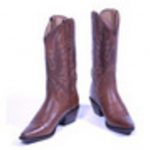
Before the club’s policy update, patron Shae Gardner was turned away over the weekend because she was wearing heeled boots. Gardner called the experience “very jarring,” telling DCist/WAMU that the dress code felt exclusionary to feminine-presenting queers and women like her.
“This hearkens back to a worse time at queer clubs,” Gardner, 27, told DCist/WAMU before the club updated its dress code in response to the community feedback. “We don’t need that right now.”
“Each bar will ultimately develop its own community of patronages, ” added Gardner. “Rather than taking the time to allow that community of people to develop and then figure out that this is their spot, they’ve decided out of the gate to start excluding people.”
Gardner says she, her girlfriend, and three other friends, all queer, decided to check out Bunker after reading articles about how the bar/club was inclusive to the LGBTQ+ community. Plus, Bunker’s “disco daddy” event was free of the standard cover charge if they went early enough.
But when the group reached the entrance to get their IDs checked, Gardner says the bouncer did not let her in because her heels were a “safety issue.” When she asked for clarification, a member of Bunker staff came out of the club and explained to her that a patron wearing heels injured themselves on the grate floor the weekend before. Meanwhile, Gardner says she saw another person wearing heeled boots enter the club the Sunday she was turned away.
The club’s managing partner, Q, reiterated that they had implemented the policy as a safety precaution in a statement to DCist/WAMU. “BUNKER is a dimly lit, underground dance club with concrete floors and steps. Our intention was to ensure a safe and enjoyable experience for everyone,” says Q. “However, we have heard the feedback from our community loud and clear and while we will continue to strongly discourage the wearing of high heels for safety reasons, we will not prevent patrons from wearing them.”
Gardner says her girlfriend, who’s lived in D.C. longer than her, was triggered by Bunker’s dress code because some bars and clubs that were tailored for gay cis men used to have no high heel dress codes. “That was specifically an effort to keep out women and feminine-presenting queer people,” said Gardner. “Bars no longer have that practice because they understand that dress codes are pretty discriminatory, especially if you’re a place that advertises as inclusive and as queer-friendly and as welcoming to everyone.”
Cobalt, a once-popular gay club in Dupont Circle that’s now closed, had a longstanding no-high-heel policy until a new general manager stepped in. “Discouraging people from dressing the way that they want to is not what we want to go for. We want to take the negativity of any kind of stigma as far away from the bar as we can,” the manager Mark Rutstein told Washington City Paper in February 2009. The club, which had been around for twenty years before closing in 2019, also banned bachelorettes, because of complaints about “loud and disorderly behavior,” per Washington City Paper, but Rutstein suspended that policy too.
It’s unsurprising that Bunker is receiving criticism given that dress codes in general are controversial. Because dress codes offer businesses some plausible deniability, these policies have long been used to exclude Black patrons, in particular, from white establishments, critics have argued.
Businesses in the region and elsewhere have come under scrutiny for enforcing dress codes in a discriminatory manner. The Baltimore-based Atlas Group faced a lawsuit in 2020 from a Black woman who alleged that she and her son were denied entry to its restaurant Ouzo Bay on account of their race. A recording of the incident shows a manger telling the woman her son’s athletic shorts violate the restaurant’s dress code. Meanwhile, a white child who is similarly dressed is seated and dining nearby. Following public backlash, Atlas Group declined to add a dress code to its new D.C. restaurant.
Dress codes were just debated recently because a chef for Stephen Starr’s restaurant group, Marjorie Meek-Bradley, was not allowed to dine at the downtown Japanese restaurant Shōtō over the summer because of her Birkenstocks sandals. The restaurant dress code says “no athletic wear, jerseys, shorts, beachwear, or flip flops are permitted.” A friend who was with her that day, Danny Lee of Anju, Mandu, and Chiko, did not understand why he was allowed to dine but she was not, given that he was wearing a baseball cap.
“To be clear, the reason why dress codes are problematic is because it’s impossible to enforce them with any consistency,” Lee wrote in an Instagram following the incident. “This enables sexist/classist/elitist/racist thought to guide the enforcement of these ‘codes.’”
Several local restaurants still have dress codes, defending the practice as protecting the ambiance of the establishments, particularly during a time when people have gravitated to leisure wear. Shōtō, for example, says patrons help guide the policy.
Gardner appreciates Bunker for updating its dress code. But she doesn’t think she’ll be returning any time soon.
“I think there are other places in the city that from the outset have been warm and welcoming and probably deserve patronage a little bit more,” says Gardner in a follow up interview. “While I don’t think I will be attending any events at Bunker, I can’t make that call for the rest of the community.”