Morgan Baskin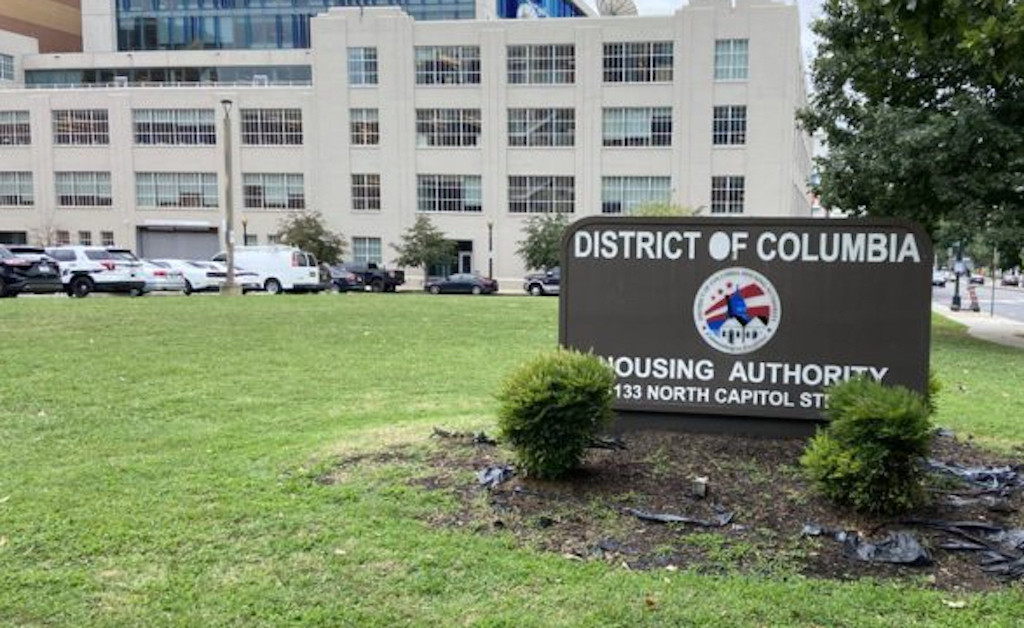
Roughly five months after a report from the federal department of Housing and Urban Development dinged the DC Housing Authority for its rent payment practices, the D.C. Council is wading into the fray with a proposal to reform them.
Ward 3 Councilmember Matt Frumin, supported by eight of his colleagues, introduced a bill this week seeking to limit how much rent the DC Housing Authority can pay to property managers who rent to some tenants in the Housing Choice Voucher Program.
The bill would subject apartments rented through the Housing Choice Voucher Program to D.C.’s rent stabilization law, which generally limits rent increases to inflation plus 2% at most apartment buildings built before 1976.
“I see it in Ward 3 – and it happens in other places – the way in which rent stabilized units have been cannibalized by another form of affordable housing,” Frumin says. “It happens in lots of different ways. It happens in buildings where the owner … begins to see an advantage to having voucher rents as opposed to rent stabilized rents, as a way of getting around the rent stabilization rules. [And] it happens when buildings flip.”
Housing Choice Vouchers pay the majority of recipients’ rent and allows them to rent on the private market. The majority of HCVP participants live in Wards 7 and 8 – which also has the highest concentration of buildings potentially subject to rent control – but residents of more affluent neighborhoods have also complained that higher-than-market rents sometimes offered by DCHA have attracted predatory business practices to their buildings.
Metrics for determining DCHA’s voucher reimbursement levels are somewhat opaque; the agency uses both “fair market rent” rates set by HUD and its own neighborhood rent caps to determine how much it will spend for rent in any given place. Property owners can command high rents under D.C. ‘s metric, which caps rent for a 3-bedroom apartment near American University at $4,000, to take one example.
DCHA also tends to rubber-stamp landlords’ rent requests, even if those asking prices are much higher than those for comparable units, as revealed in a February story by the Washington Post. Coupled together, DCHA’s voucher payment practices have created a strong financial incentive for developers, some of whom market buildings to the D.C. government for use by voucher holders because they see the funds as guaranteed income – and often above what they could make from market rate.
A DCist/WAMU investigation published this week examines the market effects of this business model, which sees developers buying rent-stabilized apartment buildings and clearing them of existing tenants, so that property managers can rent to voucher holders with higher rent payments.
A Sept. 2022 report from HUD found that DCHA sometimes overpays those who rent to Housing Choice Voucher Holders, and that its executives have demonstrated “inadequate management and knowledge of HCV program functions.” Consequently, Brenda Donald, the director of the DC Housing Authority, said during a March meeting of the agency’s board of commissioners that DCHA leadership is weighing how to create a metric for “rent reasonableness.” HUD mandates that public housing authorities create and abide by those standards when authorizing voucher payments.
Frumin’s bill could help establish at least part of that metric, by subjecting much of the housing subsidized through the DC Housing Authority’s voucher program to the same rental pricing guidelines as other, non-subsidized rental housing. (A spokesperson for the Apartment and Office Building Association of Metropolitan Washington, an influential trade group representing the region’s biggest real estate companies, says AOBA backs the spirit of Frumin’s bill; “there is a lot of confusion about how DCHA is determining [fair market rent],” the spokesperson said.)
In response to a question about how DCHA views Frumin’s proposal, Chief Operating Officer Rachel Joseph told DCist/WAMU in an emailed statement that agency staff are “reviewing [Frumin’s] proposed legislation and the implications it will have as we implement new rent reasonableness.”
She wrote that the original exemption of HCVP and other subsidized units from the city’s rent stabilization law was “created with the good intentions of expanding the available housing stock across the city to those who participate in our programs. However, this has had the unintended consequence of creating incentive for landlords to prioritize voucher funded and government subsidized tenants. On its face, CM Frumin’s proposed legislation seeks to rectify this incentive. DCHA looks forward to working with the Council on a commonsense solution.”
A spokesperson for A-Large Councilmember Robert White, who chairs the housing committee, says that staff plans on holding a hearing on the bill in the late spring if and when it’s referred to the committee.
Until then, the spokesperson says, White’s staff plans “to use our budget hearings and close ongoing oversight of DCHA to diagnose and solve systemic issues with rent reasonableness.”
“I think everybody on the council is skeptical and worried about how the agency is going to operate,” Frumin says. “It’s actually on [the Council] at this point. We approved the reform board, we know there’s a serious issue. If we let things slide, then we own it as much as the leadership does. So we need to be very vigilant and have a sense of responsibility around this.”