Héctor Alejandro Arzate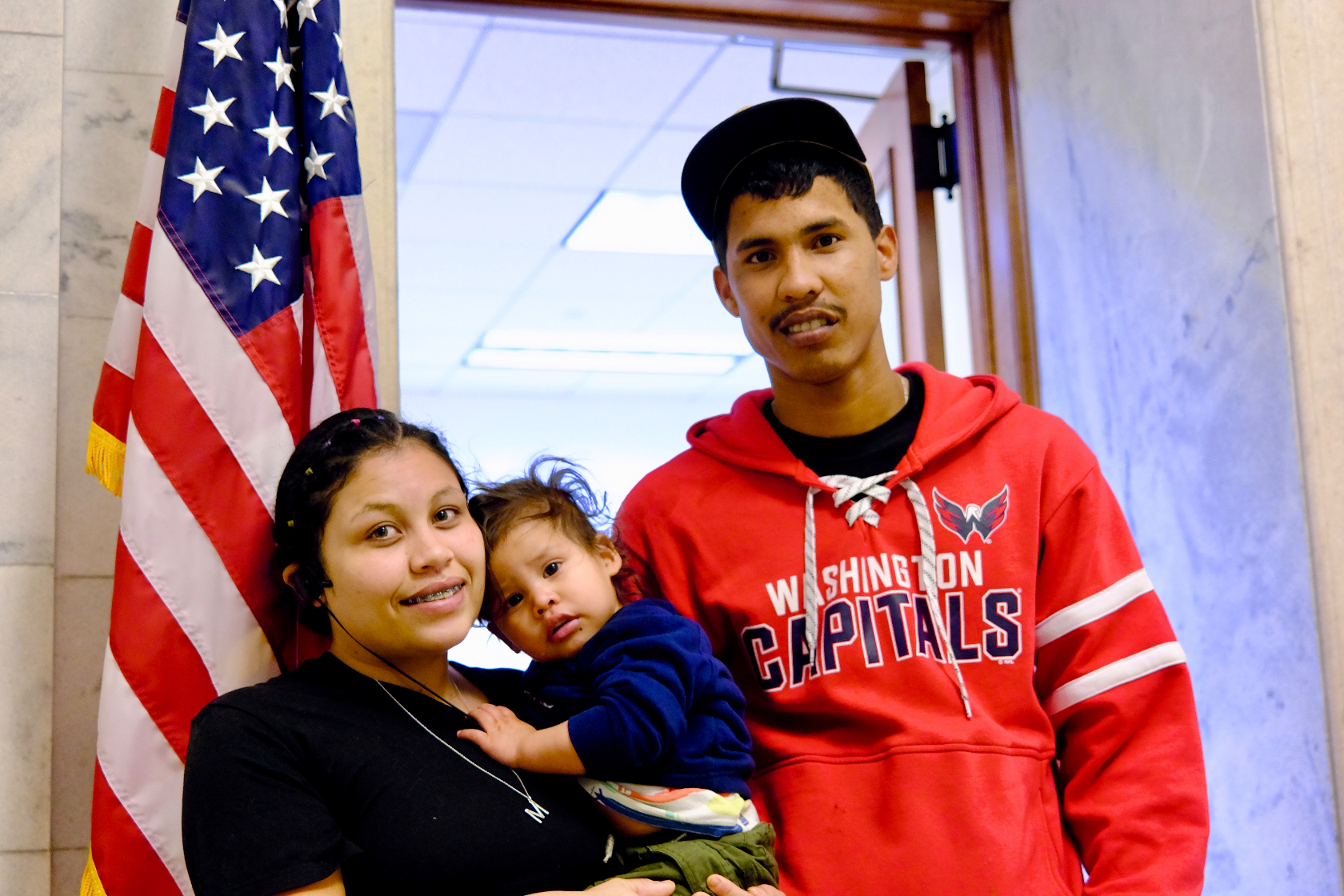
Last week, Mayor Muriel Bowser unveiled her budget proposal for next year, which would include reducing emergency rental assistance, potentially tripling the number of traffic cameras in the District, and proposing that the Metropolitan Police Department take the reins over D.C.’s crime lab.
As the D.C. Council works on passing next year’s budget, some immigrants and their advocates say there are currently five bills before lawmakers that would directly impact their community.
Launched as the DC Immigrant Justice Platform, those bills include the Local Resident Voting Rights Amendment Act, the Domestic Worker Employment Rights Amendment Act, the Vulnerable Youth Guardianship Protection Amendment Act, and the Street Vendor Advancement Amendment Act. It would also include a change to the Temporary Migrant Services and Supports Act – which was passed last year to establish the Mayor’s Office of Migrant Services in response to the arrival of buses from the southern U.S. border.
June Lee, a director for immigrants’ rights at Legal Aid DC, says those bills are directly connected to serve the well-being of D.C. immigrants, and that legislators should support the platform in its entirety.
“It’s kind of premised on the idea that if you want to be pro-immigrant, you also want to be anti-poverty, you want to be anti-discrimination,” says Lee. “This is also about being anti-sexism because it’s sort of based on the idea that all these forms of oppression are kind of linked together.”
While most of the legislation has already passed the Council, there are still two bills that need to make their way through the process. The street vendor bill, which would decriminalize vending without a license, still awaits a final vote. Meanwhile, the bill for vulnerable youth still needs to go through a public hearing and the Judiciary Committee. That bill would raise the age limit from 18 to 21 so that D.C. immigrant youth can apply for a pathway to citizenship through the Special Immigrant Juvenile Status.
According to advocates like Alana Eichner, they don’t just want to see the pieces of legislation pass, they also want them to be funded under next year’s budget. Eichner previously campaigned to pass the Domestic Worker Employment Rights Amendment Act, which would extend protections against workplace discrimination to D.C.’s house cleaners, nannies, and home health aides. The only problem, she says, is that there’s currently no way to implement it.
“The Mayor put zero dollars for this in our budget, which we were really disappointed to see – a complete lack of recognition for domestic workers. So we are counting on the Council to remedy this omission from the Mayor,” says Eichner.

The coalition of immigrants and their advocates gathered this week at the John Wilson building to meet with key members of the D.C. Council in an attempt to garner support. Among them was Rosmery Torrico, a long time domestic worker who was born in Bolivia before moving to the D.C. region.
“It’s not possible that, as we say, in the capital of the world, there is so much injustice to essential workers,” says Torrico. “They deserve respect. They deserve security. And we’re here in the fight, asking [for that].”
The coalition also wants to secure the funding to effectively implement non-citizens voting rights, which passed after significant push back from Republicans in Congress.
Abel Amene, a volunteer who worked on the campaign, says the Board of Elections otherwise won’t be to provide educational programming to non-citizens. He also says that, after such a tenuous battle to pass the bill, immigrants should finally have a say in local elections.
“This is a powerful piece of legislation that would enfranchise nearly 50,000 people, that would now be voters in the District,” says Abel, who himself is an Ethiopian immigrant. “They should have a say, right? I should have a say in those decisions.”
Meanwhile, advocates say that legislators need to address the initial rollout of the Temporary Migrant Services and Supports Act, which they argue bars many immigrants from accessing local housing services. Lee says that the legislation redefines who is considered a D.C. resident, which in turn excludes many immigrants from accessing long-term housing support.
“We would love for all of that section that excludes anyone from homeless services to be taken out,” says Lee.
Antonieta Otaiza, a Venezuelan migrant who was bused to D.C. from Texas with her husband and son, says she’s been trying to help her sister get housing through the District’s hotel program. Under the current law, however, Otaiza’s sister is unable to qualify for the services so she’s had to jump from Airbnb to Airbnb. She says the experience has been debilitating.
“In my case, we do have a place to live right now but we don’t know what will happen to us. We don’t know if there will be a solution. We feel that we are here but that we’re also not here,” says Otaiza.
So far, the campaign has garnered the support from Councilmember Brianne Nadeau, who says she’s asked the Mayor to fund the voting rights bill, the street vendor bill, and the domestic workers bill.
“As the Councilmember for the most diverse ward in the District, supporting immigrants has been a high priority for me, including expanding access to healthcare, the noncitizen voting rights bill, and expanding language access,” Nadeau told DCist/WAMU in a statement. “We’re going to work hard and attempt to find the necessary funds in a tight budget year.”
Over the next two months, the D.C. Council will deliberate over the Mayor’s budget proposal and offer changes before voting in May.