Margaret Barthel
Puedes leer este artículo en español aquí.
The big question on the table at the March meeting of the Arlington Housing Commission was, once again: what is going on at the Serrano Apartments — and how can it be fixed?
The aging 280-unit apartment complex is owned by nonprofit AHC, Inc., which owns about a third of Arlington’s committed affordable housing units.
Tenants and advocates at the Serrano Apartments began speaking out in 2019 about rodent infestations, mold, HVAC problems, slapdash repair work, and other poor living conditions. Also on the list was bad communication, confusing charges and fees, and what they characterize as a lack of empathy and respect from property management and AHC.
In 2021, two years after tenants began organizing, the situation finally forced a public reckoning. It laid bare scant public oversight of taxpayer-subsidized affordable housing properties in Arlington, even as the county rushes to develop more and more committed affordable units.
Now, conditions at the Serrano have improved, but residents say they’re still inadequate, citing frequent water and heat shutoffs, elevator problems, security concerns, and ongoing pest control issues. Some no longer trust AHC or onsite property managers to act in good faith, citing fears about retaliation and even eviction.
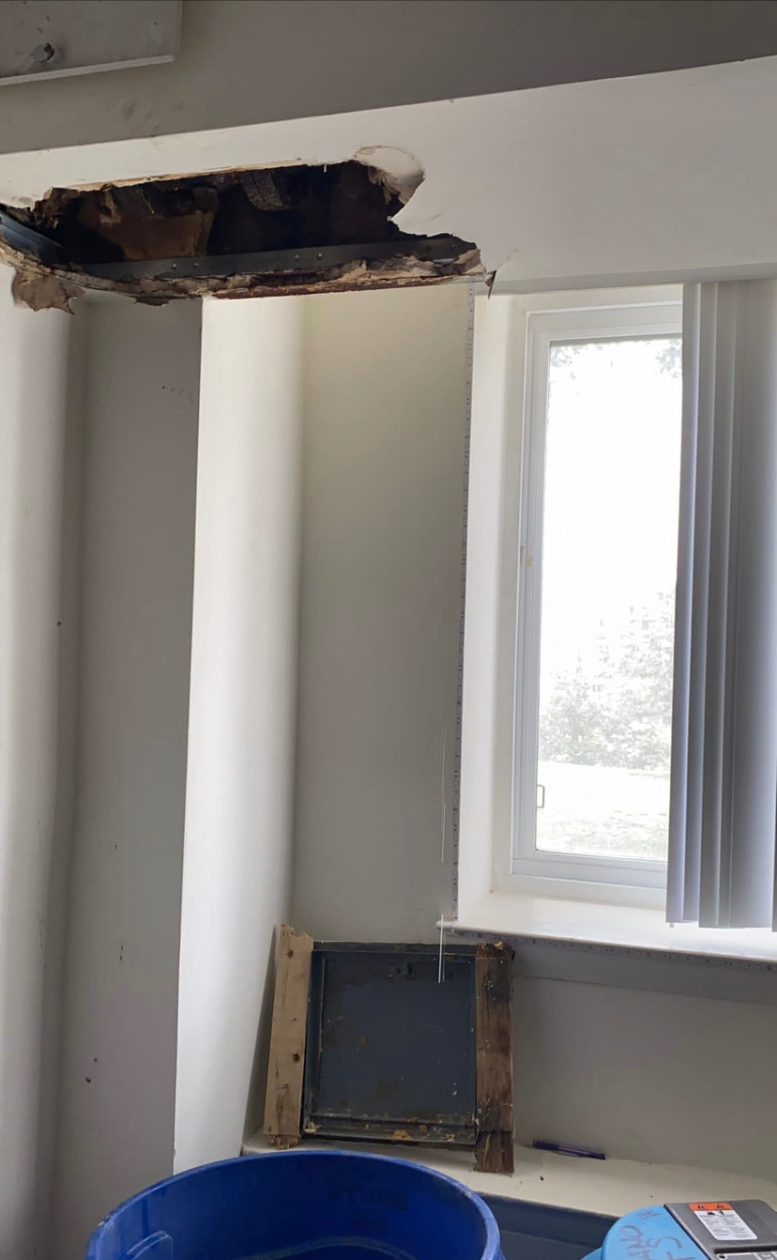
“There were some changes, but not everything,” says Janeth Valenzuela, a longtime advocate who has been working with families at the Serrano Apartments for years. “And now we’re going back to the same place that we were.”
Advocating for tenants at the Serrano has become a years-long, all-absorbing project for Valenzuela, who is also the founder of Arlington Schools Hispanic Parents Association. She talks with residents and then brings their concerns to AHC leadership, county staff, County Board members – anyone who might be able to get some results. She makes a point to pick up her phone for tenants, even if it’s the middle of the night, because she believes so many of them have gone unheard for so long.
“I have to answer because they are tired of calling a machine and leaving messages with no return,” she says. “It is exhausting.”
Now, Valenzuela and other advocates worry the public spotlight has moved on to other housing-related issues in the county, like passionate disputes over zoning reform — despite the fact that problems at the property still exist.
“We all, the county and the community, took our foot off the pedal after there were some initial improvements at the Serrano,” says Marjorie Green, with advocacy group Virginians Organized for Interfaith Community Engagement (VOICE). “I would like to think that all of this would have happened without community scrutiny … but I can’t say that with any confidence.”
And while AHC’s new CEO, Paul Bernard, says he’s determined to refocus the nonprofit to prioritize residents over real estate deals, it’s clear that some Serrano residents are not yet feeling the force of that commitment in their regular interactions with staff at the complex.
Meanwhile, the stakes couldn’t be higher in tackling the challenge of repairing trust and communication with residents: AHC is beginning to explore plans to redevelop or renovate the Serrano complex, another upheaval for a community that’s already been through a great deal.
‘Systemic’ problems
AHC purchased the Serrano complex in 2014 for $62 million, including a $16.5 million low-interest loan from Arlington County’s Affordable Housing Investment Fund. The purchase of the two 1960s-era buildings set aside 196 of the Serrano’s 280 apartments as “committed affordable” units for households in income brackets ranging from 60-80% of Arlington’s area median income (the remaining 84 units are market-rate).
Neither AHC nor the county appear to have anticipated that the Serrano would deteriorate less than 10 years after its purchase in 2014. At the time, an outside appraisal found the condition of the buildings “average” and estimated their remaining life at 40 years, according to documents obtained by WAMU/DCist via a public information act request. The appraiser found no evidence of deferred maintenance after a walkthrough of the property and a visit to about a dozen apartments.
AHC pitched the project as a relatively inexpensive way to preserve a large number of affordable units when requesting the AHIF loan from the County Board.
The apartment homes in the Serrano have some key coveted characteristics: they’re more spacious than many more-recently built units, and some have three bedrooms, making them more suitable for families with children. Plus, they’re committed affordable homes in Arlington, where affordable housing spots can be hard to come by.
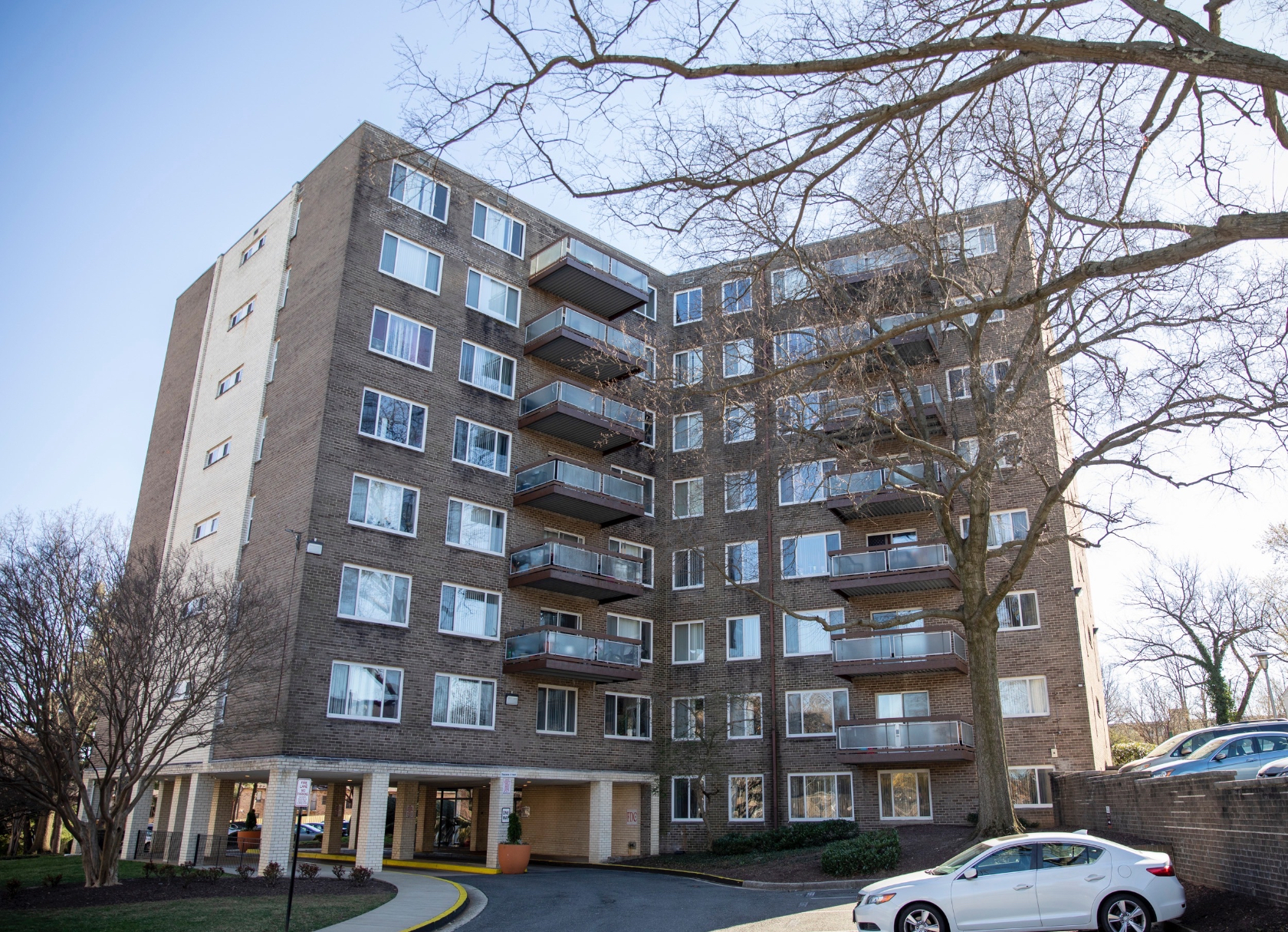
Elder Julio Basurto, a translator and elder at a local church and the founder of the advocacy group Juntos En Justicia, felt lucky to find a three-bedroom unit in the Serrano Apartments for him and his three young children around 2015.
But that elation quickly soured, Basurto says. He started hearing scratching in the walls of his new place, and one day, a rodent scrabbled through the walls in the kitchen.
“There was a humongous hole where mice were coming in and out,” Basurto recalls. “We told management about it. They came in, put some duct tape on it, and they said that, you know, that that was adequate.”
Basurto said the property manager was initially responsive to his concerns, but then left for a new job: the start of a pattern of staff turnover. New staff, he said, started mistreating residents, discounting their concerns and being rude or bullying people. In the meantime, a new hole in Basurto’s air conditioning unit filter caused a leak and also created another entry point for mice. He was fed up. So when he found out that Valenzuela was working with residents to advocate for changes, he immediately wanted to join in the effort.
“When I started to hear from other residents, I was like, ‘Oh, I’m not the only one,’” he says. “And you know what? I can’t just stay quiet.”
Valenzuela, Basurto, and other tenants began raising concerns about widespread problems in the Serrano buildings in the spring of 2019. But the response from the county and AHC, they say, was scattershot, with meetings mostly focused on individual issues as one-off problems instead of a part of a larger troubling trend.
Valenzuela and Basurto got back-up support from VOICE, a group of clergy and parishioners in Northern Virginia devoted to supporting the needs of low-income people.
“There was not an understanding [of] our frustration of the systemic nature of these problems,” said Green from VOICE. “And I don’t just mean building systems, I mean systemic in the sense that these problems had existed for a long time. They were widespread, they weren’t being addressed by management.”
When property managers did finally address maintenance issues, Housing Commission Chair Kellen MacBeth said the repairs were often only the bare minimum, shoddy or ugly.
“It was going in and saying, ‘Well, yes, they technically filled the hole that the mice were in, but they did it with foam that’s now sticking out like several inches into their kitchen, looks terrible, and then saying, ‘Well, why do you think this is an acceptable way to fix this issue? Don’t you care about having a nice-looking home as well?” he recalls.
The inertia persisted until spring 2021. News — and images — of rodent- and mold-infested apartments were published by hyperlocal site ARLnow, and the local chapter of the NAACP conducted a walkthrough of the property with county officials. At an hours-long May 2021 Housing Commission meeting, tenant after tenant shared searing stories of living with pests, mold, faulty and old HVAC systems, intimidation from property staff, and more.
Rev. Ashley Goff, the pastor at Arlington Presbyterian and a VOICE leader, remembers how powerful it was to see tenants join the online gathering from their apartments, pivoting their cameras to show the public the mouse droppings in their kitchen and other problems in their homes.
“It just absolutely floored me, because it was just this wave upon wave of power coming through Microsoft Teams,” Goff remembers. “Finally, AHC could not outflank the tenants. They could not outflank these stories because they were filling the space.”
The public scrutiny did the trick, pushing Arlington officials into crisis-response mode. Subsequent inspections conducted by the county in 2021 found only 31 out of 221 units in passable condition. The county paid for hotel rooms for the roughly two dozen households who requested relocation while their units were fixed, a temporary housing cost later transferred to AHC.
Green recalls county staff setting up tables outside the complex to help residents apply for rent relief, legal aid, and other services, and a walkthrough with county officials and members of the Board. She credits Anne Venezia, the Arlington housing director, with expediting inspections and pest control services — and also ensuring that staff entered apartments with care, recognizing previous property managers’ “history of just barging into units.”
“So the county really did kick into high gear at that point, and it was very impressive,” Green says. “I think everybody’s hope would be that this doesn’t have to happen again, that we can put some kind of accountability procedures in place so that we never get to this point again.”
AHC took some notable actions, too. The nonprofit replaced its own for-profit management arm, AHC Management, with an outside property management firm to oversee the day-to-day operations at the Serrano. Following the revelations in spring 2021, the nonprofit announced that its longtime CEO, Walter Webdale, was retiring. The organization also worked with Arlington County to help some tenants relocate, offered a claims process for residents who said their property or personal health had been impacted by bad living conditions, added tenants to their Board of Directors, and sought to improve communication with residents. In a letter to the County Board in mid-2021, the nonprofit committed to spending up to $2 million in the following year to fix problems at the Serrano.
The nonprofit maintained that the issues were less widespread than advocates claim, and that responding to them effectively in 2020 and 2021 was hampered by the pandemic. Bernard, the new CEO, points out that AHC only conducted emergency repairs during the COVID-19 crisis, generating a maintenance backlog. Nevertheless, tenant complaints led to an investigation into possible housing discrimination by the Virginia Attorney General, an inquiry that is still ongoing.
Having to fight for years to address serious problems in their homes irrevocably broke some tenants’ trust and left them with trauma.
“I remember it was regular for me to see the mice running in my living room and not being afraid of them anymore because I got used to them. I got used to them being on my table. I got used to them being on my kitchen counter, climbing in my oven, inside of my oven,” recalls Basurto. “All of these things became normal. And so your mindset starts to degrade.”
WAMU/DCist spoke to two longtime residents at the Serrano who have stayed despite the living conditions because they want to keep their children in Arlington Public Schools — even though both worried about the health risks of continuing to live in the building.
One, who we are referring to by her middle initial, M., has lived in the building for 18 years. She said she was “sad” and “frustrated” by the situation.
“On one hand is the education and the good schools in the county, and on the other hand is health and the right to live in a home that is clean and safe,” M. said in Spanish.
“There’s been a lot of talk, but not real change, tangible change,” N., another resident, said in Spanish.
WAMU/DCist is using middle initials to refer to M. and N., who were worried about possible retaliation from property management if they used their full names. Both described a continuing culture of fear among fellow tenants and a feeling that staff in the building office were hard to get in touch with, uninterested in helping residents with problems, and at times intimidating.
“It’s as if we didn’t pay, as if we live for free, but that it’s not correct,” said N. “We’re paying rent.”
Current issues
At the Housing Commission meeting in March, Valenzuela, Green, and other advocates joined a handful of tenants to share current problems they see happening at the complex with the public and AHC leadership.
Their concerns included safety and security issues around the property, ongoing pest control problems, yellow-colored tap water, a faulty fire alarm, and frequently-broken elevators. They also criticized poorly-managed water and heat shutoffs, where they felt property managers had not adequately provided support for residents. Valenzuela noted an instance where apartments had no heat, but property management said they didn’t widely publicize the fact that they had space heaters available for tenants to borrow, citing concerns that tenants would overuse the privilege.
“When are we going to end this? I know there is not an end because that building is old,” Valenzuela said. “But at least try to treat the residents with respect and dignity.”
One tenant, who did not give her name, told the commission that pest problems were still affecting her life.
“It’s hard for us to leave any bread outside or anything because the mice come,” she said.
Valenzuela told the commission that she was still concerned about staff at the property intimidating or threatening residents if they speak out about conditions or raise criticisms about management. Nearly half of the residents at the Serrano Apartments are Latino, and many are immigrants who may be undocumented or have family members who are.
Valenzuela and Basurto said in an interview with WAMU/DCist that property staff have tried to discourage the two of them from visiting the complex, something housing commission member Eric Berkey called “unacceptable.”
“If not for advocates, we wouldn’t be here,” he said.
One Serrano resident told a story of approaching a member of the property management staff about setting up a payment plan for money she owed coming out of COVID, and that she was having trouble paying due to medical expenses. She said it was hard to get an appointment to discuss the problem, and then during the meeting a staff member said they’d get a lawyer involved to get her to pay.
“I felt afraid and frightened when she told me that I was going to be taken to court,” the resident said through a translator. “I told her, I understand that I owe the money, I just need time.”
Bernard, the AHC CEO, said in a follow-up interview with WAMU/DCist that his staff had reached out to the residents who testified to seek to solve the problems they described.
He also said AHC staff and their contracted property management staff are undergoing diversity and inclusion training designed to help them be more responsive to residents’ backgrounds and possible sources of trauma. He also said the organization would not tolerate poor performance with respect to resident interactions.
“When issues arise, we try our best to be as swift as we possibly can in terms of dealing with those issues,” he said. “In some instances, we’ve had to make some staffing changes as necessary.”
Advocates say they’ve noted some improvements, but still see a persistent problem with communication between tenants, the management company, and AHC itself.
“AHC has said it’s trying to be responsive. It’s trying to work with [property management company] Drucker + Falk to be responsive,” says Marjorie Green. “It just hasn’t gotten there. There have been problems with the emergency line when residents try to call and say, ‘I have no heat or no water.’ Somehow the message doesn’t get through.”
But at the meeting, Bernard painted a much rosier picture of life at the Serrano, noting that some tenant surveys and a recent tenant meeting showed broad satisfaction with life there. Eighty-one percent of respondents to the survey said they were satisfied, up from 47% the previous year. Eighty-sevenpeople, or about 30% of residents filled out the survey. (Advocates criticized the survey for not capturing a broad cross-section of responses, and said the tenant meeting was held at a time when few residents could attend).
Bernard said he didn’t see a mismatch between his presentation and tenant perspectives shared with the commission, but simply saw the Housing Commission meeting as “an opportunity” to come to the table and talk with key stakeholders.
The March meeting was the first time that kind of public discussion had happened in a while, but it was by no means the first time ever. The commission, along with the Tenant-Landlord Commission, have previously hosted meetings that brought together AHC, tenants, advocates, and county staff to discuss problems and the path forward — a service the Housing Commission performed several times in 2021, as the Serrano crisis and its response unfolded.
“Public scrutiny made it happen the last time, and I think we still need public scrutiny,” said Marjorie Green, who asked the commission to schedule regular public check-ins between AHC, advocates, and tenants to discuss problems as they arise, a practice which tailed off after the height of activity in 2021.
Following through on repairs
Bernard said that AHC has spent well over the amount it promised to put into the building, making capital expenditures of $1.5 million on major building systems in 2022, and an expected $2.6 million in 2023. That’s a dramatic increase from previous capital expenditures; Serrano operating budgets for 2015-2022 obtained by WAMU/DCist via a public information act request show particularly low capital spending in the years leading up to the crisis. For 2015, 2016, and 2017, AHC put less than $325,000 in capital expenses into the building; in 2018, it put in nearly $670,000. After the problems surfaced, capital expenses totaled an estimated $1 million in 2019 and $725,000 in 2020, according to an AHC spokesperson.
Several of the current disruptions — like the water shutoffs — are actually the result of maintenance workers making badly-needed repairs and upgrades in the buildings, Bernard said. One challenge of older buildings, he explained, is that the water and heat systems are often highly interconnected, making it difficult to make repairs without shutting off the entire system.
“You’d think it’d be easy enough to isolate the problems and just turn off a switch,” he said. “But this is almost like a Christmas light piece where one light goes out, everything goes out.”
Bernard said AHC had taken steps upon his arrival to put valves in place that separated the water systems of the two buildings; previously, the systems had been interconnected, meaning that a repair in either building would shut down water to the entire complex. He said staff had provided water to residents. (Valenzuela and tenants made the point that what was made available to residents were smaller plastic water bottles — not a volume, they said, that would adequately serve a whole family.)
Tenants and advocates noted other stopgap measures that they thought fell short.
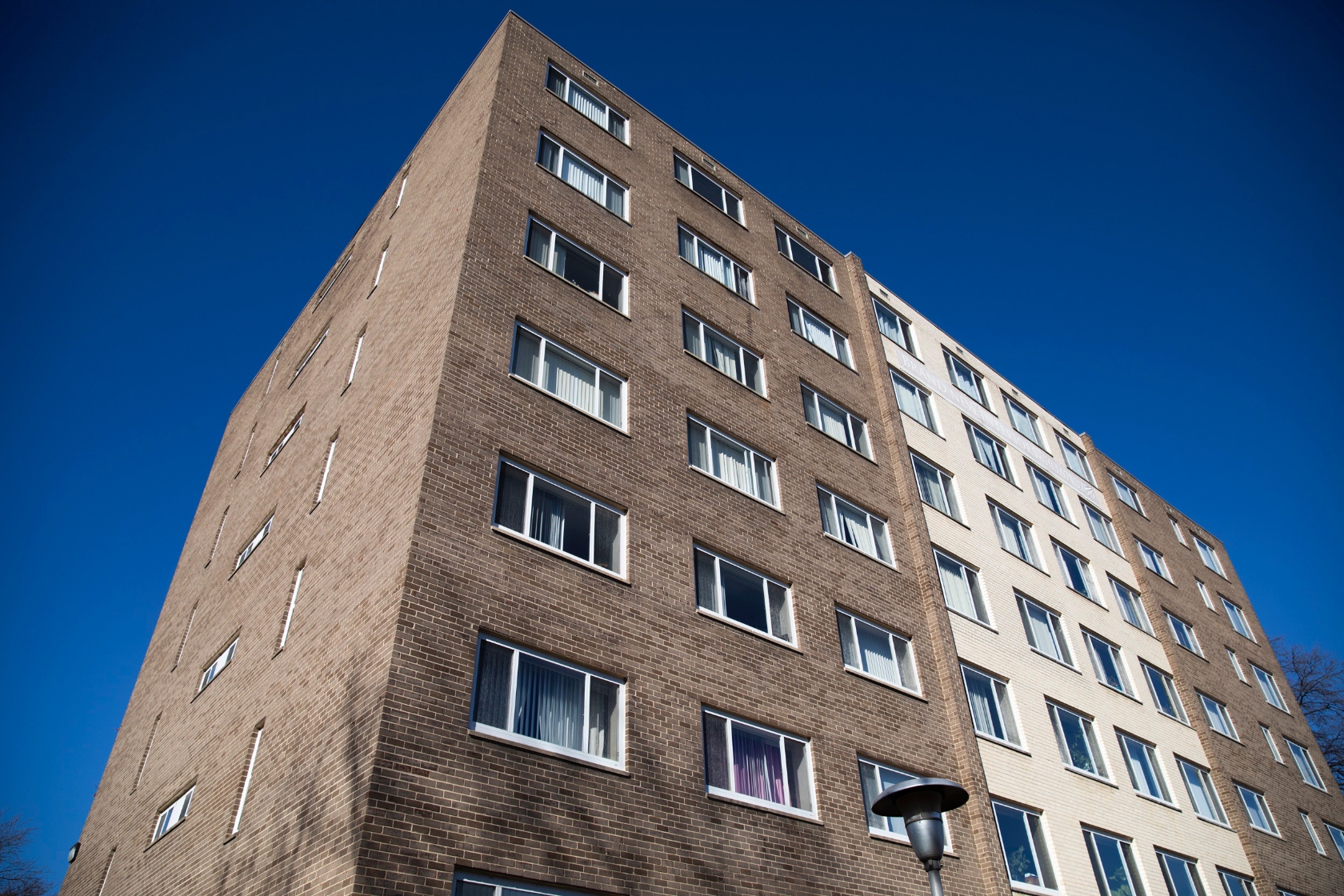
Bernard said AHC had put people in place to help residents carry packages up stairs when there was an elevator outage on Christmas Eve, and said AHC was putting together a spare parts inventory for the elevators, so that fixes are no longer dependent on unreliable supply chains. In the meantime, he said AHC had given residents of the 8-story buildings a $50 gift card for their patience. However, one tenant at the meeting said the person hired to help people carry things up the stairs didn’t help at all.
Similarly, the organization had hired people to serve as “fire watch,” regularly patrolling hallways when the fire alarm system went down. (Individual unit smoke detectors, AHC staff elaborated, were not affected, but the alarm that connects directly to the fire department was found to be not operational during a routine visit from the fire marshal. It was still down at the time of the meeting.) Valenzuela said she’d noticed the fire watch person on a recent evening had not appeared especially vigilant.
“He was laid back with the music very loud,” she said. “So, I don’t know, is that also code, for the fire watch to be acting that way?”
Staff at the meeting said they would call the company responsible for the fire watch and ensure that the behavior ended.
What’s next
Multiple aspects of the feedback loop between AHC, the property management company, residents, and the county appear to be broken, several meeting participants agreed. And that quickly becomes a self-fulfilling prophecy: if residents don’t feel comfortable speaking up or confident that their concerns will be taken seriously, they’ll stop talking about them — or they’ll take them to advocates and the county instead of directly to AHC, the route of communication that finally, in 2021, got results.
“Can’t fix what I don’t know about,” Bernard summed it up in an interview.
It isn’t just a breakdown in tenants’ requests for fixes — it went deeper, said MacBeth, the Housing Commission chair.
“So when AHC said, ‘We’ll fix that or we’re working on things,’ [the tenants] would be like, ‘Bullcrap, I don’t believe you. I don’t think you want to fix anything. I don’t think you care about this. I don’t believe anything that you say about addressing the concerns that we’ve raised.’”
Identifying the problem is one thing — solving it is another.
Bernard says his strategy at this point is simple: just keep showing up.
“I can’t really understand where the disconnects are because in part, since I’ve been here, those are the things that we’ve been trying to do,” he said. “We’ve been trying to be transparent, open lines of communication. If there are issues, we always follow up.”
He acknowledges that communication with residents is “an area where we need to improve.”
Berkey, who chaired the body during the Serrano crisis, reflected on the commission’s role in mediating the broken communication loop.
“I’m personally not opposed to us reconvening and following up on this,” he said. “I will say I hope that that’s not necessary because I think these are the conversations that should be able to be had not always in a public setting between AHC and residents and advocates.”
But while there’s at least some recognition among advocates that Bernard and AHC’s new leadership team are trying to solve problems that they did not themselves create, they’re also clear that the county and commission likely have a role moving forward.
“I’ve spoken with staff at AHC, and I understand the circumstances they inherited were not at all ideal and recognize their attempts to improve the situation,” said Bryan Coleman, the local NAACP’s lead on housing, in testimony to the commission. But for Coleman, that just means refocusing on defining the county’s expectations of its nonprofit affordable housing partners and their customer-service work.
Venezia, the county housing director, acknowledges that the county’s systems — which advocates say can be bureaucratic and hard to navigate for residents — are not perfect. At the commission meeting, she put out a call for ideas for how to improve.
“We haven’t solved it,” she said. “If you have thoughts, ideas on how we as the county and our role can provide a welcoming avenue, a channel for residents to share what’s on their mind, and specifically if they do have any concerns about a property in our portfolio, we really would love to hear those concerns and work with you on that.”
Venezia said the Serrano property is on the county’s inspection list for this month. (AHC recently did its own round of inspections; Bernard said most units were in good condition.)
In the immediate term, AHC is also planning some upgrades for the Serrano, including a resurfacing of the pool deck, new pool furniture, camera and fob system upgrades, and a new play area for kids near the pool. They also say they are forging ahead with elevator repairs, and more work with the water system valves so that shut-offs are less frequent, as well as continuing regular resident meetings and events.
Following the Serrano crisis, AHC added two residents to the nonprofit’s board of directors, and the organization is embarking on a strategic planning process aimed at making it more “resident-centric.”
“It’s not: we do the building and then we have the conversation about resident services and programming,” Bernard says. “It’s like, no, let’s have that conversation first and fit that within the building that we’re trying to build.”
Speaking of building things, Bernard says that so long as AHC owns the Serrano “doing nothing on the property is not an option,” and the nonprofit is actively seeking financing for projects ranging from a major renovation to possibly even a partial teardown, depending on what they hear from residents and, crucially, what funds are available for a redevelopment, which will be difficult in a high-inflation, high-interest-rate environment. He said a major renovation might give AHC the chance to try “eking out a handful, 50 or so” more apartments within the existing structure.
Bernard would not commit to specific allowances for residents during the development process, beyond the general principle of listening to their perspectives.
“I’m not sure I can get into the specifics because we don’t know what we don’t know,” he said. “What we can commit to is lines of communication being open and being transparent, and probably doing it sooner as opposed to later and making sure that residents are part of the process and not an afterthought.”
But the tenants who spoke at the commission meeting sounded alarmed about the prospect of another major disruption at the property — and mistrustful of AHC’s assurances that they’d communicate extensively with the residents.
“I understand that there’s going to be redevelopment and I’m concerned about being informed,” one told the commission. “Are they going to tell us when it’s going to happen? Are they going to let us search for a place or just leave us there, or kick us out?”
This article was reported through a fellowship supported by the Lilly Endowment and administered by the Chronicle of Philanthropy to expand coverage of philanthropy and nonprofits. WAMU/DCist is solely responsible for all content.