Amanda Michelle Gomez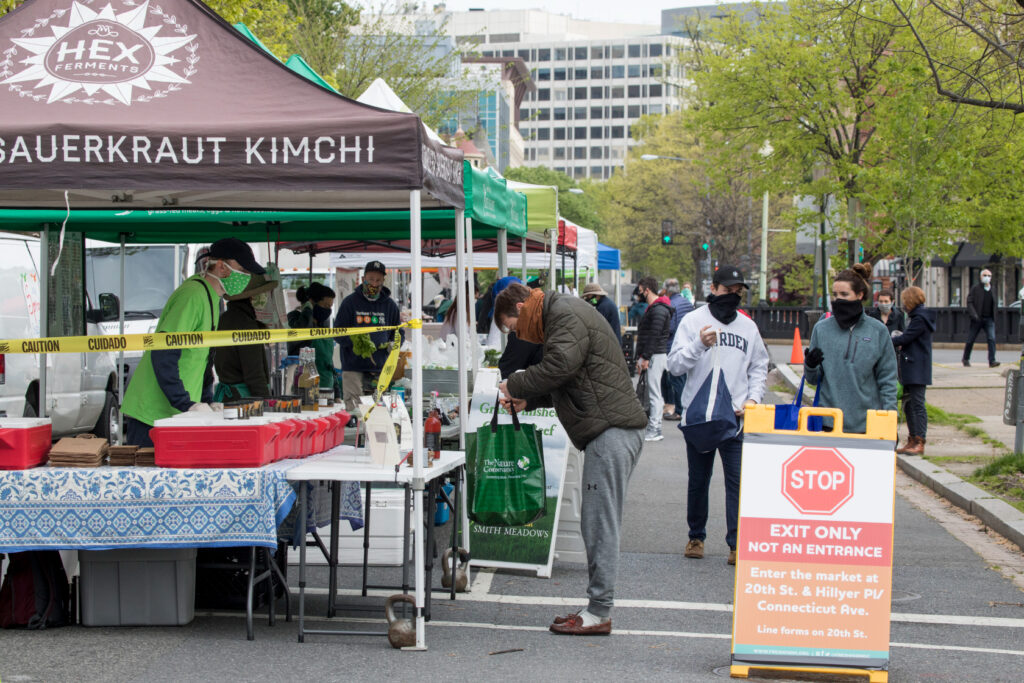
The Smithsonian’s Anacostia Community Museum will host a small farmers’ market on Saturdays from 10 a.m. to 2 p.m. beginning April 22. It will be run by FRESHFARM, a D.C.-based nonprofit that operates over two dozen markets across the region and is the nation’s third-largest farmers’ market organization.
The opening marks the first time FRESHFARM will sell local foods in Ward 8, east of the Anacostia River, which only has one full-service grocery store for tens of thousands of people and limited fresh or healthy food options.
The market will be small to start — technically, one farm stand featuring a local business — as FRESHFARM tries to build a clientele. The hope is for FRESHFARM to add more vendors and stands or markets in the ward as they build community trust. The stand will also be seasonal, running until November 18, 2023. They accept Supplemental Nutrition Assistance Program (SNAP), Special Supplemental Nutrition Program for Women, Infants, and Children (WIC), and Senior Farmers’ Market Nutrition Program (FMNP) checks — all federal programs meant to help low-income people afford food. The stand will also match every dollar spent via federal benefits through the nonprofit’s program FreshMatch, so shoppers on food assistance can get more bang for their buck.
The vendor at the museum’s stand is Barajas Produce, a family-owned, sustainable farm based in Montross, Virginia. They plan to sell their own spring fruits and vegetables like strawberries, asparagus, spinach, and scallions as well as year-round produce like potatoes and onions, according to FRESHFARM’s director of communications Juliet Glass. They’ll also sell fruit from another Pennsylvania-based orchard, so expect things like summer peaches. They’ll also offer vegetable seedlings, which can be eligible for SNAP.
Barajas Produce has an existing relationship with FRESHFARM, selling produce in a handful of other markets.
The farm stand in Ward 8 will mirror FRESHFARM’s efforts in Ward 7, where the nonprofit has opened three farm stands since 2017, according to executive director Hugo Mogollon. He says FRESHFARM tries to reduce the risk to participating farmers by managing the administrative aspects of running a stand. For example, FRESHFARM hires community members to sell produce.
FRESHFARM opened its first market in Dupont Circle in 1997. While it has some programs in Ward 8, why has it taken until now to open a farm stand?
“We believe that if you want to do something in the community, you need to have the certainty that you will be there in the long term,” says Mogollon. “It also is important to have connections with the community. So it’s not that you are coming to just offer solutions to people. You need to have the buy-in and the commitment. And in the past we have not been able to do that.”
FRESHFARM feels more certain entering the ward now that its partnered with the Anacostia Community Museum, which is often busy on the weekends and hosts events that align with the nonprofit’s mission. The stand will open on Earth Day, when the museum will be hosting gardening workshops and farm-to-table cooking demos.
“The FRESHFARM ACM Farm Stand is a wonderful example of how the Anacostia Community Museum continues to imagine how a museum can serve its community. We look forward to working with our friends at FRESHFARM to increase access to fresh, healthy foods,” says Melanie Adams, a director at the museum.
Mogollon recognizes there are local organizations already working to fill nutritional gaps in these neighborhoods. The food policy nonprofit, DC Greens, has a community farm at The Well, just 10 minutes away from the new farm stand.
The Policy Director at DC Greens Reana Kim says its members are “thrilled” that residents will have another option for getting fresh fruits and vegetables close to home.
“Food is the starting point, the base, yet for far too long, East of the River (EOTR) Communities have come last,” said Kim in a statement. “For too long, EOTR neighborhoods have had to make do while other, wealthier, DC neighborhoods have enjoyed an overabundance of grocery and market options.”