Elliot C. Williams

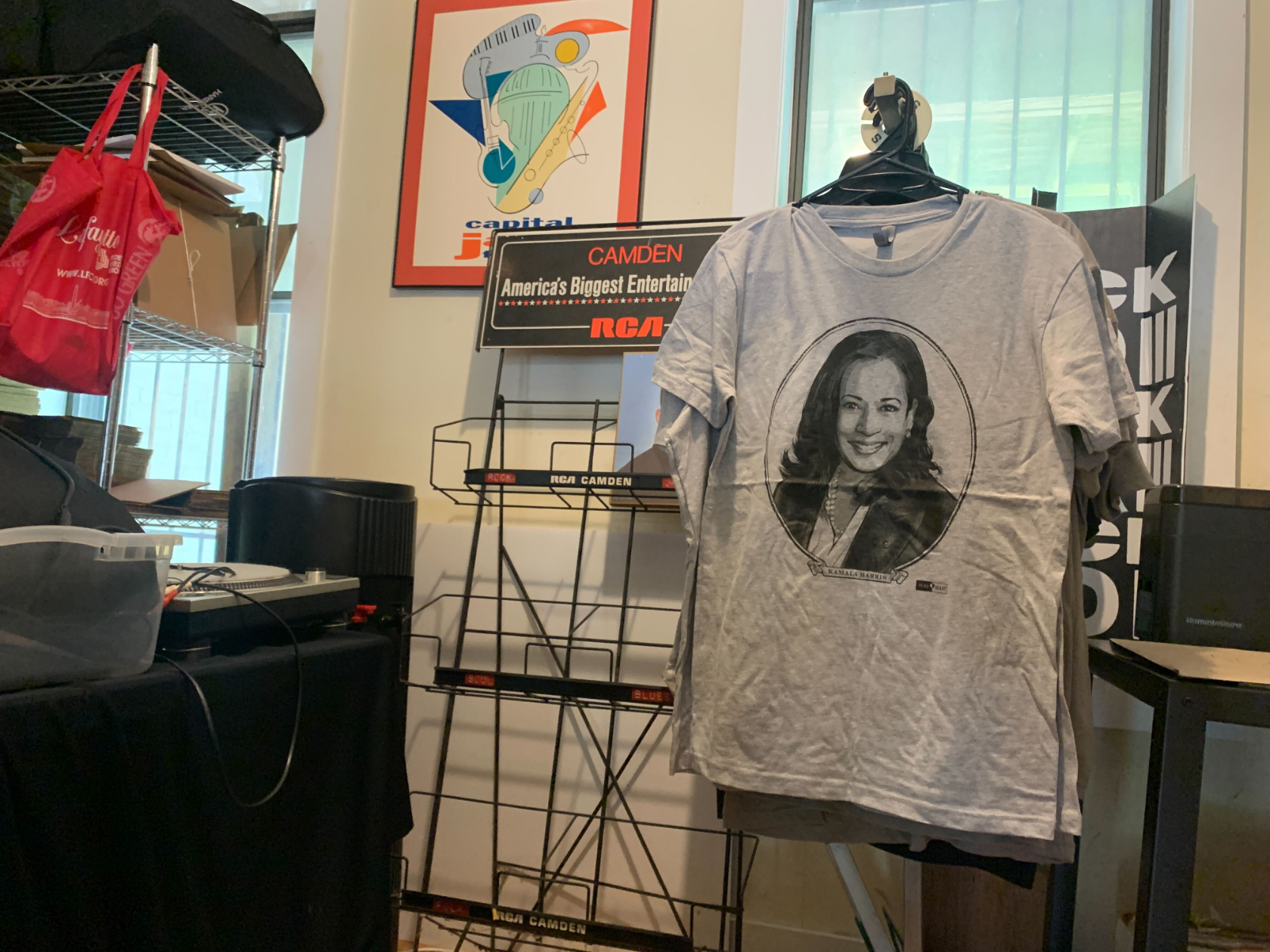
No one was more surprised by Vice President Kamala Harris’ short-notice visit to HR (Home Rule) Records on Thursday than the Brightwood Park shop’s owner, Charvis Campbell.
Just a few hours earlier, Campbell had received a call from someone saying a senior member of Harris’ staff might show up and that, for security reasons, he couldn’t tell anyone about it. After receiving another call explaining that the vice president would not be joining the staff member for the visit, Secret Service showed up and did a sweep of the building. Then, as customers browsed Campbell’s extensive collection of R&B, soul, and jazz vinyl, the vice president’s motorcade did show up, and Harris went crate digging.
“She knows her music. I was impressed” Campbell shared with DCist/WAMU Friday morning, before the store opened for the day. “You know, I tried to give her a softball and give her Coltrane. And she was like, ‘No, no, no. Where’s the Mingus?'”
Harris, who took photos with Campbell and his customers, walked away with some impressive jazz selections, including: Charles Mingus’ Let My Children Hear Music; Roy Ayers’ Everybody Loves the Sunshine, which Harris called “one of her favorite albums of all time;” and Ella Fitzgerald and Louis Armstrong’s 1959 album Porgy & Bess, which featured classics like “Summertime.”
Just a month ago, HR Records didn’t even have a sign out front — after five years in the Brightwood Park neighborhood, the storefront finally got some official signage from a local steelworker in April.
But Campbell, a Howard University alum like Harris, has long been a purveyor of records and D.C. music paraphernalia. Originally from Long Island, he worked in higher education, first as an assistant dean for student affairs at George Mason University and later with the honors department at Howard’s business school. But in 2017, after purchasing 5,000 records, CDs, and books from a friend who was closing his store in Baltimore, Campbell found the space on Kennedy Street and knew he had to turn his hobby into a full-fledged business. He opened HR Records in 2018 and became one of the few Black record-store owners in the country.
Campbell, 50, often refers to records as physical pieces of history.
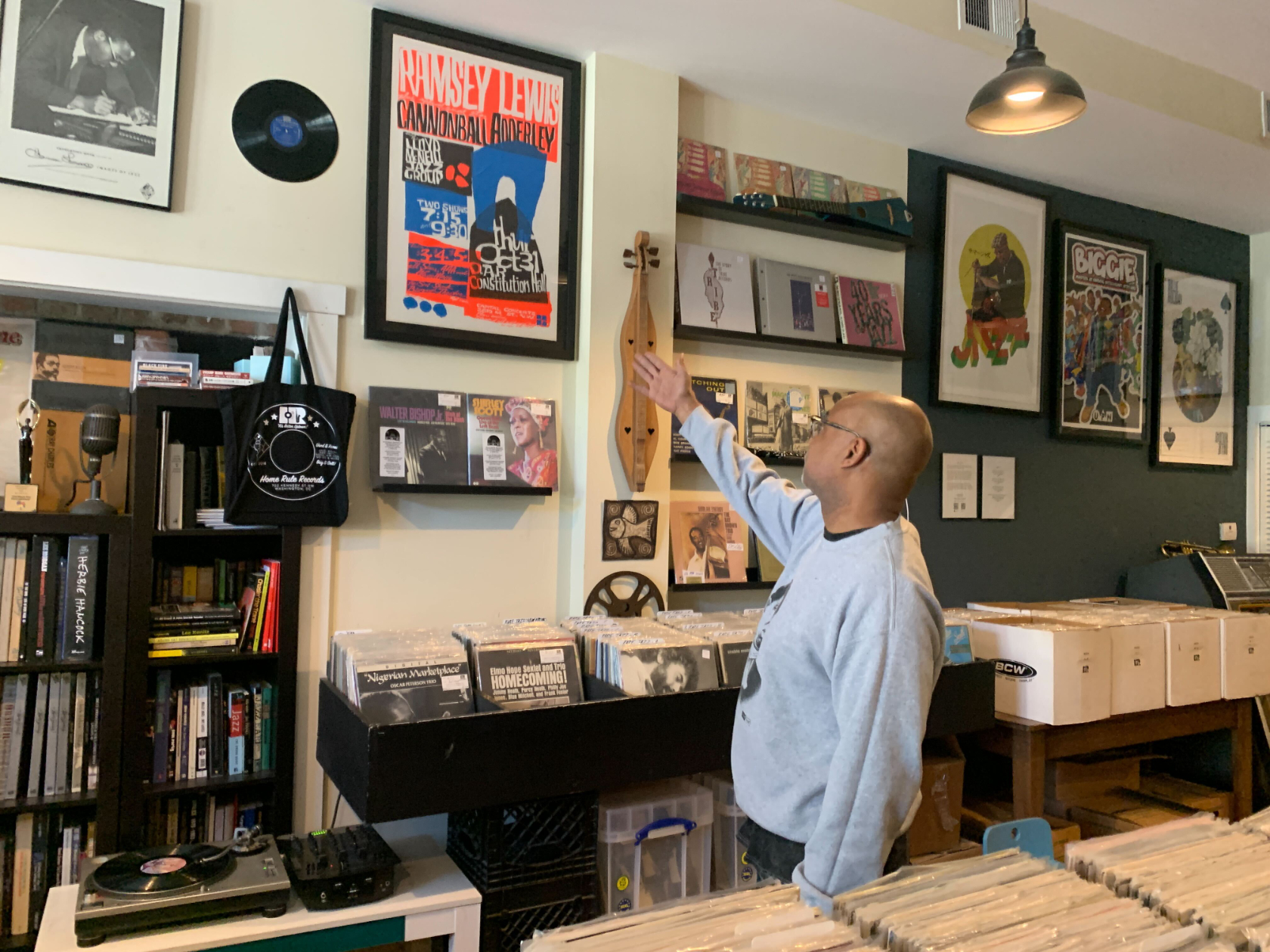
“The history of jazz music is really, I think in some ways, the history of America and really the history of African Americans. It’s our music,” Campbell says, picking a vinyl out of a crate. Records often come with liner notes, posters, lyrics, and all types of things you can’t hold in your hands by streaming a track online, he adds.
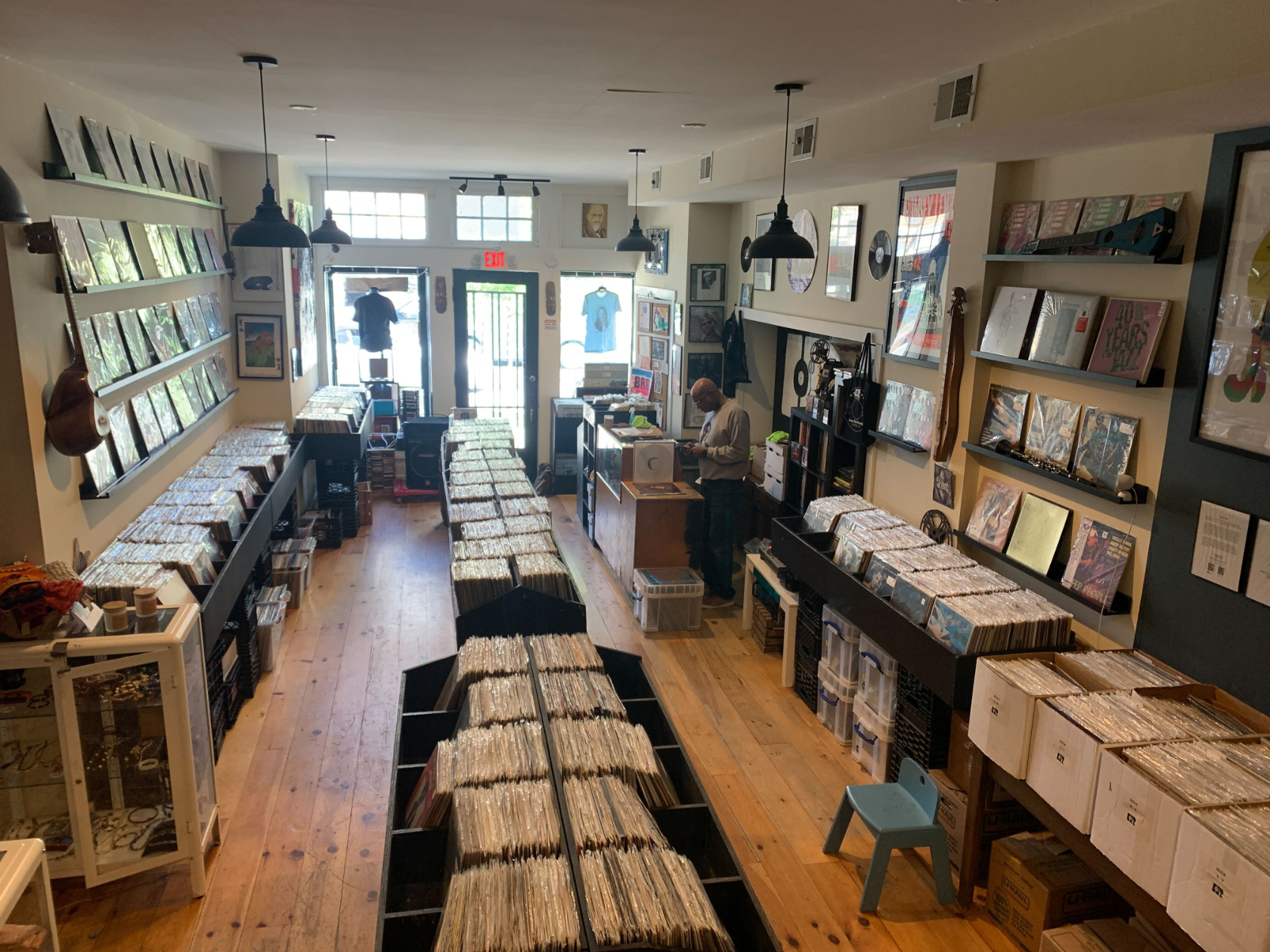
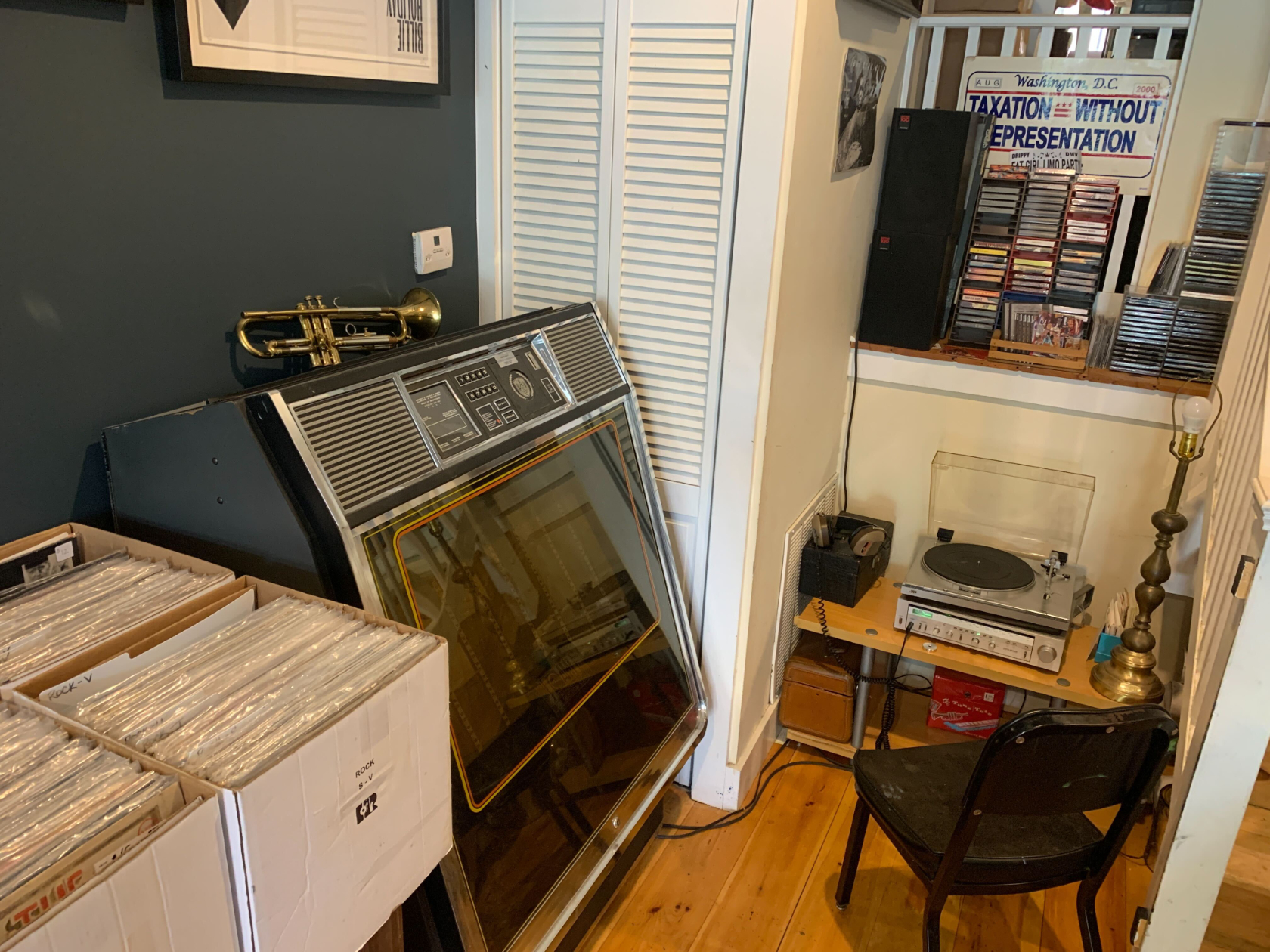

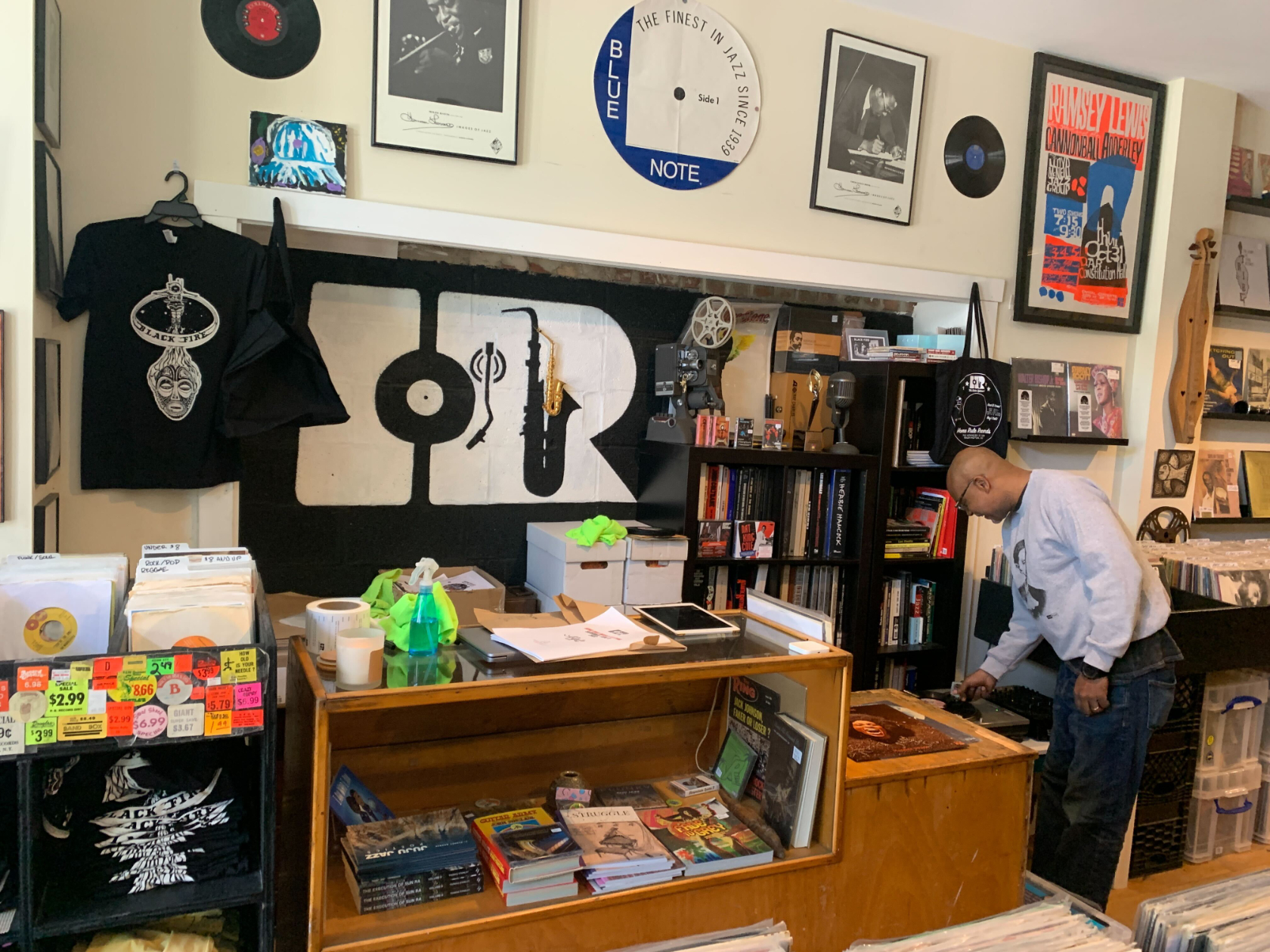
Campbell wanted to celebrate some of that history, which is why he kickstarted the Home Rule Music and Film Preservation Foundation a few years ago to shine a light on D.C.’s incredible music legacy, going back to when the District was known as “Chocolate City.” The foundation has produced a documentary about the storied Black Fire Records, hosted 14 local acts for “tiny stage” performances during the pandemic, published a zine with features about local artists, and launched the Home Rule Music Festival, which returns for its second iteration in June.
In just two days, Campbell’s shop has become a national representative for small businesses, something of a political pawn ahead of reelection season. (He pointed out how cramped the store felt with the White House press corps filling the room Thursday.)
But Campbell has had something special on his hands years before the vice president gave her stamp of approval.

He looks around the block and sees the old and the new, expensive condominiums next to mom-and-pop shops that line Kennedy Street. Across the street, ANXO serves cider and pizza — next to it, patrons at Everyday Sundae, a Black-owned ice cream shop, kick off the weekend with sweet treats. There has been nonstop construction in the neighborhood since Campbell opened his doors — including one project where a building collapse tragically injured five workers. Just a few hundred feet away, crews are putting up 30 condominiums where Harlan Jones’ historic New Sewell Music Conservatory used to be (the new building will retain 1,000 square feet for the music school).
“Clearly, D.C.’s changing and is going through a transformation, and I think Kennedy Street is a prime example,” Campbell says. “Kennedy Street has had some challenges, unfortunately. There are some young men who still do their street business outside,” Campbell says. “And for me, I think music is one of those not only healing but connecting forces in the universe.”
Change isn’t always a bad thing, Campbell adds, as hammers and drills drone on in the background, blending in with a Funkadelic record playing over HR Records’ speakers. There was a shooting nearby six or seven months ago, he says. Now, on warm afternoons, he drags those speakers out to the sidewalk and plays oldies as loud as he can without “disturbing anybody.”
“I was like, ‘Screw this, I’m putting the music outside,'” he says. “And we haven’t [a shooting] since.”