Martin Austermuhle
Funding for emergency rental assistance has been restored under a final draft of the proposed 2024 budget being circulated ahead of a first vote in the D.C. Council on Tuesday, while plans for the K Street Transitway would be put on hold and a proposed $2 congestion charge for rideshares into downtown D.C. would largely be scrapped.
Those are among the changes to the budget that Council Chairman Phil Mendelson unveiled on Monday, culled from weeks of work by lawmakers to review and amend the $19.7 billion spending plan submitted by Mayor Muriel Bowser in March.
“What we got from the mayor was a very tight budget. And I think if you add up what I have put forward here, we’ve managed to find considerable resources for these needs,” said Mendelson in an interview with DCist/WAMU. “I think that we’ve done a pretty good job of making sure that the agencies are adequately funded and that most of the priorities identified by councilmembers are funded.”
Amongst the priorities listed by councilmembers earlier this month was restoring funding for the Emergency Rental Assistance Program, or ERAP, which helps low-income residents stay housed by helping pay their rent in emergency situations. Bowser had proposed slashing the program’s funding by 80% — to $8 million, from the current $43 million — because of improvements in the city’s economy and decrease in unemployment levels, but lawmakers and advocates responded that rents have continued rising and the current year’s ERAP funding was fully used up within six months.
In his draft of proposed changes, Mendelson said the council would restore ERAP funding for 2024 to $43 million, while also funding 230 new housing vouchers for people experiencing homelessness (Bowser had not funded any new vouchers) and reversing cuts the mayor proposed for a program that offers a free attorney to low-income residents in landlord-tenant court. Still, the funding for vouchers falls short of the 1,740 vouchers homeless advocates had been requesting.
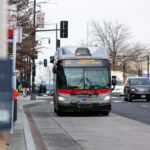
Mendelson is also directing $12 million towards bringing 24-hour services to 13 Metrobus lines. The plan was part of a broader bill to make Metrobus free of charge within city limits, but that was derailed earlier this month by concerns over feasibility by the Metro board. He is also restoring funding for three Circulator routes that Bowser had proposed cutting, albeit only for one year.
In something of a victory for Bowser, Mendelson said he would not include a proposed $2 congestion charge for Uber and Lyft rides in and out of downtown D.C. during rush hour in the budget. Instead, he is proposing a 25-cent surcharge on all rideshare rides throughout the city, with the surcharge dropping slightly for hybrid and electric vehicles. (The revenue from the surcharge will help pay for the cost of the 24-hour Metrobus.)
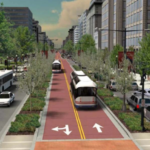
But Mendelson also ignored pleas from Bowser and the businesses community to restore $115 million in funding to rebuild K Street with dedicated bus lanes; he says he still has concerns with the design, and included additional funding for the city to come up with better options. “Pretty much everybody says privately they don’t like the design,” he said. “But we increased the planning money so that this can continue.”
Should an improved design for the K Street Transitway be produced, Mendelson said he would restore funding for construction in the 2025 budget.
Mendelson also said he was proposing a $15 million increase in funding for back pay for teachers in charter schools, responding to concerns their counterparts at D.C. Public Schools were receiving more money. He is also adding language he says will ensure the money gets to educators (instead of being used for any other purposes) and expanding the definition of who can qualify for it to allow a broader range of school staff to see pay bumps.
While Mendelson’s final draft is meant to incorporate changes proposed by all his colleagues, and thus represent something of a consensus view on the 2024 budget, there still remains the possibility that additional changes will be made during the debate scheduled for Tuesday.
Some progressive activists have floated the idea of freezing a planned sunsetting of a tax increase on large land deals and directing the expected $104 million in revenue to housing programs, food assistance, and more. On Monday afternoon, Councilmember Zachary Parker (D-Ward 5) said in a letter to his colleagues that he would formally propose that idea.
“When I think about our priorities as we emerge from the pandemic, what is top of mind for me are the daily struggles of District families trying to secure housing and put food on the table. It is easy to dehumanize these unmet needs in conversations about a ‘tough budget year,'” he wrote. “But we do not have to accept that the past will be prologue. We have agency. We have a choice to make. We must center our comeback plan around investments in District residents.”
But Mendelson says he doesn’t support any such move, and would rather wait for an existing commission to complete its review of the city’s tax rates and structure.
“I think it actually would be very, very damaging to downtown because it is by far the highest tax rate on transfers and regulations in the region,” he said. “I think that if we want a major tax change like that, we should wait for the Tax Revision Commission.”
In response, Parker wrote that his proposal would not endanger downtown because it would exempt office-to-residential conversions from the increased tax.
As for Bowser, earlier this month she criticized some of the council’s proposed budget changes as gimmicks and unsustainable policy changes.
This post was updated with information on a budget amendment from Councilmember Zachary Parker.