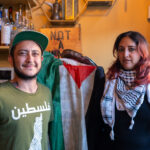
Before Jinan Deena opened local Palestinian food pop-up Bayti, she was adamant she’d never work in the restaurant industry. Growing up, she often helped at her parents’ restaurant in Toledo, Ohio, where she always noticed her mom’s efforts to tone down her Palestinian recipes in favor of the more Mediterranean-style dishes customers preferred.
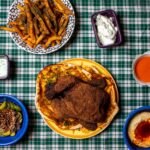
But when Deena moved to D.C. in 2017, she missed her mother’s home cooking and started hosting large dinner parties where she cooked authentically Palestinian dishes like the leafy green soup molokhia, bamya, or okra stew, and maqluba, a chicken and rice dish cooked in a pot and then flipped upside down to serve. A few years, later, she connected with Chris Francke, the owner of Adams Morgan Middle Eastern craft cocktail bar The Green Zone, who encouraged Deena to organize her very first pop-up event at the bar for Ramadan.
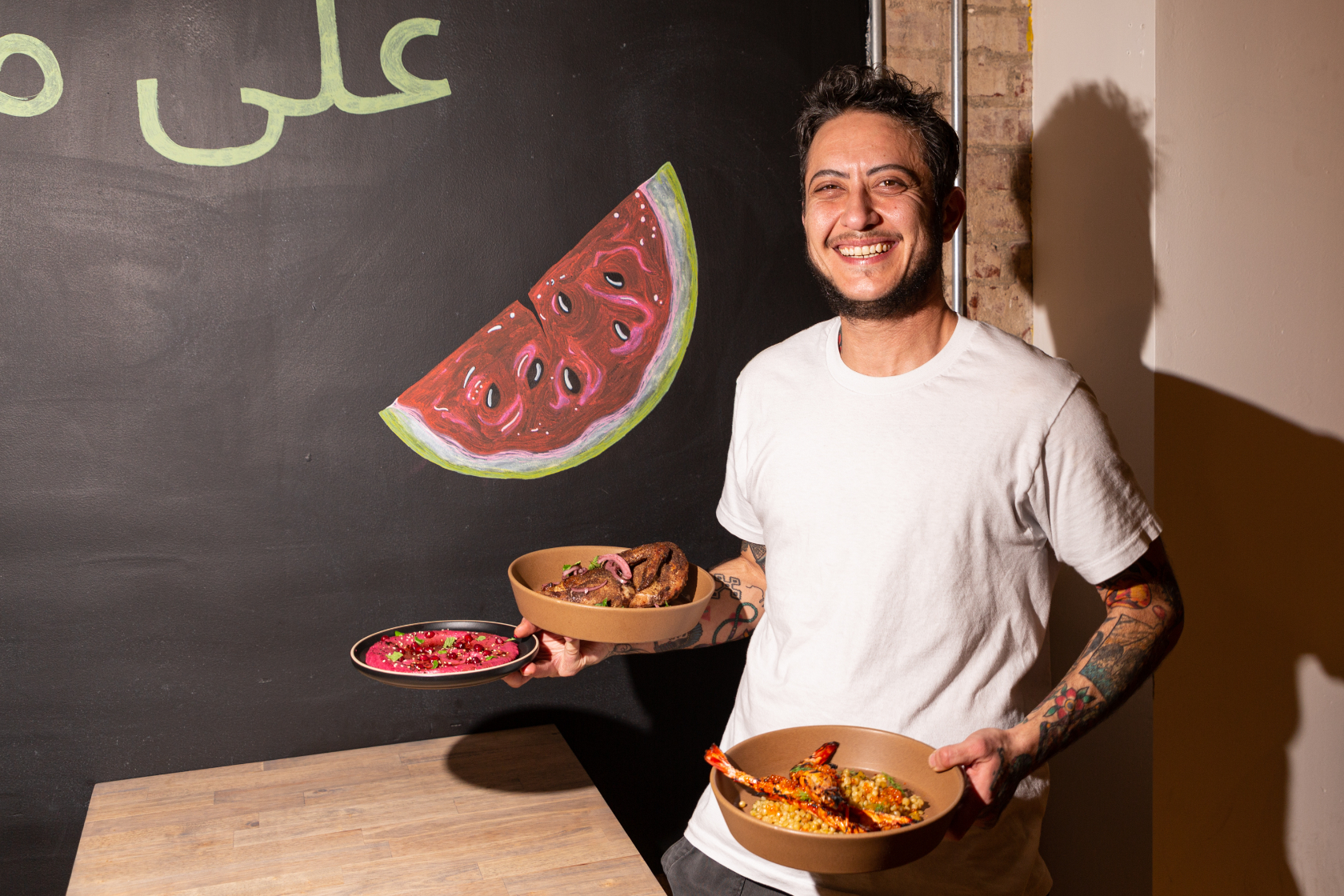
Bayti was soon born, holding its first official event the following year at the nearby Grand Duchess. The name means “my home” in Arabic, which is exactly how Deena hopes attendees feel.
“I wanted to create an experience where D.C. diners were invited into a Palestinian home for a dinner party,” Deena says, remembering the large, animated events her mom hosted when she was growing up.
But the joy of those parties isn’t the only thing Deena wants to recreate — for her, Palestinian food is political, and making sure people know that is a revolutionary act.
“This is so important for us to resist the occupation we’re living under. We’re preserving our history and culture from being appropriated and erased,” Deena says. “If you’re Palestinian, you’re automatically political. It’s your life, your blood, your lineage.”
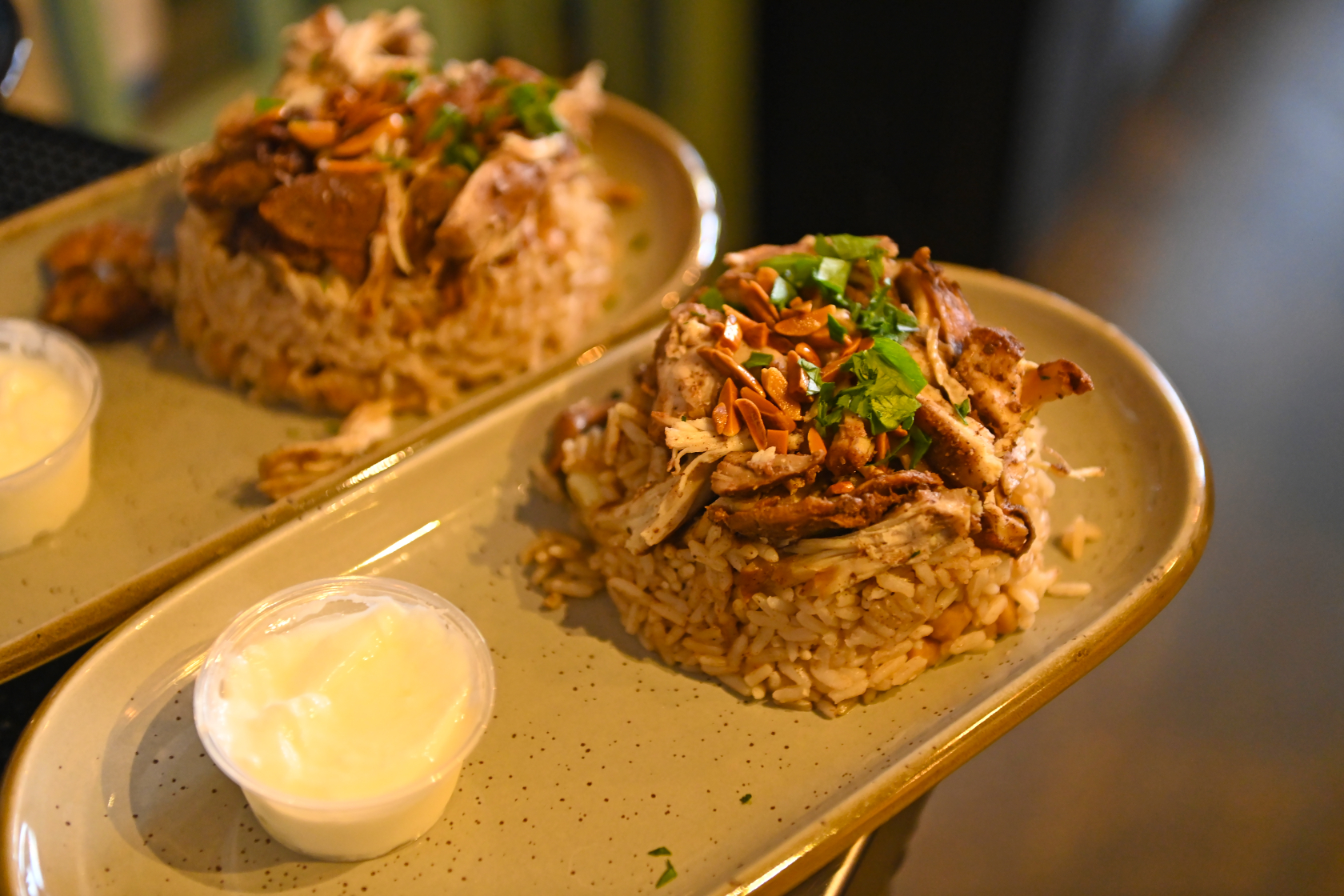
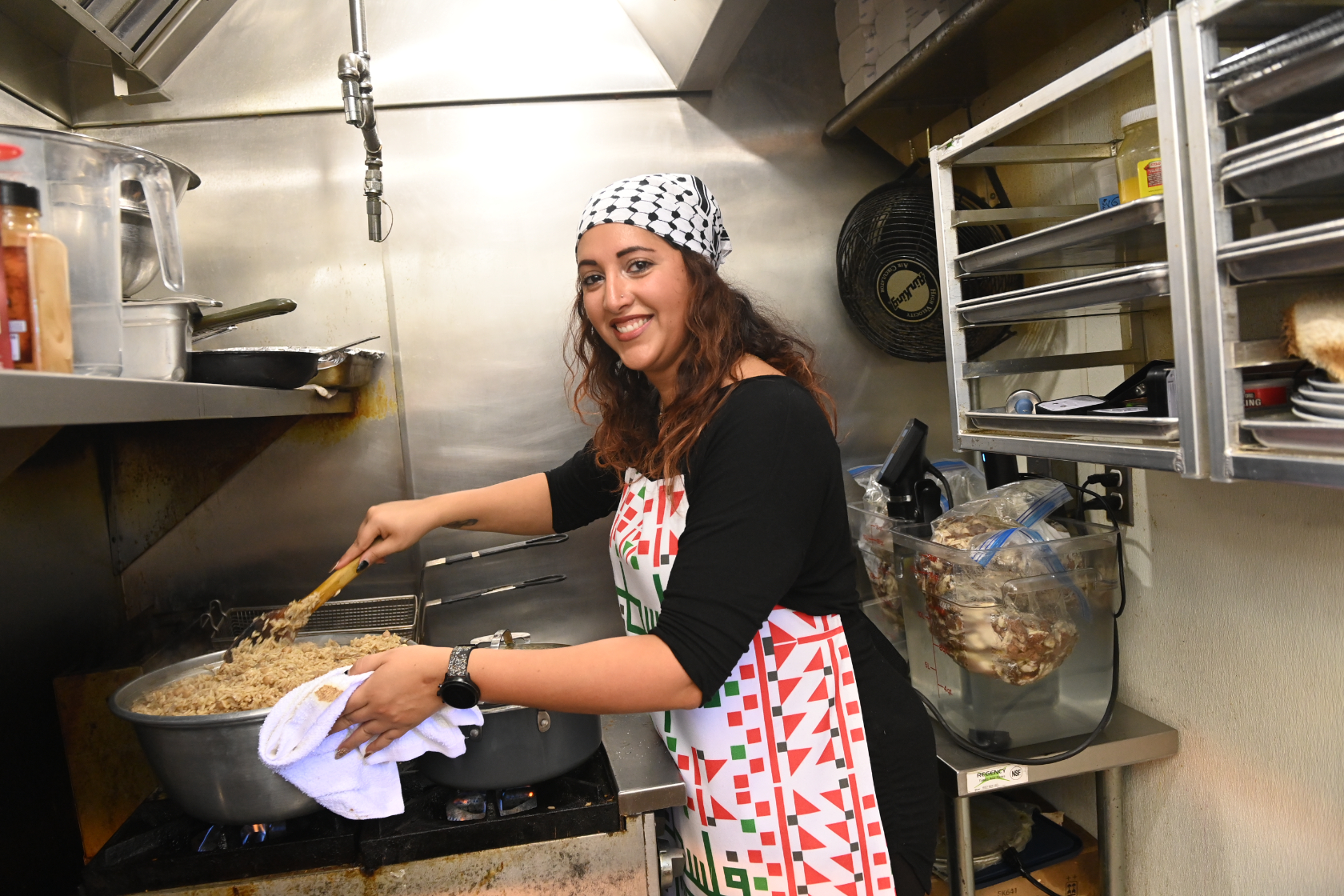
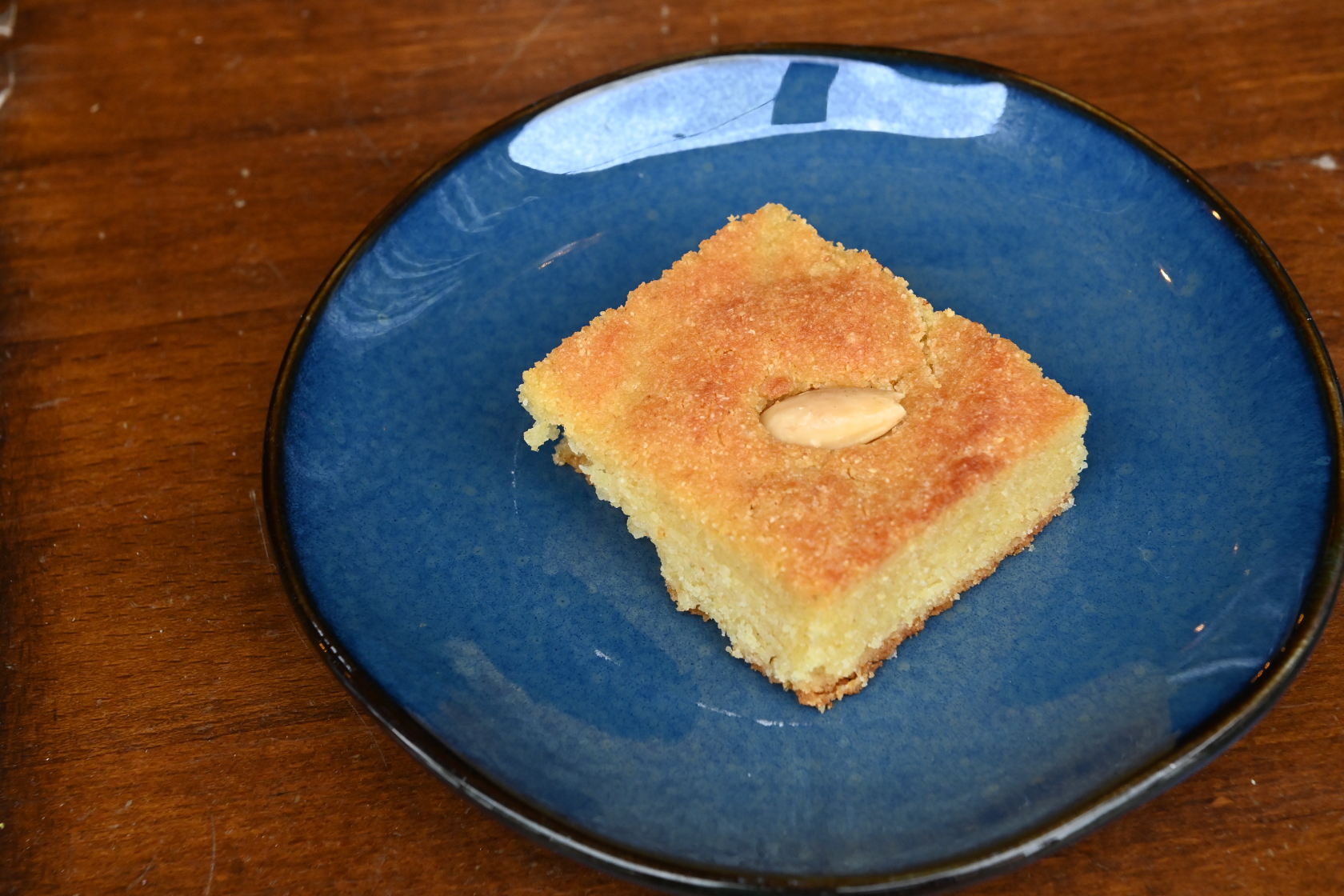
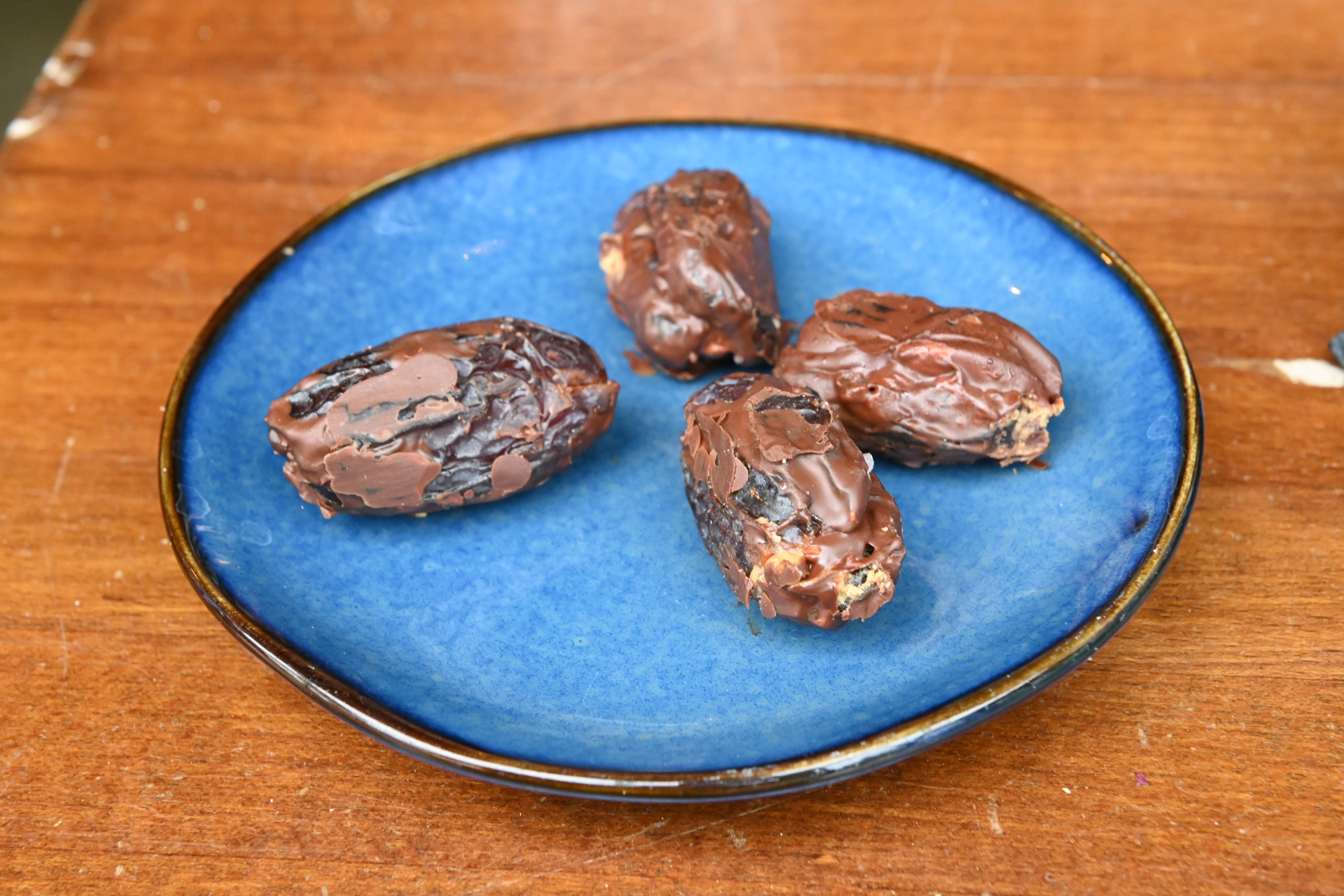
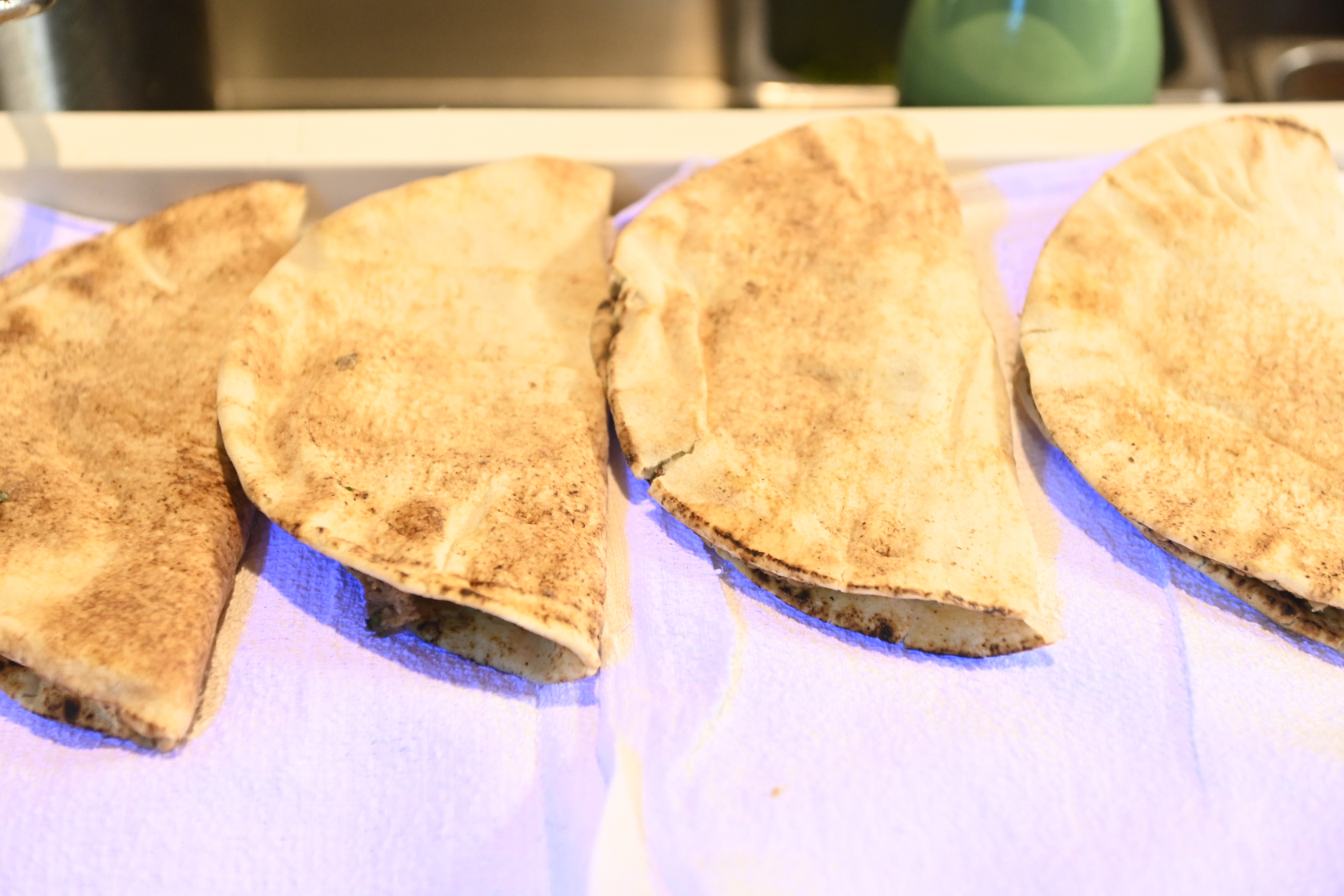
Deena focuses on Bayti full time these days, curating events that not only introduce the region to her people’s food but also their culture and the oppression they face under Israeli occupation. Last October, she hosted an event at D Light Bakery honoring the olive harvest season, featuring a vegetarian menu with dishes such as lentils with rice and layered eggplant, and a discussion of the struggles facing Palestinian farmers and the cultural importance of the harvest.
The following month, her event at La Tejana serving tacos with Palestinian chicken, falafel, shawarma, and cauliflower — all while Palestinian music played — sold out within 2 hours.
Many other local Palestinian chefs feel similarly to Deena, saying that serving food explicitly tied to their identity is an important act not only because hospitality is so culturally important but also because Palestinians at home and abroad face severe forms of repression, including incarceration, when it comes to free speech, political organization, and many cultural expressions.
In 2020, Marcelle Afram also decided to focus on Palestinian food after many years in the food industry, including as head chef at Bluejacket Brewery and Maydan, and opened up the chicken pop-up Shababi.
“I no longer wanted to keep the narrative of who I am in the shadows,” says Afram, adding that they also had gender-affirming surgery and came out as transgender in the same year. “I had a platform but I never spoke of [my] Palestinian identity before, and I had this feverish feeling that I wanted to put it all out there.”
Shababi has taken several forms so far: delivering food around the region, hosting private dinners, and organizing events — including a Palestinian Christmas at Maketto with Deena. They also served food at the Smithsonian National Museum of Asian Art’s centennial festival and have been recognized with a RAMMY nomination for rising star of the year.
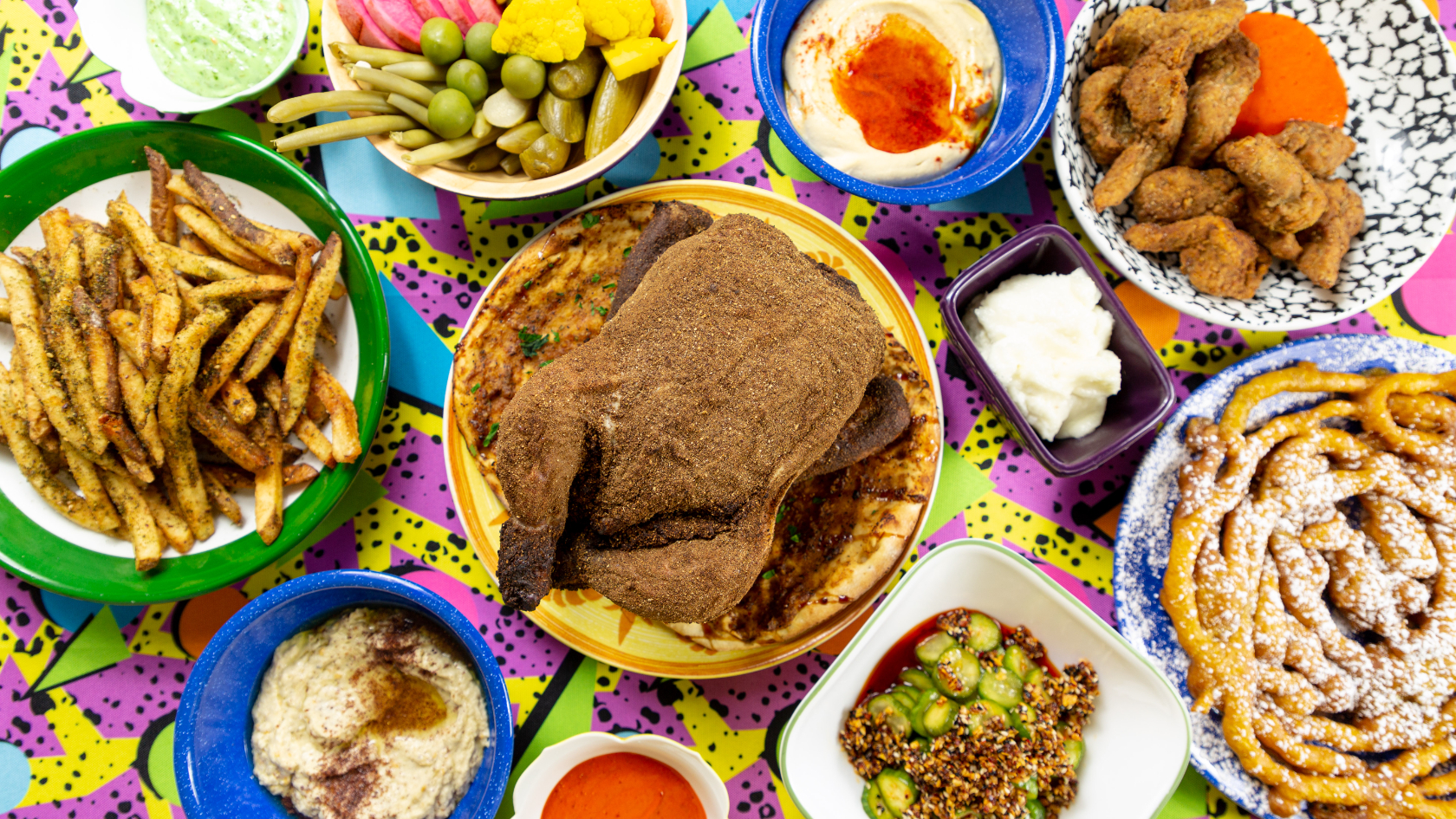
“It’s humbling but it’s also time,” says Afram. “Shababi for me is, yes, about great food, but also it’s so much more about having the medium to say ‘Palestine’ [and] influence others to see and hear and understand the narrative, the resilience, the joy, the pride.”
Like Deena, some chefs have been motivated to recreate a taste of home in a region often lacking Palestinian flavors. Danny Dubanneh says he could never find za’atar nearby, “a symbolic reminder of home” that he says is necessary for any Levantine table. So in 2016, he and his brother Johnny started making their own jars of za’atar, along with manoushe — flatbreads with the spice blend and other toppings — and selling them at local farmer’s markets.
They quickly began to expand, first stocking several local restaurants with Z&Z Spice and then all of the Whole Foods in the mid-Atlantic region. In 2021, they opened Z&Z Manoushe Bakery in Rockville which recently made Bon Appetit’s 50 best new restaurants list.
Claiming foods as Palestinian shouldn’t be anything remarkable though, Dubbaneh says.
“It’s always going to be intricately tied with what we do. This might ruffle some feathers, but for us it’s an easy decision,” he says.
Labeling foods Palestinian can cause intense reactions, however. Manal Hilana is the owner of Hilana Falafel, which serves “Jerusalem-style falafel” at farmers’ markets, made from chickpeas, tahini, and a very generous amount of spices like cumin and coriander — a trademark of Palestinian dishes. She says that customers who support Israel’s position — contested by international law — that the entire city is Israeli sovereign territory have gotten upset by the name.
Still, Hilana pushes through, continuing to advertise her falafel as Palestinian saying that it’s an important act of reclamation and a reminder of home.
“There’s a responsibility to tell others about us. We are here, we exist, and we are peaceful people,” Hilana says. “We have a culture that’s stretched with love and stories and authenticity, and our foods tell people about me as a Palestinian, about my culture, about our generosity and love.”
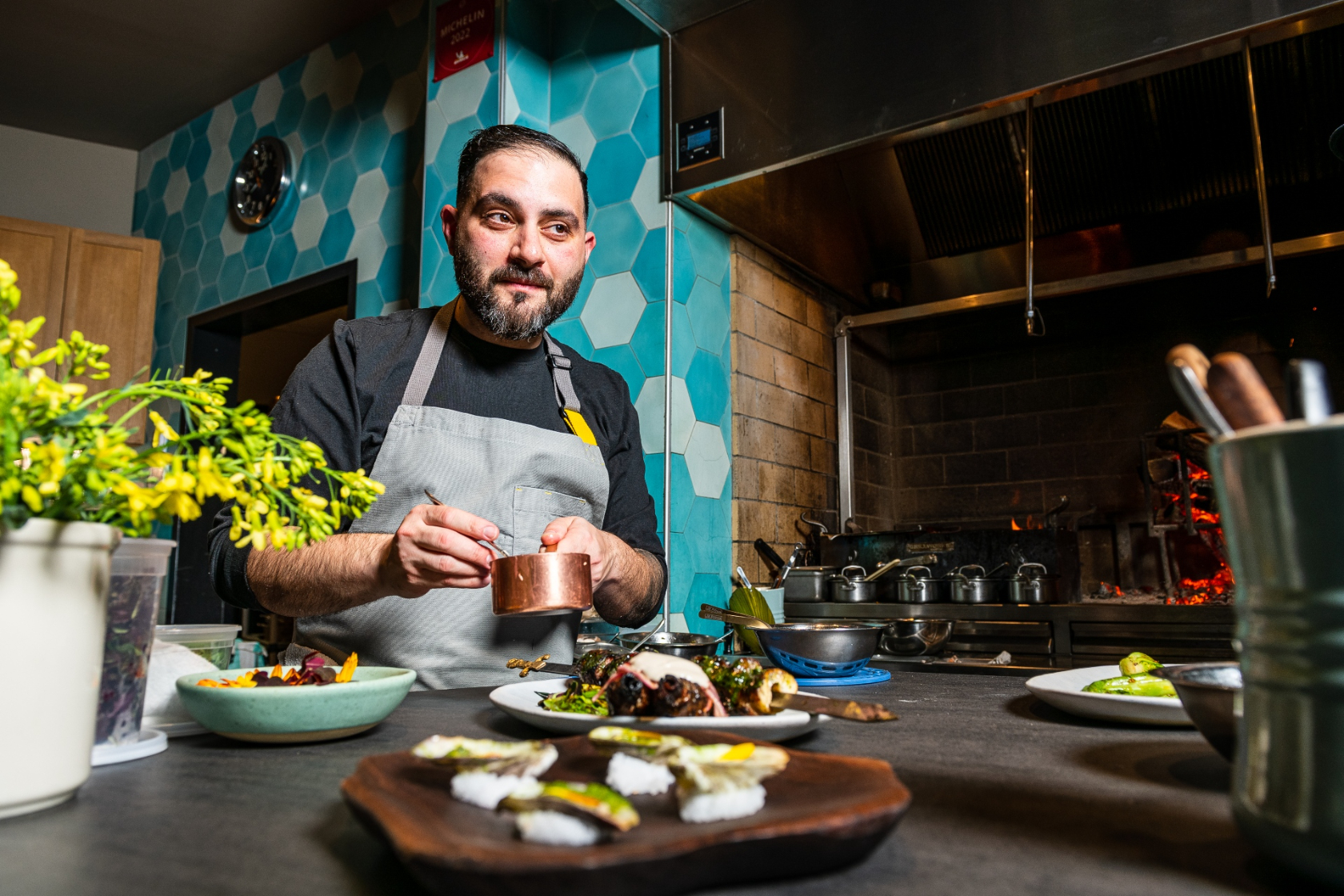
Many local Palestinian chefs are in touch with each other, offering collaboration and support. Michael Rafidi of Yellow and Albi recently relaunched his Habibi Sofra dinner series, inviting other chefs with Palestinian heritage or a connection to the food to join, including Reem Assil and Sami Tamimi. The series’ proceeds benefit UNRWA USA, a nonprofit supporting displaced Palestinian people.
Deena, Afram, and Rafidi all agree that D.C. has historically lacked Palestinian dining options, in part because of the federal government’s strong ties to Israel and the prevalence of negative stereotypes about Palestinians and Islam in the United States.
Afram says that Palestinian food isn’t a new trend, however. Their grandparents, Deena’s parents, Dubbaneh’s parents and grandparents, and Rafidi’s grandparents all owned and operated restaurants that each chef grew up working in. But Afram says that for their parents’ generation, there was more fear that labeling it as such could impact the success of their business, and even their safety.
But many chefs say their successful current businesses are proof that things are changing. This could be due to the shifting national opinion, with younger generations more likely to view Palestinians sympathetically than a few years ago, according to Gallup and Pew data — or just because people are more open to new experiences.
“All of us in the industry are trying to be who we are authentically without any apology and fear,” Deena says. “It’s very obvious with [my] events that Palestinian is not a taboo, it’s not a dirty word. It sells out and people stand in line for hours — that’s all the proof to me.”
Having each other as a support network helps too. Afram found out after reaching out to the Z&Z Instagram account that their families go way back. Hilana and Dubbaneh have become close after meeting at the White House farmer’s market.
“Each time I see them, I think of home,” Hilana says. “Real Palestinian people with their generosity, kindness, passion, and love of Palestine, it means a lot each time I see them.”