
 Jacob Fenston
The Potomac River has been slowly, but steadily, getting cleaner over the past decade. Wildlife long absent from the watershed has been returning — from bald eagles to bottlenose dolphins. But at the same time, suburban sprawl, deforestation, and climate change are slowing down progress on the cleanup.
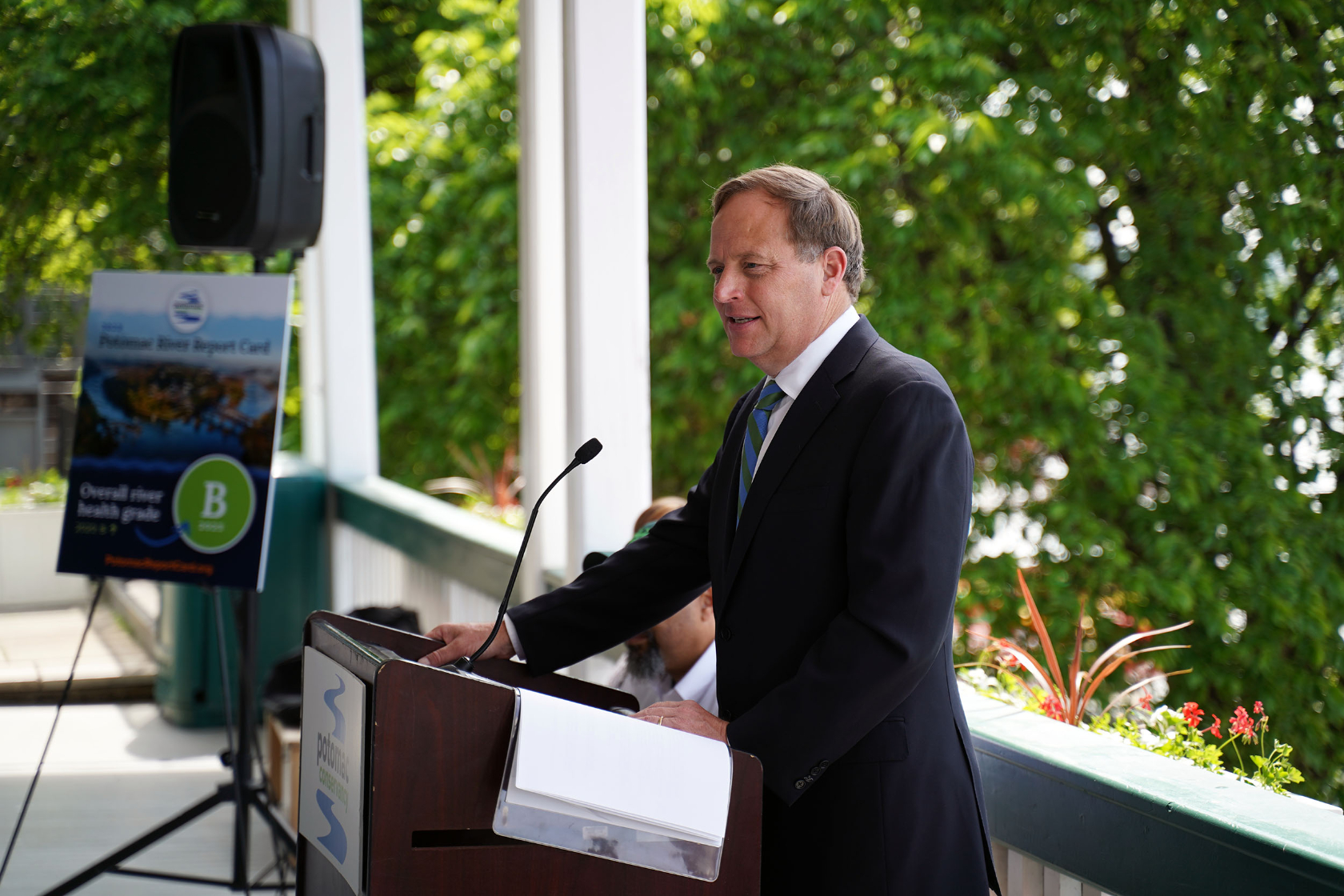
The latest Potomac River report card from the nonprofit Potomac Conservancy gives the waterway a B, up from a B- in 2020, and up from a D in 2011.
“The health of the Potomac overall is improving, but unfortunately, it’s not yet safe for swimming or fish consumption,” said Potomac Conservancy President Hedrick Belin, during a press conference today.
The District has a goal to make all waterways in the city swimmable and fishable by 2032, and there has been recent discussion of lifting or loosening the decades-old ban on swimming in the Potomac and Anacostia rivers. In fact, water quality monitoring over the past four years shows that several locations in the District are clean enough to swim in most of the time, meeting water quality standards for bacteria in more than 70% of tests.
Belin said the 2032 goal is well within reach.
“We believe that by 2030 we can achieve a river that is fishable and swimmable, a river that you can safely splash around in and touch 365 days a year,” said Belin.
In the meantime, District officials are exploring ways to allow some swimming when water quality allows, possibly beginning as soon as next summer.
The report card rated the river’s progress in five categories: pollution, fish, habitat, land, and people.
In one positive sign, the river scored all A’s in the pollution category. Nutrient pollution, which can cause algae blooms, is down significantly and on track to meet a 2025 goal set by the U.S. Environmental Protection Agency. Theses pollutants, nitrogen and phosphorus, come from largely from agriculture as well as from runoff in urbanized areas. Investment in sewer treatment upgrades and new tunnels to prevent sewage overflows has driven reductions in nutrient pollution, as have improved farming practices.
On the other hand, the river got the lowest grades on habitat, with several D+ marks. Underwater grasses, a key indicator of the health of a waterway, are nowhere near the 2025 target, and forest buffers along waterways are also lagging.
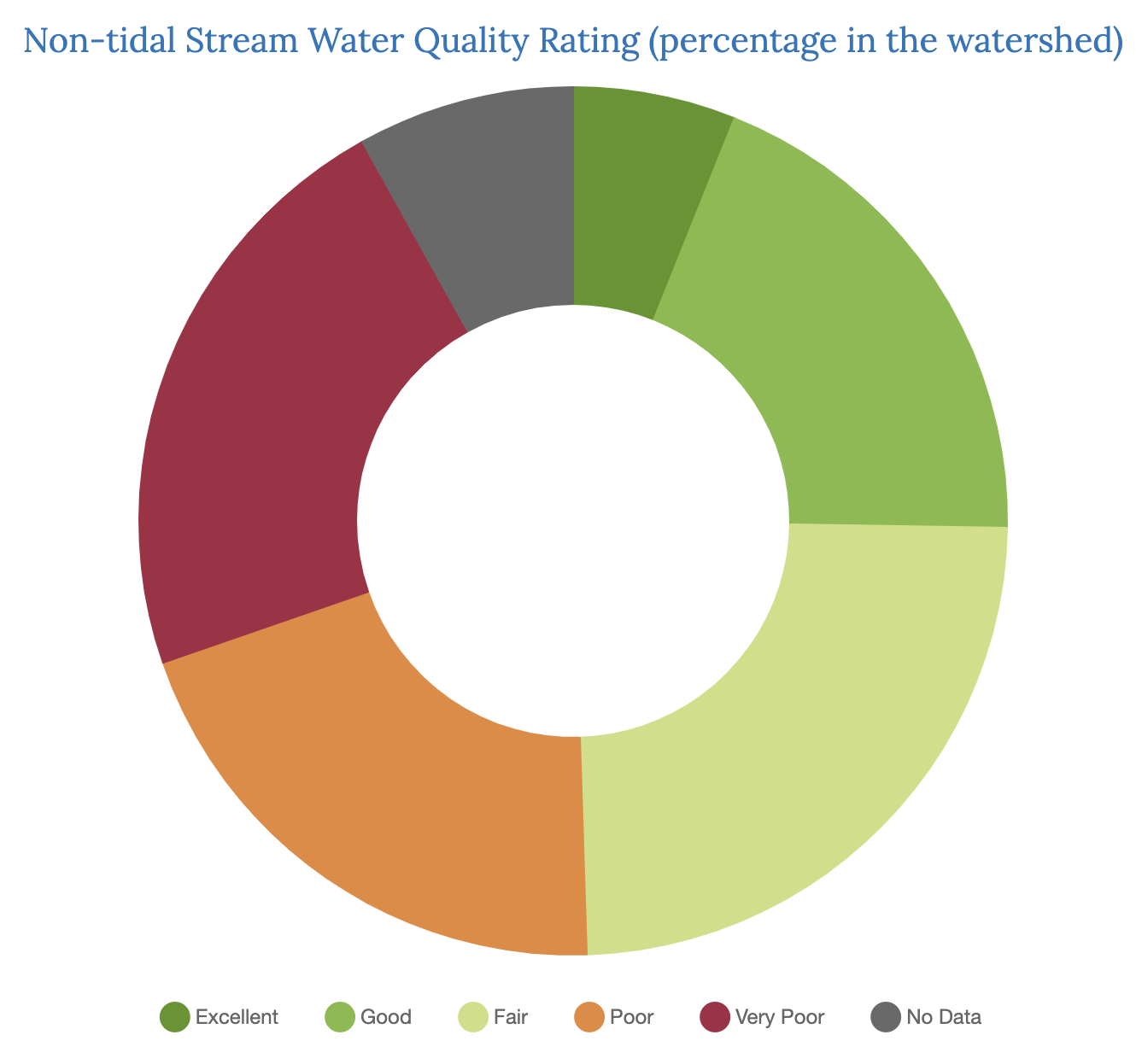
In the land category, the report warns of the consequences of continued development of once forested land. Currently, 53 percent of the Potomac watershed is covered with forests, while 15 percent is developed. But that proportion is shifting, as more trees are cut down to make way for development.
The report card urges “river-friendly growth planning,” which would prioritize denser mixed-use communities, requiring less deforestation.
At the same time, climate change is bringing heavier storms, flushing more pollution into the river. It’s also making the water warmer, impacting the aquatic ecosystem.
Richard Jackson, interim director of the District Department of Energy and Environment, said the B grade represented a lot of hard work at his agency over the years.
“I like the accountability factor of it that it’s holding our feet to the fire. It’s making sure that the work we’re doing has a real impact and we get to see the results,” Jackson said.