 Sarah Y. Kim
For people in need of mental health care in Northern Virginia, options have been feeling increasingly short in recent years.
It’s the result of what many Americans consider to be a national mental health crisis, one that accelerated in recent years. Over the course of the pandemic, more than 30% of adults across the country reported symptoms of anxiety and depression, and drug overdose deaths in the U.S. rose by 50%. In Virginia, that crisis has also raised alarm. More than a million adults across the state have a mental health condition, and nearly a quarter of those adults have a serious mental illness, according to recent data from the National Alliance on Mental Illness (NAMI). About half of people who need mental health care don’t get it because they can’t afford it. Meanwhile, hospitals with psychiatric units are overflowing and people in need of care are scrambling to get treatment. Increasingly, those who have nowhere to go end up in jail or prison.
In Arlington, there’s been an increase across all age groups of people seeking help for depression and anxiety, according to data from the Department of Human Services.
“It’s been a tough three years,” Kurt Larrick from Arlington County’s Department of Human Services told DCist/WAMU.
State lawmakers have been pushing forward a bipartisan effort to address the crisis, and Gov. Glenn Youngkin laid out a $230 million spending package last December to “transform Virginia’s behavioral health system.” Those dollars are expected to go into expanding Virginia’s crisis receiving centers, funding new mobile crisis teams, and expanding mental health programs in schools. Last week, Youngkin attended a ceremony for the future opening of a crisis receiving center in Prince William County. The center is expected to be completed in late 2024.
Whether that funding will come through is still up in the air, however, as the state budget and its finer details remain in limbo. The Republican-led House and Democrat-led Senate have failed to reach a deal on amending Virginia’s two-year budget (though lawmakers did pass a stop-gap “skinny” budget as a first step). And advocates and local officials are wary that without putting other support systems in place, the state may be throwing money at the problem without addressing some of the underlying issues.
An urgent need for crisis centers
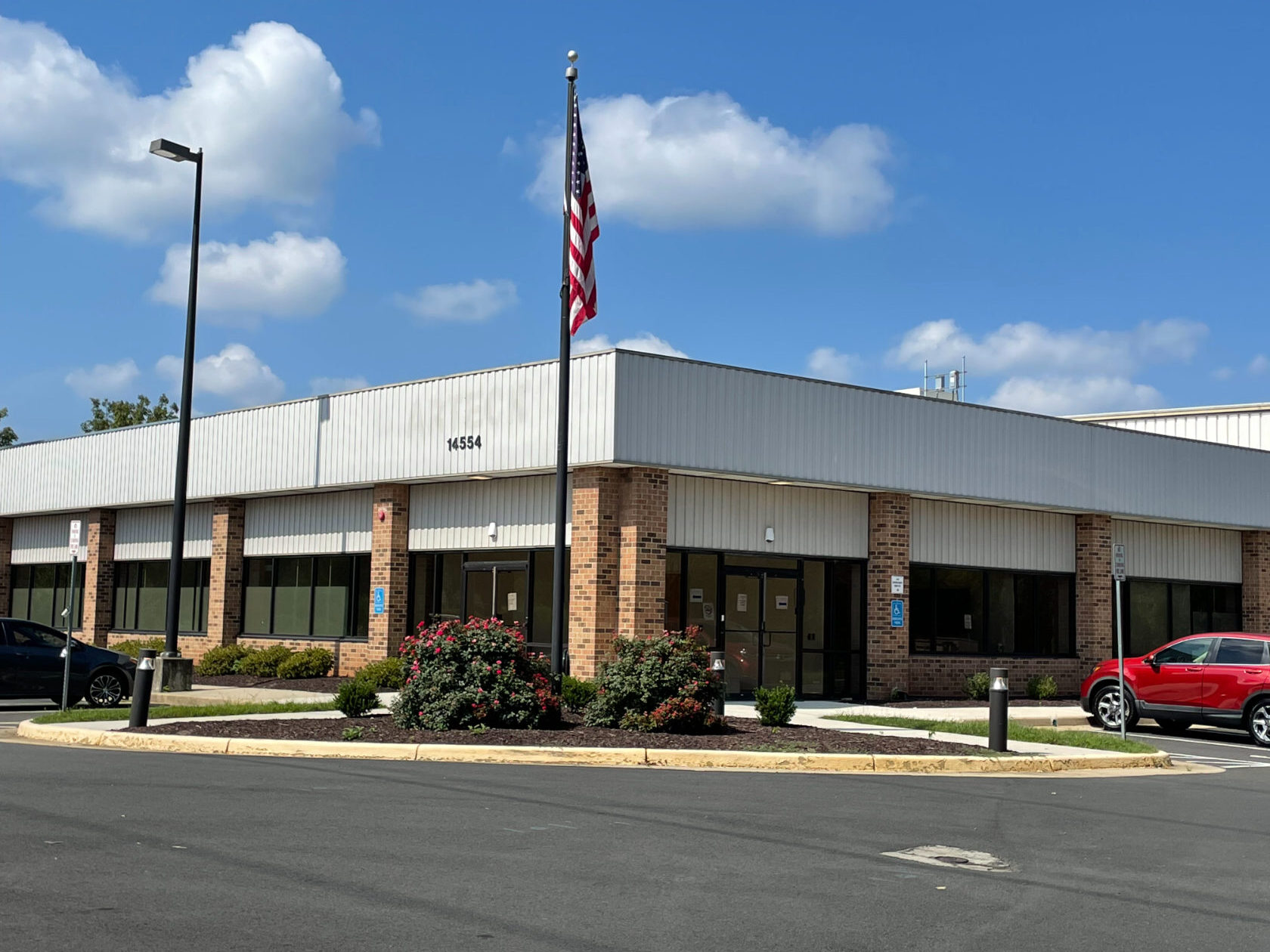
The largest allocation – as laid out in Youngkin’s December package – is $58 million for increasing the number of crisis receiving and stabilization centers. There are a variety of different types of crisis facilities, but essentially these are walk-in facilities are supposed to offer short-term urgent mental health care to anyone who seeks it (receiving centers tend to offer a wider range of services than stabilization units). For many Virginians, however, they are not very accessible. To get to the nearest crisis receiving center, a resident of Arlington County may need to travel by car for about 45 minutes to get to the Chantilly Crisis Receiving Center, a 16-bed facility in Fairfax County. Arlington County does not currently have its own crisis receiving center. However, the county is preparing to open its own crisis intervention center, which is not as comprehensive as a crisis receiving center but offers similar services. VHC Health is also building a new facility that would expand behavioral health services in the county.
However, Paul Galdys, deputy CEO of RI International – service provider for the Chantilly Crisis Receiving Center – says that despite an increase in people requiring mental health services in the region, crisis receiving centers like Chantilly don’t have the resources to help everyone who seeks their services.
In theory, according to national guidelines by the Substance Abuse and Mental Health Services Administration (SAMHSA), crisis receiving centers have a “no wrong door” policy: they are supposed to accept all people seeking urgent mental health care and substance use treatment, regardless of income or medical history.
“Unfortunately, that’s not what we’ve been able to realize in Northern Virginia yet,” Galdys says.
He says he believes the region will get there. Galdys is hoping that with more money from the state, the Chantilly center could soon cover the cost of care for all patients, regardless of insurance. Medicaid does pay for crisis care in Virginia, but for people who aren’t on Medicaid, the Chantilly center relies on an annual pool of funding from the five jurisdictions it serves. That funding, however, isn’t enough to cover the costs. Galdys says the center is incurring “significant financial losses” to provide care to people without coverage.
Another significant barrier to care, Galdys says, is that the facility is not allowed to have medication at the center due to statewide licensure rules. That means having to turn away patients because the site can’t provide them the immediate medical attention they need.
“Imagine someone coming in with a mental health substance use crisis, but you’re not allowed to have medications,” he says. “We have to wait and contact the pharmacy, to hope for delivery.”
Staffing is also a significant challenge. Under national SAMHSA guidelines, crisis centers are supposed to be staffed at all times with a team of psychiatrists or psychiatric nurse practitioners, nurses, clinicians, and peers with lived experience.
Galdys says that kind of staffing can be hard to pull together when they can’t offer competitive pay. State funding would help with that, he says – right now, the center gets most of its funding from local jurisdictions. “Which is helpful,” Galdys says. “But it’s simply not enough.”
Across the behavioral health system, the stress, hours, and low pay have driven a lot of people from the field. In July 2021, five of Virginia’s eight state psychiatric hospitals temporarily closed to new admissions due to staffing shortages and financial struggles. Leading up to those closures, 108 staff members resigned from the Virginia Department of Behavioral Health and Developmental Services, and several staff reported “serious injuries” and assault.
That’s exacerbated a wider shortage of mental health services across the region. Rebecca Kiessling, executive director of the National Alliance on Mental Illness (NAMI) Northern Virginia, says hospitals continue to have trouble hiring and retaining mental health providers.
In the meantime, hospital emergency rooms in Arlington and across Virginia are overflowing with people experiencing mental health crises, and there’s an ongoing shortage in adult psychiatric beds. Kiessling says that in theory, crisis stabilization units would be able to ease the burden on hospitals and other facilities. “But they need to be funded,” she says.
Instead, when someone is experiencing a mental health or substance use crisis, they would probably find themselves in a hospital emergency department, sometimes brought in by law enforcement. And long wait times for someone in crisis can exacerbate the episode.
“Any of us that have waited hours in an emergency department find it intolerable,” Galdys says. “Individuals in mental health, substance use crisis wait days, often, for care.”
The shortage of mental health beds is not a new problem, and over the past decade it fueled momentum around expanding mental health resources in the region. In 2013, State Sen. Creigh Deeds’ son Gus, who suffered from bipolar disorder, experienced a mental health crisis and attacked and seriously injured him; his son then took his own life. Deeds, who has since been a vocal advocate for improving Virginia’s mental health system, says his son died because he was sent home from the emergency room when they could not find a bed on a psychiatric unit for him.
Jails are our ‘largest mental health facilities’
Without crisis care, things often escalate to the point that law enforcement gets involved. With hospitals overwhelmed and not enough crisis centers, people in crisis can end up in jail.
“The largest mental health treatment facilities were jails and prisons around this country for many years,” Galdys says. “That has to change.”
Brad Haywood, the chief public defender for Arlington, says police officers wouldn’t be making so many arrests if people in crisis had mental health services to begin with. Instead, “their main job is to arrest people with mental illness and put them in jail.”
Haywood says people with serious mental illness are overrepresented in the criminal legal system across the country, but that the criminalization of mental illness seems especially severe in Arlington. He estimates that 50% of people at the county jail are on medication for mental illnesses.
In recent years, there has been a nationwide effort to better train police to intervene when someone is in crisis, in addition to adding social workers and other crisis intervention experts to respond to situations. Last summer, Virginia launched its version of the national 988 mental health crisis and suicide hotline, an alternative to the Suicide Prevention Lifeline or 911. But Haywood says law enforcement often still get called to intervene in situations involving someone experiencing a mental health crisis.
Most of the Arlington County Police Department’s patrol officers have had crisis intervention training, according to the department. Haywood says that when police are called to respond to someone in crisis, they might take the person in custody and try to get them mental health care. But hospital psychiatric wards are often full. Wait times are often so long that the police end up taking the person to jail.
Sometimes, the person in custody will act out as wait times drag on, perhaps hitting the officer, leading to their arrest and even felony charges.
“Suddenly we’ve got somebody with a serious mental illness…facing felony charges in our courthouse,” Haywood says. “It is really honestly a failure at every step along the way.”
Rare bipartisan support
Lawmakers from both parties appear to support Youngkin’s proposal to beef up mental health funding, though the Democratic-led Senate seems to be pushing for more funding than the Republican-led House. Sen. Deeds told DCist/WAMU Monday that the Senate is proposing an additional $217 million to build community capacity for care. For crisis receiving centers, however, Deeds says the Senate and House are seeing eye-to-eye on how much to allocate (both have proposed upwards of $80 million – higher than Youngkin’s proposed $58 million).
In addition to crisis receiving centers, Youngkin’s $230 million proposal includes $20 million for new mobile crisis teams which would respond to 988 calls, $15 million for expanding mental health programs in schools, and $20 million for partnerships with hospitals to create alternatives to emergency departments.
Haywood says those critical of Youngkin’s proposal say it’s still not enough money on the table. And ultimately, addressing mental health isn’t just about new facilities for care – it’s about funding resources like permanent supportive housing that can help prevent people from getting into crisis in the first place.
Kurt Larrick from Arlington County’s Department of Human Services says there’s hope that state funds will go into expanding the Chantilly center. Galdys says the site was always supposed to open in two phases. The first, which is complete, established the existing 16-bed stabilization unit. Phase two is expanding the unit into a 23-hour crisis receiving center. “That of all things is the most critical to the crisis system working,” Galdys says.
As short as the state is on facilities that offer urgent care, Galdys also says the immediate problem isn’t the lack of physical sites. It’s making the sites that already exist fully operational, including addressing issues like staffing shortages.
“That would always be my warning,” Galdys says. “Instead of supporting the sites that are there, you could have a lot of buildings that still can’t do what you want them to do.”
Rebecca Kiessling, executive director of NAMI Northern Virginia, says there does seem to be an unprecedented statewide, bipartisan interest in funding mental health resources. And she’s optimistic.
“When you have the governor come out so strongly and say that he’s going to put all this money into mental health, we of course don’t know what that looks like, but it really is making a statement,” she says.
And if state lawmakers can’t finalize a budget, Kiessling worries they’ll never regain the momentum they built over recent years.
“You don’t always see this much money on the table for mental health. You don’t always see this blip in time when people understand the need. And it’s not just the need. It’s how we are to move forward from what the past three years were,” she says. “People need to truly understand what this is. We have this great opportunity.”