 Aja Drain
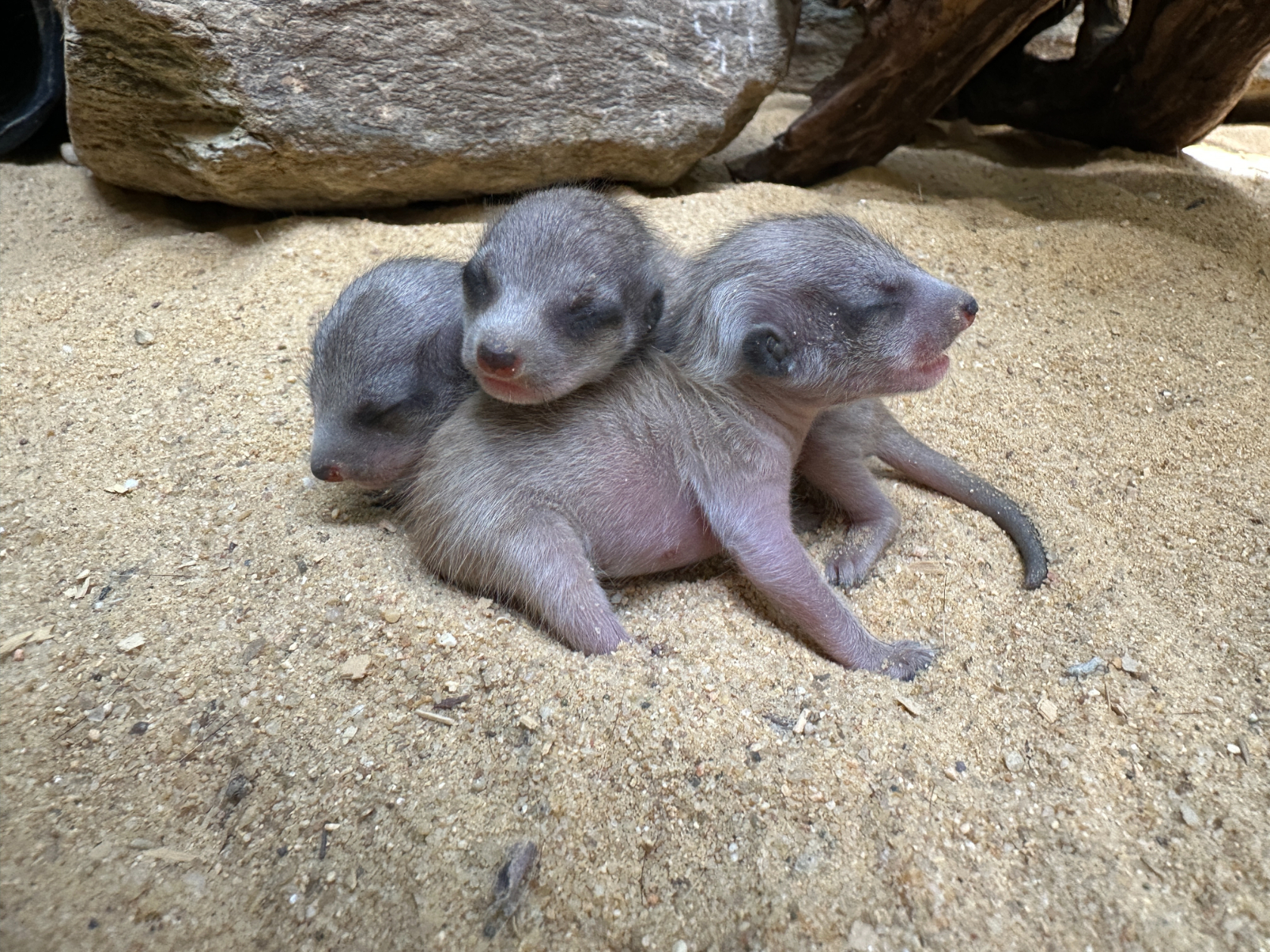
For the first time in 16 years, the Smithsonian’s National Zoo welcomes the birth of three meerkats.
Native to southern Africa, meerkats typically live in dry open plains, savannas, and grasslands — where they generally continue to thrive. Their conservation status is considered as “least concern,” according to the International Union for Conservation of Nature. And for the Lion King/Timon fans out there, you may be familiar with well-known meerkat behaviors like performing “sentinel duty” to watch for predators throughout the day, and digging tunnels underground. Meerkats are very social and live in groups called mobs that can include as many as 30 individuals, but the average mob size is 10 to 15 meerkats.
For a while, the National Zoo was meerkat-less. In August 2021, 14-year old Dogo, the last of his family that had lived at the zoo, was humanely euthanized — he dealt with health issues related to old age. But in November of 2022, Sadie and her sister Stella came to D.C. from the Brevard Zoo in Florida, and Frankie arrived from Los Angeles, California.
On May 10, keepers in the Small Mammal House observed that 5-year-old meerkat Sadie had given birth overnight. These are her first offspring with six-year-old father, Frankie. The day Sadie gave birth, she brought her pups into the main exhibit space, surprising keepers!

Animal care staff are allowing the mob of meerkats to bond and care for the pups without interfering for now. It may be a while before staff can determine the sexes of the meerkats, but at about two-weeks old, the pups are starting to open their eyes and explore their habitat.
In the wild, meerkat pups stay in an underground burrow for about three weeks. But for visitors hoping to see the new babies, a nest box offers a view of their sleeping chambers.